What’s Left After Wokeness?
An interview with political philosopher Susan Neiman, the author of Left Is Not “Woke.”
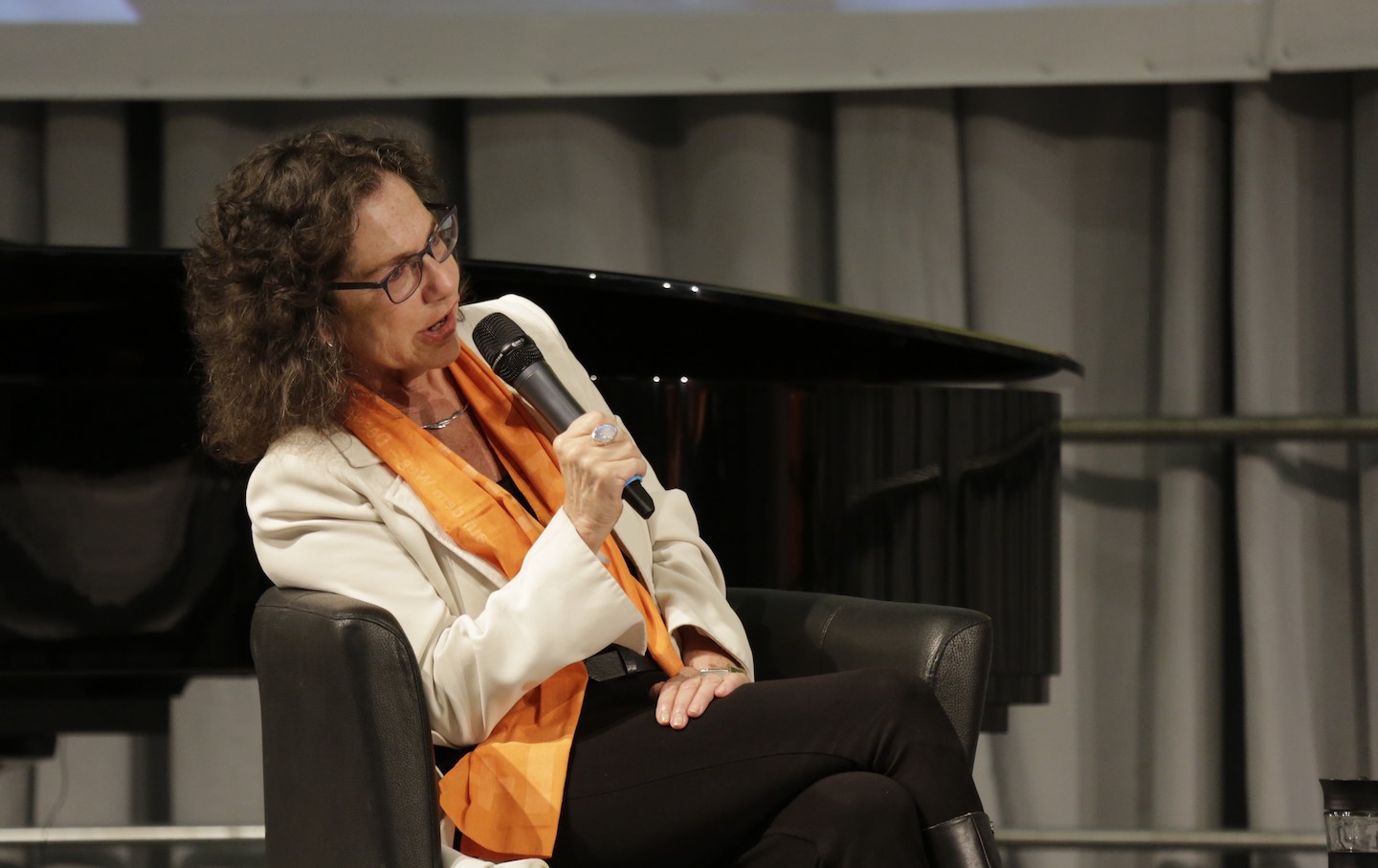
Susan Neiman is a prominent American political philosopher living in Berlin, where she directs the Einstein Forum. She is the author of many books, including Evil in Modern Thought and Learning From the Germans. Her most recent book, Left Is Not “Woke,” from Polity Press, has sparked an international conversation, with translations, she told me, coming out in languages from Thai to Farsi. This interview has been lightly edited and condensed.
Katha Pollitt: What do you mean by “woke”? When Lead Belly urged Black people to “stay woke” in a 1938 song about the Scottsboro Boys, he meant “Watch out for racism.” To be woke was good. Now it’s somewhere between a joke and a pejorative: Ron DeSantis named his law against teaching about racism the Stop Woke Act.
Susan Neiman: Many people urged me not to use this title, for fear that it would be seen as supporting the right. But I decided to use it because it’s a phenomenon people recognize all over the world. The term is confusing because it is based on traditional left-wing emotions, like wanting to stand up for the oppressed, while relying on assumptions that are drawn from the right—like a commitment to tribalism rather than universalism and a focus on power rather than justice. Because many leftists are increasingly uneasy with those assumptions, they are uncertain about what it means to be left today. I wrote the book to set out simple philosophical principles that define what “left” is—because people recognize what “woke” is, even if they have trouble defining it.
KP: What is “left”? You criticize “progressives” for what you see as an excessive focus on victimhood and identity politics, in which people are lumped together according to race, ethnicity, gender, sexuality, and so on, with massive assumptions made about what they want and need. You want universalist values. But isn’t a major feature of today’s left that people are demanding the right to speak up for themselves about their own issues and problems?
SN: Traditionally, the left was concerned with universal justice, which included the right to speak up about each group’s own problems but was never confined to it. Thanks to a combination of ideologies that took hold at the end of the 20th century, including neoliberalism and evolutionary psychology, we have come to normalize the idea that self-interest is the only thing that motivates us to action. That’s actually a right-wing philosophical assumption.
KP: You support universalism over what you call tribalism, but where does that leave women and minorities? Universal programs, such as national health insurance, are important and help everybody, but it takes a lot more to give disadvantaged people equal access to good care. Countries that have universal programs, like the United Kingdom, still have big problems with racism and sexism in medical care. Doesn’t universalism use white men as the (unconscious) norm?
SN: Like other good ideas, universalism can be abused, and politicians have indeed often preached universalism while—more or less unconsciously—practicing tribalism that serves the interests of white men. But the only real basis for arguing against racism, sexism, and other forms of discrimination is the universalist question “Is she not also a human being?” Here I’m quoting the Ghanaian philosopher Ato Sekyi-Otu, whose book Left Universalism convincingly argues that universalism is not a European invention but an ideal found in his native Akan as much as anywhere else. The point is that we can only fight oppression by appeals to universal values. Otherwise the struggles have nothing to do with justice but are just a matter of tribes fighting for power.
KP: How is tribalism different from people with common problems uniting as an interest group?
SN: It isn’t different. The question is whether the best thing we can do is to unite as interest groups or allies, as the US and the USSR did as long as they were fighting the Nazis—or can we return to the idea of international solidarity, which once defined the left? That distinguished it from the right, which recognized no deep connections and few obligations to those outside a particular tribe. We’ve become used to the idea that people only act upon their own self-interest, but it often is not the case. One of my heroes, Paul Robeson, was the son of an enslaved man. He was subject to racist abuse much of his life. Yet what sparked his own turn to political activism was an encounter with striking Welsh miners.
KP: All over the world, reactionary forces are gaining strength in places as disparate as India, Texas, and France. In Germany, where you’ve lived for many years, the Alternative for Germany (AfD) is moving ahead despite scandals over its Nazi sympathies. Why is this happening?
SN: Reactionary forces are indeed gaining strength, because tribalism is the easiest way of reacting to global neoliberalism. To focus on Germany for brevity: The AfD and a left-wing party with some similarities have argued that the current center-left government has substituted symbolism for policies that would increase genuine equality. Gender-sensitive language does not change the fact that women earn 18 percent less than men, on average, or cannot pay their rent where housing is no longer considered a social right, as it was in East Germany. But it’s always easier to blame immigration than to imagine creating systemic change.