How Trump and His Allies Are Working to Depress Turnout, Immediate Voters and Steal the 2026 Election
Time to save America from the SAVE America Act.
Donald Trump’s second term has been marked by scenes of naked authoritarianism, from federal agents raiding a Georgia elections office to killings in the streets of American cities.
But there is another variety of authoritarian encroachment underway—this one calmly procedural, but with the potential to be just as devastating to American democracy.
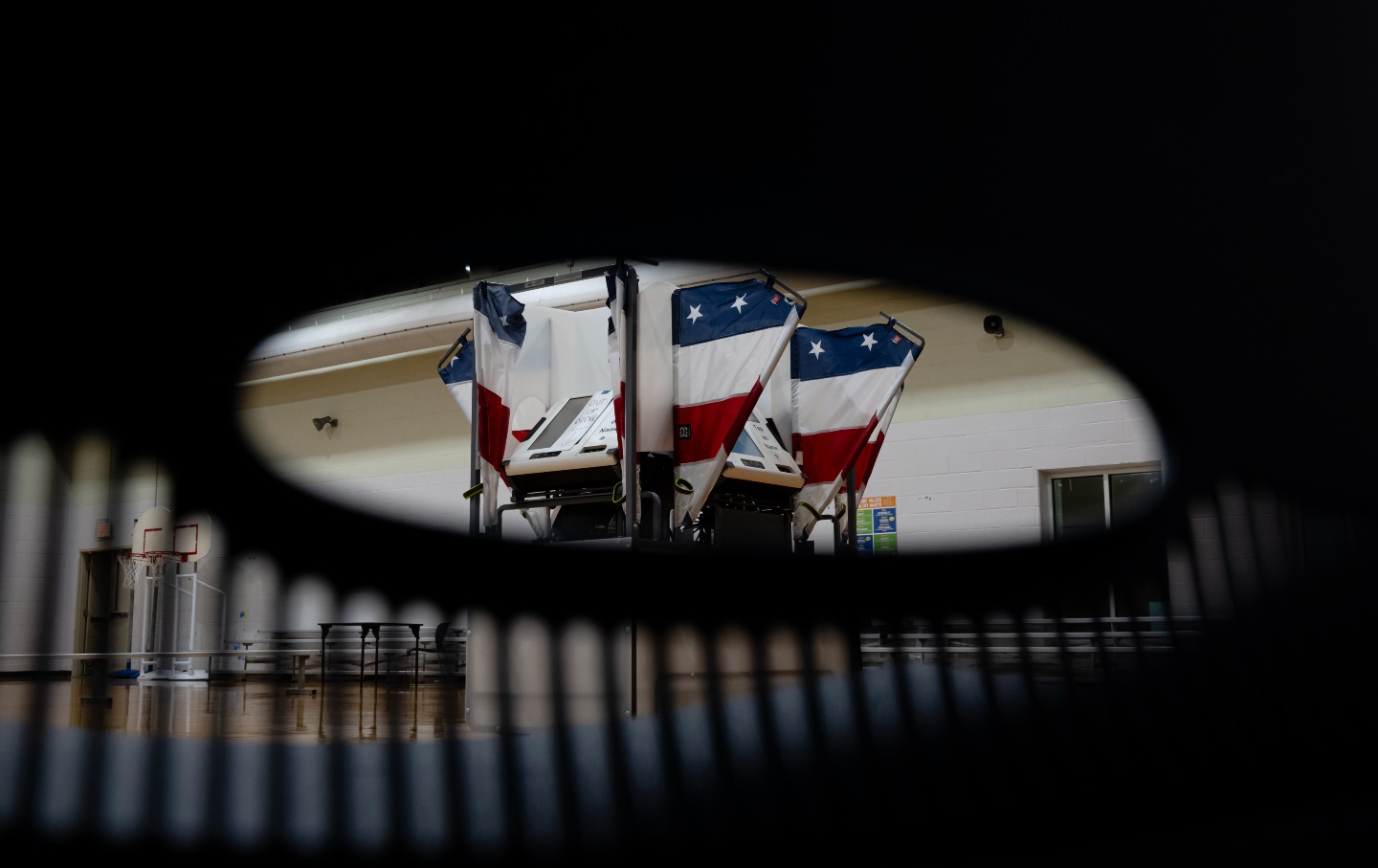
Earlier this month, the House passed the SAVE America Act, which threatens to block millions from voting in November. It’s just one salvo in a multipronged Republican effort to undermine the midterms and lay the groundwork for a new round of 2020-style election denialism should Democrats win Congress. From the flurry of Trump-instigated redistricting efforts to the new FCC guidance that spurred CBS to pull Stephen Colbert’s interview with Texas Senate hopeful James Talarico, Trump and his allies are using every tool at their disposal to depress turnout, intimidate voters, and unjustly tilt the electoral balance towards Republicans.
Last spring, election-denier Pam Bondi’s Department of Justice began requesting confidential voter registration data from states and jurisdictions around the country—and suing those that refuse to comply. The information the agency collects is being shared with the Department of Homeland Security, which has launched its own effort to investigate naturalized Americans accused of voting before gaining their citizenship. And, shortly after January’s Fulton County FBI raid, Trump called for Republicans to “nationalize the voting,” though the Constitution he vowed to preserve, protect, and defend gives the executive branch no authority to manage elections.
If approved by the Senate, the SAVE America Act could be this administration’s most devastating blow yet to voter participation. The bill would require states to share their voter data with DHS, along with forcing Americans to furnish a photo ID at the polls and produce proof of citizenship before registering to vote. This is despite the fact that Trump’s own profoundly compromised Justice Department claims it has identified only 10,000 noncitizens on the rolls after examining nearly 50 million registrations. Under the guise of preventing hypothetical ballot-casting by .02 percent of the enrolled voter base, then, 21 million Americans who lack immediate access to their birth certificate or a passport could lose the franchise.
In this attempt to shrink the electorate, Trump and congressional Republicans are using the levers of democratic governance to undermine democracy itself—a strategy sometimes referred to as stealth authoritarianism. It’s practiced by despotic regimes like that of Hungary’s Viktor Orbán, who reshaped his country’s electoral system to hamstring his opponents. Naturally, he has few more devoted fans than our president, whose administration is bear-hugging Orbán in the lead-up to another technically free yet profoundly unfair Hungarian election.
As our own midterms approach, Americans cannot be sure that Trump will restrict himself to procedural manipulations. He has expressed regret that he did not order the military to seize voting machines after his 2020 loss, and could very well decide to use this cycle to make up for lost time. Even more likely, however, are tactics at the margins designed to intimidate voters and disrupt proceedings. Arizona Republicans are seeking to station ICE agents at polling sites, while their Indiana counterparts want to truncate the state’s early voting period, and the Republican National Committee pushes to restrict the counting of mail-in ballots.
The SAVE America Act at least faces an uncertain path to the Resolute Desk, as Senate Republicans lack the 60 votes needed to overcome a Democratic filibuster. And despite the right’s myriad efforts to stack the deck in its favor, Americans could still deliver Democrats a November victory so resounding that cries of election rigging will ring obviously hollow. Only a year into his term, the president has already lost considerable ground with the Black and Hispanic voters who helped secure his most recent victory, and states from New York to California are implementing measures designed to fortify their elections against outside interference.
Still, a rout is by no means assured. Democrats have been sounding the alarm on Trump’s authoritarian tendencies ever since his glide down the golden escalator, but calls to save American democracy have failed to resonate amid an affordability crisis that finds families nationwide struggling to contend with the ever-inflating cost of food and housing. So, in a savvy democracy strategy, progressives would be wise to fuse Trump’s threats to the integrity of our system of governance with a bold case for their ability to lift the middle class out of despondency.
During his 1984 presidential run, the late Jesse Jackson credited Ronald Reagan’s 1980 win not solely to his persuasion of Democrats and independents but also to the large numbers of demoralized young, poor, and minority voters who sat out the election altogether. These were the people Jackson claimed as his constituency, ”the desperate, the damned, the disinherited, the disrespected, and the despised.” Their absence at the polls had handed Reagan the precedency, Jackson argued, a victory delivered “by the margin of despair.”
By suppressing the vote and intimidating their opponents, Republicans are attempting to engineer a 2026 win by the same margin. To counter this, we might take inspiration from Jackson’s lifetime of public service. Defeating the right in November will require a broad mobilization that bridges divisions of faith, race, and class—a rainbow coalition.