Meet Seattle’s New Mayor, Katie Wilson
Her victory was won by the precariat: renters, transit riders, and democratic socialists who rallied, rang doorbells, created social media, and registered new voters.
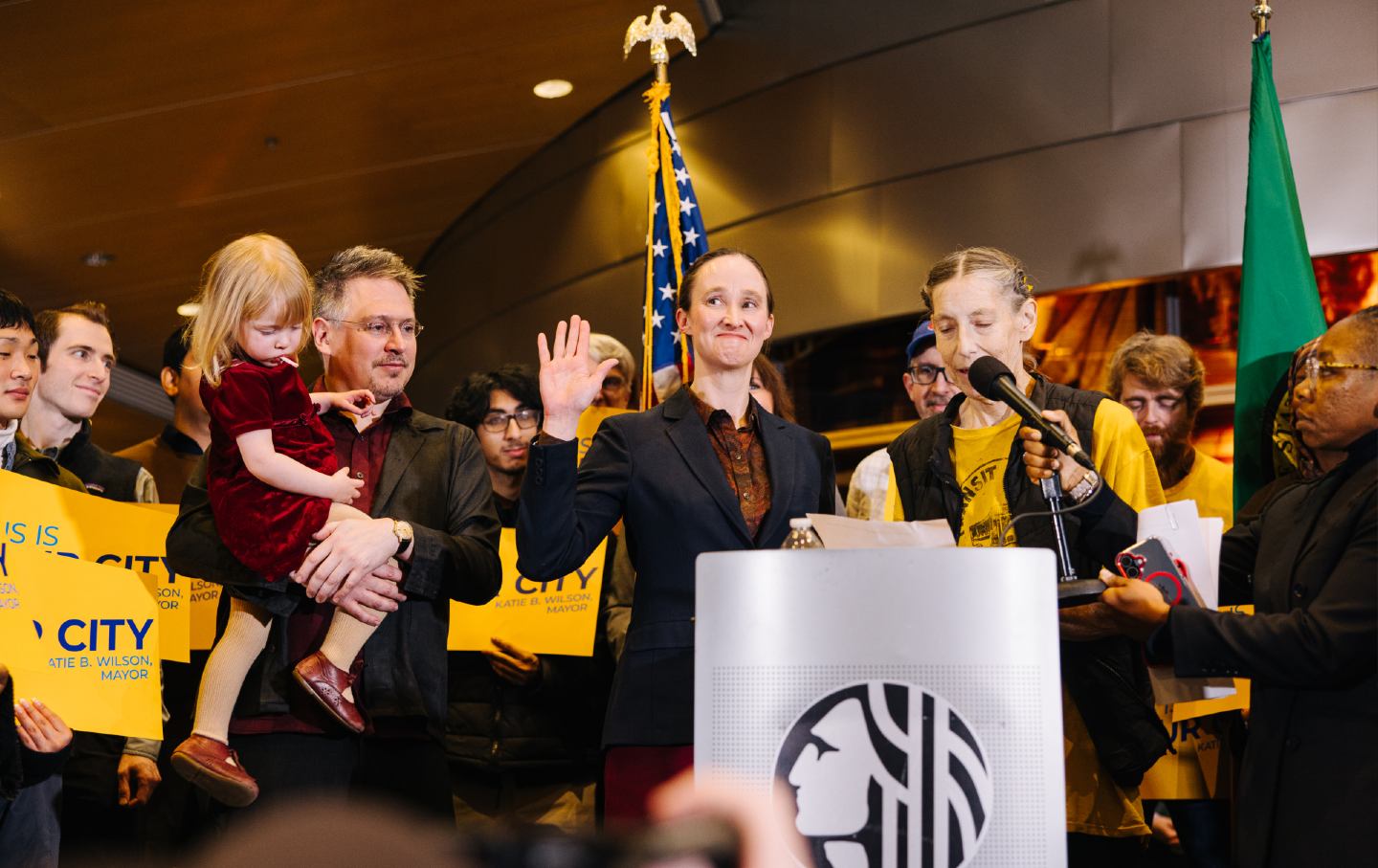
A day after Zohran Mamdani’s inauguration, 3,000 miles west of New York, the people of Seattle celebrated their own democratic socialist miracle, swearing in Mayor Katie Wilson. Katie beat the odds in unseating a powerful incumbent with an agenda rooted in equity and an authenticity that appealed to the city’s most precarious voters.
I was lucky enough to be among the speakers at Wilson’s inauguration, which, unlike Mamdani’s, was purposefully not star-studded. There were very few suits. Mayor Wilson’s clothes were purchased at Goodwill. One thousand Seattleites crowded into City Hall, hundreds of whom had never thought of it as their home. Along with me, Katie invited three speakers who presented a mosaic of hope: a Somali American graduate student, a formerly homeless man, and an elder who reminded us over and over again to be courageous and not content.
While Zohran was sworn in by Senator Bernie Sanders, Katie was sworn in by Pauline Van Senus, a low-income transit rider known as Seattle’s “transit fairy” for cleaning bus stops throughout the city.
Katie’s victory was won by the precariat: renters, transit riders, and democratic socialists who rallied around Katie, rang doorbells for her, created dominant social media, and registered new voters.
These are not the recognized power brokers of Seattle, but Katie’s win shows they can mobilize and inspire the grassroots to elect a mayor who embraces working-class values and policy that will enable residents to thrive—including affordable childcare, transit, and housing.
Now the challenge Katie faces is to universalize childcare and social housing. In previous decades, progressives have tried to create progress with incremental victories in an overwhelmingly powerful corporate context. I know this work firsthand as a longtime advocate for progressive economic policy. I’ve seen the pitfalls of this approach. It is time for fundamental, systemic, and universal progress for Seattle. Katie can bring it.
It won’t be easy, as the Trump administration and Congress are stripping funding from social services such as childcare and healthcare. Though Seattle has the means to fund these social goods, we are about to find out if our leaders have the political gumption to tax the oligarchs, the affluent, and the global corporations headquartered in Seattle, including Amazon and Starbucks.
Katie has never shied away from confronting corporate power. Her first stop after the election was at a Starbucks picket line, where she proclaimed, “I’m not buying Starbucks and you should not either.” It’s not just lip service: Katie originated the JumpStart tax on large corporations.
With the election of three progressives, she now has allies on the City Council. She has built a grassroots movement that could be engaged in initiative campaigns if the City Council refuses to act. That’s how we may end up building our city. As Katie’s swearing-in ceremony demonstrated beautifully, Seattle’s new mayor has built a coalition of community organizations, workers, activists, immigrants, Democrats, socialists, childcare workers, and small businesses to win her election. Now that coalition must be plugged into actual policy advancement.
Katie’s platform is about more than creating a thriving economic community. It’s also about setting the conditions that allow everyday people to enjoy the simple pleasures of life—to walk in a park, to have time to read a book. Watching Mamdani’s swearing-in from Seattle, I was moved to tears as Lucy Dacus sang “Bread and Roses.” In Seattle, Katie, echoing these lyrics, affirmed that we must open up “the time and space where life happens, where people can breathe and experience and create, where we can be full human beings and not just means to an end.… Because we need bread, but we need roses too. We deserve roses.”