
How Rob Reiner Tipped the Balance Against Donald Trump
Trump’s crude disdain for the slain filmmaker was undoubtedly rooted in the fact that Reiner so ably used his talents to help dethrone him in 2020.
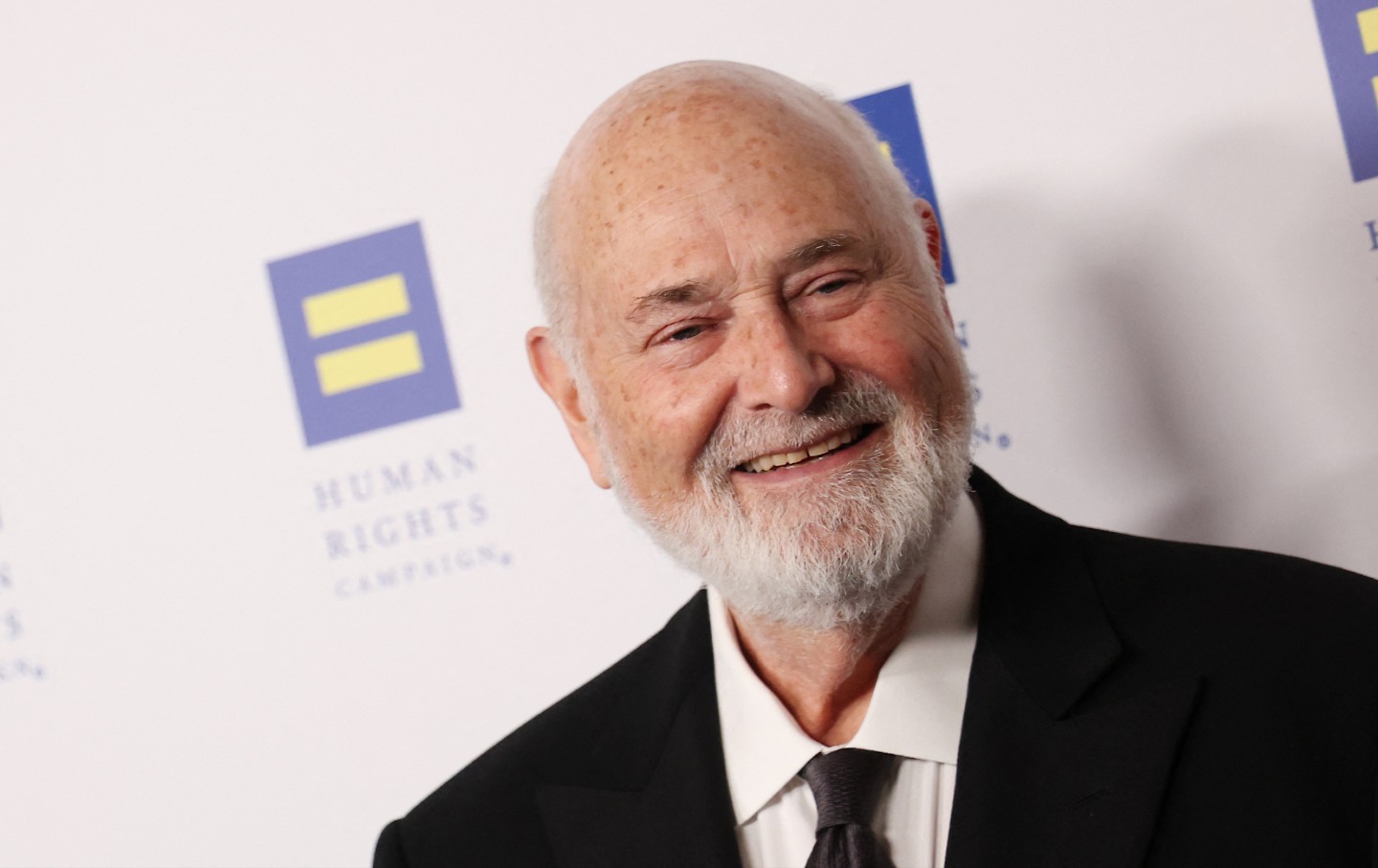
Rob Reiner attends the Human Rights Campaign’s 2025 LA Dinner at the Fairmont Century Plaza in Los Angeles, March 22, 2025.
(Michael Tran / AFP via Getty Images)In the fall of 2020, at a point when Republican Donald Trump and Democrat Joe Biden were locked in their high-stakes competition for the presidency of the United States, Wisconsin ranked as the ultimate battleground state. It had backed Democrats in presidential elections from 1988 to 2012, and then—by just 22,748 votes—supported Trump in 2016. If the Republican president could be beaten in Wisconsin in 2020, state Democratic Party chair Ben Wikler argued, along with many others, there was a good chance that the national electoral balance would be tipped toward Biden.
Wikler pulled out all the stops to achieve this result, and he had help from an unexpected ally: filmmaker Rob Reiner. The Hollywood director became a central figure in what Wikler recalls as “the biggest state party fundraiser, as far as I know, in American history.” That event, a dramatic reading of the script from Reiner’s highly regarded film The Princess Bride, was streamed online, attracted 142,000 viewers, and stirred the energy of grassroots activists at a critical stage in an ultimately successful campaign.
Reiner, who was renowned for his work as a director, screenwriter, and actor, was found dead Sunday, along with his wife, Michele, in the couple’s Los Angeles home, after what police described as an apparent homicide.
Reiner was, of course, remembered for his remarkable accomplishments over six decades in Hollywood. But he was also recalled as a lifelong progressive activist. After decades of campaigning for liberal candidates and causes—particularly LGBTQ+ rights and access to education—he had emerged in recent years as an outspoken and consistent critic of Trump, describing the reality-TV star turned politician as an authoritarian who “wants to destroy the constitution, go after his political enemies and turn America into an autocracy.” While Reiner’s critique was well regarded by civil libertarians and historians of the American experiment, it drew the ire of Trump, who on Monday lashed out at the director—claiming that he had suffered from a “massive, unyielding, and incurable affliction with a mind crippling disease known as TRUMP DERANGEMENT SYNDROME.”
The president’s crude attack was decried not just by Democrats but also by a number of Republicans. Trump’s self-absorbed assessment of a genuinely beloved figure in the entertainment industry was offensive. But so too was the fact that the embattled president overlooked Reiner’s decades-long history of advocating for the constitutional system of checks and balances and for democracy.
“I think Rob Reiner felt, to his core, that the light of democracy was the thing that made every other kind of progress possible. And he knew that it was in danger,” recalled Wikler on Monday. “He’d been involved in the fight for democracy throughout his life, but especially since Trump came in. That was the motivation for everyone he pulled into the Princess Bride event—a sense that if all of us didn’t do everything we could, then the light might go out. We needed to keep it alive.”
Working with Reiner on the September 2020 event brought together the personal and political sides of Wikler’s life.
“The Princess Bride is my favorite movie in the world. It’s really affected my life,” explained the now-former party chair, who is currently writing a much-anticipated book on his political experiences. “And I think that what I loved about that movie, and about so much of Rob Reiner’s work, and his life, is that it had such a soul. The humor and warmth were there, but his work also had depth. Both his work and the spirit that informed his activism can teach us all something about how to live a life.”
Reiner directed and produced The Princess Bride in 1987, with a cast that included actors Mandy Patinkin, Chris Sarandon, Christopher Guest, Wallace Shawn, Billy Crystal, Robin Wright, Carol Kane, and, in the scene-stealing role of Westley, Cary Elwes.
After Wikler and the Wisconsin Democrats pulled off a successful summer 2020 benefit that reunited cast members of the politically engaged TV drama The West Wing, Elwes reached out to the party chair through a mutual friend. That connection led to a discussion of whether a Princess Bride reunion might be organized to support Wisconsin Democrats.
Reiner’s commitment was essential. And, of course, he was all in. Wikler had met Reiner in the early 2000s, when the Wisconsinite worked with Al Franken, the comedian and author who would eventually serve as Minnesota’s US senator. In 2020, the director of This Is Spinal Tap (1984), Stand by Me (1986), When Harry Met Sally…. (1989), Misery (1990), A Few Good Men (1992), and The American President (1995), among other major motion pictures, threw himself into the Wisconsin project—working with Wikler to pull together original cast members for a live dramatic reading of the Princess Bride script.
“Rob Reiner’s genius for assembling people to do amazing things was on full display with the Princess Bride fundraiser,” said Wikler. “He got all these actors from all over the country—some of whom had no idea how to use Zoom—to get in front of the cameras and to play their roles with every bit of the vigor and energy that they brought to their original performances.”
Popular
“swipe left below to view more authors”Swipe →On September 13, 2020, Reiner joined the crew for a Zoom performance that was covered by The New York Times, Rolling Stone, and other media outlets as one of the major events of the campaign season. The performance raised in excess of $4.25 million for the state party. It also energized grassroots activists who, in November of that year, narrowly delivered the state and—with wins in other battlegrounds—the presidency to Biden.
For his part, Reiner remained politically engaged, especially after Trump returned to the White House this year.
“I actually had a couple calls with him over the last month. He was dreaming up a huge get-out-the-vote operation for the 2026 midterm elections,” Wikler said Monday. “Rob Reiner had serious politics. He was tuned into the details, as well as the big picture. He wasn’t just pontificating or writing a check. He was thinking about what he and his community could do to make a real difference in people’s lives.”
Become a Sustaining Donor This September
Between the reemergence of right-wing red-baiting and Donald Trump’s use of the chilling National Security Presidential Memorandum–7 to criminalize left political organizing, we’re seeing McCarthyism reborn before our eyes.
This assault on democracy cannot be ignored or wished away. Resisting it requires bravery in the face of threats and repression, a steadfast commitment to the truth, and the unwavering belief that we can—and will—overcome this darkness.
We must have an independent media that sets the record straight, unearths corruption and abuses of power, and advances a politics of justice and dignity for all if we’re to win this fight.
That’s why I’m writing to you today. This September, The Nation needs to add 100 monthly donors to sustain our progressive journalism. Your contribution makes the next investigative report, the next truth-speaking column, and the next pathbreaking essay all possible.
I hope you’ll support our work with a recurring donation today. If you donate $10 or more a month, we’ll send you a brand new “Hands Off the Free Press!” sticker to recognise your commitment to our cause. Please, donate today.
Onward,
Katrina vanden Heuvel
Editor and Publisher, The Nation
More from The Nation

The US Had a Choice After 9/11. It Chose Wrong. The US Had a Choice After 9/11. It Chose Wrong.
In this week’s Elie v. U.S., our justice correspondent reflects on September 11. Plus: the stupidity of the "Trump Dividend" and the threat of AI.


Trump Wants Voters to Pretend He’s on the Ballot Trump Wants Voters to Pretend He’s on the Ballot
But Republican midterm candidates are hoping everyone forgets he exists.

Remembrance: 25 Years Since the September 11 Attacks Remembrance: 25 Years Since the September 11 Attacks
On September 11, 2001, coordinated terrorist attacks carried out by the extremist group al-Qaeda killed 2,977 people and injured more than 6,000 others in the United States.

How The Nation Covered 9/11 How "The Nation" Covered 9/11
Our phone lines were down. People were weeping. But we got an issue out the door with morality, justice, and nuance.

How a 26-Year-Old Beat a 42-Year Incumbent—and What It Means for Democrats How a 26-Year-Old Beat a 42-Year Incumbent—and What It Means for Democrats
As the only undergraduate managing a primary campaign in the state, I helped a 26-year-old beat a 42-year incumbent. Here is what Democrats can learn from our win.

