
The GOP’s Bloated Pentagon Budget Is Indefensible
The House just approved $892.6 billion in military spending—continuing the march toward $1 trillion defense budgets.
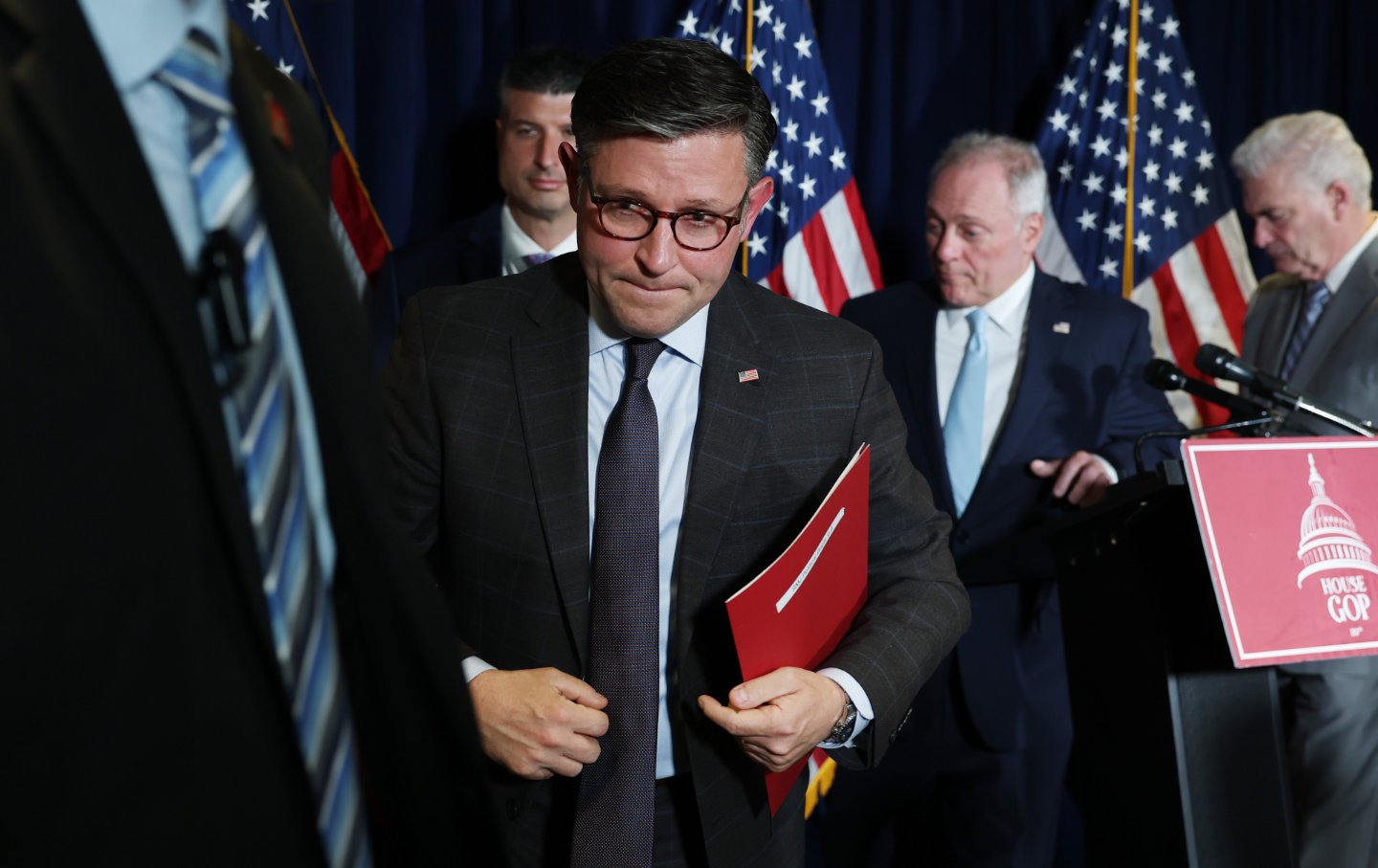
Speaker of the House Mike Johnson (R-LA) departs after a press conference on Capitol Hill on September 9, 2025
(Anna Moneymaker / Getty Images)Federal budgets, we are told, should be read as moral statements that reflect the values of congressional majorities. So what was the statement this week from the Republican-controlled US House of Representatives? That the overwhelming majority of House Republicans, along with a handful of wrongheaded Democrats, are prepared to hand the military-industrial complex everything it demands, while denying hungry children the food that could so easily be provided to them.
On Wednesday, the same politicians who decided nearly two months ago to slash funding for Medicaid and the Supplemental Nutritional Assistance Program voted to authorize a staggering $892.6 billion in military spending. Vast amounts of that money will go to politically connected corporate contractors that the Quincy Institute for Responsible Statecraft accurately describes as reaping “the profits of war”—and they can count on even fatter paychecks down the line as the ever-expanding Pentagon budget barrels toward the $1 trillion mark.
“A small fraction of that money would keep every child out of poverty,” said US Representative Mark Pocan, the Wisconsin Democrat who, with former US Representative Barbara Lee (D-CA), founded the Defense Spending Reduction Caucus and has been a leading advocate for cutting the Pentagon budget.
Pocan was one of 192 Democrats and four Republicans who voted against the House’s National Defense Authorization Act proposal—versus 214 Republicans and 17 Democrats who voted “yes.” (You can see the final 231–196 roll call here. Credit to the Republicans who voted “no,” even if they may not all have done so for the right reasons. Shame on the Democrats who voted “yes,” as united opposition might well have upended the process and permitted the real debate over defense spending that is so desperately needed.)
True, the new NDAA contains an amendment that seeks to end a pair of Authorizations of the Use of Military Force that, since the early 2000s, have been used as excuses for presidents to bypass Congress when launching military actions. That represents a commendable victory after decades of advocacy by Lee, Pocan, US Representative Jim McGovern, and others who have sought to curtail executive overreach.
But the bill also contains a litany of anti-LGBTQ+ initiatives and other bows toward the hard-right on social policy that Representative Mark Takano, the California Democrat who chairs the Congressional Equality Caucus, decried in a statement that declared:“The National Defense Authorization Act has traditionally received strong bipartisan support, yet for the second Congress in a row House Republicans have tainted a bill aimed at improving the lives of servicemembers with poison-pill riders that threaten our troops’ rights, their families’ stability, and our efforts to retain top talent. Republicans’ sacrifice of a strong bipartisan vote for a politicized NDAA to appease the Trump Administration and a small slice of their base cannot undo the sacrifice of the transgender servicemembers, cadets, or military dependents that will be hurt by this bill. Congress should be fighting for those who fight for us—but it’s clear the GOP has other priorities. I will keep fighting to prevent the harmful provisions in this bill from becoming law.”
Some of the worst aspects of the NDAA may be removed after the measure is considered by the US Senate. But, at its core, this bad bill represents a blank check for unaccountable spending by the Pentagon, and it was authorized by a House majority that, as McGovern suggests, has lost both its sense of proportion and its moral compass.
“The excessive military spending, and in many cases just grossly wasteful military spending, has not improved the quality of life for the vast majority of people in this country,” says McGovern. “The fact that we have 40 million people who don’t know where their next meal is coming from, I find offensive. We need people to rise up and say: Your priorities are all screwed up, Congress!”
That call to action may be dismissed by pundits, political insiders, and corporate lobbyists as simply the outrage of a progressive Democrat. But McGovern’s sentiments were anticipated decades ago by a Republican president.
Dwight Eisenhower warned in a 1953 speech to newspaper editors of “a burden of arms draining the wealth and the labor of all peoples.” A career military leader who had served as the supreme commander of the Allied Expeditionary Forces in Europe during World War II, and as the chief of staff of the Army at the beginning of the Cold War, Eisenhower recognized that the United States faced military threats. Yet he refused to suggest that increased defense spending should be a singular priority. Rather, in his 1953 speech—one of the first major statements of his presidency—he spoke of the “dread road” of constant military escalation and warned about “a wasting of strength that defies the American system or the Soviet system or any system to achieve true abundance and happiness for the peoples of this earth.”
“Every gun that is made, every warship launched, every rocket fired signifies, in the final sense, a theft from those who hunger and are not fed, those who are cold and are not clothed,” said Eisenhower, adding:
This world in arms is not spending money alone.
It is spending the sweat of its laborers, the genius of its scientists, the hopes of its children.
The cost of one modern heavy bomber is this: a modern brick school in more than 30 cities.
It is two electric power plants, each serving a town of 60,000 population.
It is two fine, fully equipped hospitals.
It is some 50 miles of concrete highway.
We pay for a single fighter with a half million bushels of wheat.
We pay for a single destroyer with new homes that could have housed more than 8,000 people…
“This is not a way of life at all, in any true sense,” explained Eisenhower. “Under the cloud of threatening war, it is humanity hanging from a cross of iron.”
The 34th president proposed a wiser balance that respected the need for investments in human uplift and social progress. “The monuments to this new kind of war would be these: roads and schools, hospitals and homes, food and health,” he concluded. “We are ready, in short, to dedicate our strength to serving the needs, rather than the fears, of the world.”
Eisenhower is long gone. But today’s United States could use more of his wisdom, in the White House and in Congress.
Popular
“swipe left below to view more authors”Swipe →Become a Sustaining Donor This September
Between the reemergence of right-wing red-baiting and Donald Trump’s use of the chilling National Security Presidential Memorandum–7 to criminalize left political organizing, we’re seeing McCarthyism reborn before our eyes.
This assault on democracy cannot be ignored or wished away. Resisting it requires bravery in the face of threats and repression, a steadfast commitment to the truth, and the unwavering belief that we can—and will—overcome this darkness.
We must have an independent media that sets the record straight, unearths corruption and abuses of power, and advances a politics of justice and dignity for all if we’re to win this fight.
That’s why I’m writing to you today. This September, The Nation needs to add 100 monthly donors to sustain our progressive journalism. Your contribution makes the next investigative report, the next truth-speaking column, and the next pathbreaking essay all possible.
I hope you’ll support our work with a recurring donation today. If you donate $10 or more a month, we’ll send you a brand new “Hands Off the Free Press!” sticker to recognise your commitment to our cause. Please, donate today.
Onward,
Katrina vanden Heuvel
Editor and Publisher, The Nation
More from The Nation

CEOs Are Losing Control of AI CEOs Are Losing Control of AI
With no slowdown from Trump’s administration.
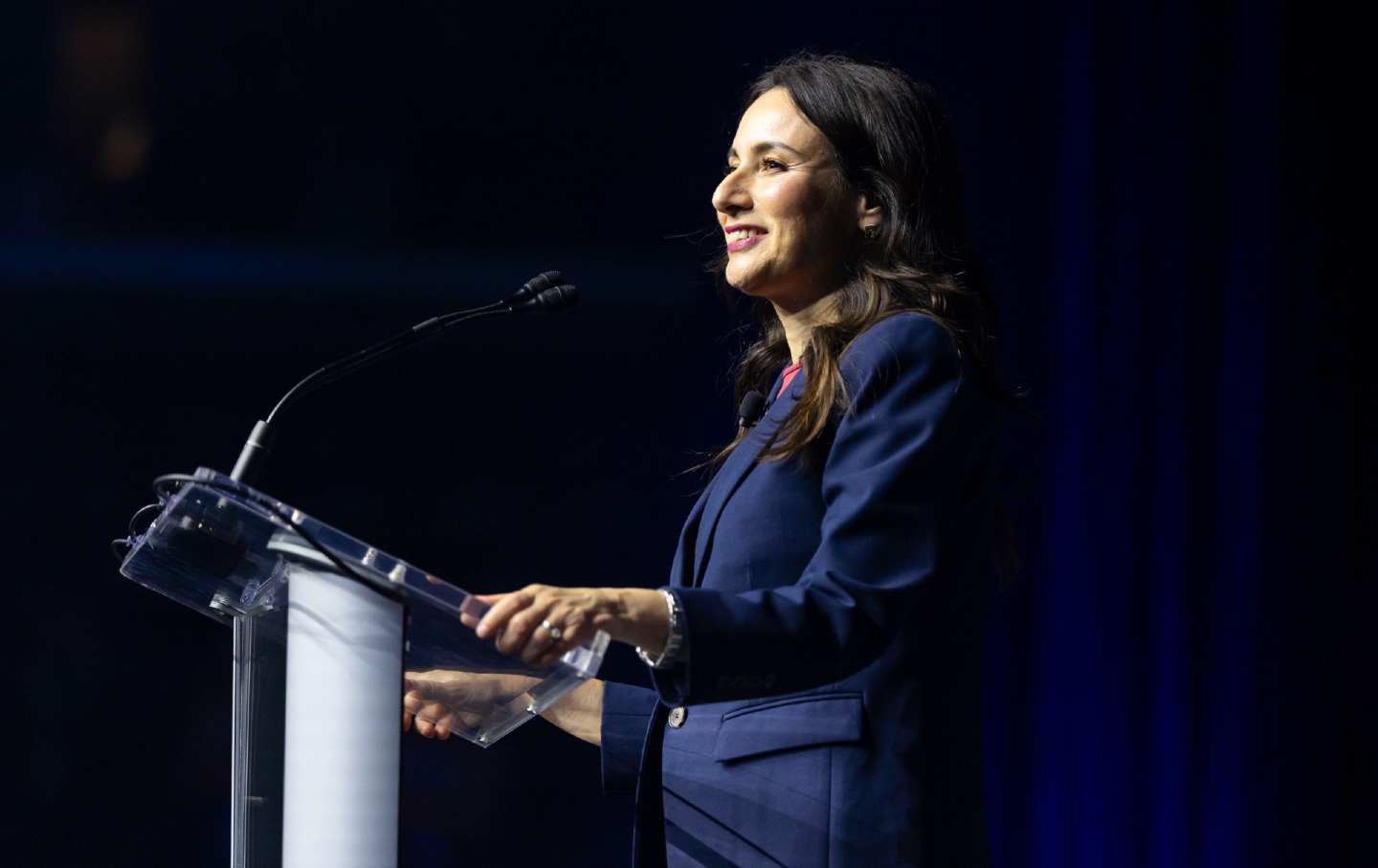
Gina Hinojosa: “We Flip Texas, and It’s Over” Gina Hinojosa: “We Flip Texas, and It’s Over”
Talking to Texas gubernatorial candidate Gina Hinojosa about what redistricting could mean and how a new generation of Democrats is speaking more directly to voters.
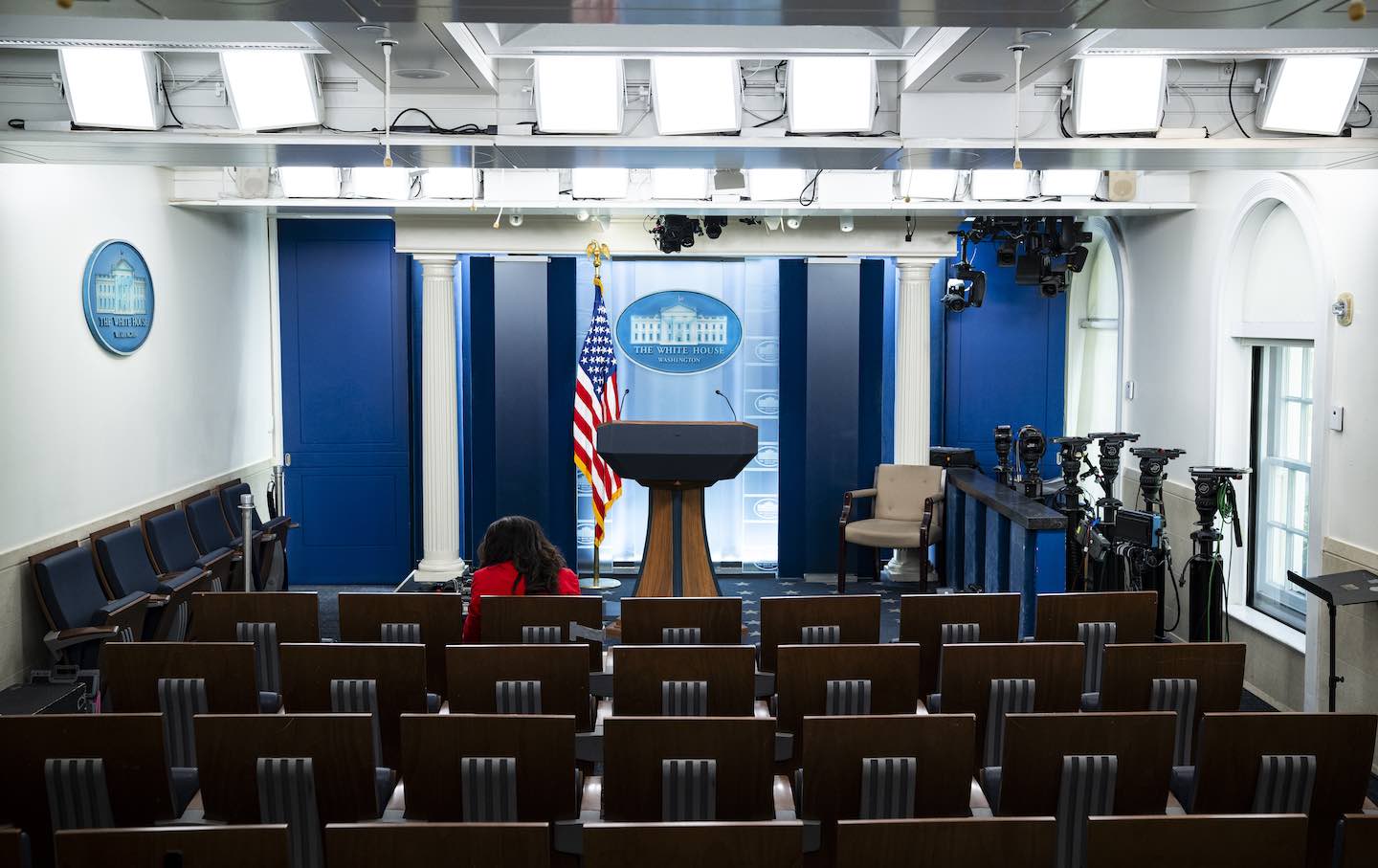
Trump Wants to Keep Journalists Out of the White House. He Should Get His Wish. Trump Wants to Keep Journalists Out of the White House. He Should Get His Wish.
The president has banned MS NOW, CNN, and Politico from attending press briefings. The rest of the media should respond with a boycott.
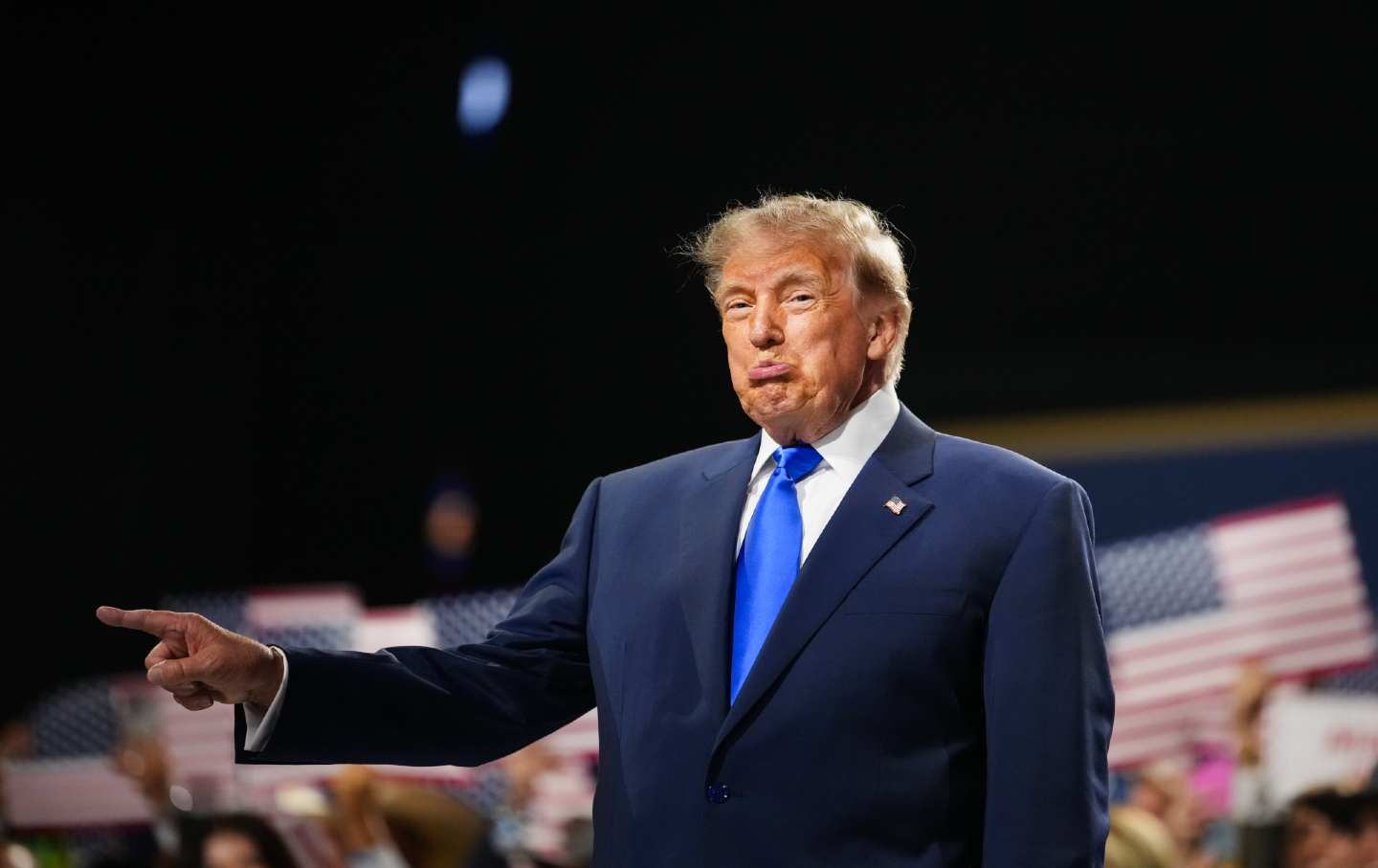
The GOP’s Incredible Shrinking Senate Map The GOP’s Incredible Shrinking Senate Map
Trump has so badly damaged the Republican Party’s brand that strategists are contemplating bitter fights—and losses—in races they’d been banking on as sure things.
Bernie Sanders: “People Are Sick and Tired of the Status Quo. People Want Change” Bernie Sanders: “People Are Sick and Tired of the Status Quo. People Want Change”
Exclusive: Read the text of a major foreign-policy address delivered by the independent senator at Riverside Church.

Even Republicans Are Figuring Out That Pete Hegseth Is a Disaster Even Republicans Are Figuring Out That Pete Hegseth Is a Disaster
Hegseth was always a horrible choice for defense secretary. At long last, some in the GOP are admitting it.

