
Why the UAW’s Shawn Fain Is So Excited About Nebraska Independent Dan Osborn
The union leader says that electing a genuinely working-class senator like Osborn could upend all of American politics.
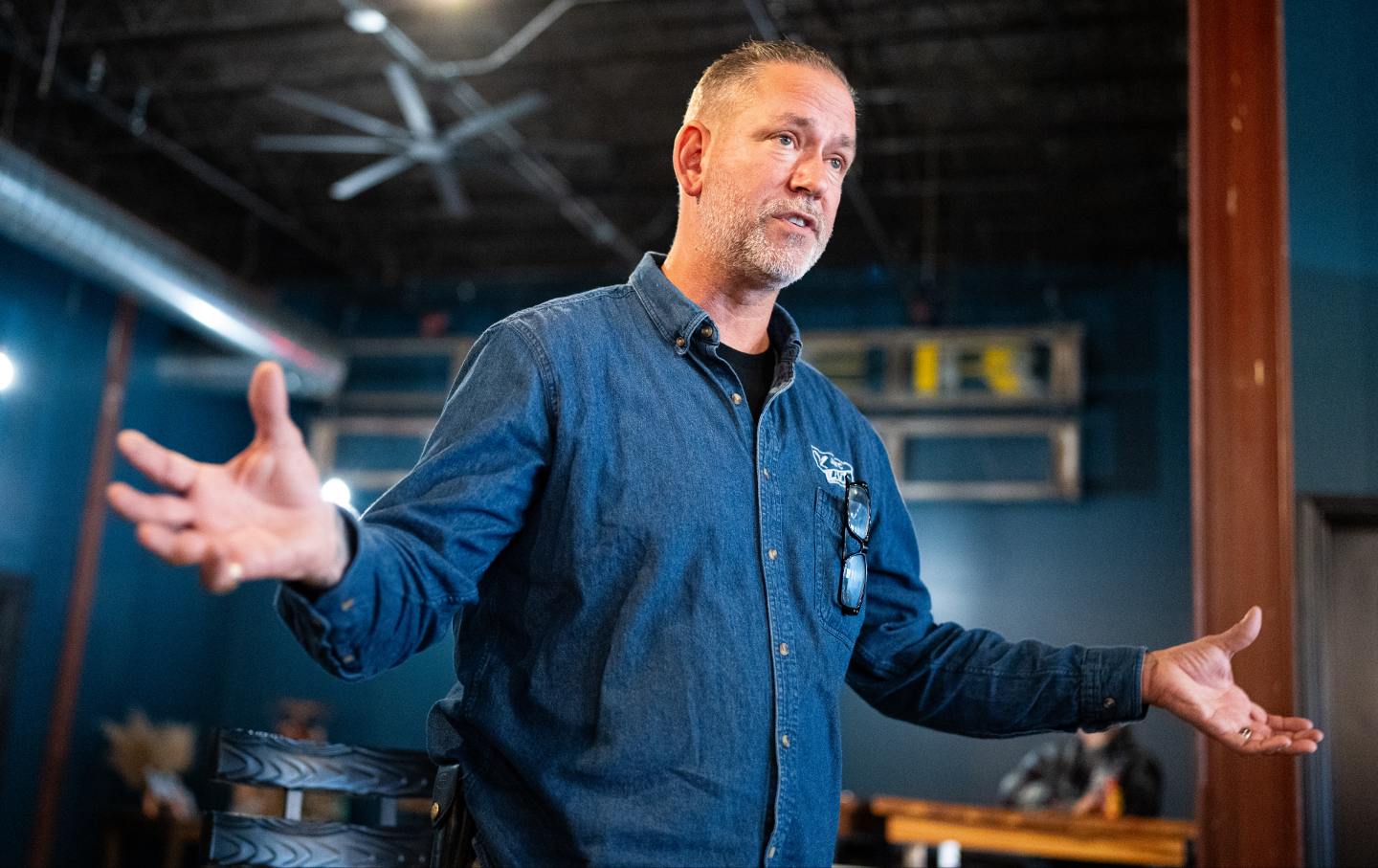
Independent Senate candidate Dan Osborn speaks during his campaign stop at the Handlebend coffeshop in O’Neill, Nebraska, on Monday, October 14, 2024.
(Bill Clark / CQ-Roll Call, Inc via Getty Images)
The US Senate, which was historically described as “the most exclusive club in the world,” is frequently decried these days as “a millionaire’s club,” which neglects the interests of working American in order to meet the demands of billionaire campaign donors and Wall Street insiders. The senators who bow to the billionaire class come from both parties. Indeed, while Democrats are more likely than Republicans to support unions and proposals for minimum-wage hikes, many Democrats have joined with Republicans to advance trade policies that have shuttered tens of thousands of factories, and more than a few shy away from populist calls to “tax the rich”—perhaps because so many are, themselves, wealthy beyond the wildest dreams of most Americans.
But what if the Senate had a member who rejected party ties and simply represented workers? What if that senator were a machinist who had served as a union leader and led an epic strike against corporate greed?
“I think it would be huge, and I think it would send notice to both parties that they better get on board with working-class people,” United Auto Workers president Shawn Fain told me recently. As the November 5 election approaches, Fain is pouring his energy into electing just such a candidate. In October, the labor leader, who rose to national prominence as the leader of last year’s successful UAW strike against the nation’s three major vehicle manufacturers, traveled to Nebraska to stump in union halls for independent Senate candidate Dan Osborn.
An industrial mechanic by trade who worked for the better part of two decades at the sprawling Kellogg plant in Omaha, Osborn served as president of Bakery, Confectionery, Tobacco Workers, and Grain Millers International Union Local 50G. In 2021, he and members of the local walked off the job in a 77-day strike against a two-wage tier system, as well as a host of other issues. The strike drew national attention and made Osborn something of a local hero—especially among working people who were fed up with corporate greed. Fired by Kellogg, Osborn became a boiler maintenance worker and joined Steamfitters and Plumbers Local 464 in Omaha.
This year, he is also the highest-profile independent candidate for the Senate—an outsider who is stirring things up in a suddenly competitive red-state contest.
“I haven’t always been political,” explained Osborn, when I followed his campaign in Nebraska earlier this year. He said he didn’t think a lot about campaigns and elections “until corporate greed came knocking on my door when I was president of BCTGM Local 50G.”
“During Covid, we were working seven days a week, 12 hours a day,” Osborn said. “At one point in time, 50 percent of our workforce was forced to quarantine and/or [was] sick, but we kept the plants running at full capacity. [Kellogg] made record profits that year — they went from $19 billion to $21 billion. The CEO gave himself a $2 million raise. The board enriched themselves, the stockholders enriched themselves, [but] at the same swipe of the pen, after they gave themselves a raise, they tried to take from their workers, so we went out on strike.”
Osborn and the union secured a contract after 77 days on the picket line. But Osborn said, “The experience really opened my eyes.… It changed who I was and how I saw my world.”
What he saw was a political class that too frequently failed workers, and a US senator from Nebraska, Republican Deb Fischer, with a long record of opposing worker rights and doing the bidding of Wall Street. Osborn could have run as a Democrat, or as a Republican primary challenger to Fischer. But he decided to campaign as an independent because that’s where his political instincts are. “I’m not going to change who I am,” he says. “I have to stay true to myself. If I don’t do that, then why am I doing this?”
What he’s doing instead is running a grassroots campaign that, as he put it, says, “Washington, DC, is broken, and we need somebody to fix it.” Partisans aren’t likely to do the job, he argues, “because they just have to get in line. I don’t want to get in line with anybody. I’ve never been good at that.”
Osborn tells crowds gathered in union halls and community centers that he wants to go to the Senate as a champion for stronger unions, higher wages, trade policies that favor workers and their communities, a better deal for working farmers and a pushback against corporate greed that will lead to “closing loopholes used by multi-nationals to avoid paying taxes.” That populist message has attracted Democrats and at least some Republicans. Both Bernie Sanders supporters and Donald Trump fans now show up at Osborn’s events. And he has been climbing in the polls. A late October survey for The New York Times put Fisher at 48 and Osborn at 46.
For observers of the brutal battle for control of the US Senate, which Democrats and their allies now hold by a narrow 51–49 margin, the prospect that Nebraska—a very red state that is all but certain to vote for Trump— might oust a Republican senator is big news. As Politico noted Friday, “If Dan Osborn, a populist independent, wins an upset victory in the Senate race here, it will be a humiliating blow to Republicans.” With Democrats all but certain to lose a seat in West Virginia, and in serious danger of losing one in Montana, Osborn could end up being the only senator standing in the way of a Republican majority. But the candidate, who is both pro-choice and a critic of at least some Democratic approaches to budgeting, says he’s not in a hurry to join the caucus of either party.
That makes a lot of political insiders nervous. The Democratic Senatorial Campaign Committee is not helping Osborn because the committee’s head, Michigan Senator Gary Peters, says the Nebraskan is “not a Democrat.” But Fain has no qualms about campaigning for Osborn. He views the Nebraska campaign as one of the most exciting political developments of 2024.
“Working-class people are what makes this country move, and what makes the world move. So we need to start electing people that come from those ranks, that understand what it means to live paycheck to paycheck, or to not have money at the end of the week, or to not have adequate health or retirement security,” says the UAW leader. “The majority of Americans are living that. So if we’re going to change things in this country, we have to elect people at all levels of government that understand those issues and are going to fight for those things.”
What delights Fain in particular is the prospect of sending a mechanic to fix what’s broken in Washington. “He’s a working-class person. That’s what this is all about,” the UAW president says. “It’s ironic that, over the years, because of this capitalist system, you always hear people talking about how, ‘Oh, this [candidate] is a businessperson.’ We’re always electing business people, and we see where that puts us. It puts us in a system of government where everything’s for sale, and where working-class people are left behind.”
So, argues Fain, why not elect a former union leader?
“When you are a union leader at a local level, national level, whatever it is, you are answering to people. You are representing a membership,” he says. “It’s no different from a congressperson, who is representing constituents. It’s the same thing, the same concept. Running a local union or a national union, you have so much money to work with, you have a budget. You manage people. You have to know the business end of those things. So, obviously, there are a lot of similarities. But, to me, the difference is that, when you’re a union leader, your fight is about bringing justice to working-class people and having decent wages, having healthcare, having retirement security, and getting more of your time for yourself—so that you don’t have to work all your time to live.”
Popular
“swipe left below to view more authors”Swipe →That, says Fain, is exactly the sort of experience that’s needed in the Senate.
More from The Nation
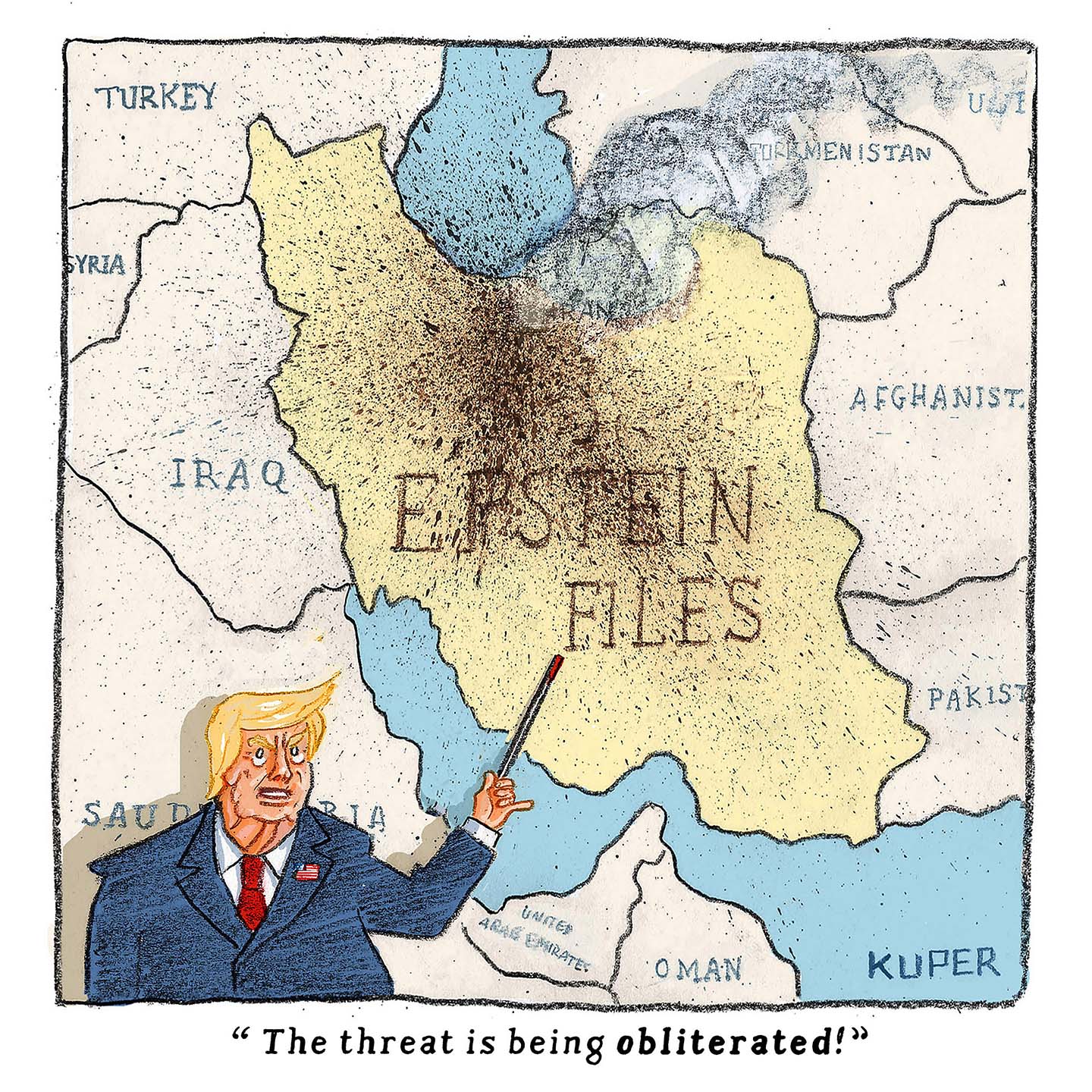
Trump’s Reason for War in Iran? Trump’s Reason for War in Iran?
Obliterating the Epstein files at any cost.
Why Can’t Top Democrats Just Say “No War With Iran”? Why Can’t Top Democrats Just Say “No War With Iran”?
The response to what could be the biggest geopolitical disaster of the 21st century is foot-dragging, silence, and sleepy, feigned opposition long after the deed is done.
This Is an Unnecessary, Unauthorized, and Unconstitutional War This Is an Unnecessary, Unauthorized, and Unconstitutional War
Congress has a duty to take up War Powers resolutions and assert its primacy over matters of war and peace.
Will There Be Justice for Survivors? Will There Be Justice for Survivors?
The Epstein files have renewed scrutiny of alleged misconduct by powerful figures, including Donald Trump and Prince Andrew, raising ongoing questions about accountability and just...
New York City Hospitals Fold to Trump. Will Zohran Mamdani Defend Trans Care? New York City Hospitals Fold to Trump. Will Zohran Mamdani Defend Trans Care?
As a candidate, Zohran Mamdani made promises to New York City’s trans community. With two hospital systems ending trans youth care, he’s now facing his first test.

This Minnesota Winter Is the New Prague Spring This Minnesota Winter Is the New Prague Spring
I’ve studied Czechoslovakia in 1968. I live in Minneapolis. The similarities between the historic invasion and the current ICE “surge” are scary.

