
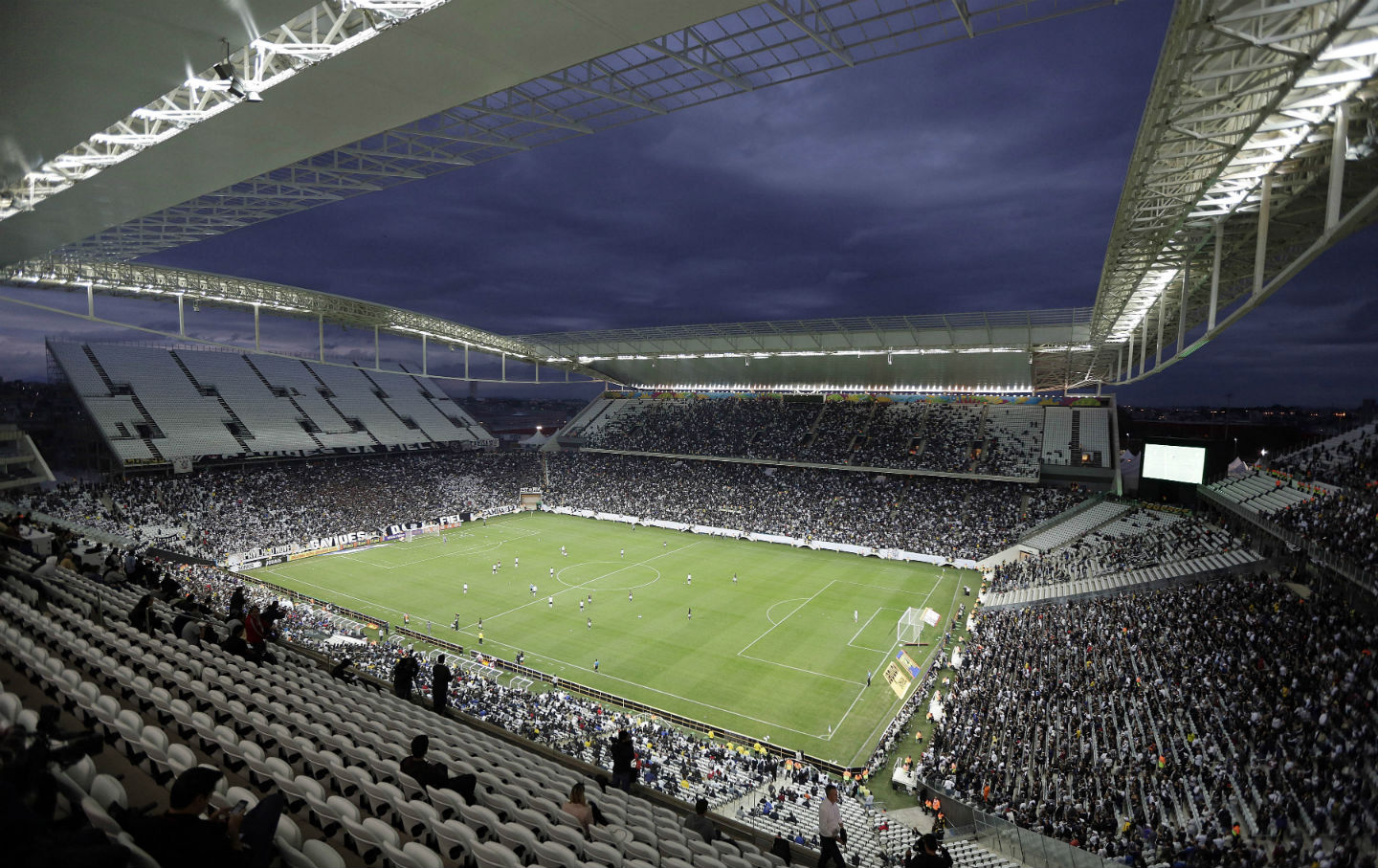
Having a Wedding? A Sweet 16? Consider One of Brazil’s World Cup Stadiums! Having a Wedding? A Sweet 16? Consider One of Brazil’s World Cup Stadiums!
Who could have predicted that Brazil’s World Cup buildup would have disastrous results—other than everyone not financially vested in its success?
May 19, 2015 / Dave Zirin
Letters Letters
The 9-to-5 dream; the root of all good and evil; praise for a poet of fact…
May 19, 2015 / Our Readers
Puzzle No. 3364 Puzzle No. 3364
Click HERE to download a printable PDF of this puzzle. ACROSS 1 Right and left (found in office tent) are scrambled, having given it some thought (5,10) 9 Lustrous blaze I give off (9) 10 Tooth 1A in 29 would be good (5) 11 Officer 1A in 29 would be a forensic professional (7) 12 What God supposedly did 1A in 29 would be like an athlete’s shoe (7) 13 Dances 1A in 29 would be lascivious glances (5) 15 Almost overdue, by way of a European country (6) 19 Pole, for instance, spun around that thing’s innards (6) 20 Baseball requirement 1A in 29 would be wood (5) 23 Backward movement 1A in 29 would be missing limbs (7) 25 Legal proceedings 1A in 29 would be shows (7) 27 Expression of displeasure 1A in 29 would be sent by air (5) 28 “Typify zip!” I emote foolishly (9) 29 Thankless gigolo shattered Carroll’s mirror (3,7,5) DOWN 1 Tuna and cobra stewed in beer (8) 2 Plowman catching home run? That’s exciting (8) 3 Authority’s downfall is pronounced (5) 4 Meaningless repetition confused Alice when adopting Spanish greeting (9) 5 In Honolulu, dickering is playful (5) 6 On the way to accommodate favorite in contention (9) 7 Listen: Enlist silent tinsel to provide four ways to supply what you need to make bays (6) 8 Maneuver under a Nobel-winning poet (6) 14 Easily enter cunning racket (also on the phone) (5,4) 16 Satan: “I’m an eccentric, like many devils” (9) 17 Somalian touched up a painting (4,4) 18 Bits of ears, some used more than once? Think again (8) 21 Gain is anti-inappropriate? (6) 22 Pay no attention to contents of sign or evidence (6) 24 Move mountains bottom to the top, say (5) 26 Carry trail mix up, taking north fork (5) SOLUTION TO PUZZLE NO. 3363 ACROSS 1 ARCH(R)IVAL 6 hidden 9 letter bank 10 DOCK + ET 11 anag. 12 SEED + O + UBLE (anag.) 14 BEN + D 16 init. letters 18 AUSTER + [p]ITY 21 MISS + POKE 22 NUN C.I.O. 25 AT THE LAST + MINUTE 26 HI + RED 27 DAM + A SCENE DOWN 1 A(WAR)D 2 CUTI(CL)E 3 anag. 4 anag. 5 anag. 6 LE(ANT)O 7 GR(IMAC)E 8 CANA(DAD)RY 12 S(TEAM + BAT)H 13 B(LACK + H)AND 15 BE(AU + TI)ES 16 VI + SITOR (rev.) 19 “ink, lewd” 20 S + P + READ 23 phonetic hidden 24 A + TOM
May 19, 2015 / Joshua Kosman and Henri Picciotto

What’s Wrong With the Federal Death Penalty What’s Wrong With the Federal Death Penalty
Dzhokhar Tsarnaev was sentenced to death by a federal jury in a state that firmly repudiates capital punishment.
May 19, 2015 / Bruce Shapiro
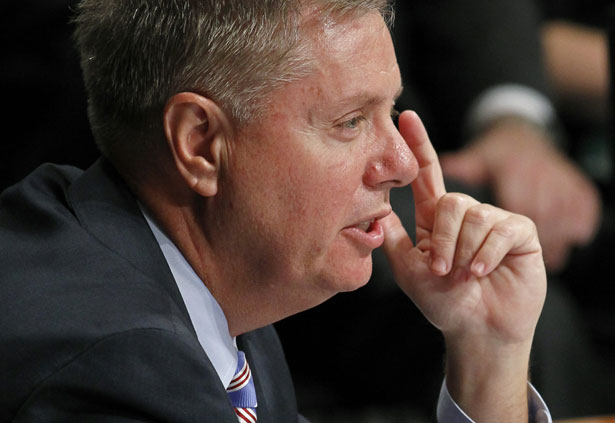
‘I’m Going to Call a Drone and…Kill You’ and 9 Other Insane Things Lindsey Graham Has Said ‘I’m Going to Call a Drone and…Kill You’ and 9 Other Insane Things Lindsey Graham Has Said
The fear-mongering senator from South Carolina is expected to announce his bid for the GOP nomination in June.
May 19, 2015 / Zoë Carpenter
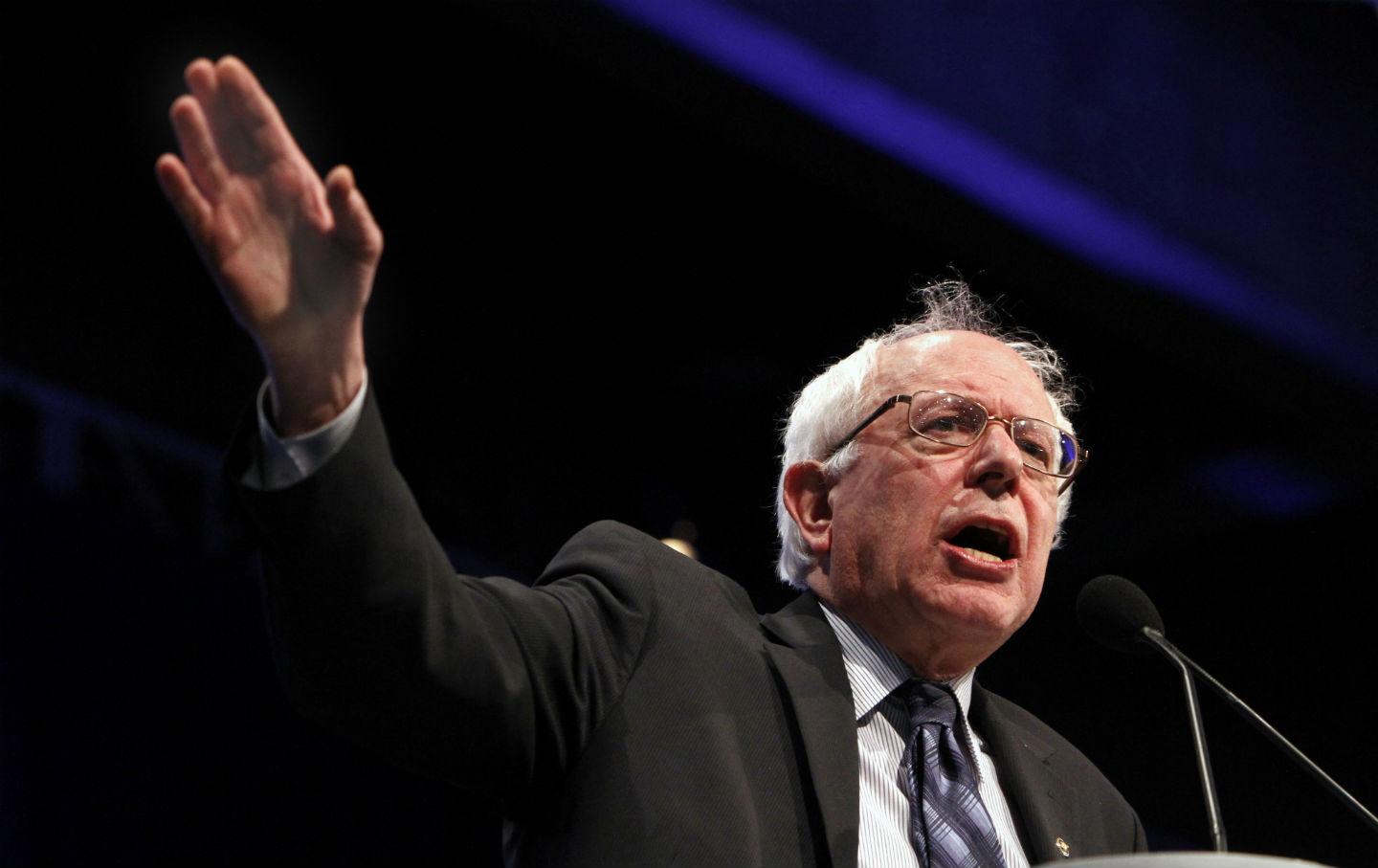
Bernie Sanders Has a Plan: Tax Wall Street and Make College Free Bernie Sanders Has a Plan: Tax Wall Street and Make College Free
A Robin Hood Tax on financial transactions could make higher education available for all.
May 19, 2015 / John Nichols
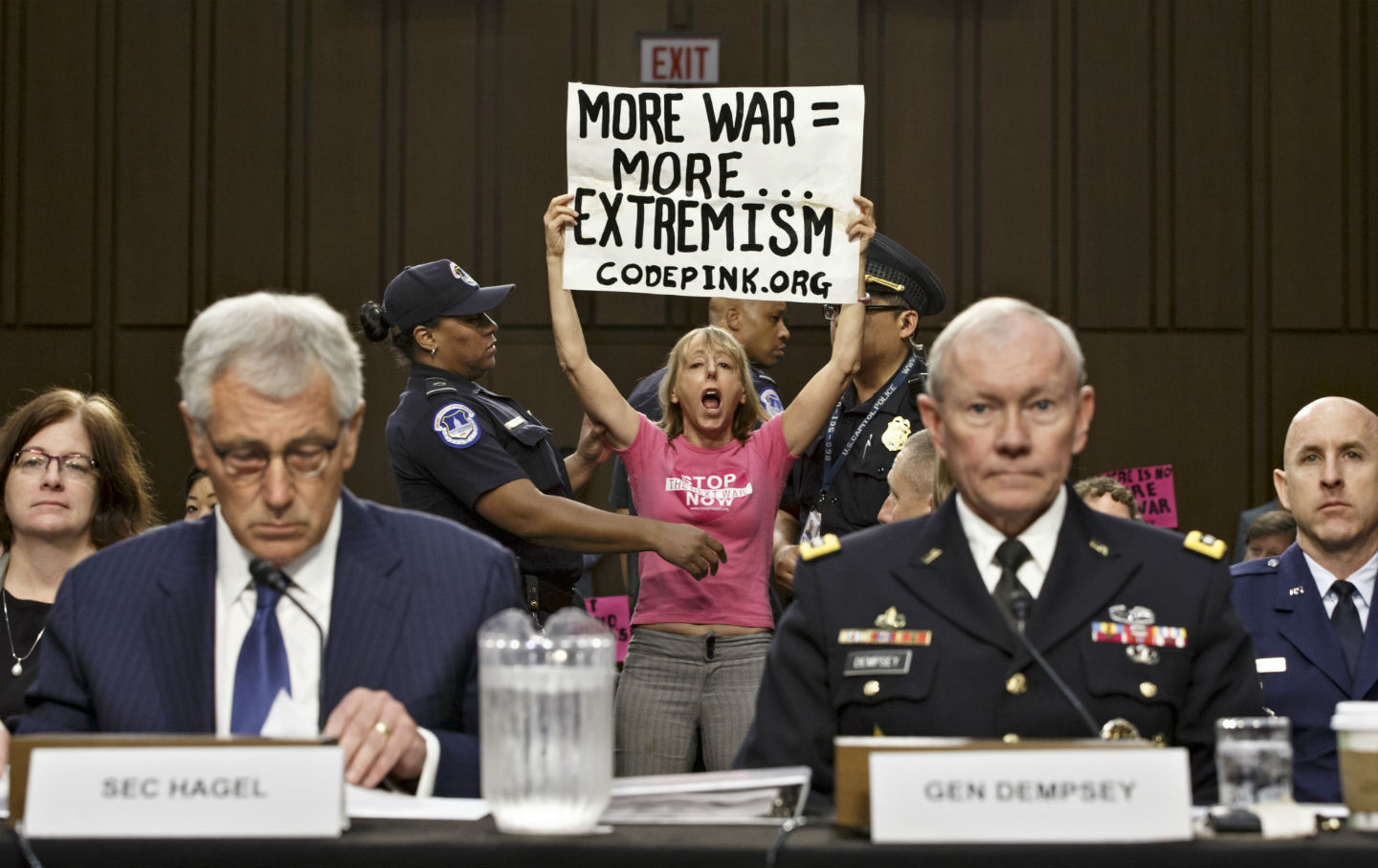
9 Headlines We Guarantee You’ll See Again Sooner Than You Think 9 Headlines We Guarantee You’ll See Again Sooner Than You Think
From toddlers with guns to wedding parties hit by drones, here’s the news for tomorrow.
May 19, 2015 / Tom Engelhardt

The GOP Still Doesn’t Get It on Iraq The GOP Still Doesn’t Get It on Iraq
For many 2016 GOP hopefuls, when it comes to Iraq, time does not equal wisdom.
May 19, 2015 / Katrina vanden Heuvel
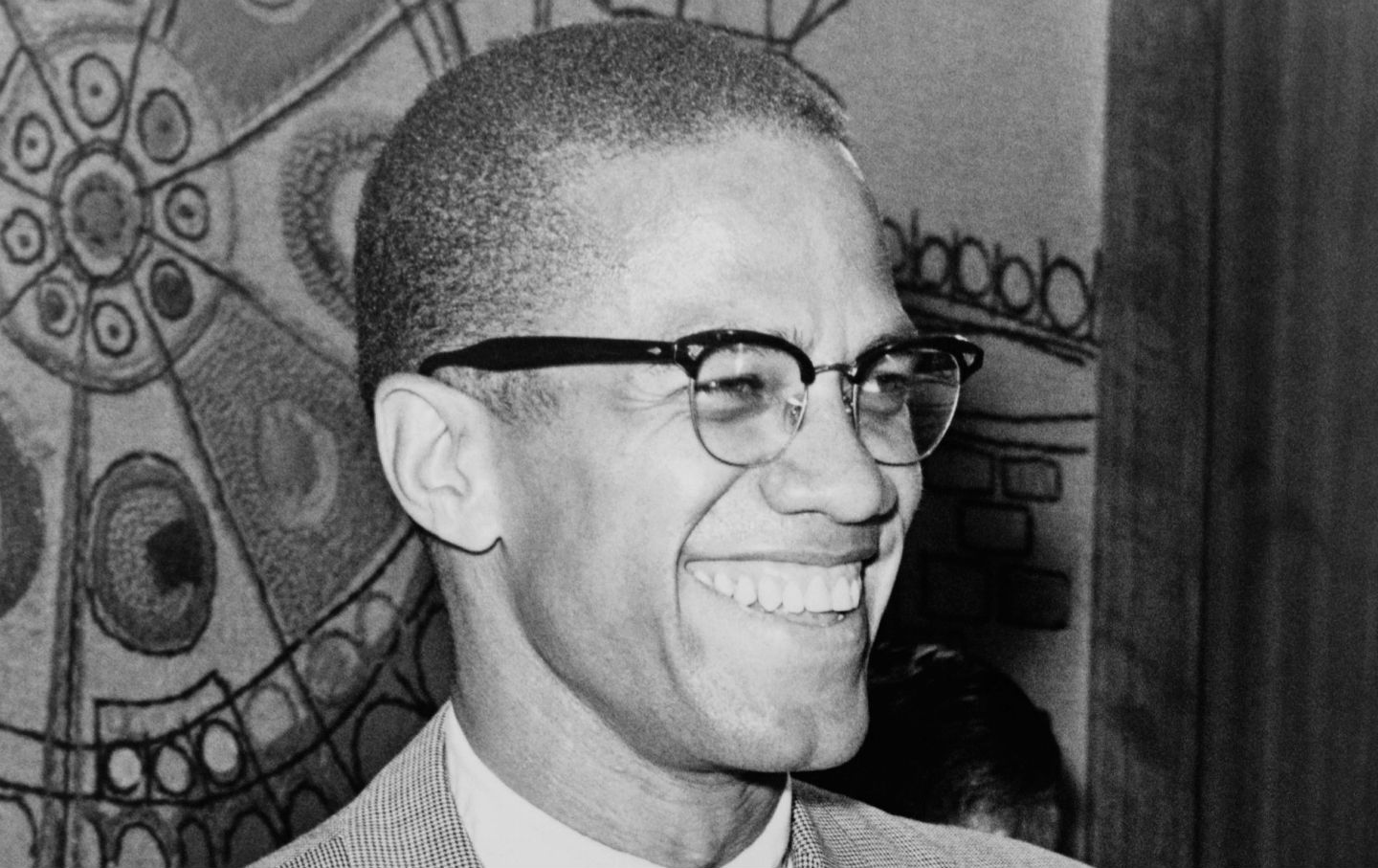
May 19, 1925: Malcolm X Is Born May 19, 1925: Malcolm X Is Born
“This is the story of a man struck down on his way to becoming a revolutionary and a liberator of his people.”
May 19, 2015 / Richard Kreitner and The Almanac
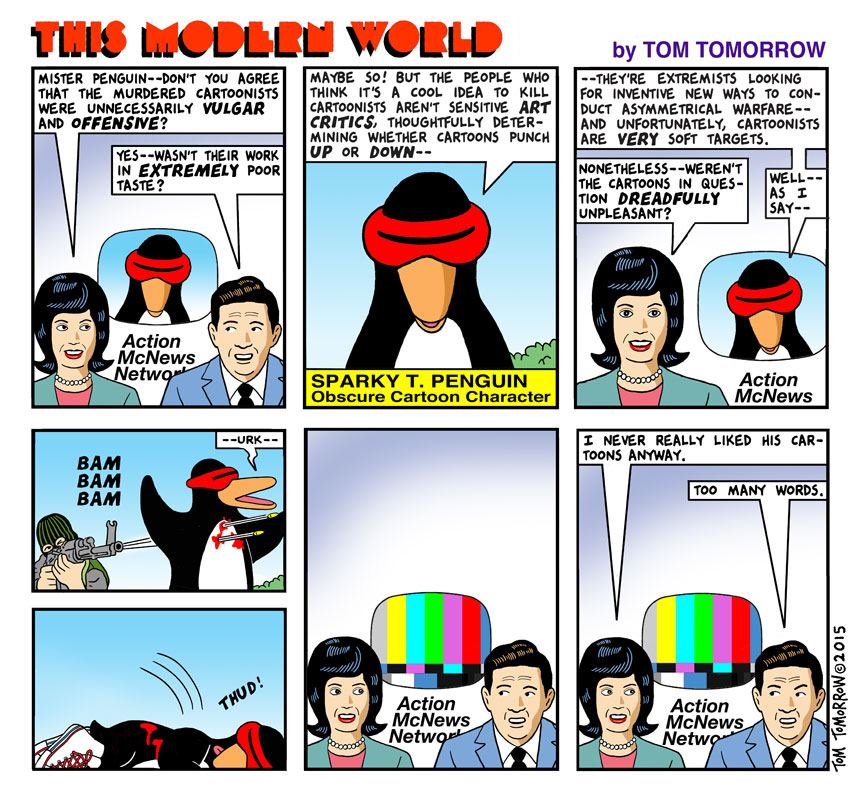
Cartoonists Make Soft Targets Cartoonists Make Soft Targets
Especially when their cartoons are so dreadfully unpleasant.
May 19, 2015 / Tom Tomorrow