
The Blood Diamonds of Brazil
When an Amazonian tribe tried to regulate the mines on their territory, they invited the violence of modern life into their homeland.
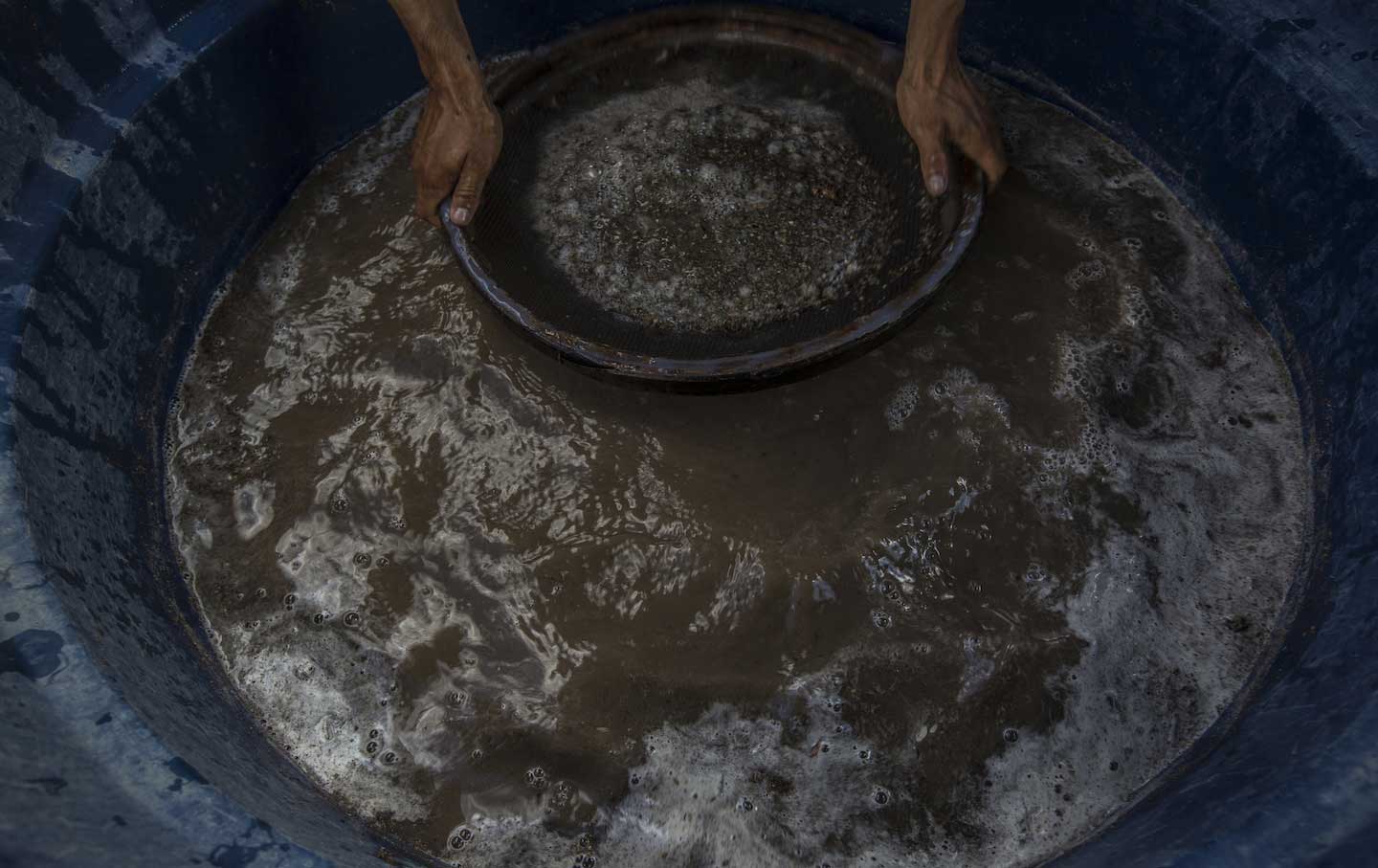
In early April of 2004, federal agents in Brazil’s northwestern state of Rondônia recovered the decomposing bodies of 29 diamond prospectors in the dense thickets of the Amazon jungle. The men had been dredging for diamonds on the territory of the Cinta Larga people when a small band of Cinta Larga rallied to ward off the prospectors. What began as a peaceful attempt to end the illegal activity—“All the warriors knew they weren’t to hurt or kill anyone,” one of the Cinta Larga would later recall—ended in a bloodbath that put the Cinta Larga, many of whom had never had contact with mainstream society until as recently as the 1960s, under the country’s and the world’s scrutinizing gaze.
Books in review
When We Sold God’s Eye: Diamonds, Murder, and a Clash of Worlds in the Amazon
Buy this bookThis wasn’t their first time in the spotlight. Four decades earlier, a dozen of their own were massacred by white men looking for rubber. Now the Cinta Larga stood accused, and the bloody commodity in question—diamonds, not rubber—had been made accessible in part by the Cinta Larga themselves.
In When We Sold God’s Eye, Alex Cuadros traces the lineage of the Cinta Larga’s remarkable journey: that of a tribe forcibly brought into Brazil and modernity only to fall prey to the predatory violence of capitalism. Cuadros’s clear-eyed narrative centers on a group of Cinta Larga individuals whose lives are transformed by contact with mainstream Brazilian society, taking into account the ambiguity with which the Brazilian state and foreign actors have treated the Cinta Larga (alternately as monsters, children, and business partners). Over 40 years, the decisions made by Cuadros’s protagonists and the way their trajectories subsequently diverged provide the ingredients for a familiar history of dispossession, but one that makes the reader wonder whether dispossession is the right word to describe the experience of the Cinta Larga. Were the Cinta Larga complicit in their own evolution from uncontacted tribe to savvy diamond-selling businesspeople—or did they ever really have another other choice?
As Brazil rapidly modernized during the early and mid-20th century, its government sought to appropriate the Amazon rainforest as “a land without people for people without land.” But the forests were far from unoccupied; they were populated by approximately half the country’s Indigenous people, many of whom had been uncontacted until the government desired their land.
In 1967, a public prosecutor published a damning report on the atrocities committed by the Brazilian government’s Indigenous Protection Service (SPI), an agency established in 1910 and led by a military officer named Cândido Rondon. Rondon believed that the nation’s Indigenous people “belonged to a primitive stage of human evolution” that would benefit from exposure to Western civilization. Though well intentioned in theory—the SPI championed integration rather than extermination, which had previously been the expectation—the reality of what SPI agents did to Indigenous communities was bleak and brutal.
The SPI’s interactions with the Cinta Larga, in which hired gunmen shot children in front of their mothers and macheted one woman in half, was by far the most horrific case. “In cosmopolitan Rio de Janeiro, it was hard for middle-class readers to believe such horrors were possible,” Cuadros writes. The subsequent outcry led the government to dissolve the SPI and create the National Foundation of the Indian (Funai), which held that the protection of Indigenous peoples began with their integration into the state.
The organization’s curious blend of selfless and self-serving motives attracted idealists like Francisco “Chico” Meirelles, whose job was to “pacify” the natives with the intent of bringing them into the Brazilian economy. His primary tactic involved setting up a camp near Indigenous territories and luring the native people with Western goods such as cookware and sugar. Once gifts were exchanged, the logic went, further engagement would follow, though precedents with groups such as the Xavante, the Kaingang, the Xokleng, and the Nambikwara showed that integration often further enriched white men while leaving tribes susceptible to disease, dispossession, and death.
By the time Chico’s son, Apoena Meirelles, set up such a camp on the western edge of Cinta Larga territory in 1969, the government agents in Funai were not the only ones seeking something on Indigenous land. Cuadros’s book begins with Funai and other non-native interests meeting the Cinta Larga for the first time. Driving along the BR-364 highway into the Amazonian heartlands, diamond prospectors arrived at the Roosevelt River in search of jewels that could be worth hundreds of thousands of dollars. They didn’t think much at the time about the people who were already there. One day, a young Cinta Larga boy named Roberto Carlos, out fishing with his cousin, spotted a diver wearing a rubber suit and a copper helmet. Soon another boy, Pio, saw the same—and was even asked to crank the crew’s oxygen tank while one of the white men dashed away to pee. Later, when an intrepid Cinta Larga teenager named Oita met a group of prospectors led by a man known as Raul the Spaniard, he accepted their cooking oil and utensils and persuaded several other Cinta Larga to do the same. Soon the boys were learning Portuguese words and helping sieve gravel from the riverbed. “I didn’t know what a diamond was,” Oita told Cuadros decades later. “I didn’t know what money was. I didn’t understand anything.”
The boys’ involvement with the prospectors came to a head when they brought two of the foreigners to a Cinta Larga feast. The following day, scores of the Cinta Larga woke up unwell. They felt hot. They started vomiting. And then dying. In a delirious stretch of days, the bodies of brothers, sisters, mothers, and fathers were left to decompose in their hammocks; the air saturated with the stench of death. Cinta Larga lore would later claim that the foreigners had poisoned their food. The child survivors of this tragedy—among them Pio, Pichuvy, Tataré, Oita, Roberto Carlos, and Maria Beleza, several of the characters whose stories When We Sold God’s Eye tells—ventured out for help. Some returned to Raul the Spaniard’s camp to find that Apoena had transformed it into a Funai post, designed as a “model village where future waves of Cinta Larga could become agricultural workers.”
Roosevelt Village became a makeshift home that would be transformed in the following decades into a permanent settlement for the Cinta Larga—and a place where they would become inadvertent initiates into Western society. Tapir and wild pig were quickly replaced by salted rice and beans. Maria—who for a time was trapped in an abusive relationship with a Funai worker turned bandit—was baptized and joined an evangelical church. The boys learned the value of wage labor and the untapped resources of their land; a Funai agent told Pio that the value of the mahogany trees on Cinta Larga territory was akin to a jackpot. “Don’t let it go to waste,” he urged them. “Sell that stuff.” As the Cinta Larga integrated into mainstream society, they watched TV, rode in cars, and bought guns—yet they continued to live in poor-quality dwellings surrounded by trash. They contracted new diseases, but for those without access to a car, getting to the nearest health center required a five-day walk.
“The Brazilian state turned Indians into poor people,” the Brazilian anthropologist Eduardo Viveiros de Castro once wrote. Their traditional ways of life dismantled, the Cinta Larga became easy targets. When prospectors found a diamond-rich stream on Cinta Larga land in the 1990s, the territory was overrun by prospectors hoping to make a quick buck. Pio and Roberto Carlos tried to keep profits within the community by imposing entry tolls and requiring prospectors to pay commissions to Cinta Larga partners who served as their patrons. But the prospectors stashed their best finds in their pockets, and the Cinta Larga squandered what money they earned on cars and other short-term pleasures. Even when entry tolls soared to the tens of thousands of U.S. dollars, demand continued growing; ramshackle boomtowns emerged along the riverbed, the frenzied activity along the water reminding Pio of “an Amazonian anthill.”
These boomtowns became hotbeds of prostitution, drugs, and coercion. Inordinate amounts of money were exchanged on luxury goods. Upon finding a dead man in a brothel, the federal police detained Pio, Tataré, and some other Cinta Larga men with allegations of tax evasion, receipt of stolen goods, larceny, extortion, and homicide. Amid the chaos, Pio attempted to shut down the diamond prospecting sites, but prospectors continued to sneak in illegally. The federal police blamed the Cinta Larga for failing to stop the mad rush of the diamond trade. In a last-ditch attempt to rescue the integrity of his community, Pio gathered a group of Cinta Larga men to persuade a famously pugnacious prospector, Baiano Doido (the “Crazy Bahian”), to remove his illegal operations from the territory. Painting their bodies in ceremonial jaguar spots, he and his men prepared their bows and arrows, just in case.
Popular
“swipe left below to view more authors”Swipe →Where did things go so wrong? One might argue that it was the imposition of Western ways on the Cinta Larga that ultimately led to the group’s current state: living in Roosevelt Village with all the comforts of modern life—its smartphones, its television sets, its air-conditioning—but without the social mobility or the glamorous wealth that the diamond trade seemed to promise. But such a simple answer—that it would have been better to leave the Cinta Larga alone—would neglect the agency of the contemporary Cinta Larga and their own self-image as caught between the old ways and “the new world of white society.”
As their circumstances changed because of tragedy and death, the Cinta Larga adjusted in the ways they could. Cuadros’s account makes the case that the ultimate failure on the part of mainstream society was not necessarily that it intruded into Cinta Larga’s territory, or even that it introduced the Cinta Larga to modern comforts, but rather that it refused to truly acknowledge the Cinta Larga as equals after integration. What if the Cinta Larga had been considered proper business partners instead of easy targets? What if there had been no “special jurisprudence” for Indigenous peoples, whom the government considered to possess “incomplete mental development”? What if the Cinta Larga’s move toward modernity had been met with better access to hospitals and schools?
Although Cuadros’s book illustrates the problems of the status quo, its method of character-driven storytelling might offer a potential corrective. Cuadros himself is not an Indigenous person; in his epilogue, which offers an honest and open acknowledgment of his subject position as an American journalist, he admits that the Cinta Larga could rightfully consider him as “yet another white person extracting something of value from their lands.” He does not appear as a character in the book except for the rare mention of a “journalist” among the Cinta Larga, and even then it is unclear whether this is a reference to himself. He weaves together the stories of various Cinta Larga instead, allowing their stories to speak for themselves.
Importantly, When We Sold God’s Eye (the title’s “we” is a telling choice, with “God’s Eye” referring to a diamond so large it resembled something otherworldly) does not portray the Cinta Larga as mere bystanders in their own disarray. They, too, are participants, as their own stories show. Oita desires the vices of wealth—the women, the booze, the parties—while Pandarê, a young Cinta Larga whom Pio attempts to send to school, greedily accumulates a fleet of seven cars, one for each day of the week. Tataré admits an urge to kill the policemen who come to detain him. The mosaic result complicates the “childlike” guilelessness that white society ascribed to the nation’s Indigenous people in order to enable dispossession—and renders the incessant greed of modern capitalism the true savage of the story.
“How do stories of contact, resistance, and assimilation appear from the standpoint of groups in which exchange rather than identity is the fundamental value to be sustained?” the American anthropologist James Clifford once asked. Eduardo Viveiros de Castro cites this question in his seminal essay “The Marble and the Myrtle,” in which he illustrates how the “absorption of the Other” has always been central in Amerindian (specifically, Tupi) cosmology. Cuadros and the Cinta Larga invite readers to witness the nexus of this absorption, and to consider how to proceed given that this integration has already taken place. In this way, the book supplements a range of Indigenous Brazilian literature published in the past two decades that illustrate a contemporary form of Indigeneity that sits both inside and outside Western society. In 2024, Ailton Krenak became the first Indigenous person to be inducted into the Brazilian Academy of Letters; his books, including Ideas to Postpone the End of the World (2019), do not try to convince readers to return to a preindustrial world but rather suggest how we might live better with technologies that already exist. Daniel Munduruku, in Chronicles of São Paulo (2009), describes what it’s like for a Munduruku man to take a train or walk through the park in Latin America’s largest city.
Cuadros acknowledges that stories, like commodities, are a kind of currency that can be exchanged to equal and unequal degrees. The narratives surrounding the Cinta Larga story is one that exemplifies a historically unequal exchange, one that makes people like Pio, Oita, and Maria Beleza—now as old as their elders used to be—wonder if the experiment with diamonds was worth it at all. The verdict is uncertain, but on one point Pio is firm. “Don’t think the Indian will go back to the way things were,” he tells Cuadros. “From now on we want to evolve just like everyone else.”
More from The Nation
Can the Dictionary Keep Up? Can the Dictionary Keep Up?
In Stefan Fatsis’s capacious, and at times score-settling, personal history of the reference book, he reveals what the dictionary can still tell us about language in modern life

Why We Misunderstand the Chinese Internet Why We Misunderstand the Chinese Internet
Journalist Yi-Ling Liu’s The Wall Dancers traces how the Internet affected daily life in China, showing how similar this corner of the Web is to the one experienced in the West.

The Bad Vibes of “Wuthering Heights” The Bad Vibes of “Wuthering Heights”
Keeping its distance from the novel, Emerald Fennell’s film ends up offering us a mirror of our own times.

Has Contemporary Fiction Ignored the Working Class? Has Contemporary Fiction Ignored the Working Class?
Claire Baglin’s bracing On the Clock gives its readers a close look at work behind the fry station, and in the process asks what experiences are missing from mainstream letters.
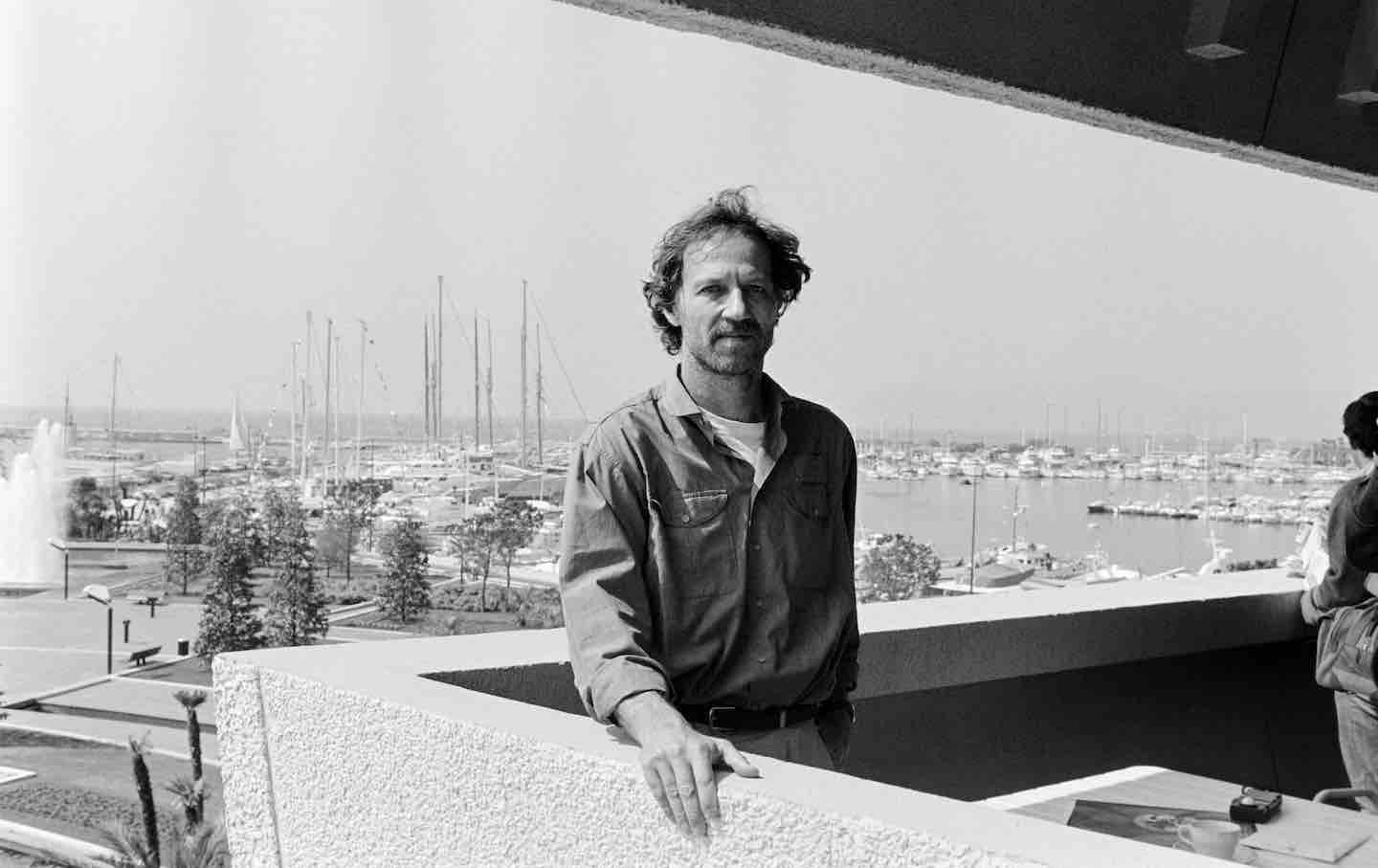
Werner Herzog Between Fact and Fiction Werner Herzog Between Fact and Fiction
The German auteur’s recent book presents a strange, idiosyncratic vision of the concept of “truth,” one that defines how he sees the world and his art.
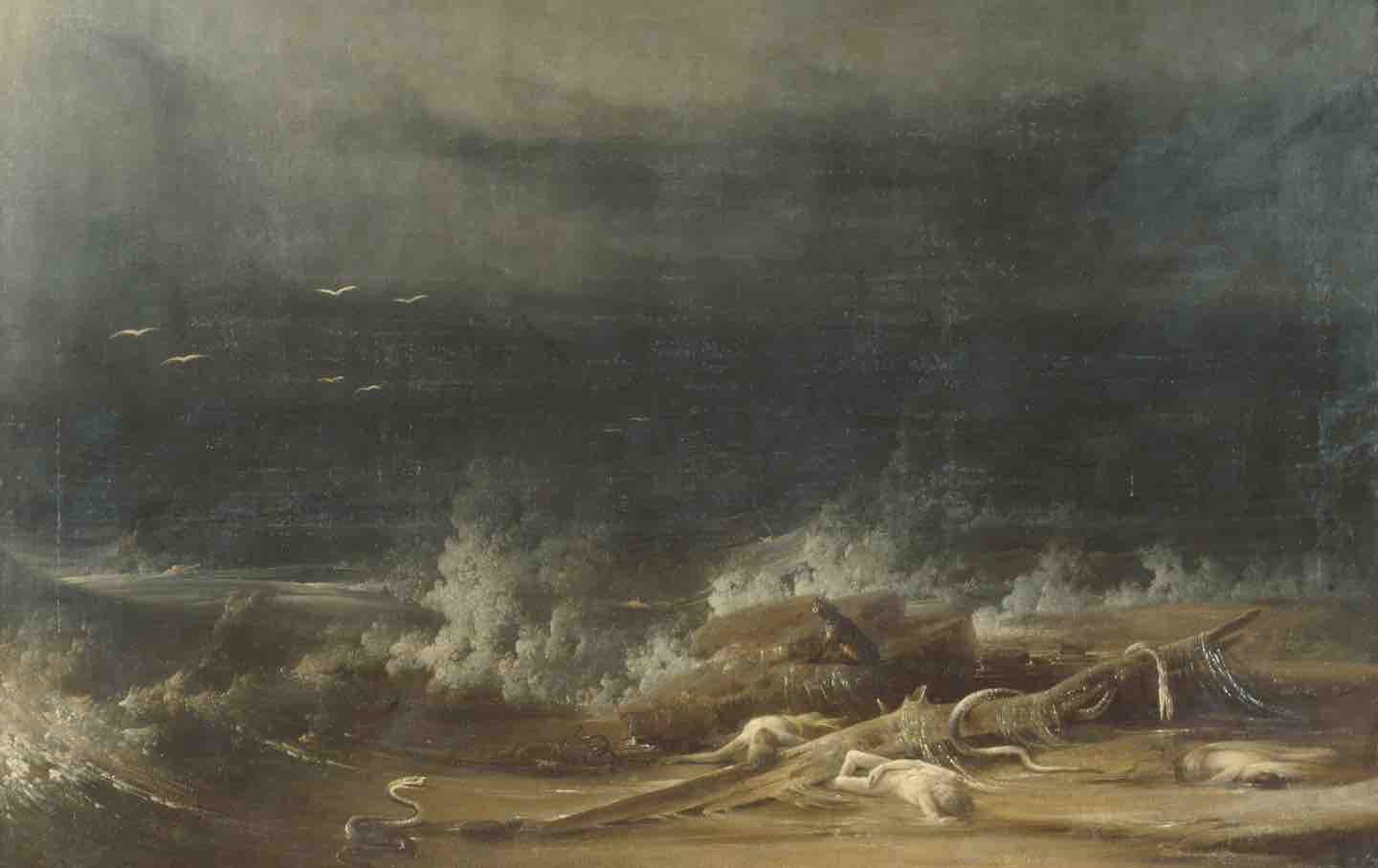
Do Humans Really Understand the World’s Disorderly Rivers? Do Humans Really Understand the World’s Disorderly Rivers?
In James C. Scott’s last book, In Praise of Floods, he questions the limits of human hegemony and our misplaced sense that we have any control over the Earth’s depleted watershed....

