
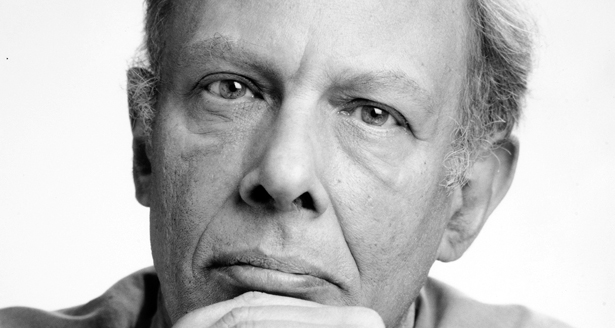
Courtesy: Fredric Stein / The University of Chicago
Peter Novick was a first-class mensch. The University of Chicago historian, who died on February 17 of lung cancer, will undoubtedly be remembered for his pioneering scholarship, intellectual courage, and a witty, astringent writing style that could turn the most forbidding of subjects into a pleasure to read. His first book, The Resistance Versus Vichy, which came out a year before The Sorrow and the Pity, began the demolition of France’s myth of widespread resistance to the Nazis. His last book, The Holocaust in American Life, was, as I wrote in The Nation, persuasive both in its account of the widespread avoidance of the Shoah in Jewish and American discourse until the 1960s, and in its anatomy of the political uses to which the Holocaust was put from that point onwards. But if you want to get a sense of what Novick was like as a human being you should really read Michael Berenbaum’s lovely tribute in the Forward.
Novick, he says ruefully, “argued that the Holocaust had been … manipulated by prominent Jewish organizations to preclude any criticism of Israel’s policy toward the Palestinians. He asserted that it was used to strengthen Jewish identity by making a long-defeated enemy central to that identity at precisely the point when Jews have gained full acceptance in American national life. Novick saw this as a fixation that allowed Jews to see themselves as oppressed when they have, in fact, become privileged.” Novick, writes Berenbaum, “held views on the Holocaust that were antithetical to everything to which I have devoted my professional life.” And yet they were clearly good friends.
My hunch is that Chicago may have played a role—in my own limited experience with Chicagoans the fierce ideological litmus tests so beloved of New Yorkers (especially, dare I say, Jewish New Yorkers) seem less important out there.
Sadly, I never got a chance to meet Peter Novick. Or even to confess to him the fact that when, as I was researching The Holocaust on Trial, my book on the David Irving libel case, I tracked down a brand new copy of The Holocaust in American Life in The Wiener Library in London—so far as I could tell the only copy in the United Kingdom–and proceeded to borrow it for the next six months! In a field clogged with special pleading, sentimentality and every form of exploitation imaginable Novick’s book was a model of scholarly decorum. And though he was attacked by all the usual suspects, who tarred him with all the usual labels, from “self-hating Jew” to “flippant” and “cynical,” Novick’s scholarship was unassailable. Indeed I suspect that being attacked was less of trial to him than being credited as the inspiration for so much tendentious writing on a subject he invariably handled with grace and tact.
We did finally make contact, just under a year ago, after he wrote to thank me for citing him. Which meant I did get a chance to tell him I’d ended up reading large chunks of his work aloud, so delighted was I by his prose, his candor and his meticulous attention to historical detail. The attacks had apparently continued, but Novick had long since given up responding. “To reply,” he wrote, “would send the message that I care about this–which is (1) not true, and (2) not what I would like to communicate. Fuck it.” We agreed to rendezvous—as he put it “next year in Jerusalem—on the Thames or by Lake Michigan.”

