Here’s What It Takes for a Democrat to Win in Texas
Jasmine Crockett can win the Texas Senate race—if voters of color get to the polls.
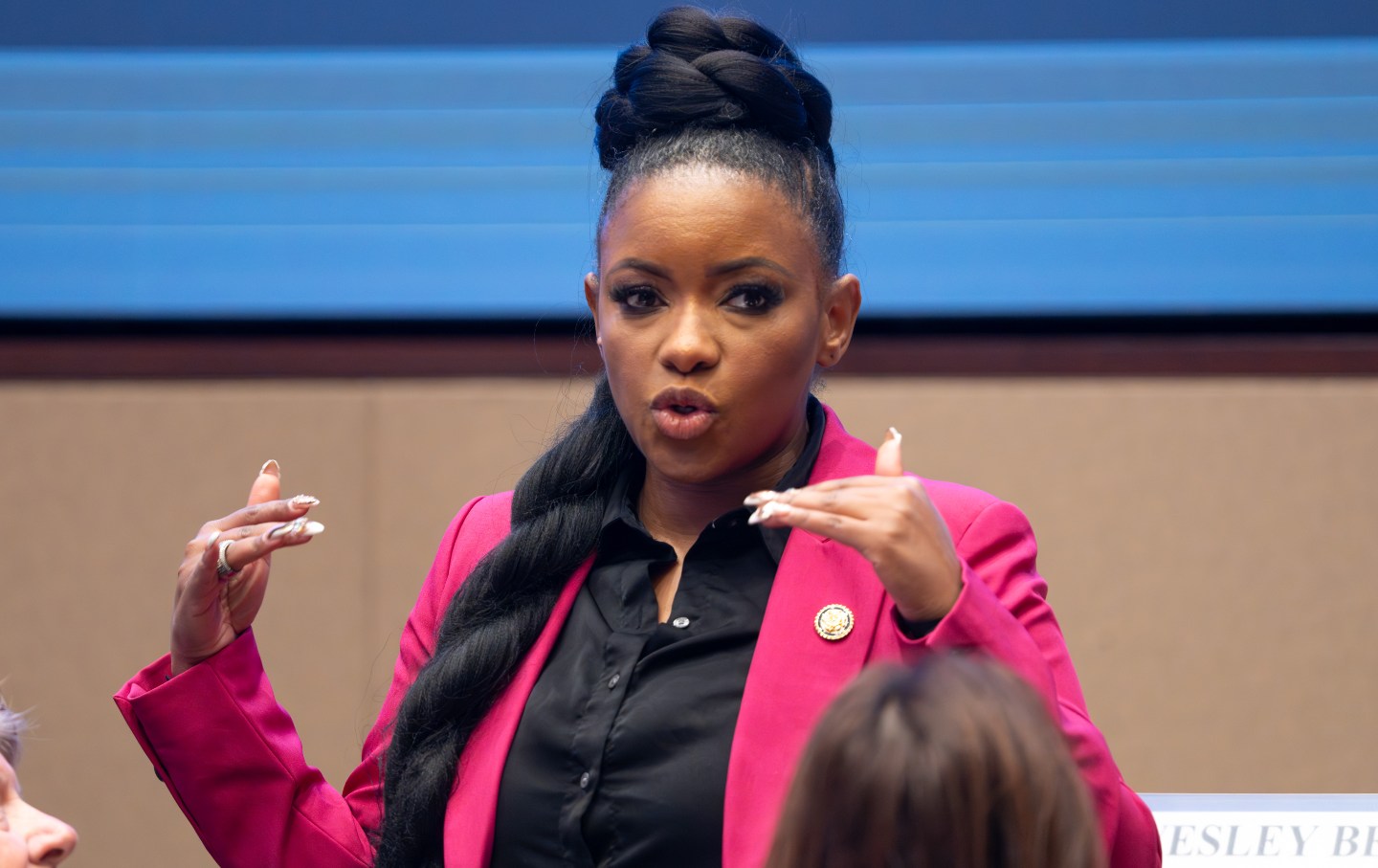
Jasmine Crockett at a hearing to examine the unlawful detention of US citizens and immigrants by federal immigration agents at the LA Metropolitan Water District.
(David Crane / MediaNews Group/Los Angeles Daily News / Getty Images)Contrary to what Democratic elites think is conventional wisdom, Representative Jasmine Crockett is not just a viable candidate for the Texas US Senate race next year—she’s the strongest one. Pundits and Democratic politicians haved failed to appreciate her potential, clinging instead to outdated theories about “moderate candidates” and mythical Republican “crossover voters.”
But the path to flipping Texas has already been illuminated: most notably by Beto O’Rourke’s near-miss in 2018 and, more recently, by Zohran Mamdani’s stunning ascent to victory in New York City.
The closest any Democrat has come to winning statewide in Texas over the past three decades was O’Rourke’s 2018 Senate campaign, when he lost by just 2.6 points, falling just 215,000 votes short. O’Rourke’s unapologetic progressivism—his courage to staunchly defend NFL players protesting police brutality by kneeling during the national anthem—separated him from the pack and attracted support from across the country.
His campaign demonstrated that inspiring, galvanizing leadership resonates in diverse states with large populations of voters of color. This same dynamic propelled Stacey Abrams within a hair’s breadth of the Georgia governorship and Andrew Gillum to a near-win in Florida in 2018. The pattern is clear: bold, progressive candidates who refuse to run from their values come closest to victory in these former slave-holding states.
What too many political strategists fail to understand is that Texas is a majority-minority state. People of color are 61 percent of the population and 51 percent of eligible voters. The challenge in Texas is not changing the minds of conservative voters but tackling the low levels of voter participation among communities of color. While not all people of color in Texas are Democrats, the upside is considerable in those communities in light of Republican hostility to racial justice and inequality. Most applicable to Crockett’s candidacy is the fact that O’Rourke won the support of 89 percent of Black Americans and 64 percent of Latinos, according to exit polling data. In that 2018 contest between O’Rourke and Ted Cruz, 5 million eligible people of color did not cast ballots.
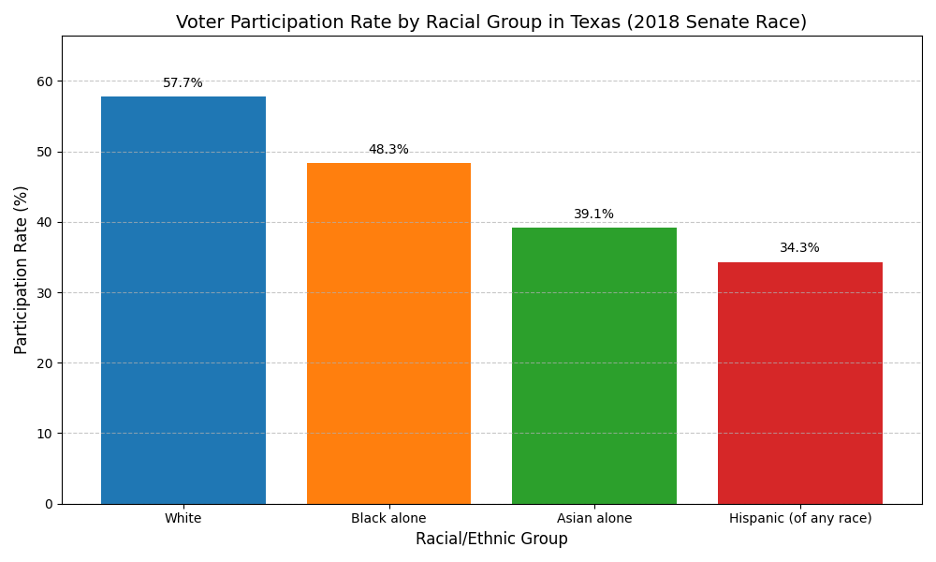
The pattern has persisted in the intervening years. While more than two-thirds of eligible white voters participated in 2024, only 44 percent of eligible Latino voters turned out, while 1.5 million Black Texas residents did not cast ballots.
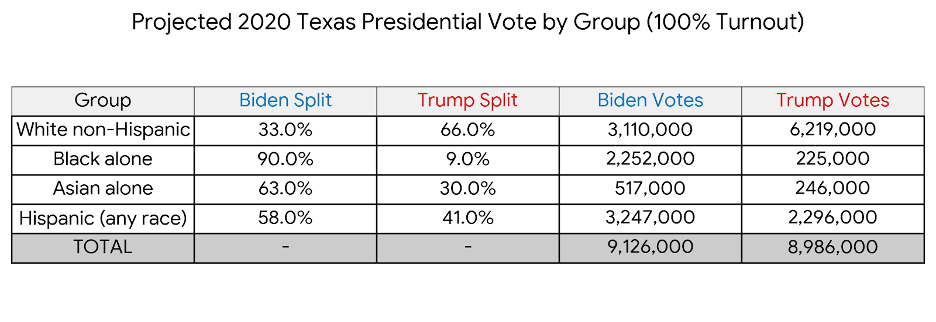
The formula for a Crockett victory lies in following the path blazed by O’Rourke, while increasing the intensive GOTV work necessary to close that gap with voters of color. Texas is not exactly a conservative state; it’s a nonvoting state. Case in point: If every eligible Texan had voted in 2020, Joe Biden would have defeated Trump, based on exit poll data showing how each racial group voted.
A logical and promising starting point for closing Beto’s 215,000 vote gap lies in massive mobilization of Black Texas residents, who, clear-eyed about the Republican Party’s hostility to racial justice and its reliance on stoking white racial resentment, historically vote more than 90 percent for Democratic nominees. As Stacey Abrams showed in 2018 and Barack Obama 10 years before that, when you have a candidate who comes from and speaks authentically to the Black community, you can efficiently and effectively attract hundreds of thousands of new voters to the polls.
Unfortunately, many in the Democratic establishment are drawing precisely the wrong lessons from recent elections. They point to moderate candidates like Virginia’s Abigail Spanberger as proof that centrist politics are the path to power, while dismissing Mamdani’s New York victory as irrelevant to other contests.
This analysis ignores crucial context. Virginia’s Democratic success over the past decade stems from the voter registration and mobilization work of organizations like New Virginia Majority, which dramatically changed the composition of the electorate. Democrats have won 10 of the last 12 statewide elections there because they built a multiracial progressive majority, not because they ran away from progressive values. And, notably, while Virginia did elect the relatively moderate Spanberger as governor, they also elevated the very progressive Ghazala Hashmi as lieutenant governor, making her the first Muslim elected to statewide office anywhere in the nation.
In terms of which 2025 template is most applicable to Texas in 2026, Texas demographically resembles New York City far more than it does Virginia. People of color are 69 percent of New York City’s population and 61 percent in Texas, while whites are still the majority in Virginia, 58 percent of the residents. Mamdani’s victory—surging from single digits in May—demonstrates what happens when a young, progressive candidate of color articulates an entirely different vision of what society could be. He captured imaginations, fueled spirits, and inspired young people to turn out in large numbers.
While the inspiration and mobilization formula is Democrats’ best bet in Texas, many Democratic strategists remain enamored by the fantasy of significant Republican crossover votes. Looking at the Texas Senate contest next year, many in the media and the Beltway harbor a strong and completely unfounded belief that Republican voters will cross the aisle and support a moderate Democratic nominee if right-wing Attorney General Ken Paxton is the GOP standard-bearer. This fanciful framework somehow ignores the reality that Paxton has won three successive statewide elections over the past decade. Texas “moderates” have certainly not abandoned him yet.
Popular
“swipe left below to view more authors”Swipe →Recent polling by Data for Social Good confirms what the demographics suggest: Among potential candidates including Colin Allred, James Talarico, Beto O’Rourke, and Crockett, she polls strongest among Democratic voters and, critically, shows the highest upside in communities of color. Crucially, Crockett has the most support among Latino voters of any announced candidate, according to the DSG poll.
The enthusiasm in Washington for State Representative James Talarico—with one New York Times column dubbing him the Democrats’ “savior”—reflects the party elite’s misguided nostalgia for a candidate who might win back conservative voters. While he is a decent man and a fine state legislator, Talarico simply has no electoral track record demonstrating an ability to inspire the kind of increased turnout required to flip Texas. The Beltway’s excitement about him stems from hope that he can attract the mythical crossover voters who have failed to materialize in race after race.
Crockett represents the future of American politics: authentic, unapologetic leadership that speaks to the diverse majority this country is becoming. Her candidacy will not only be exciting and inspiring; it also represents Democrats’ best chance to flip the Lone Star state and shift the political balance of power in this country for decades to come.
Become a Sustaining Donor This September
Between the reemergence of right-wing red-baiting and Donald Trump’s use of the chilling National Security Presidential Memorandum–7 to criminalize left political organizing, we’re seeing McCarthyism reborn before our eyes.
This assault on democracy cannot be ignored or wished away. Resisting it requires bravery in the face of threats and repression, a steadfast commitment to the truth, and the unwavering belief that we can—and will—overcome this darkness.
We must have an independent media that sets the record straight, unearths corruption and abuses of power, and advances a politics of justice and dignity for all if we’re to win this fight.
That’s why I’m writing to you today. This September, The Nation needs to add 100 monthly donors to sustain our progressive journalism. Your contribution makes the next investigative report, the next truth-speaking column, and the next pathbreaking essay all possible.
I hope you’ll support our work with a recurring donation today. If you donate $10 or more a month, we’ll send you a brand new “Hands Off the Free Press!” sticker to recognise your commitment to our cause. Please, donate today.
Onward,
Katrina vanden Heuvel
Editor and Publisher, The Nation
More from The Nation
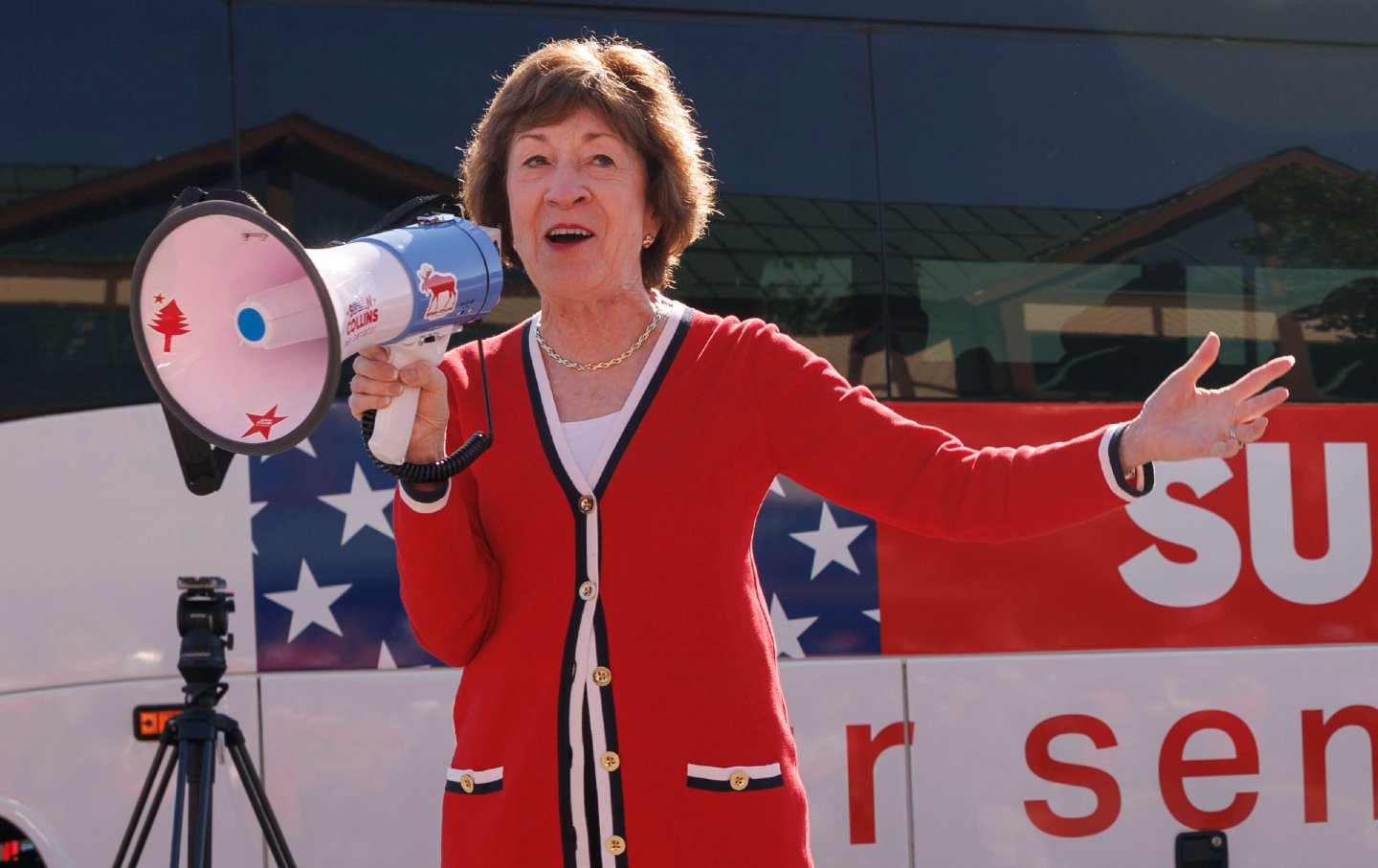
Susan Collins Is Corrupt. She Still Might Be Reelected. Susan Collins Is Corrupt. She Still Might Be Reelected.
Despite being embroiled in scandal, the Maine senator is benefiting from Democratic Party divisions.

Trump Impersonated Hitler at the United Nations Trump Impersonated Hitler at the United Nations
It was just one more of many examples of the president mirroring a fascist leadership.
Trump Is Destroying Public Health. Democrats Need to Fight Back. Trump Is Destroying Public Health. Democrats Need to Fight Back.
If they win in the midterms, the party must move quickly and aggressively to undo the harm Trump and his cronies have caused.
How Joe Biden Helped Cause a Genocide in Gaza How Joe Biden Helped Cause a Genocide in Gaza
An interview with reporter Akbar Shahid Ahmed about his new book, “Crossing the Red Line.”