
Time for a Progressive Rethink
Anger at the Democratic Party’s inept leadership and subservience to Big Money has been rising since the election. But the left also must examine our own role in enabling Trump.
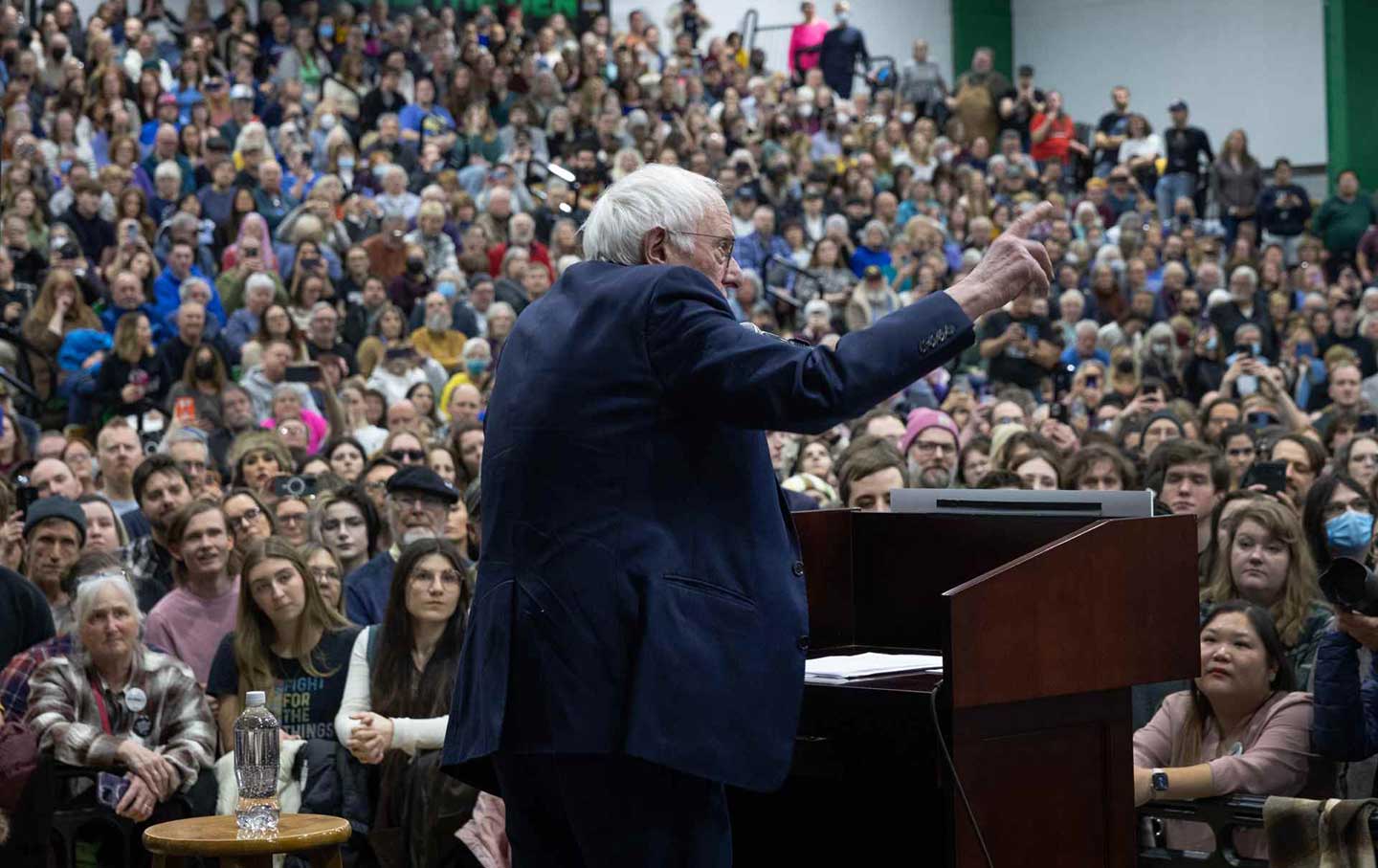
Donald Trump is already overreaching, and Democrats may well rebound in the next election merely by default. But behind the megalomania of Trump and Elon Musk lies a formidable reactionary movement intent on permanent political domination. In this long game, Democratic Party leaders are simply not up to the task of halting the national economic and social decay upon which the carrion right feeds.
Ever since the 2016 debacle, Democrats have pledged to listen to working Americans—the majority of voters—only to repeatedly ignore what they say. In exit polls following November’s election, voters said their most important issues were illegal immigration, rising prices, and healthcare. They believed that the first two were also the top priorities of Trump Republicans. They thought Democrats’ top priorities were abortion, LGBTQ rights, and climate change. They preferred the GOP by an historic margin of over 10 percentage points—far larger than the vote margin for Trump himself.
Note that the public does not see Democrats’ priorities as those of the party’s financial elite, who thrive behind closed doors. It sees the social identity and the environmental issues of the most influential part of the activist base, which naturally tries to maximize political visibility.
Party leaders accommodate both these constituencies. But it’s not clear where the working class fits in—other than assurances that the Democrats’ hearts are with them.
By now, the story of the party’s long shift away from class-based politics is widely understood. Weakened by the division over the Vietnam War and the defection of the previously solid South over civil rights, Democrats under Carter, Clinton, and Obama cultivated support from traditionally Republican Wall Street.
The party had always taken money from big business. But the New Deal balanced its influence with organized labor. Then, in the early 1970s corporate leaders launched an all-out attack on labor—from shop-floor union-busting to ideological warfare. Democratic leaders looked the other way. They refused to strengthen enfeebled labor law. Carter’s privatization paved the way for Reagan’s attacks on civilian government. Clinton’s financial deregulation undercut workers’ bargaining position and job security. Clinton and Obama’s free trade policies devastated the party’s unionized industrial base.
Political blowback was dismissed by portraying the disaffected working class as a shrinking demographic of white male racist “deplorables.” The future belonged a new Democratic coalition of college-educated women, minorities, and the young. So far, so familiar.
Less understood is the way the Wall Street alliance affected the party’s progressive wing. Democrats’ grassroots activists—the canvassers, the telephone bankers, the street demonstrators—are typically to the left of the party leadership. So, understandably, after every defeat progressives react with a stirring cry for more “organizing.” Yet, despite the efforts of smart, dedicated activists, we have been continually out-organized from bottom to top.
The reactionary right completely captured the Republican Party, ousting its establishment, trashing its dogmas on globalization and fiscal orthodoxy and bringing corporate executives to their knees. The right has taken over school boards, election commissions, libraries, and other local institutions and much of the judiciary up to the Supreme Court. It dominates social media and bullies the mainstream. And it engineered the victory of a clownish grifter, whose approval ratings are chronically below 50 percent, in two of the last three presidential elections.
Meanwhile, the left is on the defensive everywhere. Despite the mobilization of Bernie Sanders’s two campaigns, it remains a junior partner in the Democratic Party power structure. When Joe Biden renewed the Cold War, the left was ignored—even on the hot-button issue of Gaza. After Biden broke his promise not to run again, it was the liberal establishment’s Nancy Pelosi who hounded him out. And then knifed AOC’s bid for a leadership role in Congress.
No progressive counterforce poured into the streets when Trump’s mob assaulted the Capitol in January 2021. Instead, the riot was stopped by the cops, reinforced by the army.
In part, the left’s political weakness is rooted in the way its larger activist base is financed. When Democrats became more business-friendly, liberal staffs and board members of foundations (themselves creatures of corporate tax breaks) had more ideological room to help progressives by funding local organizing.
Opposing local polluters, slumlords and racist police are core political functions of the left. But these fights do not challenge the oligarchic power that rules America.
Moreover, they tend to limit the left’s power to vetoes, resulting in a paralyzing grid of state and local rules, advisory boards and checkpoints that often ally progressive organizing with the gated community ideology of the educated elite. This hyper-proliferation of democratic process makes it harder for government to efficiently deliver services.
It also lends a performative quality to left activism. Absent a unifying national political purpose, many liberal funders seem most concerned with policing their progressive clients, e.g., by enforcing board and staff diversity. Diversity is indeed an important progressive value. But it can also be used by corporations to divide and divert the working class. In the case of the over $4 billion DEI consulting business, collective political solutions give way to demands for changes in people’s individual psyches—which not surprisingly pisses them off. It also makes us a sitting duck for the right’s attack on wokeness.
In political struggle, you want to unify your allies and divide your enemies. But by itself the social identity agenda is inherently divisive. Operationally, like corporate marketing campaigns, it targets segmented population cohorts, diminishing solidarity.
In coalition politics, unity often comes from defining a common enemy. The right targets the “woke” liberal, while the left targets the white male, obsessed with violence and lost entitlement.
Identity politics on the left is not the root cause of the right-wing resurgence. But it has helped by fueling the growth of an identity consciousness among white working-class voters, whose share of the last November’s total vote rose by 4 percent.
The triumph of the personally unpopular Trump—the iconic toxic white male of our time—suggests that when the left-right conflict is fought over social identity, the right generally wins. As Brianna Wu, a Massachusetts transgender woman who has run twice for Congress, wryly commented, “It doesn’t help marginalized people to not be able to win elections.”
The stunning rise in Latino American support for Trump from 28 percent in 2016 to 42 percent in 2024 illustrates the problem.
A common explanation is the conservatizing influence of Catholicism. But Latino Americans did not suddenly become more Catholic over the past eight years.
On the other hand, Latino working-class voters are likely to be the most vulnerable to competition from illegal immigrants for jobs, housing and public services. How else can we explain why as many as 45 percent of Hispanic Americans favor deportation of illegal immigrants?
The Republican right’s answer to the surge in illegal immigration is mass deportation and militarization of the border. Cruel, but clear.
Popular
“swipe left below to view more authors”Swipe →The Democratic left’s has been muddled: strident expressions of compassion, demands for more lawyers and social services, and, recognizing that open borders is a political nonstarter, a muted acceptance of Trump-lite containment.
The immigration debate represents a colossal failure of the Progressive political imagination. Like the right, our approach has been almost exclusively focused on immigrants after they’ve arrived, ignoring why they come—which is largely because of the poverty and violence fostered by corrupt oligarchic regimes supported by US aid. Six years ago, when the newly elected leftist president of Mexico proposed a large-scale economic and social development project for the region, he was met with cynical smirks from the Democrats’ center—and indifference from the left.
The assumption of a leftward swing among women also failed to materialize in this election. Trump merely had to kick the abortion question to the states. Despite her gender, Kamala Harris’s advantage among women voters fell below Biden’s. Trump also increased his support from young voters—at least 20 percent of whom identify as LGBTQ.
The lesson is not that social identity is unimportant; it is that it is not enough. To be fair, neither are the simple mantras of economic class. It’s not clear how effective railing against “corporations” is to working people who need that corporate paycheck every week and wear corporate logos on their T-shirts. Workers already know what their class relationships are on the job. They’re just not sure that we can protect them.
Ultimately, the “identity vs. class” debates are sterile. Both are needed to create a political majority.
The other issue voters said was important to them—but not to Democrats—was rising prices. Addressing those concerns is clearly beyond the reach of local organizing, which flourished in the wake of Bill Clinton’s claim that “the era of big government is over.”
This was always nonsense. America is a big country with big problems. Given the power of global capital, addressing those problems demands strong national public authority.
Both John Kennedy and Richard Nixon publicly intervened to stop rising prices. But less than a decade later, Jimmy Carter was assuring Americans the free market would adjust and halt an inflationary spiral. It did—eventually—and the subsequent pain of that adjustment among the working class elected Ronald Reagan.
Last year, when Harris even mentioned the role of “price gouging”—implying the need for government intervention—she was told by her Wall Street advisers to shut up.
Discrediting of government on the left also stems from disillusion over the Vietnam War. Yet, over half century later, the military is stronger than ever, while the federal civilian sector struggles for survival. Democrats, from Jimmy Carter in his 1978 State of the Union address to Senator Elissa Slotkin, in her 2025 rebuttal to Trump’s, have repeated clichés about the wasteful federal government. Yet they are now shocked to see Trump/Musk take an axe to it.
The left’s pandering to anti-government rhetoric also helps explain why voters who favor progressive policies, like healthcare, clean air and water, labor protections, and the right to abortion, resist giving progressives the power to carry them out.
Ironically, the left/liberal failure to defend big government created a vacuum that was filled by the right. The Trump/Musk attack on government is cover for massive subsidies to business—including their own. As we’ve now seen, Trump’s model of government is strong, authoritarian, and brutal. The right’s aim is not to eliminate government but to weaponize it for their seizure of power.
Yet, despite its ugly and incoherent answers, the radical right is addressing a big question that the liberal/left’s decentralized incrementalism does not: Where is this country headed?
Centrist Democratic leadership is a deer in the headlights of the fascist claim on America’s future. So it is up to progressives. We already have more popular ideas on jobs, wages, gun control, and healthcare. And a potentially more appealing and inspiring agenda for the future in the Green New Deal—originally proposed as a national mobilization not seen since World War II that would transform the economy, creating millions of new good jobs as well as eliminate US greenhouse gas emissions.
Pushed by the 2020 Sanders campaign, Biden began piecing together the foundation of this transformation in his first two years. But he abandoned the work for a return to the Cold War. Since then, while the “Green” part remains an environmental catchphrase, the “New Deal” part has faded. And without that, we have no convincing answer to the right’s claim that working people will suffer to soothe the anxieties of the liberal upper classes.
Finding inclusive language, restoring competent government, and regaining the confidence to think big is obviously a huge challenge. It will involve some ideological discomfort. But as James Baldwin once wrote, “Not everything that is faced can be changed, but nothing can be changed if it is not faced.”
Become a Sustaining Donor This September
Between the reemergence of right-wing red-baiting and Donald Trump’s use of the chilling National Security Presidential Memorandum–7 to criminalize left political organizing, we’re seeing McCarthyism reborn before our eyes.
This assault on democracy cannot be ignored or wished away. Resisting it requires bravery in the face of threats and repression, a steadfast commitment to the truth, and the unwavering belief that we can—and will—overcome this darkness.
We must have an independent media that sets the record straight, unearths corruption and abuses of power, and advances a politics of justice and dignity for all if we’re to win this fight.
That’s why I’m writing to you today. This September, The Nation needs to add 100 monthly donors to sustain our progressive journalism. Your contribution makes the next investigative report, the next truth-speaking column, and the next pathbreaking essay all possible.
I hope you’ll support our work with a recurring donation today. If you donate $10 or more a month, we’ll send you a brand new “Hands Off the Free Press!” sticker to recognise your commitment to our cause. Please, donate today.
Onward,
Katrina vanden Heuvel
Editor and Publisher, The Nation
More from The Nation
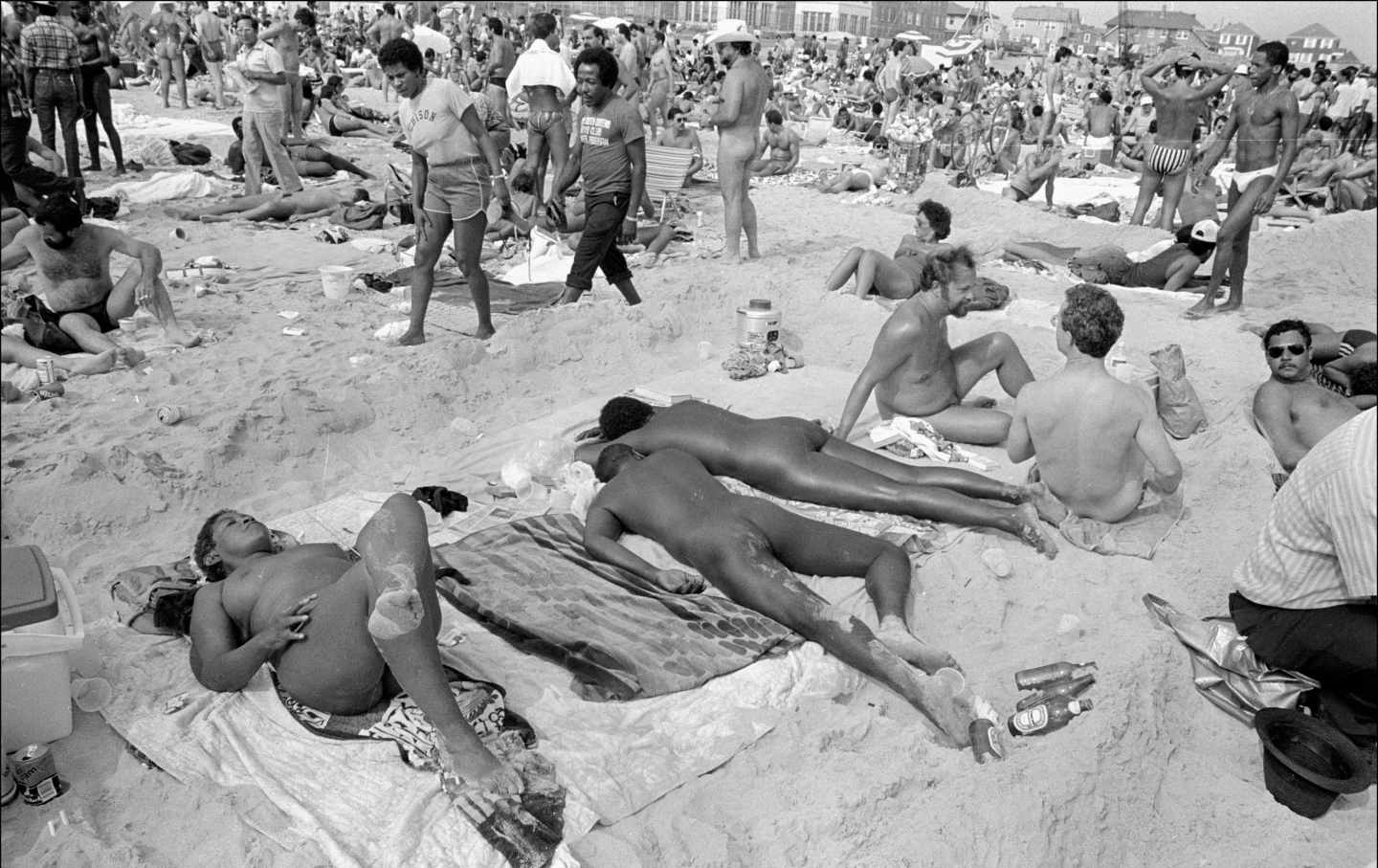
What Remains of Riis? What Remains of Riis?
A new members’ club has revived Riis Park’s long-vacant bathhouse, reopening old questions about whom the People’s Beach is really for.
We Need to Protect College Sports from Ted Cruz We Need to Protect College Sports from Ted Cruz
In this week’s Elie v. U.S., our justice correspondent looks at the Supreme Court’s rejection of Trump’s latest move to restrict mail-in voting. Plus, why Ted Cruz’s college-...
Why Aren’t We Talking About the Warmongering Lies of Mike Rogers? Why Aren’t We Talking About the Warmongering Lies of Mike Rogers?
The media’s relentless focus on Hasan Piker allows the dishonest GOP hawk (and actual Michigan Senate candidate) to evade scrutiny.

Netanyahu Is Accused of Ignoring Warnings About October 7 Netanyahu Is Accused of Ignoring Warnings About October 7
Will justice be served?

Trump Is a Runaway Train—and Nobody’s Pulling the Brakes Trump Is a Runaway Train—and Nobody’s Pulling the Brakes
Everywhere you look, the president is causing chaos and destruction.

