
The Grit and Resilience of Student Protesters
Gen Z is exhibiting the competence, control, and commitment that it has been castigated, as a generation, for lacking.
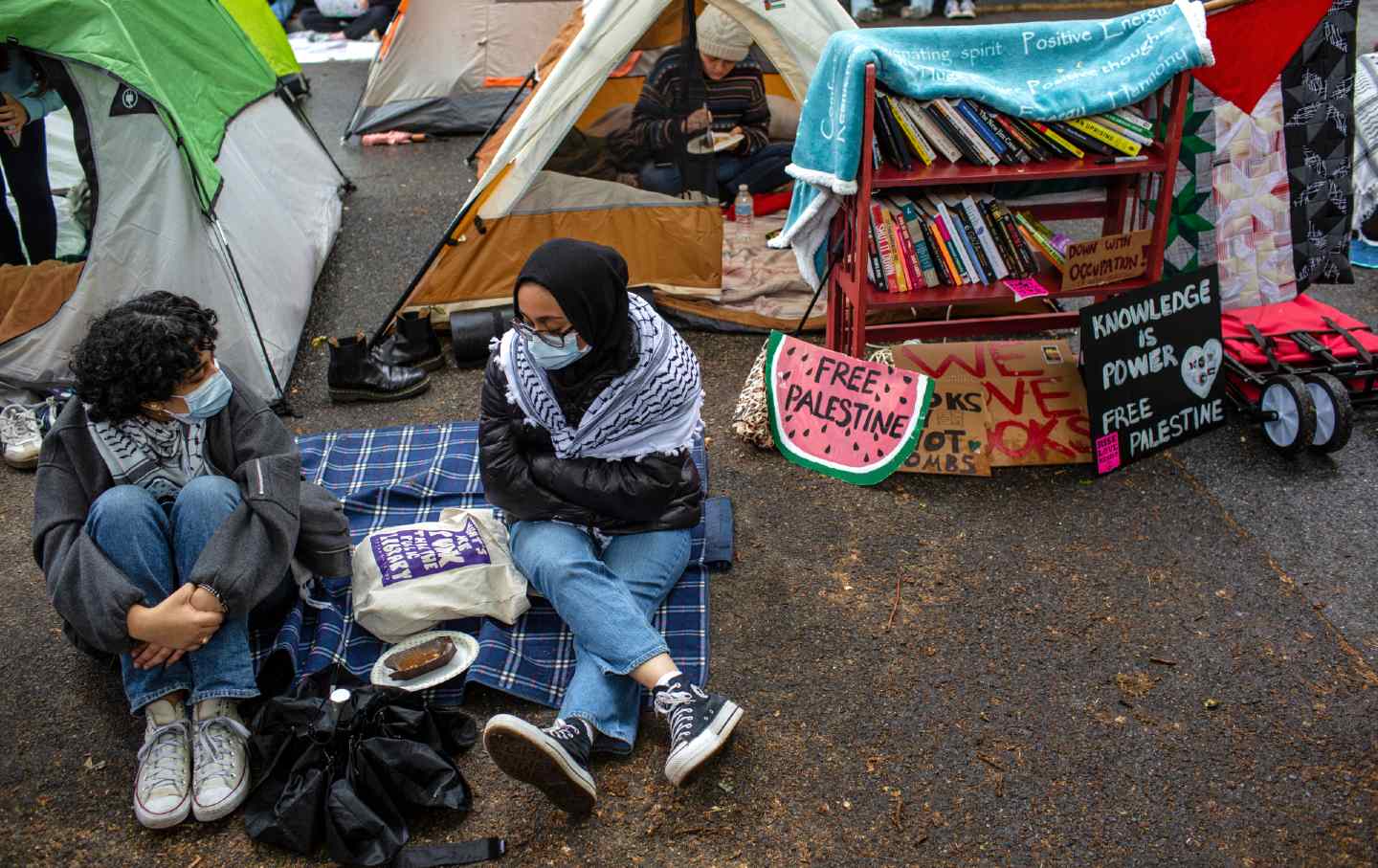
Students set up an encampment in solidarity with Palestine at George Washington University with other area universities in Washington, DC, on April 27, 2024.
(Probal Rashid / LightRocket via Getty Images)There is an irony in the fact that students protesting the Israel-Gaza war grew up hearing that they were “coddled” and “lack resiliency.” Critics scolded Gen Z for “needing safe spaces” and being “unable to cope” without trigger warnings. They claimed society was raising this generation in a “feminized” culture that’s left it weak and without purpose.
The early 2000s, the birth years for many of the students now protesting, marked the start of a period in which parents and educators worried that American children were not resilient enough. These concerns centered on children in upper income brackets attending elite institutions like the ones where protesters are now clashing with administrators and law enforcement. In 2006, one psychologist dubbed privileged children “America’s newly identified at-risk group,” leading to the warped conclusion that social vulnerabilities were resilience advantages for materially impoverished children. As Jonathan Haidt and Greg Lukianoff put it, in their 2018 book The Coddling of the American Mind, this generation has been “set up for failure.”
And yet, here they are, many of them the most privileged students in the country, risking their physical safety, academic standing, and futures by demanding accountability from powerful administrators. They are facing down militarized police and being threatened with arrest, tear gas, tasers, and brutality. They are, in fact, exhibiting the grit and competence, control and commitment that they have been castigated, as a generation, for lacking.
Resilience-shaming critics often conflate two different things: “resilience” as a process of adaptation and resilience as a proxy for a worldview. A worldview that is, at best, individualistic, hyper-masculinized, universalizing, and, at worst, invested in perpetuating supremacist norms and violent domination. That’s a lot to pack into “resilience,” I know, but bear with me.
The presumption behind the suggestion that younger generations lack resilience is that there is one “best way” to cope with hardship that is optimized for achieving personal well-being and success. This standard includes, among other factors, the belief that we grow from suffering and that only the fittest survive, through an amorphously defined “mental toughness.” Young people are supposed to be self-sufficient, optimistic, able to “bounce back” and quickly return to productivity and be grateful for what they have.
In this estimation, resilience is an individual trait demonstrated through self-sufficiency, control, and competence. Insofar as this notion of adaptation highlights independence and productivity, it takes for granted the emotional labor and care work that make both possible. It’s an ideal well-suited to competition, workplace needs, and winning, and it is invested in the belief that we personally “grow” from our suffering. In the process, however, this paradigm of resilience erases power, social context, and history. It depoliticizes circumstances of stress and crises. At its core, it is a resilience based on separation, competition, and domination.
The students protesting today have had to adapt to the world as it is. Younger people aren’t “different” and distressed, because they lack the right mindset or don’t understand what is happening around them. They are distressed, because they understand that the world is burning, and that adults have repeatedly failed them.
We are all familiar with the crises that this generation faces: climate catastrophe, widening economic inequality, highly visible and violent social injustices. They’re inheriting water, land, and bodies filled with chemicals. They’ve grown up, carrying bullies, racists, and rapists in their back pockets, as ever-present threats that live on their phones. They’ve watched delusional billionaires benefit from their addictions and anxieties. Their introduction to public and civic life—going to school—was shaped by gun violence and the constant threat of death. All of this before a pandemic derailed their adolescent lives. Covid-19 turned every social interaction into a life-or-death ethical dilemma, highlighting inequalities of wealth and poverty; gender, class and race; global power and powerlessness.
Notably, this generation grew up in accelerated sociotechnical environments. Digital natives, their understanding of the world has been shaped by visually intensive, networked, global media that has exposed them to intense social dynamics, fraught political debates, diverse perspectives, and viscerally raw depictions of current life and history. Their media—from Tumblr to TikTok—reveals connections between people and ideas and time. In the process, their way of adapting is relational, not individualistic. Older pundits routinely ignore or minimize our entanglements with one another and our environments, but students who are protesting, like so many of their peers, cannot. To them, our interdependencies are undeniable. Why would they adapt in ways that ignore those interdependencies?
It’s not as though they have a choice. Most traditional turning points in their lives—relationships and sex, school life, graduations—have been marred or prevented by crises that extend far beyond their personal environments or control.
As a foundation for envisioning the future, the hard truths of the past 25 years would depress even the most dedicated positive thinker. Escalating rates of mental distress, anxiety, depression, and self-harm are the source of legitimate and grave concern among parents, educators, and social scientists. But rates of despair and despondence have been rising for decades, during which time experts have pinned the cause on everything from late-stage capitalism and environmental toxicity to unregulated technology and (also unregulated) women’s liberation. If this generation suffers more, it could very well be the compression effects of acceleration and of exposure to the many indicators of what can feel like imminent collapse.
Popular
“swipe left below to view more authors”Swipe →Sometimes, however, distress is the appropriate response to crisis. It is a resilient response. In the traditional paradigm, optimism and stick-to-itness are paramount. But there are names for optimism when it exceeds its usefulness and leads to denialism: illusion and delusion among them. Younger people’s emotional distress signals instead the cognitive flexibility required to employ pragmatism, optimism, and pessimism strategically. Their protesting is, in fact, adaptive optimism. What after all is a protest if not the hopeful belief that you can change the future?
Student protesters also demonstrate another key resilience attribute: cognitive flexibility, which allows them to resist stereotypes and oppositional thinking, such as, for example, a victim/perpetrator binary. Students go out of their way to acknowledge the complexity of the Israel/Gaza conflict, recognizing that the current situation is shaped by historical, political, and social factors that defy simple, black-and-white categorization.
Consider, for example, that across justice movements—for Black Lives, against gun violence, for women’s rights, for peace—young people show that they are able to think in terms, as Holocaust scholar Michael Rothberg puts it, of our being “implicated subjects.” They are more honest about the ways we are enmeshed in harms by virtue of being socialized in, belonging to, and benefiting from systems that perpetrated and continue to perpetrate injustices. In the case of the current campus protests, they want to stop being implicated in a specific ongoing injustice and hold power accountable.
While media and administrators seem to cling to an ideal of faux “normalcy” in which injustices were ignored, these students are not. They are intent on repair, not restoration. They are well-versed in holding many truths at once and aware of how violence and oppressive systems make their way into not only institutions but interpersonal relationships as well. How else do you understand Jewish students holding Passover seders with classmates at university protest camps for peace and Palestinian rights and dignity?
These students are politically engaged, sophisticated thinkers who are using their life experiences and adapting to each other and to the planet in healthier, fairer ways: relationally, collectively, and purposefully.
None of this is to say that protesters and their protests are either absolutely ideologically or philosophically aligned. Mass movements are snarly, complicated messes, and no one person or group can define or contain them or people who attach themselves to them. There have been egregious acts of antisemitism on some campuses, and words and actions can, even if unintentionally, fall back on historically resonant dog whistles. However, pro-Palestinian students, many of whom are themselves Jewish, have been consistently outspoken in their denouncements of antisemitism while rejecting its evolving conflation with anti-Zionism.
As citizens who have grown up protesting, they are experts in exercising their free speech rights, almost always, peacefully. Already seasoned activists through repeated necessity, they strive to listen to others and to foreground historically marginalized voices. As a cohort, they evidence an ethics of care that leads them toward dialogue, not debate.
The truth is that critics of this generation are not addressing a problem of children who can’t cope and aren’t resilient, but one of children who refuse to conform. These students are highly resilient—they’re just resilient in a way that makes them ungovernable.
Support independent journalism that does not fall in line
Even before February 28, the reasons for Donald Trump’s imploding approval rating were abundantly clear: untrammeled corruption and personal enrichment to the tune of billions of dollars during an affordability crisis, a foreign policy guided only by his own derelict sense of morality, and the deployment of a murderous campaign of occupation, detention, and deportation on American streets.
Now an undeclared, unauthorized, unpopular, and unconstitutional war of aggression against Iran has spread like wildfire through the region and into Europe. A new “forever war”—with an ever-increasing likelihood of American troops on the ground—may very well be upon us.
As we’ve seen over and over, this administration uses lies, misdirection, and attempts to flood the zone to justify its abuses of power at home and abroad. Just as Trump, Marco Rubio, and Pete Hegseth offer erratic and contradictory rationales for the attacks on Iran, the administration is also spreading the lie that the upcoming midterm elections are under threat from noncitizens on voter rolls. When these lies go unchecked, they become the basis for further authoritarian encroachment and war.
In these dark times, independent journalism is uniquely able to uncover the falsehoods that threaten our republic—and civilians around the world—and shine a bright light on the truth.
The Nation’s experienced team of writers, editors, and fact-checkers understands the scale of what we’re up against and the urgency with which we have to act. That’s why we’re publishing critical reporting and analysis of the war on Iran, ICE violence at home, new forms of voter suppression emerging in the courts, and much more.
But this journalism is possible only with your support.
This March, The Nation needs to raise $50,000 to ensure that we have the resources for reporting and analysis that sets the record straight and empowers people of conscience to organize. Will you donate today?
More from The Nation
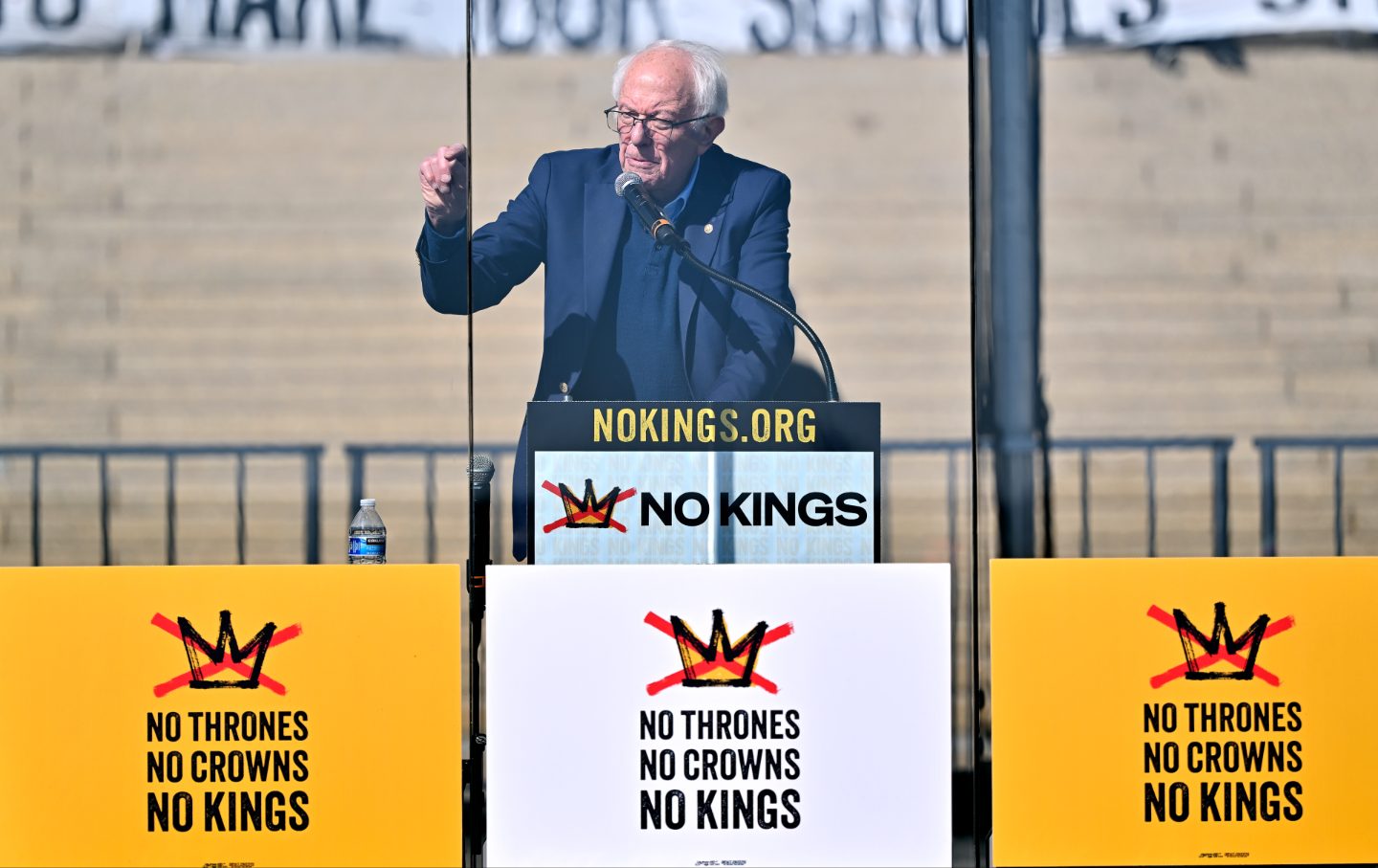
Bernie Sanders: “This War Must End Immediately!” Bernie Sanders: “This War Must End Immediately!”
The senator delivered a powerful message on Iran at the No Kings Rally in Minnesota.
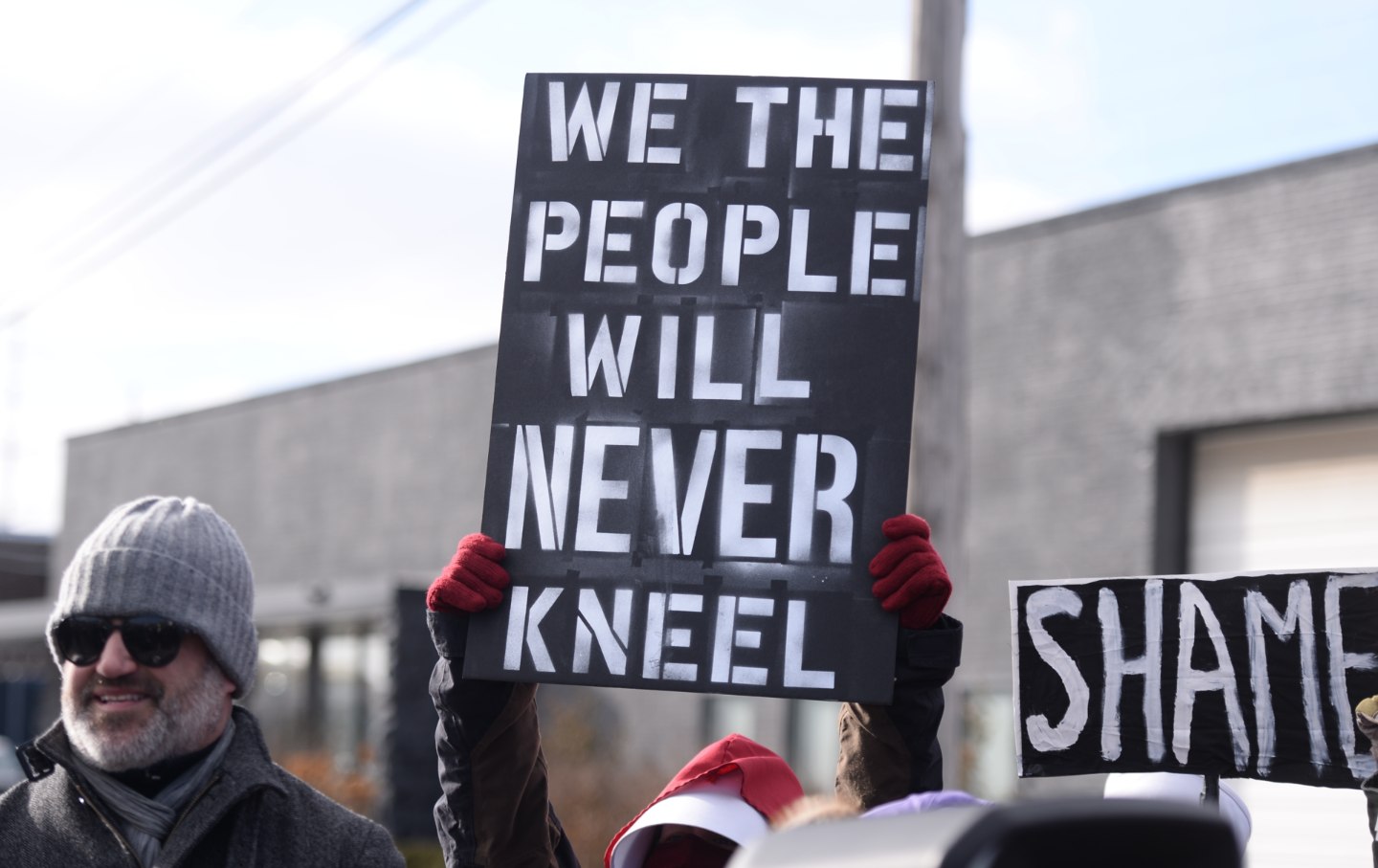
No Kings! No Wars! No Kings! No Wars!
The founders of the United States feared monarchically inclined presidents who could wage wars of whim.
What We Must Learn From the Revelations About Cesar Chavez What We Must Learn From the Revelations About Cesar Chavez
The sexual predations of the late labor leader follow a depressingly familiar pattern in left organizing circles.
Dolores Huerta: “My Silence Ends Here” Dolores Huerta: “My Silence Ends Here”
The labor movement icon speaks out after revealing that she was sexually assaulted by Cesar Chavez.

Trump Wants to Criminalize Dissent. This Texas Case Could Help Him Do It. Trump Wants to Criminalize Dissent. This Texas Case Could Help Him Do It.
The Prairieland Defendants are on trial in a case that could set a chilling precedent for the right to protest in the United States.

