
For Many Students, Labor Organizing and Palestinian Solidarity Are One Movement
At Dartmouth, unions and pro-Palestine activists have developed their causes side by side around a vision of collective campus liberation.
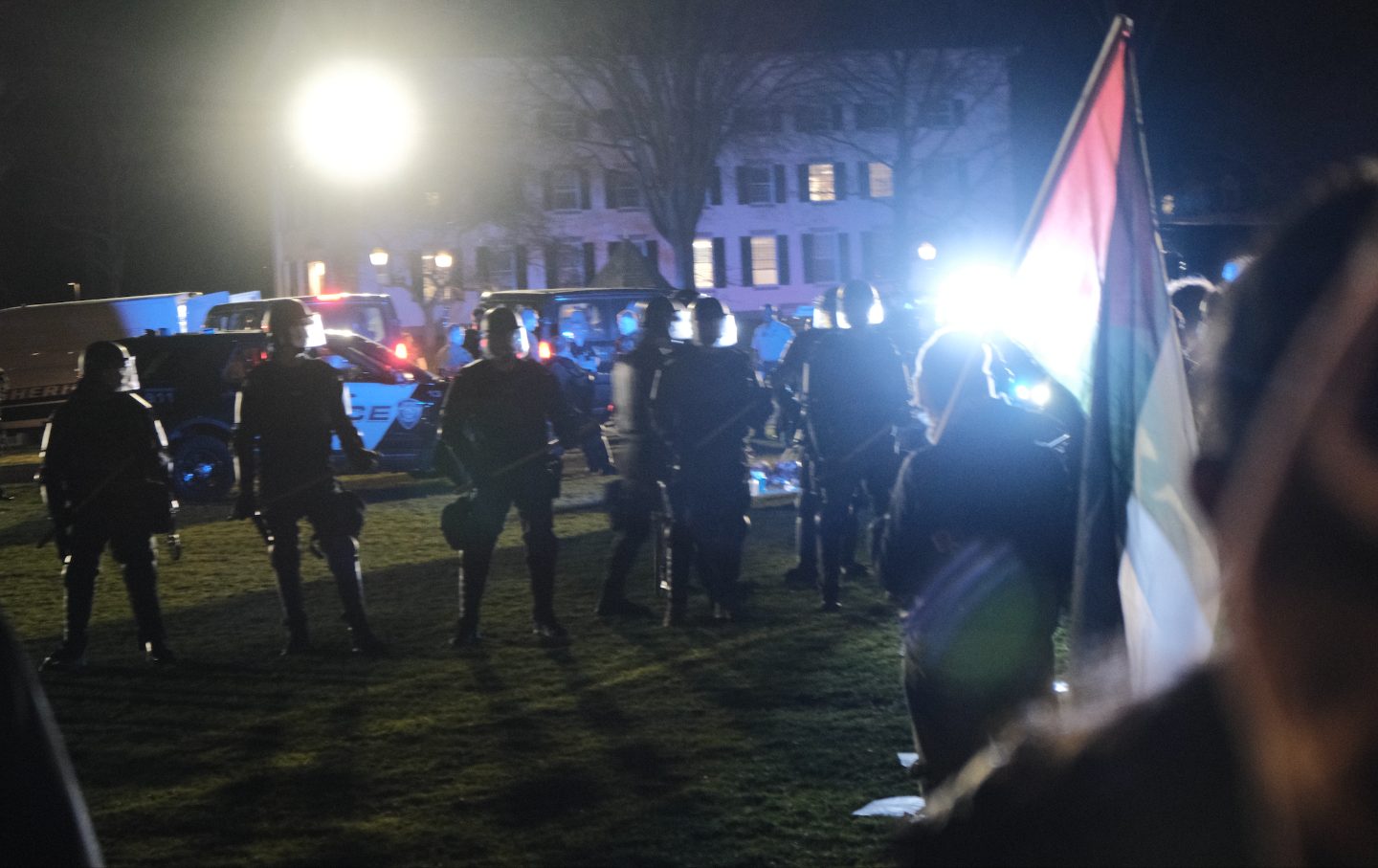
The reverberations from May 1 are still being felt on Dartmouth’s campus. That day, undergraduates formed an encampment on the campus green and graduate student workers began a general strike—a carefully-planned, jointly-coordinated challenge to the college’s investments in Israel and their treatment of graduate workers.
Both events were announced at a crowded “Labor for Liberation” rally, and the union and Palestine were explicitly linked as two halves of one action by the organizers. “It is through our unions that we can sever Dartmouth’s ties to the war machine,” said Danny Keane, a member of the Palestine caucus of the union, “and build a people’s university.”
Shortly after these words, tents were set up and the strike was officially underway. Mere hours later, state riot police would be called to the green to swarm the tents and those surrounding them. In the violent chaos and frenzy that followed, nearly 90 students, faculty and community members were arrested, including Professor Annelise Orleck, the former head of Jewish Studies at Dartmouth who was knocked to the ground, zip-tied, and taken into custody.
Court dates are still pending for many of the arrested, and the graduate strike has only recently concluded in a contract with important new benefits in the areas of dental coverage, medical leave, and childcare. Still, despite the disparity in success between the two, the lesson from May 1 is clear: at Dartmouth, the unions and Palestine are one movement.
At Dartmouth, labor organizers and Palestine activists have been developing their causes side by side around a vision of collective campus liberation. The situation at Dartmouth is not entirely unique; to quote Keane in his speech at the rally, “The labor movement for Palestine is not isolated to [Dartmouth’s] campus.” Many other schools, especially the University of California system’s historic month-long academic workers’ strike, have seen cooperation between unions and the Palestine movement in recent months.
What sets Dartmouth apart is the unique unity that these two causes have achieved on campus, with no readily discernible difference between the people who organize labor and the people who organize for Palestine. As Roan Wade, one of the key organizers in both of Dartmouth’s encampments and a union organizer on campus, explained to me, “The unions and Palestine are one struggle…it’s the same people working for the same vision.”
“Together we are creating the infrastructure for a more democratic institution, where students can get their needs met and voices heard,” they added.
Working between the undergraduate student union and the Palestine Solidarity Coalition (PSC), Wade was among the first to set up an encampment in protest of the war on Gaza in October 2023. They are one of many students active in both the Student Workers Collective at Dartmouth—which represents Dartmouth Dining Services student workers and Undergraduate Advisors—and the PSC, which have continued to support the joint cause of Palestine and labor: through a student hunger strike for Palestine in the winter and the events of the spring, student unions on campus have been an active base of support for Palestine organizing.
“An injury to one is an injury to all: we will not sit idly by as our members, colleagues, and friends are beaten up at the orders of an unaccountable, uncontrolled administration,” the SWCD declared in a statement shortly after the May Day arrests, calling for President Beilock’s resignation.
To understand this symbiotic model of activism, one has to go back to the pandemic. “With the rise of COVID and the shutdown of campus, many folks were left food-insecure, housing-insecure, struggling with rent and groceries,” explains Ian Scott, co-founder of both the Dartmouth Palestine Solidarity Coalition and the SWCD. “In response to the administration’s indifference, we started organizing.”
What would start as a few students doing mutual aid work to protect their struggling peers from an indifferent college administration would evolve into a unified leftist culture, loosely coalesced around the Young Democratic Socialists of America and the Dartmouth Student Union (a student organization, not a labor union). With activists from causes across campus brought together under one banner, the basis for a new politics of solidarity was created, one where different organizations could work together not as mere partners but as “one united front,” according to Scott. That spring, this cohort of student activists would go on to found the PSC and, a few months later, the SWCD, the first undergraduate union at Dartmouth.
Since then, union activity and Palestine organizing have been inextricably linked. One of the first campaigns for both the SWCD and the PSC was to unshelve Sabra hummus from university cafeterias in support of the Boycott, Divest, and Sanctions movement to pressure Israel into complying with international law—a demand eventually brought to the front of the negotiating table for the union’s contract. Through joint campaigns such as these, activists at Dartmouth have made the link they see in the abuse of labor and the College’s investments in Israel very clear.
Popular
“swipe left below to view more authors”Swipe →Recent months have increased solidarity between the groups; when members of the undergraduate union were arrested in the spring, the union moved to file unfair labor practices against the College—explicitly calling expressions of support for Palestine a labor right in a time where students are increasingly being punished for doing so.
As the fall semester begins and the SWCD’s contract is up for renewal, students are carrying the joint struggle to the negotiating table. New horizons for solidarity are beginning to open up, including a new faculty and staff group for justice in Palestine. Many student activists are hopeful that this model of organizing can spread to other schools. “The strategy has been incredibly effective at Dartmouth,” said Wade. “We think there’s potential for student unions across the country to work with Palestine activists for a shared liberation…and we want to help lead that movement.”
More from The Nation
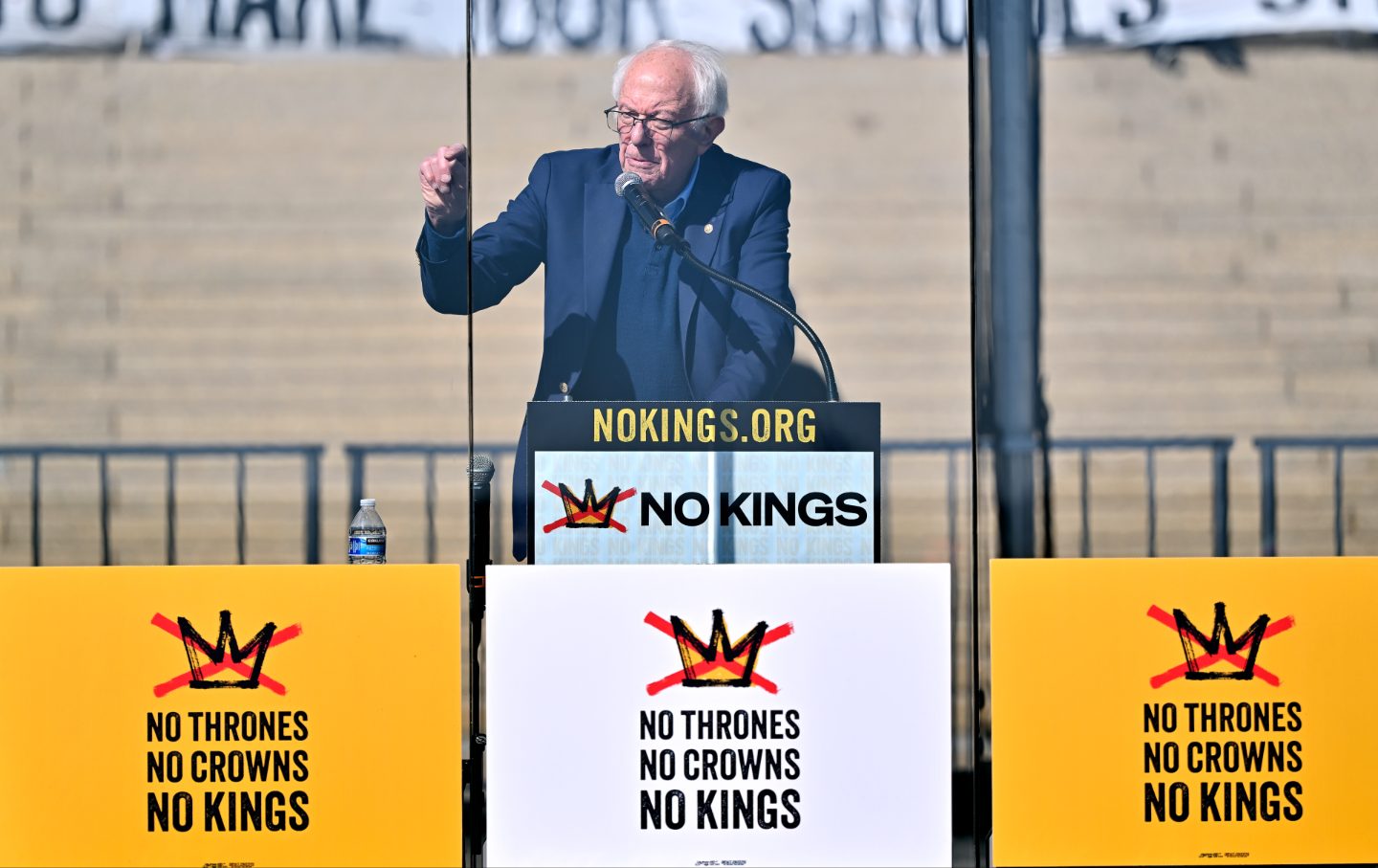
Bernie Sanders: “This War Must End Immediately!” Bernie Sanders: “This War Must End Immediately!”
The senator delivered a powerful message on Iran at the No Kings Rally in Minnesota.
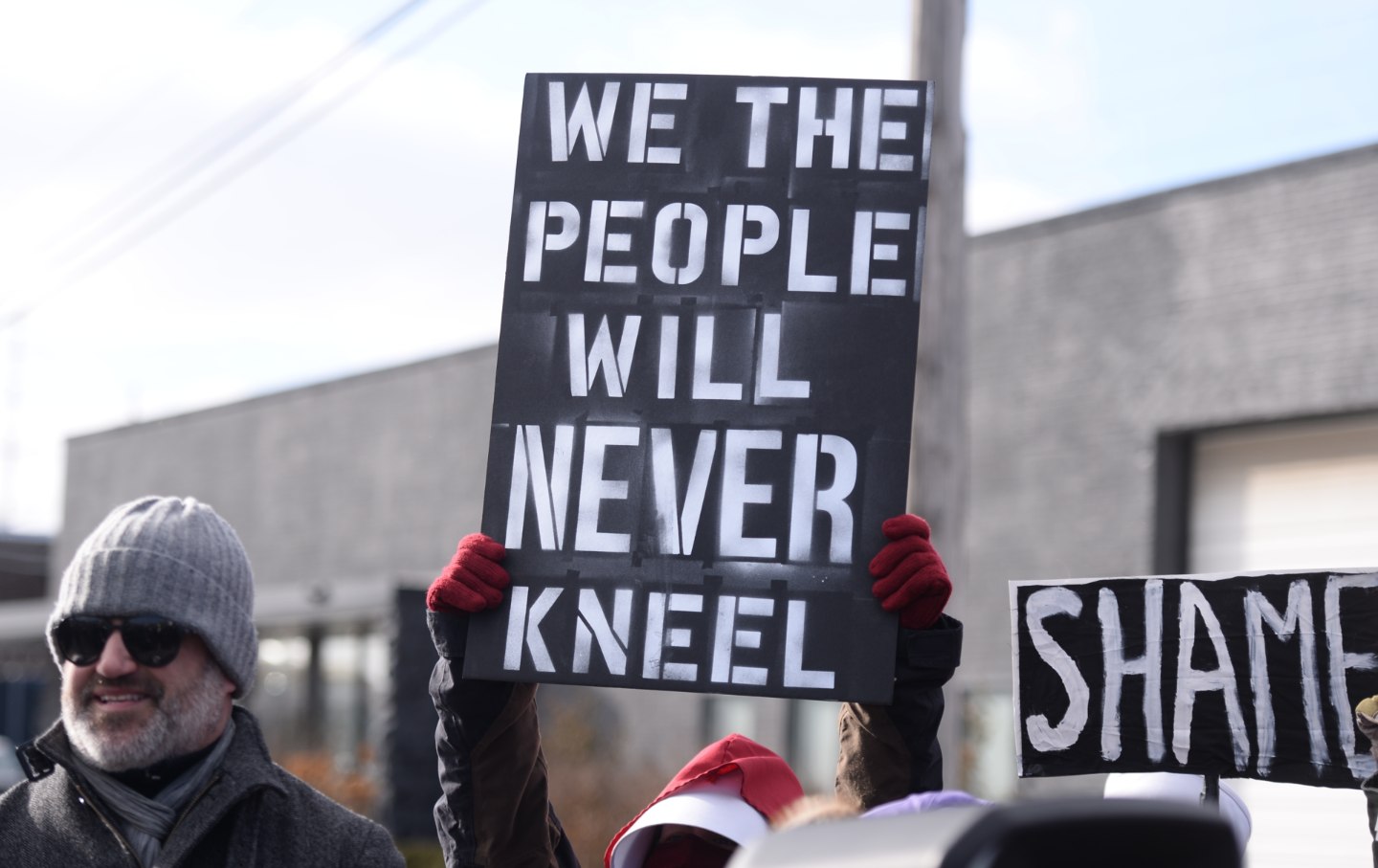
No Kings! No Wars! No Kings! No Wars!
The founders of the United States feared monarchically inclined presidents who could wage wars of whim.
What We Must Learn From the Revelations About Cesar Chavez What We Must Learn From the Revelations About Cesar Chavez
The sexual predations of the late labor leader follow a depressingly familiar pattern in left organizing circles.
Dolores Huerta: “My Silence Ends Here” Dolores Huerta: “My Silence Ends Here”
The labor movement icon speaks out after revealing that she was sexually assaulted by Cesar Chavez.

Trump Wants to Criminalize Dissent. This Texas Case Could Help Him Do It. Trump Wants to Criminalize Dissent. This Texas Case Could Help Him Do It.
The Prairieland Defendants are on trial in a case that could set a chilling precedent for the right to protest in the United States.

