“What would Jesus do if he visited the United States Senate?”
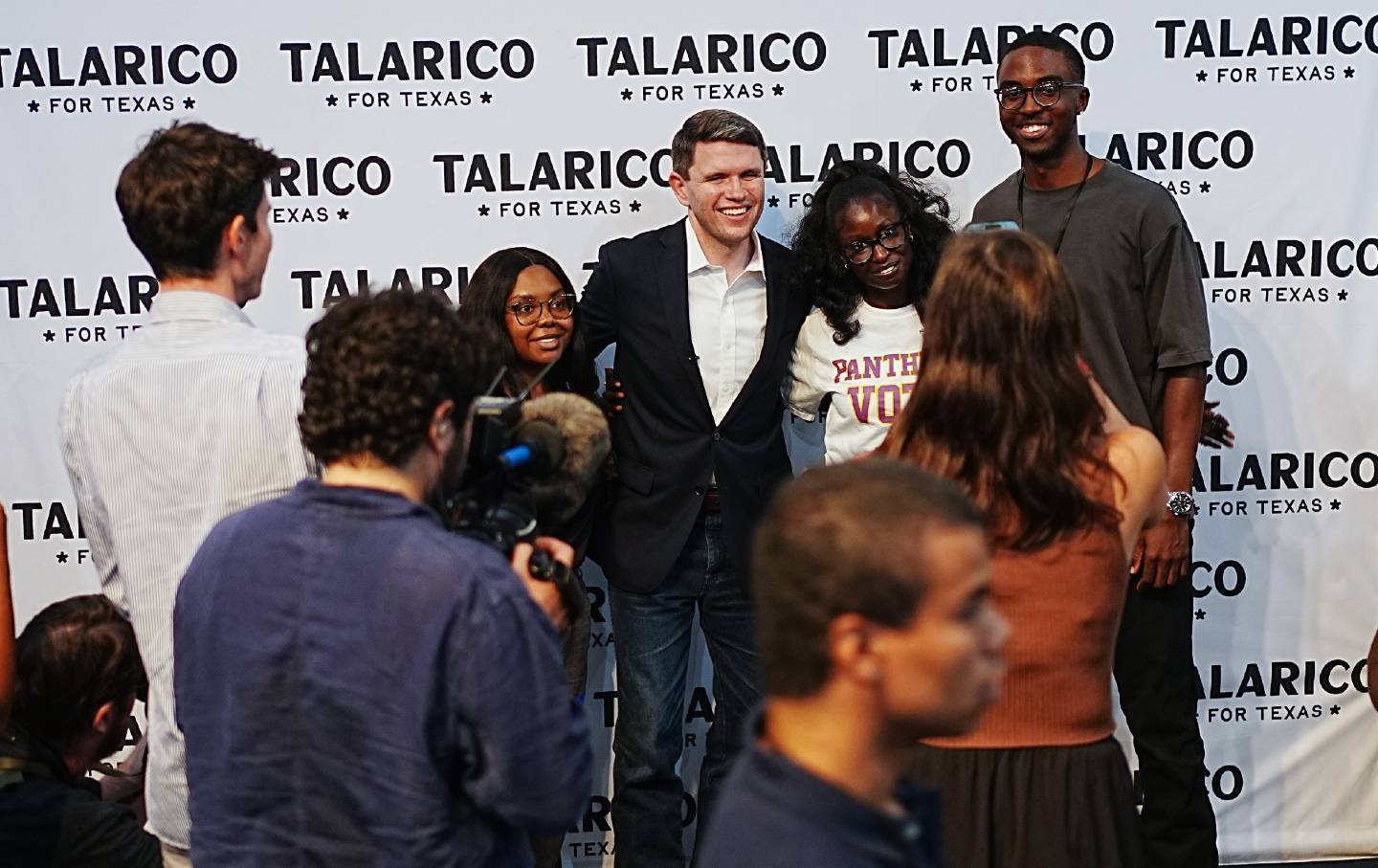
It’s a question one Senate hopeful has repeatedly asked on the campaign trail. To anyone who’s followed the last 40 years of American politics, this merging of preaching and politics may not sound particularly novel. But the candidate’s answer—and his party affiliation—marks a surprising departure from the usual partisan scripts.
“I think he would tell the senators on the floor, ‘Depart from me,’” James Talarico has told audiences. “For I was hungry and you cut my food assistance. I was sick and you kicked me off Medicaid. I was a stranger and you deported me and my family.”
Talarico, a Presbyterian seminarian, is running on a compassionate, liberal Christianity rarely seen since the right gained a stranglehold on faith-forward politics decades ago. But in recent years, Republicans, previously the bastions of good old-fashioned, Focus on the Family traditionalism, have rolled over to the dark underbelly of their movement. Exit: modest family values. Enter: barstool conservatism.
In doing so, they’ve created an opening for Democrats who make their religious convictions central to their politics. And unlike the Moral Majority of years past, these liberal candidates are preaching a faith that’s inclusive, optimistic, and winning support on both sides of the aisle.
Entrenched though it’s been, the “God gap” between Democrats and Republicans is a relatively recent creation. The Republican Party platform from 1972 contains no references to God, and in 1976, evangelicals voted for the Sunday-school teachings of Jimmy Carter.
That all changed in the 1980s with Reagan’s embrace of Jerry Falwell, who urged his fellow evangelical pastors to bring politics to the pulpit and push their congregations toward conservative candidates. The conflation of Republican beliefs and Christian identity had officially begun, and after decades of work from the likes of Pat Robertson, James Dobson—culminating in eight years of President George W. Bush—there was no stopping the merger.
But just when the God gap had reached its peak, Trump slithered in. While his extramarital affairs and long history of alleged sexual misconduct always made for an uneasy allegiance with the religious right, the president has more recently drawn fire from Christian groups for posting an AI image depicting himself like Jesus, suspending refugee programs, and almost allowing the livestream execution of a prisoner. And though he says the Bible is his favorite book, it’s hard to believe he can stomach a narrative that elevates another power above his own. The lack of pictures probably doesn’t help, either.
Regardless, white evangelicals continue to approve of Trump and his political juggernaut in shockingly high numbers, albeit less resoundingly than they did last year. But across the country, Republican candidates replicating his cheap political playbook aren’t faring as well.
Nowhere is this more apparent, of course, than the messy Senate brawl in Texas.
In one corner, we have MAGA adherent Ken Paxton, perhaps the single most morally bankrupt Senate candidate in the country—and it’s generally a competitive category. A self-identified Christian, Paxton cannot name what church he attends.
In the other corner, Talarico—a theologian, oratorical talent, and former underdog in this race—has embraced the campaign slogan “It’s time to start flipping tables,” a direct reference to the passage in the Bible when Jesus admonished merchants for corrupting a sacred temple with exploitative commerce. It’s David and Goliath if Goliath were indicted on two counts of securities fraud.
But Talarico isn’t the only Democrat closing the “God gap.” Senator (and Reverend) Raphael Warnock set the stage with his Baptist pride and 2021 Senate win—and he’s not ruling out a 2028 run for the presidency. And at least six Democrats running for office this cycle are ordained clergy, including Kansas’s Adam Hamilton, who, with the support of prominent local Republicans, has turned his deep-red state into a battleground.
It’s not just Christians, either. Mayor Zohran Mamdani openly celebrates his Muslim faith, despite Islamophobic backlash. And Senate hopeful Abdul El-Sayed continues to embrace his Muslim identity ahead of his contentious election in Michigan. Their example is broadening the definition of what a “faith-first candidate” means in America.
And in turning toward faith, Democrats are far from alone. After years in slow free fall, the share of Americans who identify as Christian is no longer declining. Meanwhile, 31 percent of Americans now see religion as gaining influence—still a distinct minority, but that’s the highest number Pew has measured in 15 years.
Popular
“swipe left below to view more authors”Swipe →Perhaps, with everyday life increasingly filled with misinformation, AI deepfakes, and broad losses in institutional confidence, more Americans are seeking comfort beyond empiricism. It’s no surprise, then, that Gen Z, facing the host of problems we’ve left them with, might be more religious than other generations.
By long ceding the pulpit to Republicans, liberals only made it easier for the right to smuggle cruel policies and ugly bigotries into our political mainstream under the guise of religion. With this new crop of faith-fluent Democrats, however, the left may have found a potent way to fight back. After all, as Talarico has said, quoting scripture, “You can’t love God and hate other people.”
For decades, Republicans have dominated the intersection of religion and American politics. Now Democrats like James Talarico and Raphael Warnock are drawing on their faith to articulate a different vision of public life.
Texas Senate candidate James Talarico is invoking Christian teachings to challenge Republican policies on immigration, healthcare, and poverty. His campaign reflects a broader effort by religious Democrats to reclaim the language of faith.
From Christian clergy running for Congress to Muslim politicians embracing their religious identities, a new generation of Democratic candidates is challenging the assumption that faith-based politics belongs exclusively to the right.
More from The Nation
Even Republicans Are Waking Up to Trump’s Corruption Even Republicans Are Waking Up to Trump’s Corruption
And, somewhat shockingly, so are Democratic elites.

Mamdani Can No Longer Avoid the Issue of the NYPD Mamdani Can No Longer Avoid the Issue of the NYPD
The mayor has been able to put difficult questions about policing on the back burner—until now.
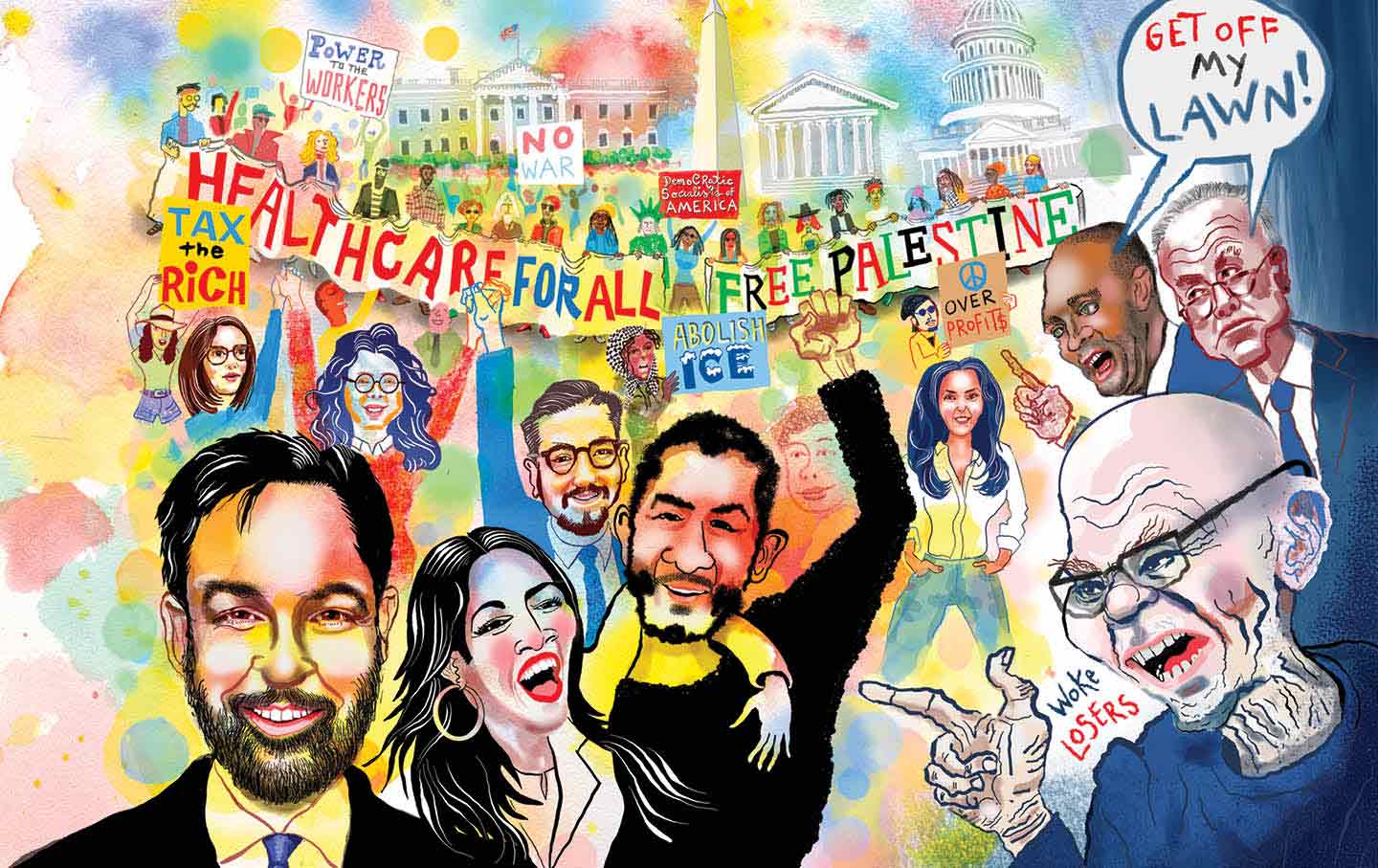
Why Democratic Leaders Keep Waging War on the Young Why Democratic Leaders Keep Waging War on the Young
The party's silver-haired establishment is caught up in an existential culture war.
The White Man Can Always Take What You Have The White Man Can Always Take What You Have
In this week's Elie v. US, our justice correspondent breaks down the real message of the attacks on Ilhan Omar. Plus: the anti-trans case that will come for us all.