
Is This the American Suez?
If the pointless war on Iran is a historical marker equivalent to Suez in ignominy, the question becomes, what do we do with this “Decline of Empire” moment?
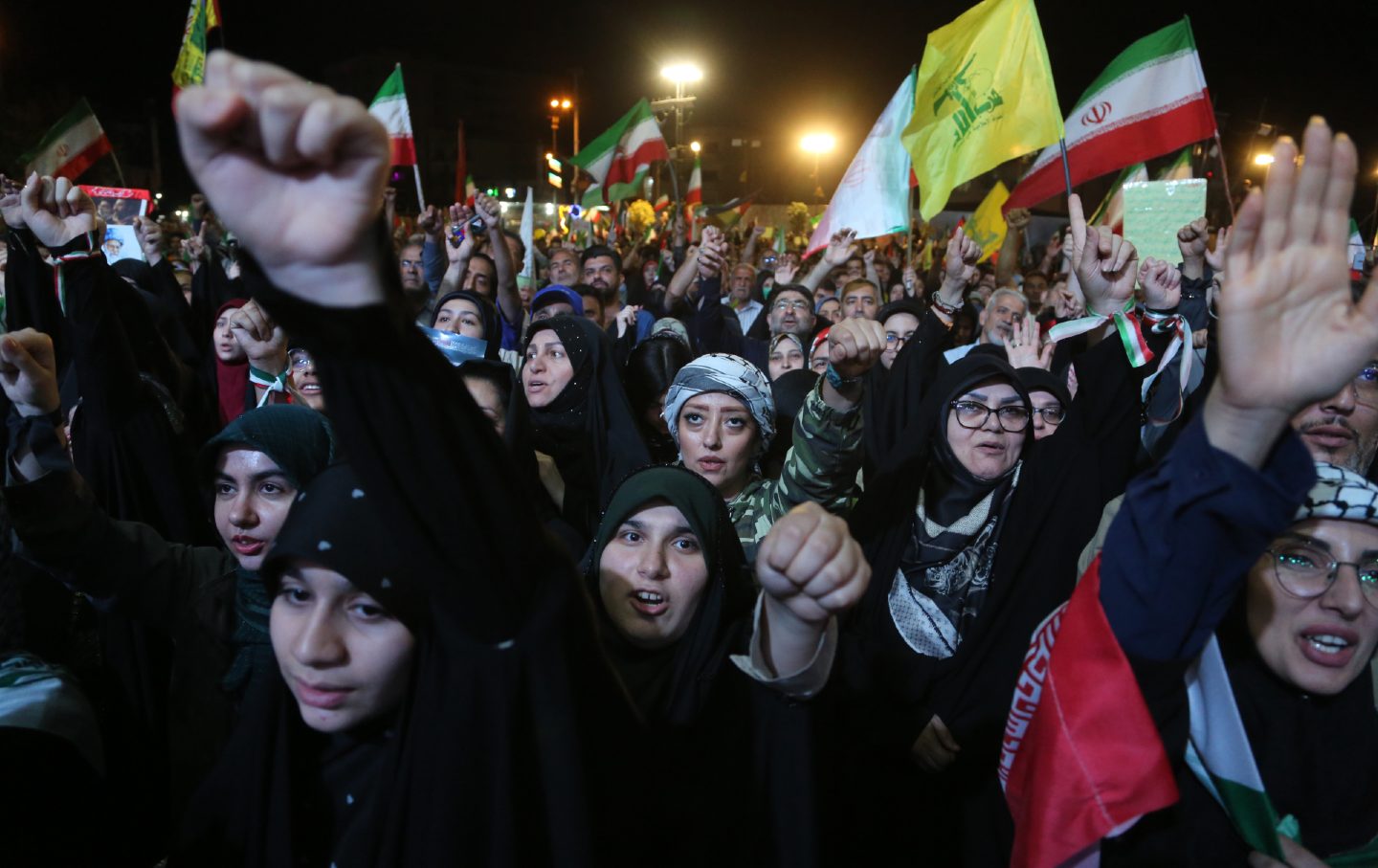
Flash back to the boastful, triumphalist 1990s, as in Madeleine Albright’s telling Matt Lauer in 1998, “If we have to use force, it is because we are America; we are the indispensable nation. We stand tall and we see further than other countries into the future.” Well, goodbye to all that. The United States is now enduring a singular humiliation akin to that Britain and France suffered 70 years ago in the Suez Crisis. That event, little-remembered here but iconic for the rest of the world, signaled the end of old-style European imperialism. In its wake arrived something new, the Americans’ vast “empire of liberty” constrained only by the Soviet Union’s upstart “empire of justice,” as Odd Arne Westad put it in his now-classic The Global Cold War: Third World Interventions and the Making of Our Times (2006).
Following Tehran’s systematic checkmating of US authority, only an ostrich could deny our decline as a Great Power. Unless you are like Trump and his minions, who think history stops at our shores, the fall of the American imperium was preordained. Sooner or later, other nations would innovate, expand, recover from defeat—but not this soon, most of us thought! Even 50 years ago, while it was regaining strategic equilibrium after the disaster in Vietnam, it was self-evident that the United States would never regain its dominance circa 1945, when we had a majority of the world’s industrial capacity, a nuclear monopoly, and the only globe-spanning naval and air forces, plus the legitimacy granted by defeating fascism and creating the United Nations. Nonetheless, from 1991 to 2016, various Bushes, Clintons, and Obama still hailed US preeminence. That’s gone for good. The myth of the sole superpower has been blown to bits by cheap Iranian drones, and no one buys it anymore. Not the Gulf satrapies whose security we guaranteed, not the European Union, warily gearing up for war over Greenland—not anyone anywhere.
For me, the augury came in 2010. For many years, I taught how in a single generation, 1870–1900, the United States outstripped Great Britain, the fabled “workshop of the world,” in the key markers of industrial capacity—coal, iron, and steel. Twenty years ago, China had been rapidly moving ahead and then it happened: In 2010, their state-directed economy surged past ours. Now it is China that beats its three rivals combined (the United States, Germany, and Japan) in manufacturing output. Still, I presumed a long, slow draw-down of US power in the emerging multipolar world where America still waved the biggest stick.
Here is where the metaphor of “Suez” comes in. That word has no meaning to Americans, but in Europe, in particular the United Kingdom, it is a trope as powerful as “Vietnam” here, a single word conveying loss, hubris, humiliation, and failure. Why?
In 1952, the Free Officers Movement led by Gamal Abdel Nasser deposed Egypt’s King Farouk and with him remaining British influence over their longtime protectorate. Nasser spearheaded an upsurge of secular, quasi-socialist Arab nationalism throughout the Middle East, and both the US and the Soviets sought good relations with these newly sovereign nations. On July 26, 1956, Nasser announced the nationalization of the Suez Canal, until then controlled by the Franco-British Suez Canal Company. Keep in mind, this is an even more vital waterway than the Strait of Hormuz! Without consulting the United States, British, French, and Israeli leaders met in secret and agreed on a plan to seize the Canal and depose Nasser. Israel would attack first, and the two others would then invade on the pretext of separating the warring parties and protecting the Canal. On October 29, Israeli forces invaded Sinai and the Gaza Strip and rapidly advanced, joined on October 31 by French and British air and naval forces and troops. Most of the Canal Zone was soon taken.
Eisenhower was livid at what he correctly perceived as an underhanded betrayal severely undermining US diplomatic initiatives in the Middle East. He immediately applied extreme financial pressure on the British, threatening the pound. And on November 2, the UN’s General Assembly overwhelmingly approved a resolution brought by the US, and endorsed by the Soviets and their allies, requiring an immediate ceasefire and the withdrawal of all foreign armed forces from Egyptian territory. The French and the British duly retreated, tails between their legs (Israel defied the UN for some months, but eventually pulled back).
Suez was the sunset of European imperialism. Never again would the United Kingdom step out of line. It has diligently, sometimes abjectly, backed the United States in all major cases since then. The French went another way. After Charles de Gaulle came back to power in the 1958 coup ending the Fourth Republic, he dispensed with official empire, granting formal independence to 13 African colonies in 1960 while reestablishing French military and diplomatic autonomy from “the Anglo-Americans.”
If the current pointless war on Iran is a historical marker equivalent to Suez in ignominy, the question becomes, what do we do with this moment? Will the US become like the British after World War II, desperately seeking a “special relationship” with some other power just to stay in the game? Or will we just keep carpet-bombing other countries, to prove a point in which no one believes anymore? As American citizens, we cannot be bystanders. This is a once-in-a-lifetime window to frame a different course for how to relate to the rest of the world. It will not come again.
Here is a basic outline for how the US can move past delusions of permanent global domination. My modest proposal below is based on a conversation I was part of with Trita Parsi, executive vice president of the Quincy Institute for Responsible Statecraft, right now the go-to place for “trans-partisan” thinking about an ethical and practical foreign policy.
He began by pointing out that while the US has certainly suffered humbling defeats—the Bay of Pigs in 1961; intervention in Southeast Asia, 1964–1975; Iraq, 2003–2011; Afghanistan, 2001–2020—the debacle in Iran is worse. The grand strategy of the United States, premised on its unrivaled military capacity to fight two major wars at the same time, has been shredded. When push came to shove, the US could not even open the Strait of Hormuz. Governments around the world, friendly and otherwise, are rapidly internalizing that American security guarantees are unreliable and questionable, and America’s global hegemony is now seriously undermined.
If our politicians and policymakers could be made to acknowledge this new reality, there is the chance of new foreign and military policies that could achieve some bipartisan support. Their core premise must be that other countries can, will, and should step up to defend themselves. We really would put “America First,” not in the sense the MAGA right uses, of aggression unconstrained by treaties and alliances, but to focus on the common good here at home. Domestic and foreign policies cannot be separated, and we need a Marshall Plan for the United States, to go forward from the present mess of immiseration for the many and absurd profiteering for the few. Decades of “forever wars” have not made us safer, and the United States should not merely accept but actively support a multipolar world based upon global cooperation at a level never seen before.
Certainly, those premises are just a start, and the devil will be in all the details—region by region, issue by issue (trade, climate, human rights). But let us start, because there will no going back. The alternative, of imperial senescence and entropy, is too horrible to contemplate.
More from The Nation

Turkey Is Brutally Oppressing Queer People. Here’s What You Need to Know. Turkey Is Brutally Oppressing Queer People. Here’s What You Need to Know.
The government’s sweeping crackdown on the LGBTQ community is an escalation of a decades-long pattern.
The Anatomy of a Literary Scandal The Anatomy of a Literary Scandal
The pillorying of Canadian-Haitian novelist Thélyson Orélien, accused of using AI to write his new novel, is the latest in a chaotic year for French publishing.
Writing About War as Bombs Fall Writing About War as Bombs Fall
While the Israeli government launched a well-orchestrated offensive of disinformation and hyperbole that would make the illegal permissible in the war on Gaza.
Has France’s Government Overplayed Its Hand? Has France’s Government Overplayed Its Hand?
The speed and scale of the police response mark a dangerous new normal.
This Is Not an Anniversary This Is Not an Anniversary
Does remembering the date of October 7 make it easier to name?
Are Europe and Russia Slow-Walking to World War III? Are Europe and Russia Slow-Walking to World War III?
Dangerous rhetoric has been escalating on both sides for some time now.

