
Trump’s Violent Threats Can’t Hide the Truth: He’s a Humiliated Bully
Under Trump, the United States is looking for weaker and weaker victims in order to mask its own fragility.
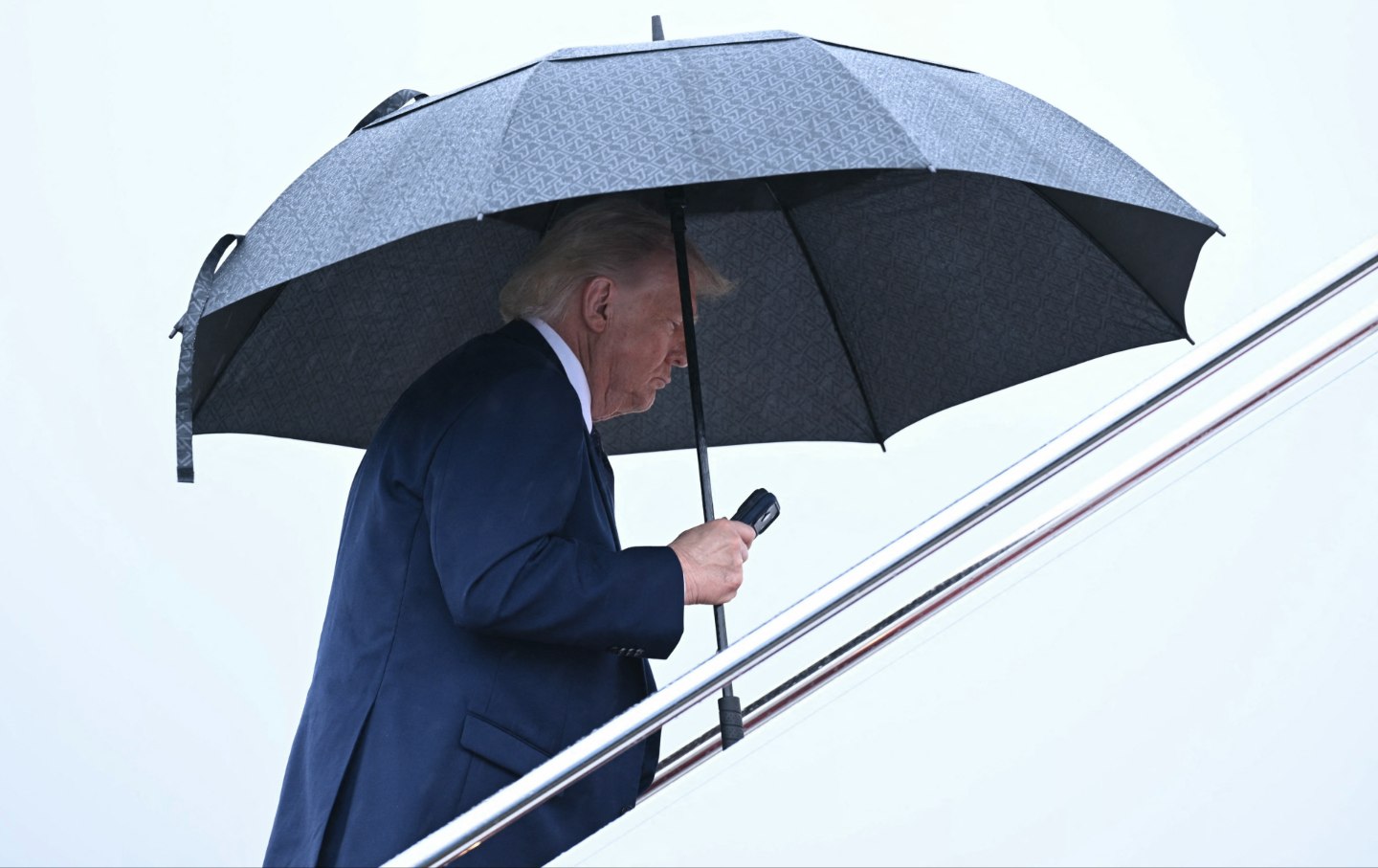
Donald Trump boards Air Force One at Joint Base Andrews on May 22, 2026.
(Brendan Smialowski / AFP Via Getty Images)Donald Trump is a rotten peacemaker for many reasons—but one of them is that he can’t even remember which enemy he’s fighting. For instance, during a cabinet meeting on Wednesday, a reporter asked Trump if the United States would accept a proposal to allow Iran and Oman to jointly administer the Strait of Hormuz. The president responded, “Oman will behave just like everybody else, or we’ll have to blow them up. They understand that. They’ll be fine.”
Trump’s opposition to any settlement that allows Iran partial control of the Strait is understandable, but his menacing words against Oman are puzzling. The Gulf state has, after all, been an American ally for decades, and the US maintains a strong military presence in the country. One supposed rationale of the current US war in the Middle East is to protect Oman and other Gulf allies against Iran.
Oman isn’t the only ally Trump is seeking to intimidate, or the only country to feel the brunt of Trump’s bloodthirsty rhetoric. The president tried to browbeat Saudi Arabia, Qatar, and Pakistan into joining the Abraham Accords by saying membership “should be mandatory.” And, as CNN notes, “Oman is at least the 15th country that he has either threatened to attack, left open the possibility of attacking, or actually attacked during his two terms as president.” While some of these countries are long-standing US foes like Iran, Cuba, Venezuela, and North Korea, many are nominally allies of the United States (or at the very least, not hostile to it): Canada, Colombia, Greenland/Denmark, Mexico, Panama, and Oman.
Trump is in effect using the war against Iran in the same way he exploited the Russia/Ukraine conflict: as a means of turning alliances into protection rackets by exhorting concessions from countries depending on the US military. It’s a mafia foreign policy that uses US military dominance as a tool of extortion to intimidate friends and foes alike.
While violent rhetoric, often manifesting itself in violent action, has been endemic to Trump’s presidency, his lashing out at Oman comes at a particularly dangerous moment. The war against Iran has been a disaster, and the only way to end it is to make substantial concessions to the Islamic Republic. And Iran is joining the ranks of nations that have effective deterrence against the United States and therefore deserve conciliation. Trump’s actions suggest that he has come to see China, Russia, and North Korea in those terms as well.
But a wounded predator can become more violent, lashing out to prove it still has the ability to dominate. This is the brute animal logic behind Trump’s threats against Oman and his increased aggression in the Western Hemisphere. Writing in The Guardian, columnist Owen Jones noted,
With the US “humiliated” by Iran, as Germany’s chancellor, Friedrich Merz, put it, you might think Trump’s appetite for conflict would be diminished. But failure does not necessarily restrain declining powers. It can make them more dangerous. Trump and his team have surely convinced themselves that conquering the Caribbean island that has defied Washington for nearly seven decades might scrub away the defeats and restore the aura of US military supremacy.
Jones plausibly suggests that Cuba might be the next US target, since Trump and Secretary of State Marco Rubio have been very open about their desire for regime change in the island nation. Cuba has long been in the crosshairs of the United States, and Trump has tightened the noose by brutally intensifying sanctions. Politico reported on Friday, “The Pentagon has spent months positioning the troops and weapons needed for the U.S. to launch a military attack on Cuba—all it needs is a final go-ahead from Donald Trump.”
Cuba is only one of several likely targets.
Precisely because the United States has difficulty imposing its will on bigger rivals, Trump is eager to find smaller foes that can serve as punching bags. The late neoconservative pundit Michael Ledeen, who was a huge admirer of Trump, said in 1992, “Every ten years or so, the United States needs to pick up some small crappy little country and throw it against the wall, just to show the world we mean business.”
Ledeen’s words can stand as the core of Trump’s foreign policy with one amendment. Because the US is now declining on the world stage, the need to beat up on a “crappy little country” can’t be a once-a-decade event but has to take place constantly.
Along with Cuba, the other nations Trump is likely to go after are all in the Western Hemisphere, as the president increasingly reverts to a 19th-century form of imperialism that sees the region as being part of the US sphere of influence.
On Thursday, The New York Times reported that the Trump administration is ratcheting up counterinsurgency programs in Guatemala and pushing to do the same in Honduras, under the mantle of the war on drugs. The larger project includes intimidating Mexico to fall in line. Citing “two people” familiar with the plans, the Times reports:
While Washington has been pushing for U.S. boots on the ground and drone strikes, President Claudia Sheinbaum of Mexico has staunchly rejected the requests. The White House’s broader strategy is to normalize an American military presence across Latin America to gain leverage over Mexico…
Stephen Miller, Trump’s deputy chief of staff for policy and homeland security adviser, is spearheading this project. He holds bimonthly “win” meetings to celebrate what he regards as triumphs, including boat strikes against purported drug dealers (a policy at odds with both US and international law).
Needless to say, what Miller regards as “wins” are disgusting and immoral displays of thuggery. As a superpower, the US unquestionably can intimidate neighboring countries and obliterate random boats on the high seas. But such policies serve no national security interest. Even in terms of displaying strength, they are counterproductive, since they are so clearly compensating for the reality that the US keeps losing wars in the Middle East. Under Trump, the United States has become a bully looking for weaker and weaker victims in order to hide its own fragility.
Popular
“swipe left below to view more authors”Swipe →None of this can hide the larger reality that the US is an empire in steep decline. In fact, it only makes that bleak reality more obvious.
Your support makes stories like this possible
From illegal war on Iran to an inhumane fuel blockade of Cuba, from AI weapons to crypto corruption, this is a time of staggering chaos, cruelty, and violence.
Unlike other publications that parrot the views of authoritarians, billionaires, and corporations, The Nation publishes stories that hold the powerful to account and center the communities too often denied a voice in the national media—stories like the one you’ve just read.
Each day, our journalism cuts through lies and distortions, contextualizes the developments reshaping politics around the globe, and advances progressive ideas that oxygenate our movements and instigate change in the halls of power.
This independent journalism is only possible with the support of our readers. If you want to see more urgent coverage like this, please donate to The Nation today.
More from The Nation
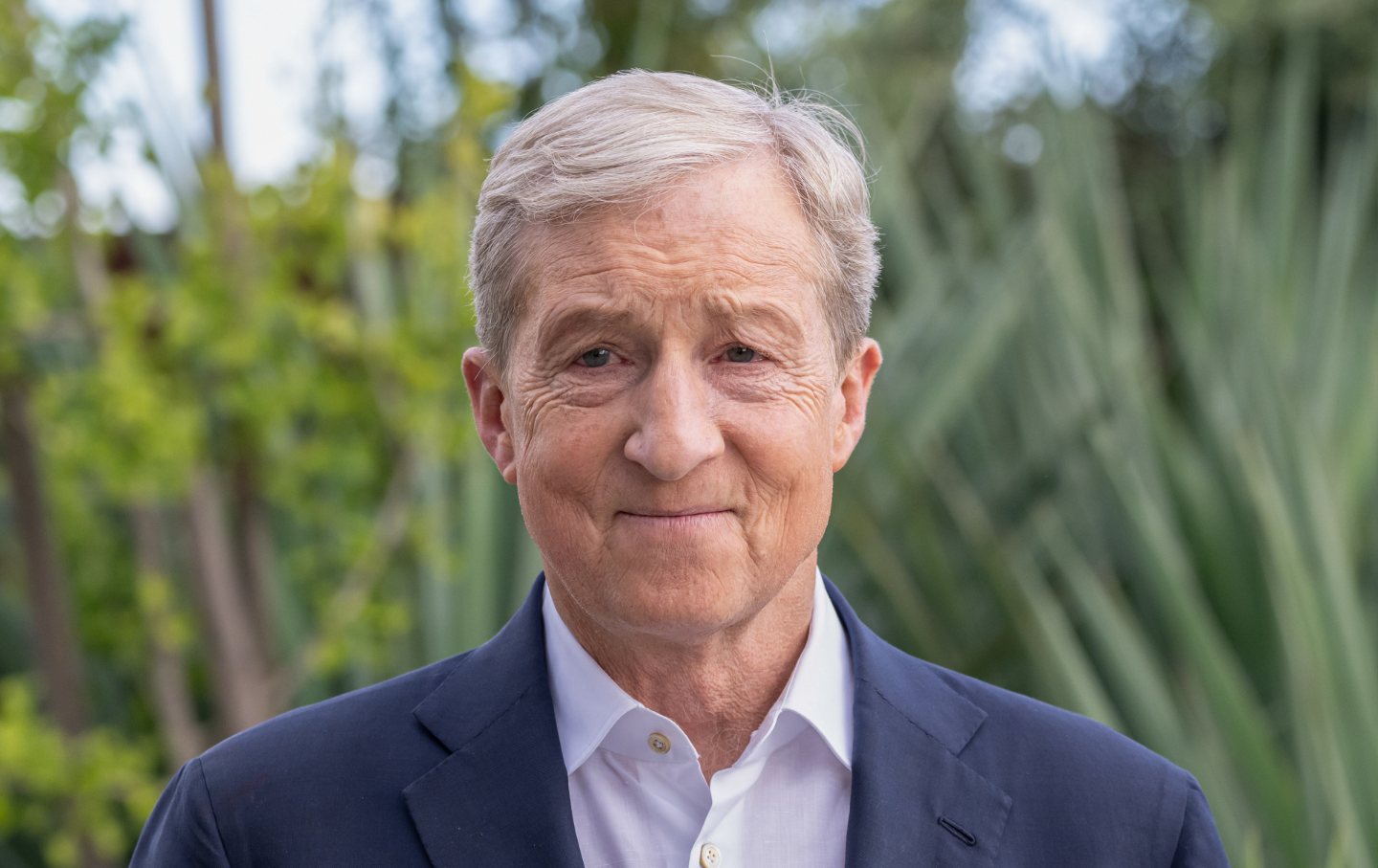
Tom Steyer Is Prepared to Take On the AI Billionaires Tom Steyer Is Prepared to Take On the AI Billionaires
The California gubernatorial candidate understands exactly what’s at stake, as he explains in an exclusive interview.
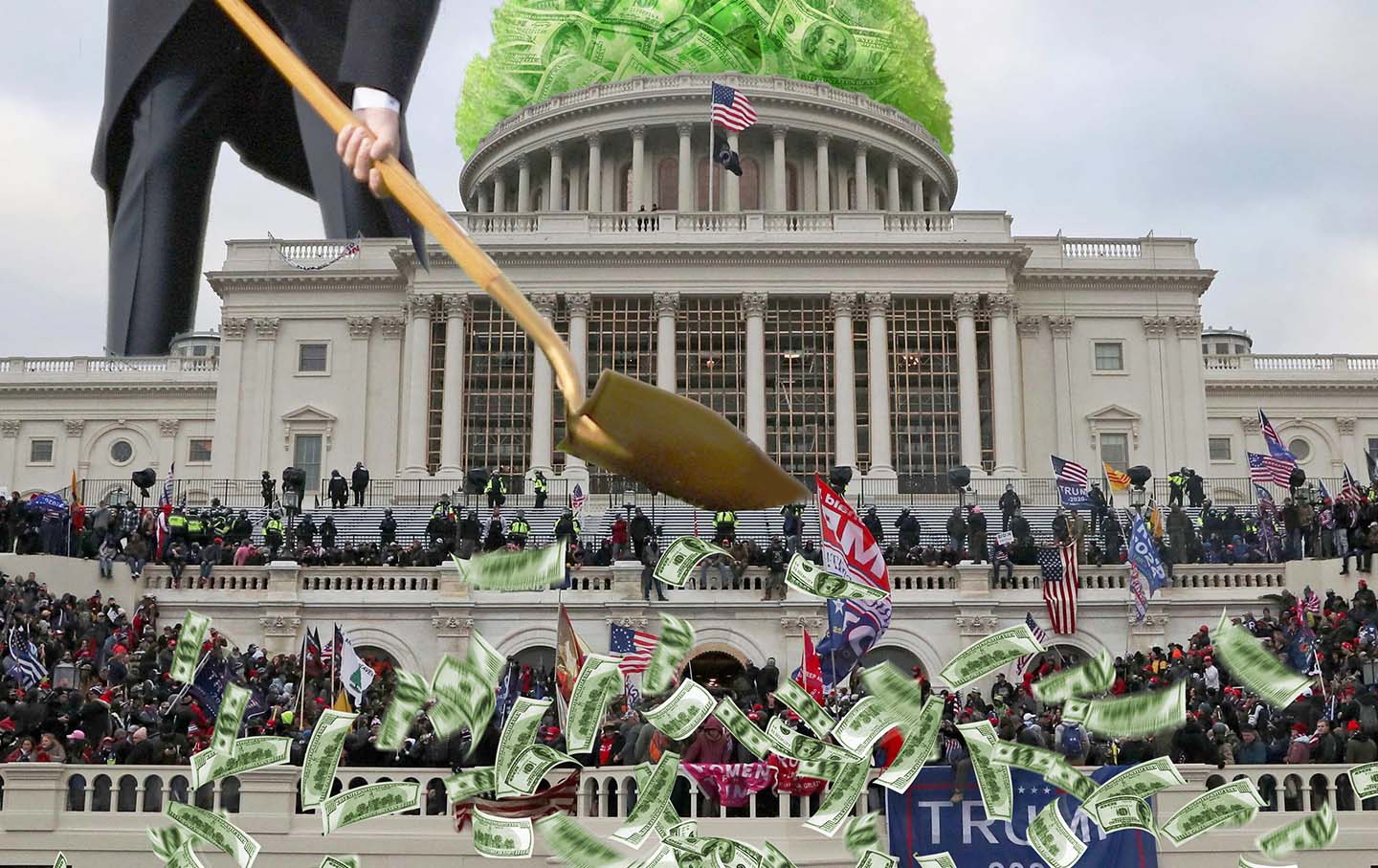
America’s Authoritarian Remodel Is Well Underway America’s Authoritarian Remodel Is Well Underway
There’s an ick factor to Trumpism that is getting worse by the day.
Mama Never Said Mama Never Said
The erasure of black voices didn’t stay in the past.
The Trump Administration Is Refusing to Follow the Laws Protecting Domestic Violence Survivors The Trump Administration Is Refusing to Follow the Laws Protecting Domestic Violence Survivors
The administration has repeatedly failed to disburse funds for services for domestic violence survivors and blocked the enforcement of their rights.

