The Affordability Crisis in Midsize Cities Is Not Inevitable
A mayoral candidate in Providence argues that unique challenges—and unique responses—must be explored.

For years, the national conversation about affordability has focused on a handful of large coastal cities. New York City, San Francisco, Boston. These places have become shorthand for everything that has gone wrong for working-class communities in urban America.
But the same crisis has taken hold in cities that rarely enter that conversation. In Providence, renters now face some of the highest housing burdens in the country. According to Redfin, Providence has become the least affordable city in America for renters. Each day, as a state representative and a candidate for mayor, I receive calls from neighbors trying to figure out how to stay in their homes.
This did not happen by accident. It is the product of a local political economy that treats rising rents as a sign of success and defers to the interests of large property owners. As mayor, I would take a different approach.
The first step is to stop minimizing the problem. Incumbent Providence Mayor Brett Smiley has argued that local rents are “reasonable” compared to Boston or New York. That framing avoids the actual question. Our neighbors are not asking how Providence stacks up against larger cities. They are asking whether they can afford to remain in the city they live in.
There is no shortage of public support for action. Some form of rent control is backed by a large majority of Rhode Islanders. Yet the mayor has opposed the rent stabilization ordinance now before the City Council. At the same time, property tax increases have raised housing costs for renters and working-class homeowners, while major donors to the mayor’s campaigns come from the real estate industry.
Housing is the clearest example of a broader affordability crisis.
Providence’s current administration promised to make the city “the best-run city in America.” What residents have seen instead is a steady decline in basic services. Weeks after the heaviest snowfall in a decade, side streets remained unplowed, and sidewalks and bus stops were left in dangerous conditions for weeks. Communication has also fallen short. Two years ago, without any community input, the administration replaced our city’s 311 app with a new website that cost about $350,000, far exceeding its original $100,000 budget. During the transition, residents had to reregister their contact information in the system, which led to thousands’ missing important alerts because their information did not carry over.
These are not isolated failures. They point to a model of governance in which the dignity of working people is not prioritized.
The same gap between rhetoric and reality is visible in the city’s approach to immigration enforcement. Providence has a sanctuary city ordinance, but that commitment has not been meaningfully enforced. ICE activity has grown, and while local law enforcement was found to have illegally cooperated with federal authorities, the mayor denied accountability. Instead of holding any officers accountable for violating our sanctuary law, he issued executive orders that simply reaffirmed existing law without changing conditions on the ground.
Taken together, these issues describe a familiar form of urban politics where officials rely on symbolic gestures while avoiding direct confrontation with entrenched interests. Meanwhile, costs keep rising for ordinary residents.
Popular
“swipe left below to view more authors”Swipe →Changing that requires a shift in priorities, not just a shift in tone. Housing affordability has to be treated as a central governing question for any future Providence administration. Policies with broad public support cannot be sidelined because they conflict with the preferences of powerful constituencies. Executive authority has to be used to enforce existing protections, not simply to reiterate them.
Rents in Providence have increased by over 40 percent since 2020. A few months ago, I met a woman who had to cancel her daughter’s birthday party because her rent had suddenly increased by $400 a month. Providence is in a housing emergency, and the first step to address this crisis is electing a mayor who will support and enforce the City Council’s proposal to cap annual rent increases at 4 percent for most units. This will keep working people in their homes.
At the same time, we urgently need to build more housing that working people can afford. Providence can no longer leave the future of our housing supply solely in the hands of private developers. The Providence Redevelopment Agency can acquire vacant lots and empty buildings and act as a public developer to transform those assets into permanently affordable homes. Our city has the tools to make life more affordable for working people. What we lack is the leadership discipline to utilize all of them.
Housing is the most critical issue in municipal politics right now, and it is a complex challenge that can be met only by holding all facets of the public sector to a standard of excellence. Building trust with working people that elected officials can actually deliver results that improve their lives requires restoring basic competence to city government. Our neighbors should be able to rely on essential services without wondering whether political connections are shaping who is responsible for delivering them.
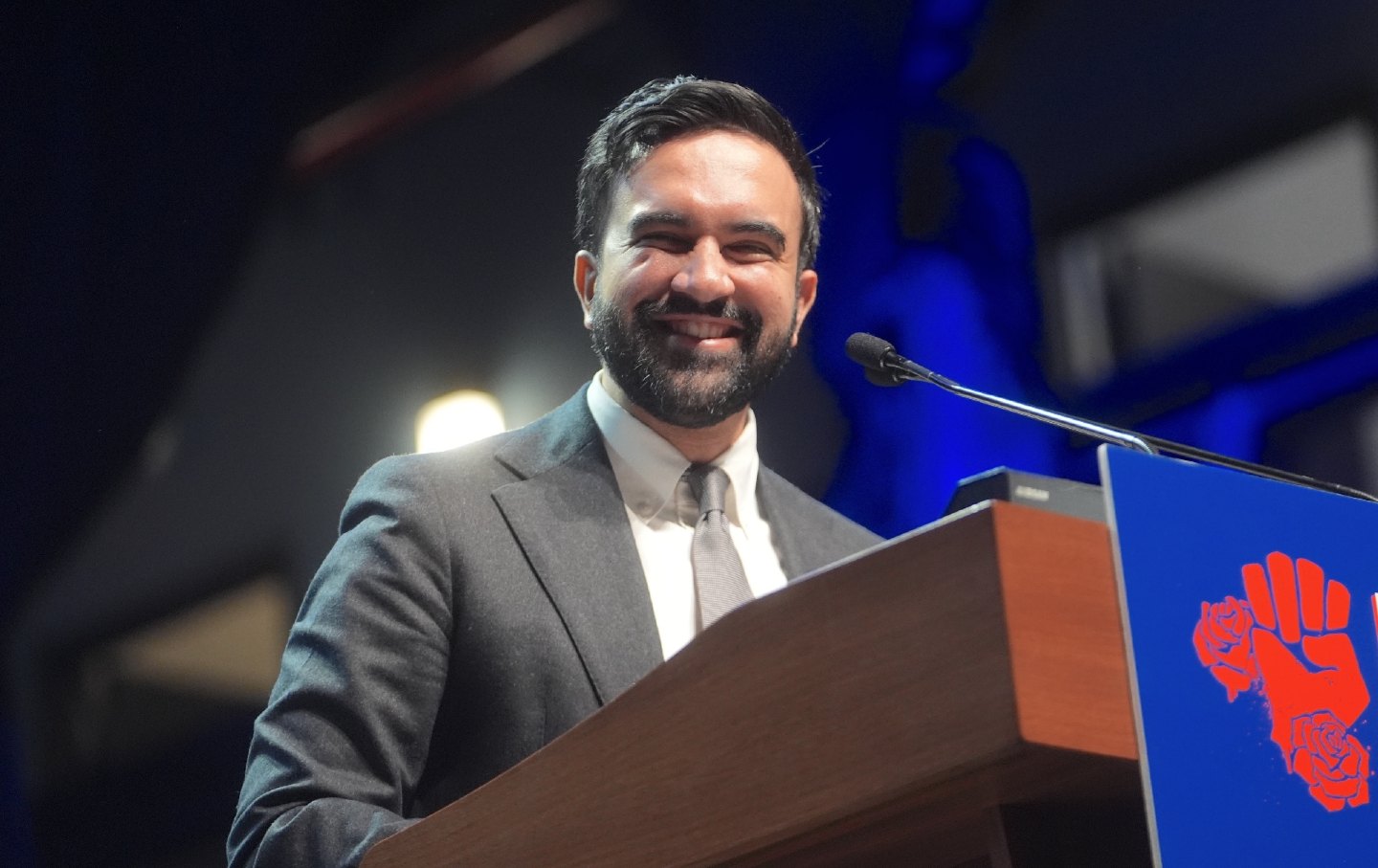
Since announcing my candidacy, I have seen how much demand there is for that kind of change. As a lifelong renter and the son of a single immigrant mom, I wanted to build a campaign working people could see themselves in. Many of the people involved in our campaign are participating in local politics for the first time. They are responding to a simple reality: The current trajectory is not sustainable. Providence is not unique in this respect. The pressures facing tenants, the influence of real estate interests, and the gap between public commitments and real life experience can be found across the country. My campaign is about proving that working people are ready to fight back and build something different.