
Is AIPAC Doomed?
The hard-line pro-Israel lobby is facing more opposition than ever before. But fully defanging it won’t be easy.
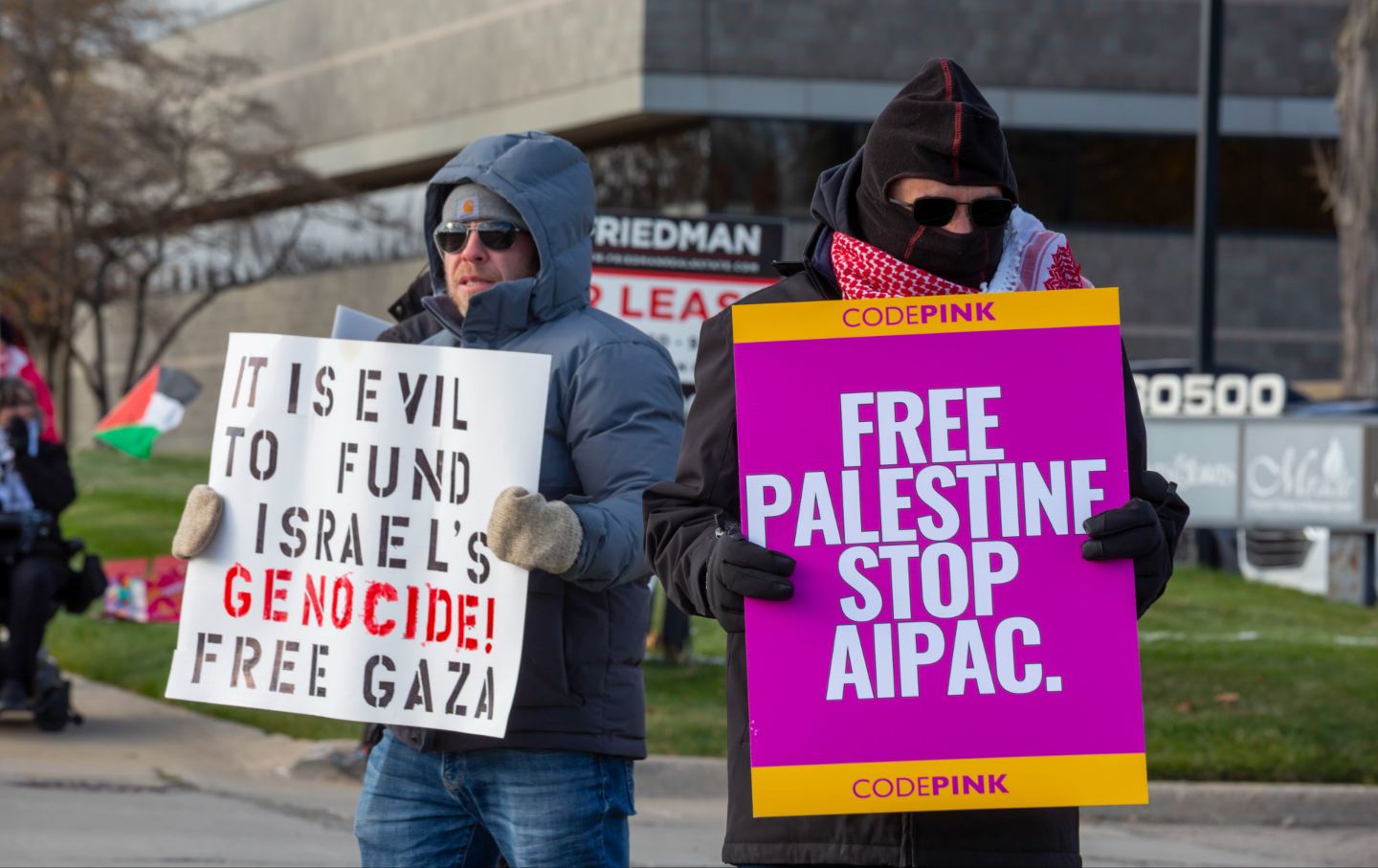
One thing that AIPAC and its critics have usually agreed on is that the hard-line Zionist lobby group is fearsomely powerful, a kingmaker that can boost or destroy political careers. In the wake of the 2022 midterms, AIPAC crowed: “More than 95% of AIPAC-backed candidates won their election last night! Being pro-Israel is good policy and good politics!”
This chest-thumping is designed to scare off critics. In an influential 2006 essay, the political scientists John Mearsheimer and Stephen Walt noted that “AIPAC prizes its reputation as a formidable adversary, of course, because it discourages anyone from questioning its agenda.” But the scholars also gave credence to the idea of a nearly unbeatable pro-Israel lobby, claiming that AIPAC has “a stranglehold on the U.S. Congress.”
Mearsheimer and Walt might have had a point in 2006, but in 2026, AIPAC increasingly looks like a paper tiger—one that, despite its still-considerable reach, is regarded with growing skepticism and even disgust by voters.
The diminishment of AIPAC’s power has been a long time in the making, with the Gaza genocide accelerating a longer trend against AIPAC’s ultra-hawkish pro-Israel politics. According to Politico, a Quinnipiac poll in August 2025 found that “half of the voters surveyed, including 77 percent of Democrats, said they believe Israel is committing genocide.” In addition, “60 percent of voters disapprove of the U.S. sending military aid to Israel.”
And as Branko Marcetic noted in Jacobin, AIPAC’s claim of a 95 percent victory rate is disingenuous, given that it mostly endorses candidates who are overwhelming favorites to win and “meekly back[s] out of races where they’re likely to lose, to avoid putting a blemish on their record.” While AIPAC did win significant victories against progressives such as Jamaal Bowman and Cori Bush in 2024, it was aided by extraneous factors (such as the redistricting that gave Bowman a less-friendly district).
More recently, AIPAC and the broader pro-Israel lobby have suffered some stinging defeats. For instance, Bill Ackman, Michael Bloomberg, and other billionaires—many of whom are hard-line Zionists—donated more than $40 million to the efforts to tank Zohran Mamdani’s New York City mayoral campaign.
These groups made Mamdani’s criticism of Israel and defense of Palestinian rights one of the hot-button topics in both the primary race and the general election, blanketing the airwaves with fearmongering ads and smearing Mamdani as an antisemite to anyone who would listen. But voters rejected the propaganda, and Mamdani won by a landslide in both races.
In February, AIPAC suffered an even more significant boomerang defeat in a Democratic congressional primary in New Jersey. The lobby spent more than $2 million to defeat Tom Malinowski, a centrist Democrat with a hawkish record whom AIPAC sought to punish for suggesting that conditions might need to be put on US aid to Israel. The spending blitz helped knock Malinowski out of the race, but not in the way AIPAC wanted. The group’s preferred candidate, Tahesha Way, came in a distant third. Instead, the seat was won by Analilia Mejia, an unvarnished progressive who isn’t afraid to say that Israel has committed genocide in Gaza. Because the district leans Democratic, Mejia stands a good chance of winning the upcoming special election.
AIPAC’s Pyrrhic victory against Malinowski was carried out by tellingly deceptive means. Because the public has soured on Israel, AIPAC has become the lobby that dares not speak its name. In ads against Malinowski, the group didn’t mention Israel (since his more independent stance was likely to win him support) but rather focused on his past support for ICE funding. This kind of subterfuge has become standard practice for AIPAC.
Defeating Malinowski to elect Mejia is by any standard a perverse outcome from AIPAC’s point of view. Not only is it likely to push Congress further away from pro-Israel extremism, but it may also alienate the moderate pro-Israel Democrats like Malinowski who have been a main pillar of the lobby’s power. Politico observed that “even [AIPAC’s] steadfast allies are frustrated” by the fact that the group flexed its muscle to destroy a centrist Democrat. One prominent centrist, Matt Bennett, a cofounder of the center-left think tank Third Way, derided AIPAC’s crushing of Malinowski as “one of the greatest own-goals in American political history.”
After his defeat, Malinowski voiced a criticism of dark-money spending that could easily have been made by a progressive: “The outcome of this race cannot be understood without also taking into account the massive flood of dark money that AIPAC spent on dishonest ads during the last three weeks.”
Summing up the New Jersey race, Democratic Representative Mark Pocan, a longtime critic of AIPAC, took a victory lap, posting on X: “Sending condolences to @AIPAC for killing any usefulness of their PAC after the monumental failure of their effort in the NJ special election. Their money is so toxic that the very people they are trying to help are now hurt by their involvement, no matter how well disguised.”
Popular
“swipe left below to view more authors”Swipe →But if even deceptive funding no longer works, blatant censorship might. The watchdog group Track AIPAC has played a major role in informing Democratic voters about the dark-money spending of the pro-Israel lobby. On February 10, Instagram suspended the Track AIPAC account, which had 137,000 followers at the time. This was allegedly done because of an intellectual-property violation. (The account was restored after Track AIPAC cried foul.) Similar cases of censorship are occurring on TikTok.
AIPAC is clearly wounded. But it still is capable of doing damage, and it still carries considerable weight in Washington. That’s why the battleground for its final defeat will not just be in Congress but in the culture at large. Voters who know what AIPAC is up to reject the lobbying group. The question now is whether AIPAC can keep enough voters in the dark to fight another day.
More from The Nation
Vivek Ramaswamy’s New Attack Ad Should Be a National Scandal Vivek Ramaswamy’s New Attack Ad Should Be a National Scandal
The Ohio GOP gubernatorial candidate has accused his Democratic opponent, Amy Acton, of lying about being raped when she was 12 years old.

Dirty Business Dirty Business
Trump turns to Russian oil to lower fuel prices in the United States ahead of the midterm elections, throwing Ukraine under the bus.
Could Mississippi Really Send a Democrat to the Senate? Could Mississippi Really Send a Democrat to the Senate?
The answer, amazingly, is yes.

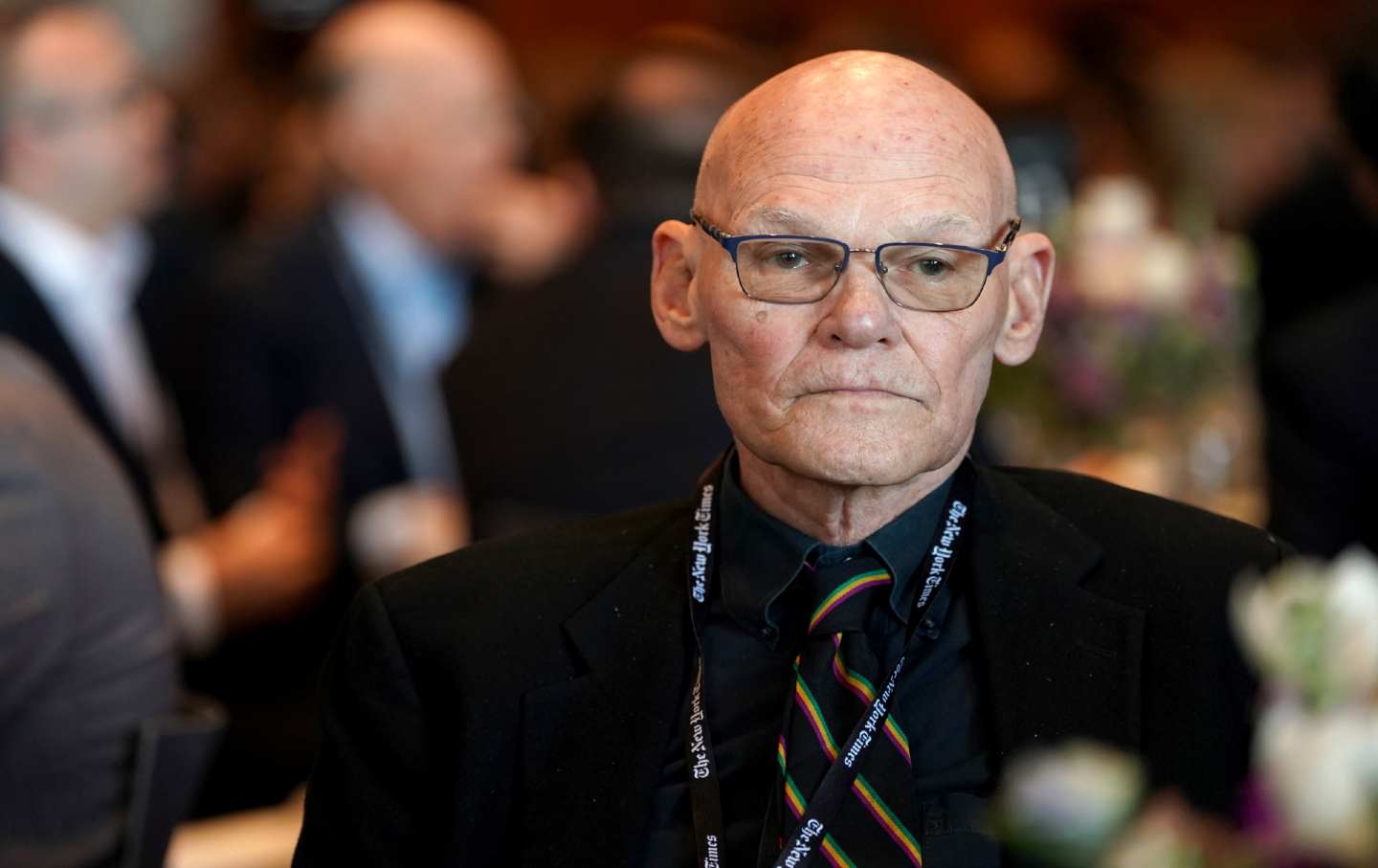
Can James Carville Please Just Be Quietly Wrong Somewhere Else? Can James Carville Please Just Be Quietly Wrong Somewhere Else?
The omnipresent consultant-cum-tantrum-thrower has long outlived whatever relevance he once had, but cable producers, podcast hosts, and Democratic campaigns haven’t got the memo....

