
Has Trump Finally Ended Western Sahara’s Dream of Freedom?
The international community must decide which principle will prevail: the right of self-determination or the right of conquest.
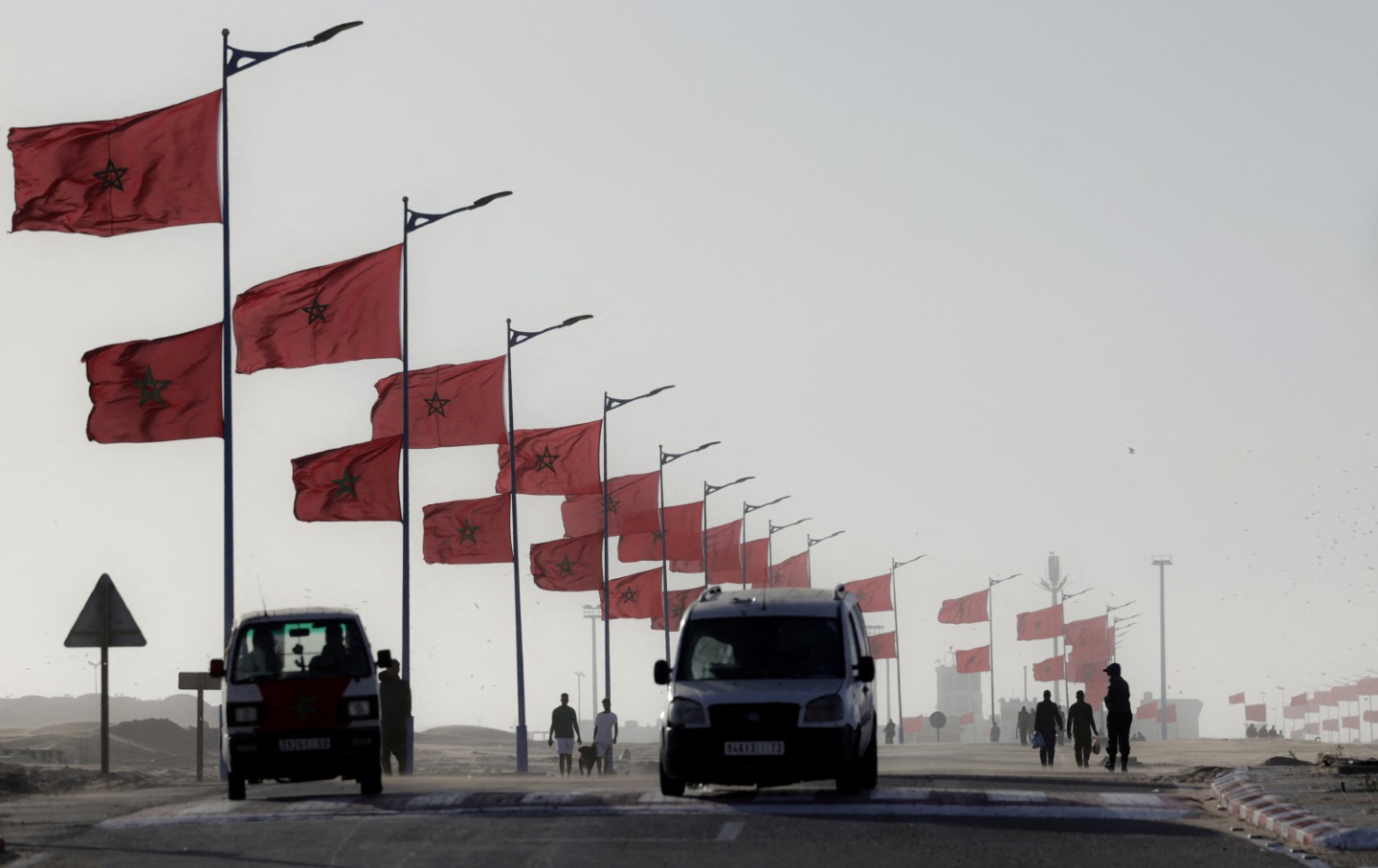
On October 31, the United States successfully pushed a resolution (UNSC 2797) through the United Nations Security Council largely endorsing a dubious “autonomy” proposal by Morocco which would recognize its takeover of the nation of Western Sahara. The kingdom, with US support, seized that former Spanish colony by force in 1975 in defiance of virtually the entire international community.
The US-backed autonomy plan rests on the assumption that Western Sahara is already part of Morocco, a contention that has long been rejected by the United Nations and by the International Court of Justice, which sees Western Sahara as a non-self-governing territory and thus an incomplete decolonization. The African Union recognizes Western Sahara as a full member state, as have over 80 countries.
For decades, a series of UN Security Council resolutions called for a referendum by the people of Western Sahara—known as Sahrawis and who have a history, dialect, and culture distinct from most Moroccans’—to choose between incorporation into their northern neighbor or independence. Morocco, however, refused to allow the plebiscite to go forward.
To fully accept Morocco’s autonomy plan would mean that, for the first time since the ratification of the UN Charter 80 years ago, the international community would be formally recognizing the expansion of a country’s territory by military force, thereby establishing a very dangerous and destabilizing precedent to the benefit of the likes of Vladimir Putin and Benjamin Netanyahu.
Currently, the United States and Israel are the only two countries that have formally recognized Morocco’s illegal annexation.
If the people of Western Sahara accepted an autonomy agreement over independence because of a free and fair referendum, it would constitute a legitimate act of self-determination. However, Morocco categorically rules out giving the Sahrawis, who appear to overwhelmingly favor independence, that option.
The details of Morocco’s proposal are rather vague and leave considerable discretion at the hands of that country’s autocratic monarch, Mohammed VI. Furthermore, the history of centralized authoritarian states upholding promises of regional autonomy is quite poor and has often led to violent conflict, as with Eritrea and Kosovo. And today, Chinese promises of autonomy to Hong Kong and Macau are already being severely compromised.
At least one-third of the country’s population lives in refugee camps administered by the Western Saharan government (formally known as the Sahrawi Arab Democratic Republic), led by the Frente Polisario, a moderately left secular nationalist movement. A consultative member of the Socialist International, the international federation of social democratic parties, their president and parliament are subjected to regular competitive elections and women are in major leadership positions. Despite this, the Moroccan regime and its US supporters have repeated bizarre, unsubstantiated, and contradictory allegations that the Polisario is an extremist group tied to Hezbollah, Al Qaeda, ISIS, Russia, and Iran.
And there is currently bipartisan legislation in Congress to declare the Polisario a “foreign terrorist organization,” even though the Polisario has never engaged in any acts of terrorism. They have formally ratified the Geneva Conventions and their protocols, and they are a party to the African Union’s Convention on Counter-Terrorism. The real purpose of the legislation is evident in the language decreeing that the terrorist designation, which would hamper relief operations in the refugee camps and undermine further diplomatic efforts, would be dropped if the Polisario accepts Morocco’s autonomy plan.
While the UNSC resolution is certainly a setback for the country’s freedom struggle, it need not be seen as eliminating the Sahrawis’ right to self-determination altogether. For example, the resolution includes clauses referencing the need for a “mutually acceptable resolution.” It calls for “genuine autonomy,” which the Moroccan proposal clearly is not. It also stresses the need for an agreement to be “consistent with the UN Charter,” which prohibits the expansion of territory by force. And, despite the US insistence that Morocco’s autonomy proposal is the only basis for an agreement, the resolution simply says it could represent a feasible outcome.
Following the vote, Staffan de Mistura, the personal envoy of the secretary-general for Western Sahara, noted that while the resolution provides “a framework for negotiations, it does not prescribe an outcome,” adding that a settlement, “in order to be sustainable, be the result of negotiations conducted in good faith.”
The Polisario’s small-scale guerrilla war, while liberating the mostly unpopulated eastern desert of the country, is incapable of defeating the powerful US-armed occupation forces. The impressive nonviolent resistance inside the occupied territory is hampered by not only by horrifically violent repression Moroccan occupation forces but also changing demographics—Moroccan settlers now outnumber the indigenous Sahrawis by at least three to one.
With success through diplomatic efforts, the armed struggle, or civil resistance so unlikely, perhaps the only hope for freedom may be through campaigns by global civil society, such as those which finally brought freedom to East Timor, an independence struggle that had also been abandoned by the United Nations and dismissed as a hopeless cause. If such efforts on behalf of Western Sahara fail, it could mean a defeat not just for the people of that nation but for the entire post-WWII international legal order. The international community must decide which principle will prevail: the right of self-determination, or the right of conquest?
Become a Sustaining Donor This September
Between the reemergence of right-wing red-baiting and Donald Trump’s use of the chilling National Security Presidential Memorandum–7 to criminalize left political organizing, we’re seeing McCarthyism reborn before our eyes.
This assault on democracy cannot be ignored or wished away. Resisting it requires bravery in the face of threats and repression, a steadfast commitment to the truth, and the unwavering belief that we can—and will—overcome this darkness.
We must have an independent media that sets the record straight, unearths corruption and abuses of power, and advances a politics of justice and dignity for all if we’re to win this fight.
That’s why I’m writing to you today. This September, The Nation needs to add 100 monthly donors to sustain our progressive journalism. Your contribution makes the next investigative report, the next truth-speaking column, and the next pathbreaking essay all possible.
I hope you’ll support our work with a recurring donation today. If you donate $10 or more a month, we’ll send you a brand new “Hands Off the Free Press!” sticker to recognise your commitment to our cause. Please, donate today.
Onward,
Katrina vanden Heuvel
Editor and Publisher, The Nation
More from The Nation

The AfD’s Rise Isn’t Just About East Germany The AfD’s Rise Isn’t Just About East Germany
The Alternative für Deutschland has a stable national poll lead, including in the former West Germany. Its rise owes to much more than Eastern grievances.
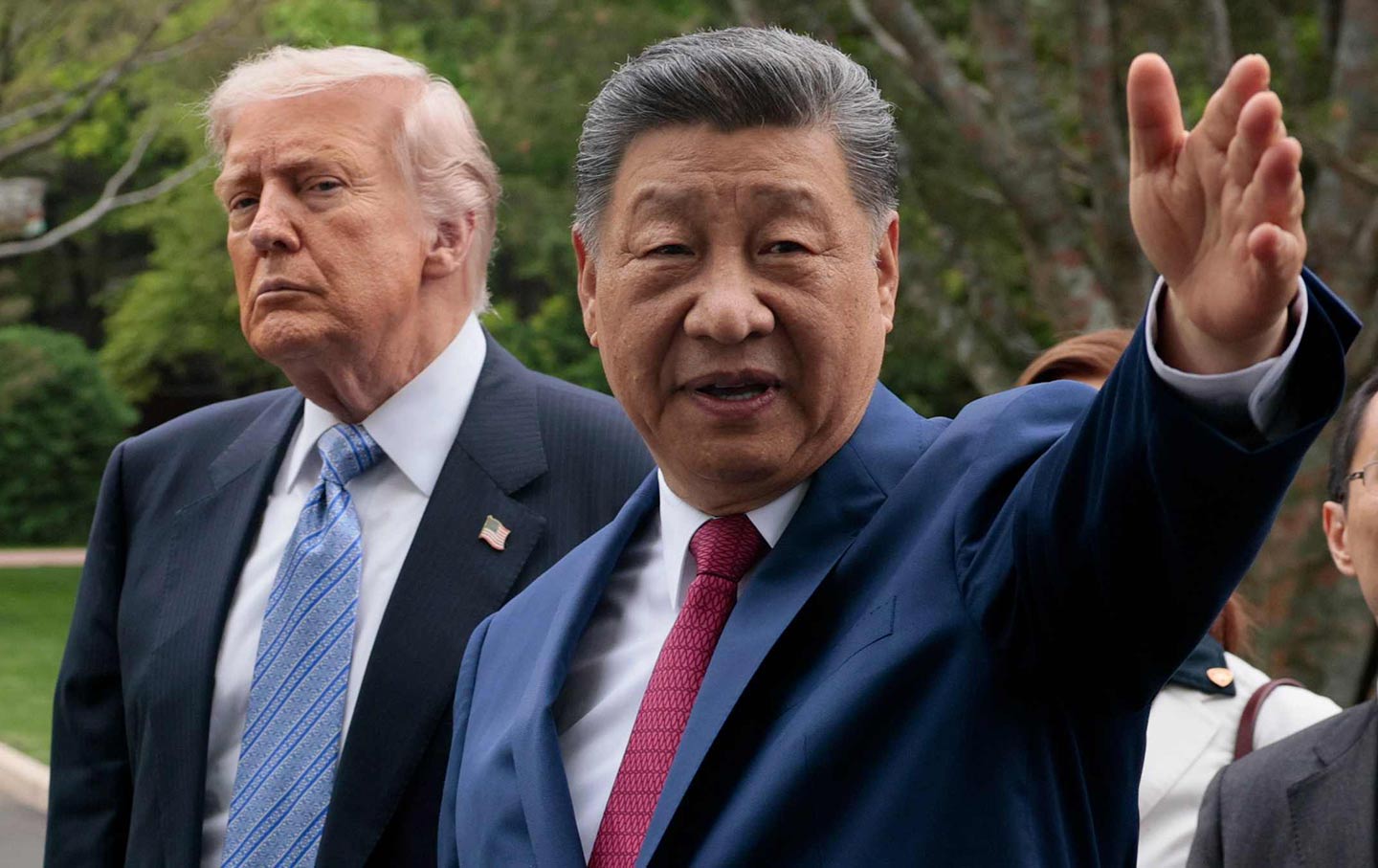
Chinese Development Is the Betrayal Washington Cannot Forgive Chinese Development Is the Betrayal Washington Cannot Forgive
The prospects for Xi Jinping’s visit are dim because American leaders are blaming China for the failures of globalization.

Pinochet: The Verdict of History in the Letelier-Moffitt Case Pinochet: The Verdict of History in the Letelier-Moffitt Case
An act of international terrorism on the streets of Washington, DC, still reverberates 50 years later.
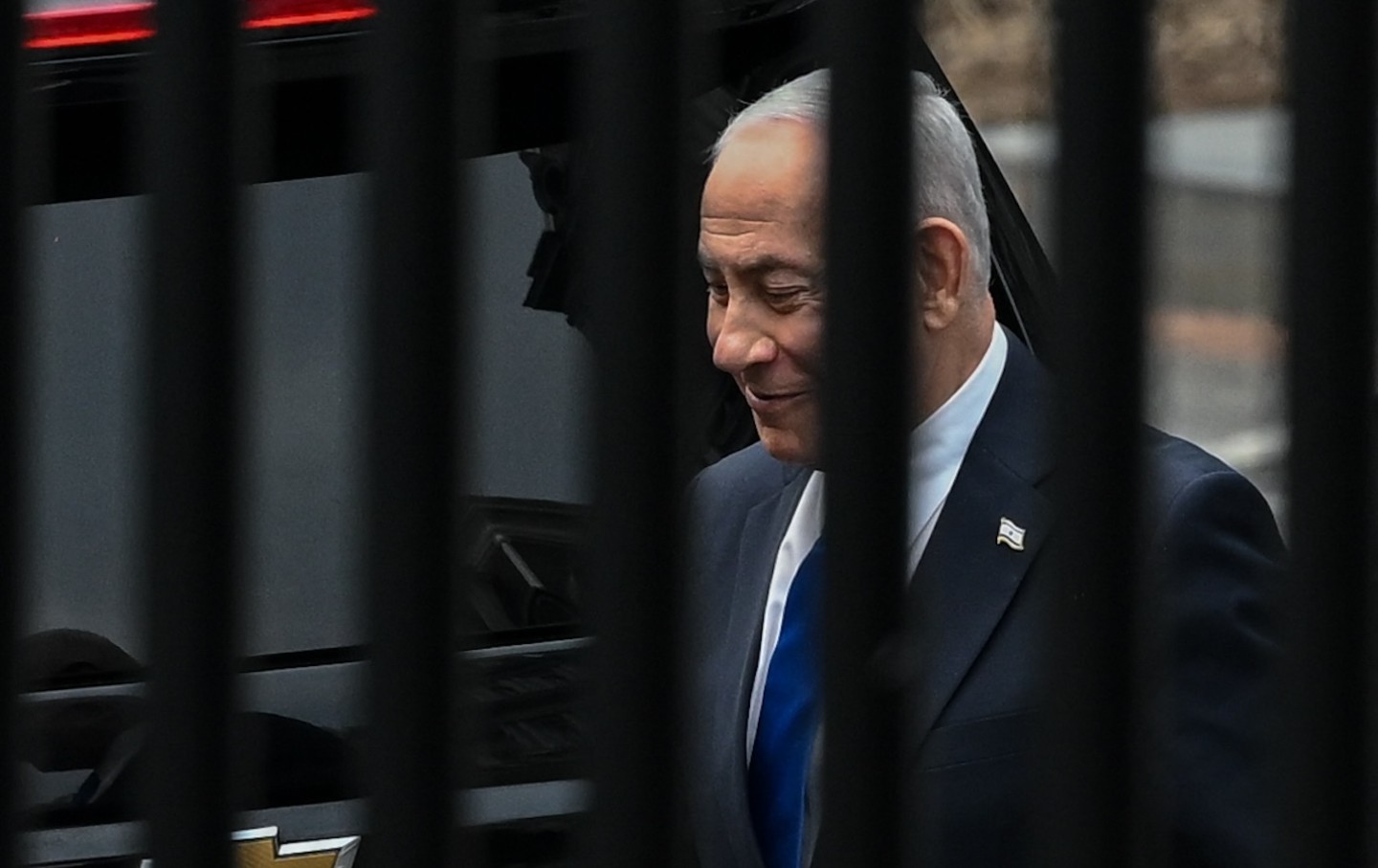
How to Arrest Benjamin Netanyahu How to Arrest Benjamin Netanyahu
Make no mistake: The United States can seize Netanyahu for crimes under US law and prosecute him in US courts when he is in New York City this week.
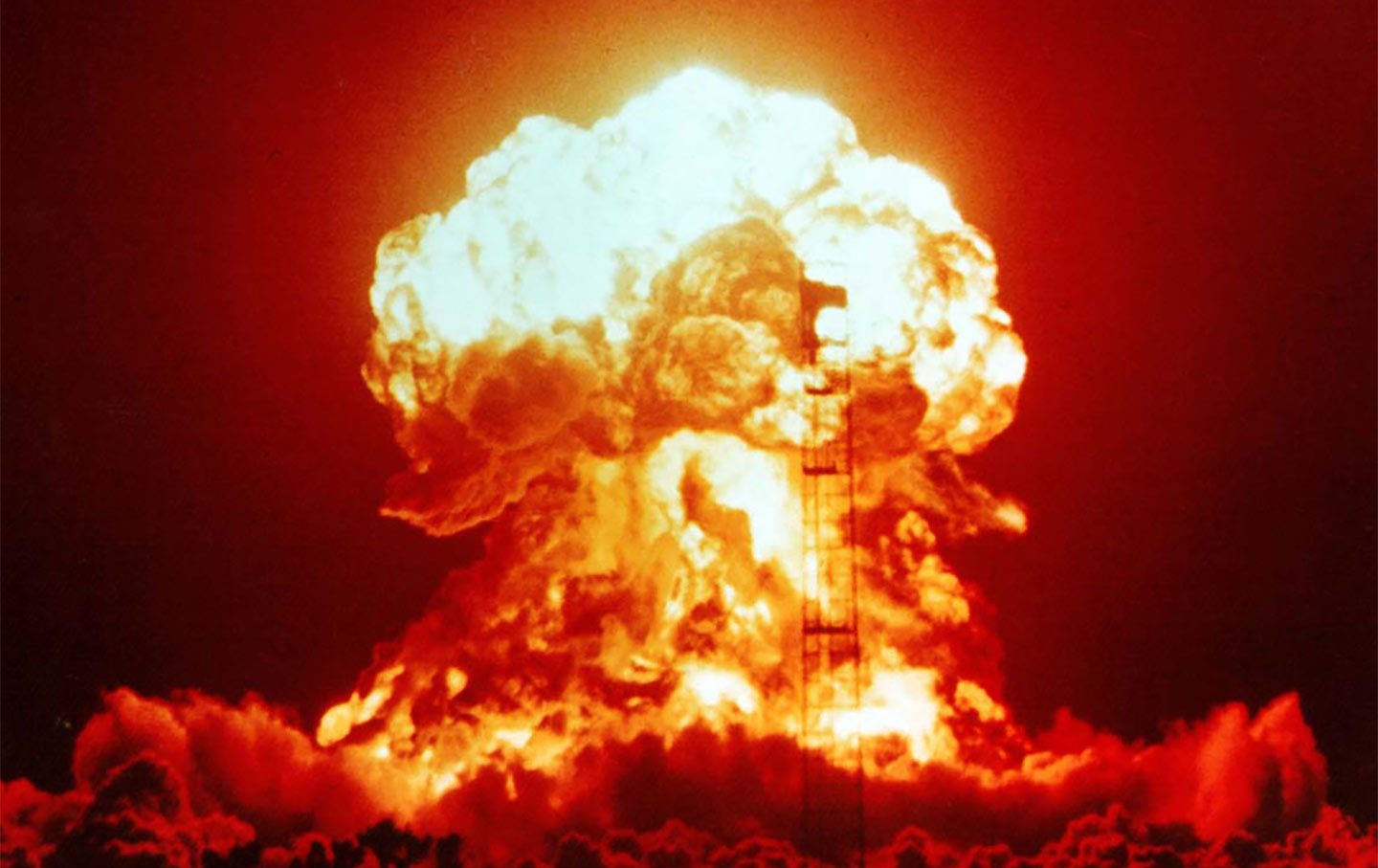
In the Age of AI, Nuclear Weapons Abolition Is a Renewed Imperative In the Age of AI, Nuclear Weapons Abolition Is a Renewed Imperative
As long as we have nuclear weapons, the job of ending humanity will continue to be as easy as the push of a button—or an AI agent hacking into a nuclear command-and-control system...
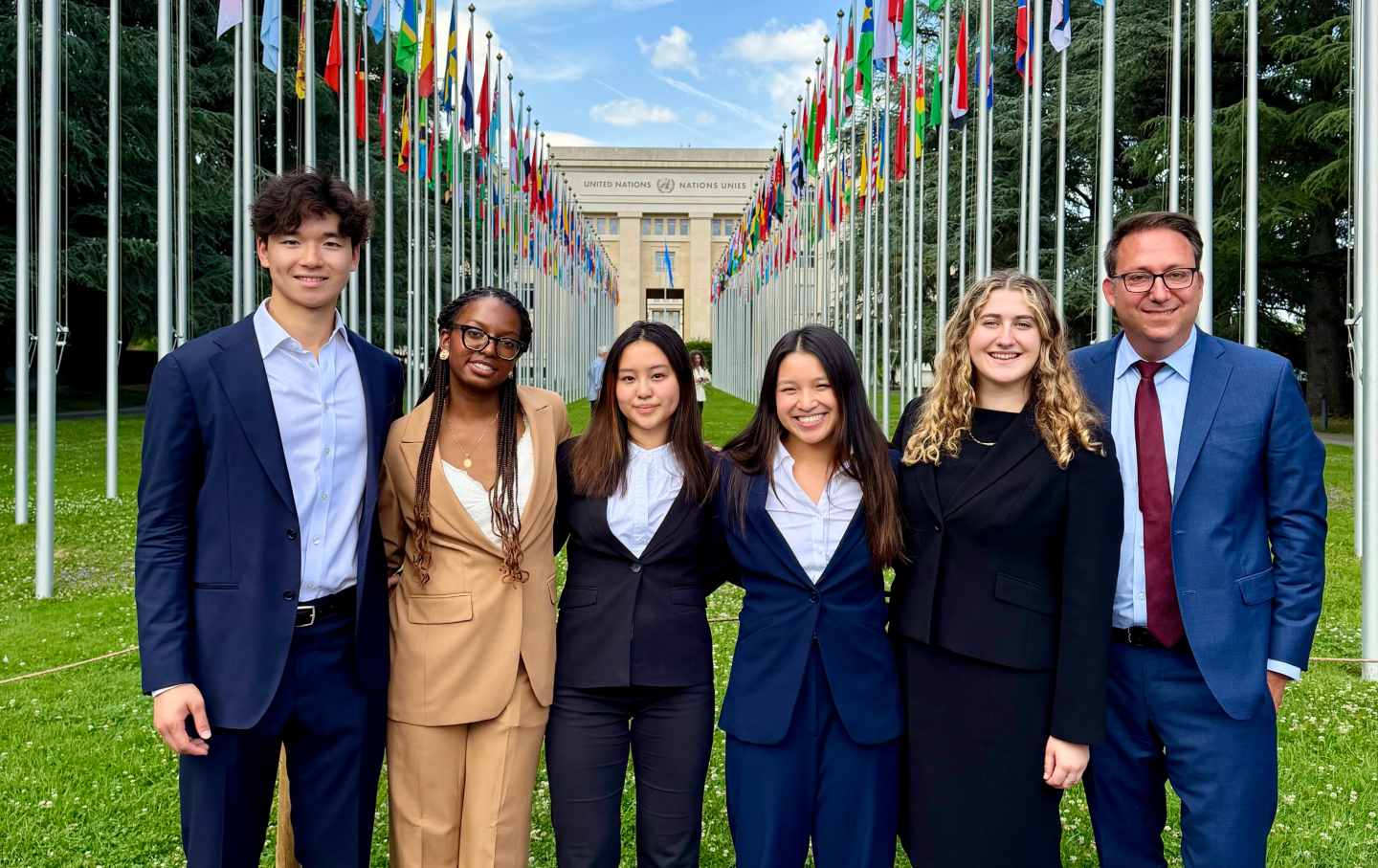
These Students Are Shaping UN Human Rights Policy These Students Are Shaping UN Human Rights Policy
Princeton undergraduates are helping the organization develop standards for post-mortem digital privacy and death in custody.

