New Mexico Is Providing Free Childcare for All. It’s Time for Others to Do the Same
The state is setting a powerful example with its first-in-the-nation plan. But the policy has support across the US.
For four years, New Mexico has been on a distressing losing streak. The state has consistently ranked last in the nation for child well-being, as determined by factors including household income, educational outcomes, and child mortality. And over the past decade, whenever New Mexico hasn’t placed 50th, it’s been 49th.
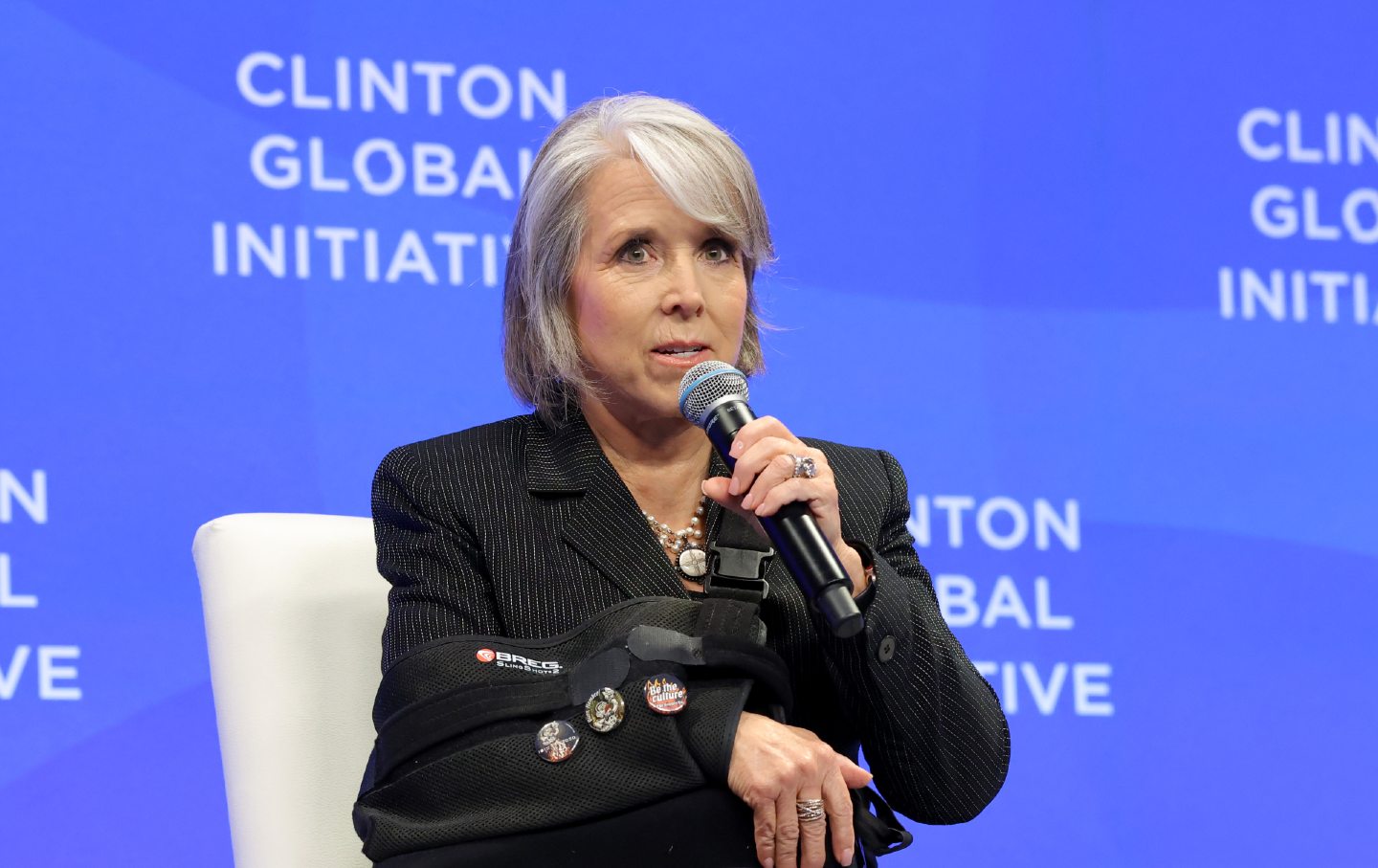
But in its ongoing efforts to shake off that unenviable distinction, the state is poised to achieve a significant first. In September, Governor Michelle Lujan Grisham—who made affordable childcare a centerpiece of her 2018 campaign—announced that New Mexico will offer free universal childcare. No other state in the US currently provides this essential service.
The program is projected to save families an average of $13,000 each year. That’s a windfall almost anywhere, but it’s a particularly life-changing sum in a state that has, by one measure, the highest child poverty rate in the nation. And New Mexico may offer a model for other jurisdictions seeking to strengthen the social safety net, particularly as the Trump administration does its level best to shred it.
Childcare for a single infant is now more expensive than public college tuition in 38 states, and each year, the price of daycare pushes 134,000 families below the poverty line. In New Mexico, childcare can cost over a third of the median single parent’s income. The resulting financial toll has nationwide consequences: According to one study, the inadequate childcare system costs the economy $122 billion each year.
Meanwhile, the personal toll disproportionately falls on mothers. Amid sky-high daycare prices and return-to-office policies, workforce participation among women with young children is declining, threatening their career development and future earnings.
The market alone can do little to lower prices. Providing kids with well-trained, nurturing caregivers in a safe and engaging environment is labor-intensive, with teacher-child ratios as low as one-to-three recommended for the youngest charges. Plus, there’s limited room for cost-cutting in an industry that is, by strict necessity, highly regulated. All of this means that care costs more to provide than most families can afford, making it, in former treasury secretary Janet Yellen’s words: “a textbook example of a broken market.”
Despite this, the United States spends a smaller proportion of public dollars on early childhood education than almost all other wealthy countries. The Biden administration’s American Rescue Plan infused the industry with funding that helped keep centers open, employees in work, and moved kids off of wait lists and into care. However, this subsidy expired in 2023, and Donald Trump’s return to office has since imperiled the already meager federal childcare offerings.
The perennially underfunded Head Start program, which marked its 60th anniversary last year and provides education and healthcare to children from very-low-income families, appears firmly in the Trump regime’s crosshairs: the administration closed half of its regional offices this spring. These days, Trump no longer denies that Project 2025 is his handbook for filleting the federal government—and that plan calls for defunding Head Start entirely. The White House briefly considered carrying out the recommendation in its 2026 budget.
This makes New Mexico’s commitment all the more necessary. Under Lujan Grisham’s administration, the state has made astonishing strides in addressing the childcare crisis. Since 2022, it’s offered free care to families earning up to 400 percent of the federal poverty level, and now, by broadening the program to include families of all incomes, another 12,000 children are expected to gain access. In addition to supporting kids and parents, New Mexico incentivizes higher wages by providing more money to daycares offering entry-level salaries of at least $18 per hour. That’s below a living wage for a childless adult, but it’s considerably more than the state’s $12-an-hour minimum. The state legislature must vote next year to sustain the funding—and, as it’s controlled by Democrats, is expected to do so.
New Mexico primarily pays for its program through its Early Childhood Trust Fund, which the state endowed using revenue from oil and gas. However, it’s entirely possible to support families without relying on extractive industries. Connecticut is deploying its budget surplus to create a childcare endowment that’s projected to fund free daycare for families earning less than $100,000 a year. And Washington, DC, raised taxes on high earners to increase pay for early childhood educators, making it easier to recruit staff while expanding the number of available daycare seats.
Even more ambitious models are found abroad. In Denmark, all children over six months old have a guaranteed right to care, either in centers that are part of the broader public education system or with home-based providers. Parents pay no more than a quarter of the fee. And Canada’s Liberal Party government is implementing a plan that hopes to lower childcare costs to about $7 a day. Although not all provinces are on track to reach the 2026 target deadline, prices have declined across the country.
The idea of creating similar resources for working families in the US isn’t mere fantasy—policies addressing childcare affordability are broadly popular, particularly among those who have kids. Fully 92 percent of American parents of children under five support universal childcare, as do 79 percent of Republicans with kids under 18.
With all hope, New Mexico won’t long hold the distinction of being the nation’s only jurisdiction offering early childhood education for all. In New York City, where a year of infant care costs $26,000, mayoral front-runner Zohran Mamdani has made free public daycare a pillar of his campaign. Enacting such a program in America’s largest city likely faces a steep uphill battle, despite the fact that it would allow thousands of mothers to join the workforce and produce $670 million in annual earnings. But three-quarters of New Yorkers support universal childcare—which suggests that voters may be ready for the fight.
Disobey authoritarians, support The Nation
Over the past year you’ve read Nation writers like Elie Mystal, Kaveh Akbar, John Nichols, Joan Walsh, Bryce Covert, Dave Zirin, Jeet Heer, Michael T. Klare, Katha Pollitt, Amy Littlefield, Gregg Gonsalves, and Sasha Abramsky take on the Trump family’s corruption, set the record straight about Robert F. Kennedy Jr.’s catastrophic Make America Healthy Again movement, survey the fallout and human cost of the DOGE wrecking ball, anticipate the Supreme Court’s dangerous antidemocratic rulings, and amplify successful tactics of resistance on the streets and in Congress.
We publish these stories because when members of our communities are being abducted, household debt is climbing, and AI data centers are causing water and electricity shortages, we have a duty as journalists to do all we can to inform the public.
In 2026, our aim is to do more than ever before—but we need your support to make that happen.
Through December 31, a generous donor will match all donations up to $75,000. That means that your contribution will be doubled, dollar for dollar. If we hit the full match, we’ll be starting 2026 with $150,000 to invest in the stories that impact real people’s lives—the kinds of stories that billionaire-owned, corporate-backed outlets aren’t covering.
With your support, our team will publish major stories that the president and his allies won’t want you to read. We’ll cover the emerging military-tech industrial complex and matters of war, peace, and surveillance, as well as the affordability crisis, hunger, housing, healthcare, the environment, attacks on reproductive rights, and much more. At the same time, we’ll imagine alternatives to Trumpian rule and uplift efforts to create a better world, here and now.
While your gift has twice the impact, I’m asking you to support The Nation with a donation today. You’ll empower the journalists, editors, and fact-checkers best equipped to hold this authoritarian administration to account.
I hope you won’t miss this moment—donate to The Nation today.
Onward,
Katrina vanden Heuvel
Editor and publisher, The Nation
More from The Nation
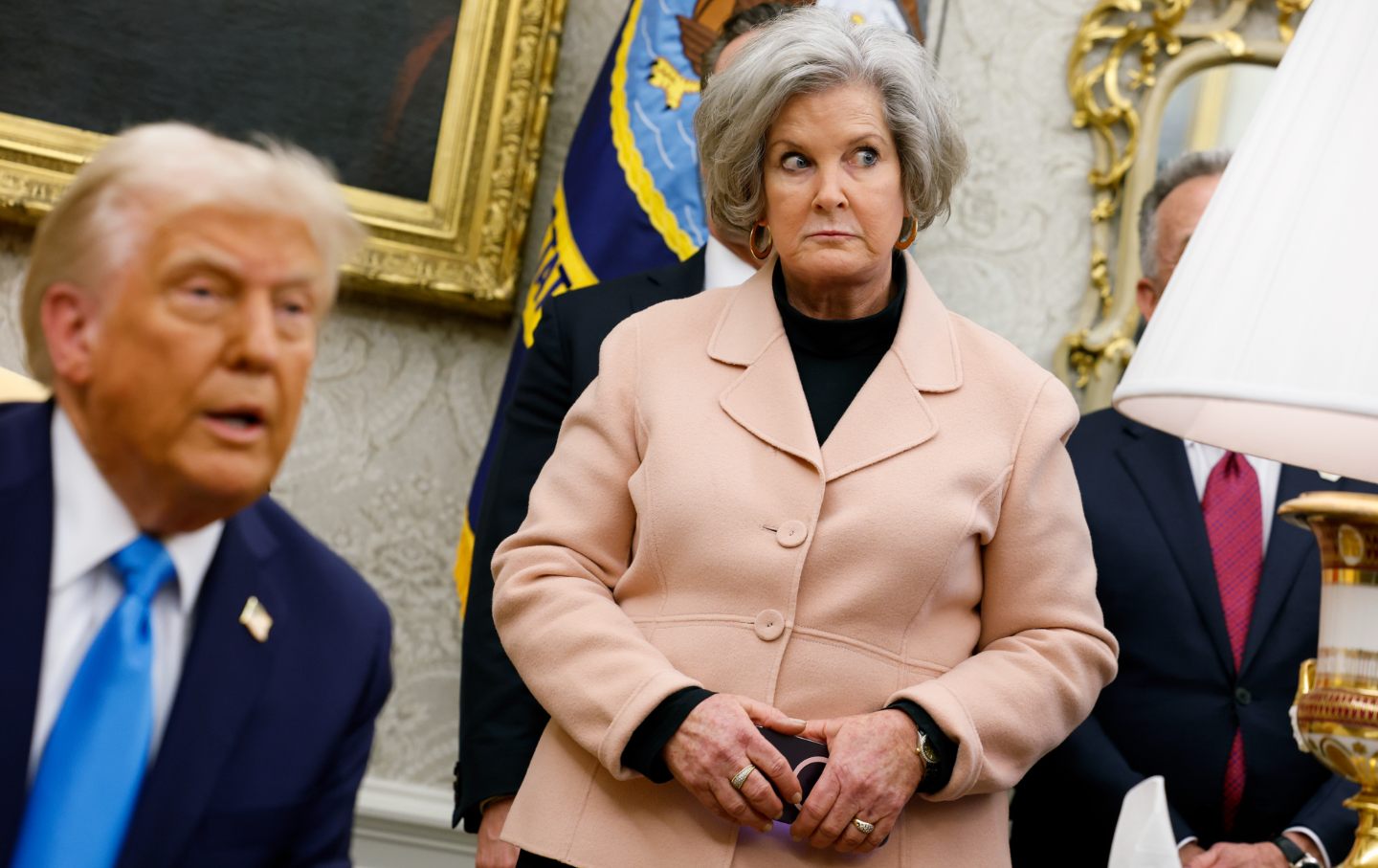
The Shocking Confessions of Susie Wiles The Shocking Confessions of Susie Wiles
Trump’s chief of staff admits he’s lying about Venezuela—and a lot of other things.

The King of Deportations The King of Deportations
ICE’s illegal tactics and extreme force put immigrants in danger.
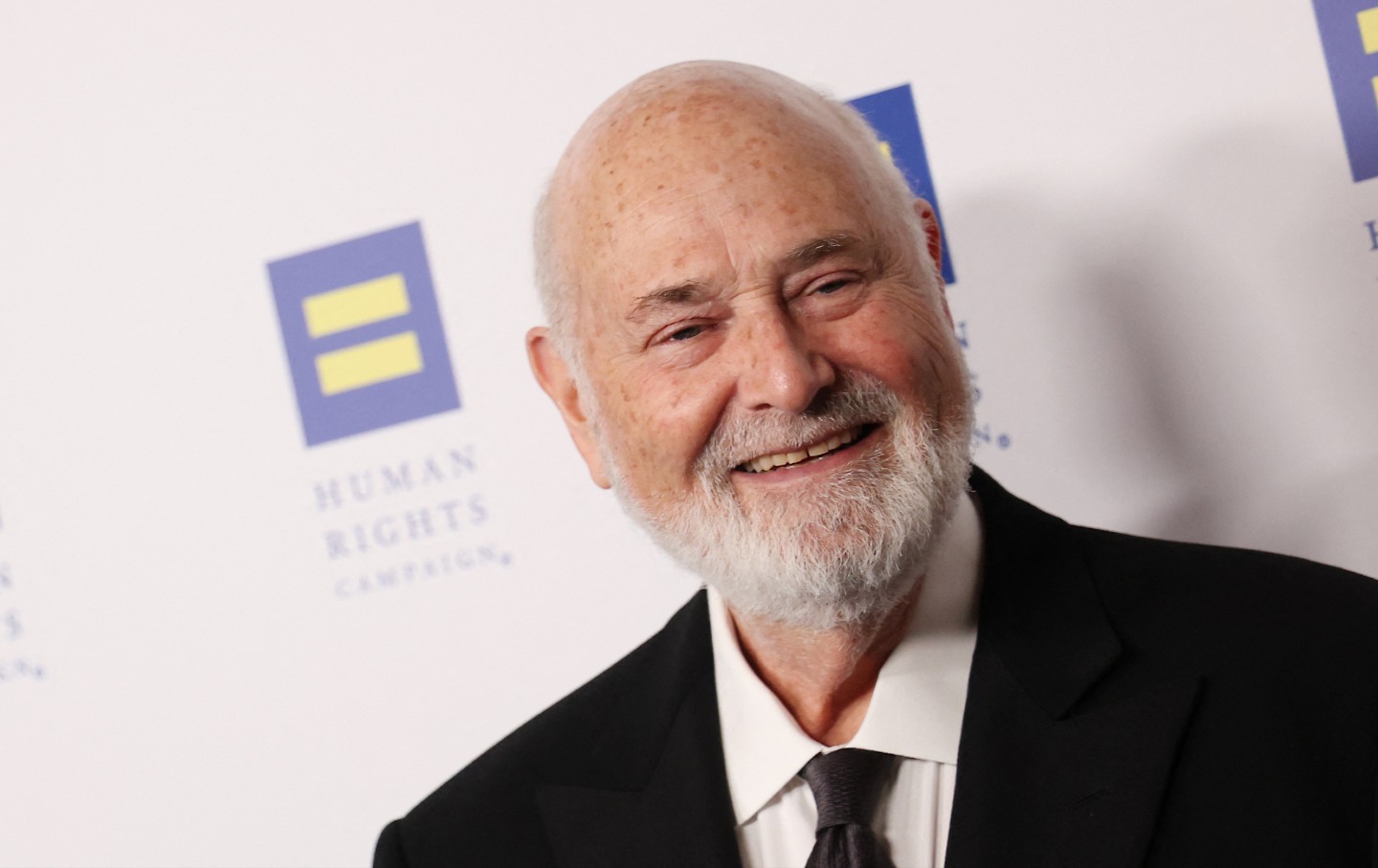
How Rob Reiner Tipped the Balance Against Donald Trump How Rob Reiner Tipped the Balance Against Donald Trump
Trump’s crude disdain for the slain filmmaker was undoubtedly rooted in the fact that Reiner so ably used his talents to help dethrone him in 2020.

The Economy Is Flatlining—and So Is Trump The Economy Is Flatlining—and So Is Trump
The president’s usual tricks are no match for a weakening jobs market and persistent inflation.
Trump’s Vile Rob Reiner Comments Show How Much He Has Debased His Office Trump’s Vile Rob Reiner Comments Show How Much He Has Debased His Office
Every day, Trump is saying and doing things that would get most elementary school children suspended.