
What Was the Cracker Barrel Skirmish Really About? (Hint: Distracting From Real Crises Facing the Heartland.)
Trump is repaying rural voters’ loyalty by shafting them.
For a week, it was MAGA versus meatloaf. Last month, the rustic restaurant chain Cracker Barrel committed the grave offense of introducing a new logo. Gone were the titular barrel and overall-clad Uncle Herschel, the Tennessee-based eatery’s mascot. In a saner universe, this switch would have been a mundane exercise in corporate repositioning. Instead, Christopher Rufo and Donald Trump Jr. accused the company of abandoning its heartland roots in favor of “wokification.”
Cracker Barrel’s stock value promptly fell by $94 million. Finally, President Trump himself weighed in, taking to Truth Social to urge the casual dining chain to undo the logo change. Later that day, the company announced that it would do just that. On X, one Trump staffer crowed that the chain’s executives had called the White House to personally telegraph their capitulation.
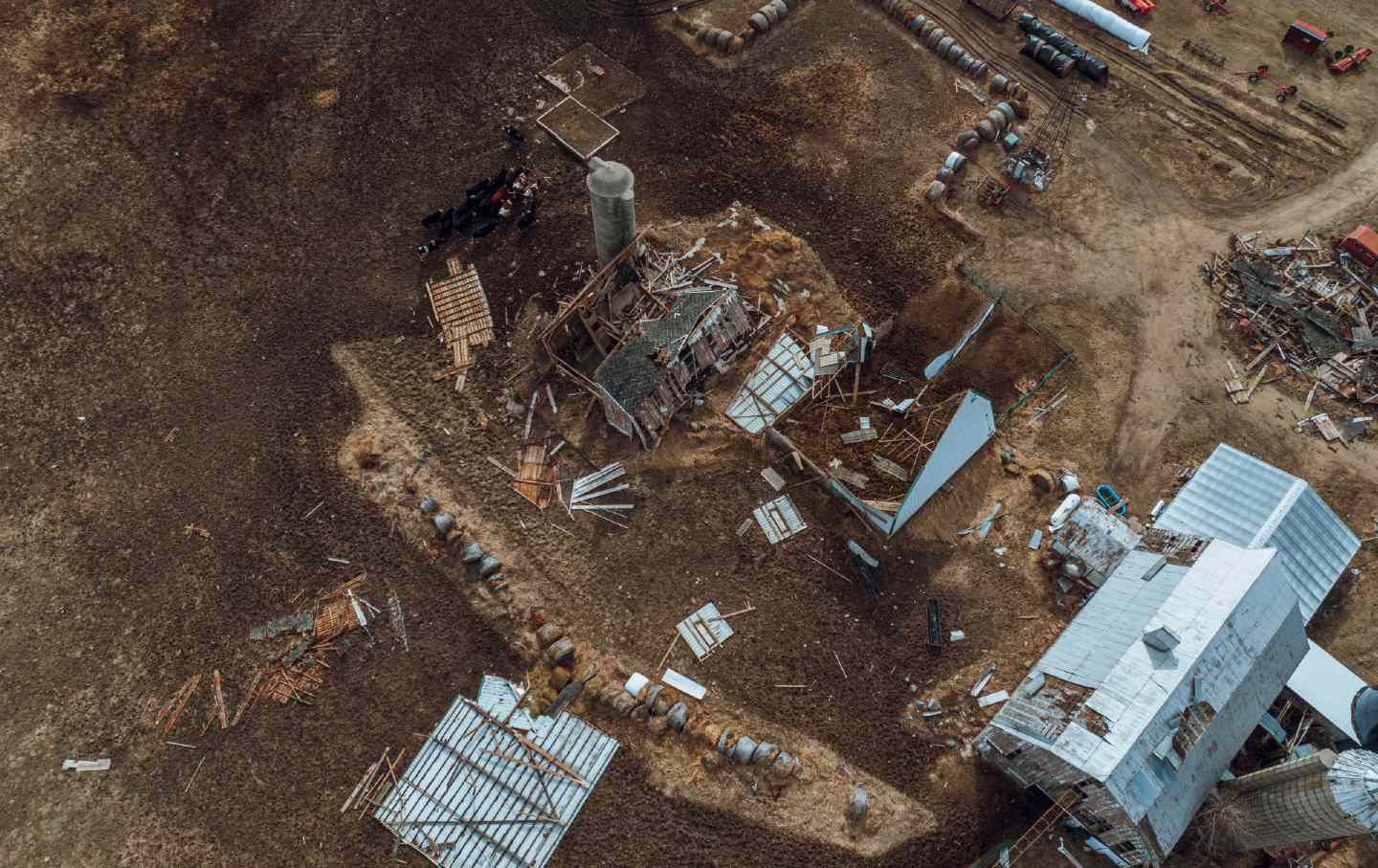
But this wasn’t just another skirmish in America’s never-ending culture war. Instead, it was a deliberate and profoundly disingenuous distraction from the real crises facing the heartland—crises that the Trump administration’s policies are exacerbating. Trump has won rural voters in each of his presidential campaigns, and his share of their vote increased every cycle from 2016 to 2024. But he is repaying this loyalty with policies that endanger the lives and livelihoods of rural Americans.
Take healthcare. The One Big Beautiful Bill’s trillion dollars in Medicaid cuts are expected to disproportionately impact rural areas, where nearly a quarter of the population is Medicaid insured and the program covers almost half of all births. Republicans, alert to the political perils of subjecting their voters to literal bodily harm, have tacked on a $50 billion Rural Health Transformation Fund. But it’s projected to cover just 37 percent of the Medicaid dollars rural communities will lose. Labor and delivery wards, which hospitals often operate at a loss, are especially vulnerable. In Kentucky, one hospital has already suspended the opening of a birthing center in anticipation of the cuts. That this is unfolding under the self-proclaimed “fertilization president” only compounds the hypocrisy.
Meanwhile, Trump’s trade war has whipsawed American agriculture. Facing metal tariffs and weak crop prices, John Deere, which netted record profits two years ago, is now struggling to sell tractors. China, the largest market for American soybeans in 2024, has yet to order even a bushel from this season’s harvest. Last month, the American Soybean Association penned a letter to the president warning that its farmers were at a “financial precipice.” And the gutting of USAID, which last year purchased $2 billion of food from American farms to distribute as aid, will certainly hurt the heartland.
The administration is also cutting infrastructure relied on by rural areas. With “equity” now a dirty word, Trump defunded the Digital Equity Act, which supported programs providing tech access and education to remote communities. Congressional Republicans erased public media funding, leaving at risk 245 rural radio stations, which broadcast crucial local updates and emergency alerts. And Trump has long mulled privatizing the US Postal Service, which could result in cuts to mail service in rural areas.
But Democrats share some of the blame for these looming disasters. The party seems to have all but given up on organizing in rural communities. According to one recent study, they haven’t bothered to name party chairs in a fifth of rural counties since 2016. And in that election year, as well as in 2020 and 2022, a similar share of rural counties hosted an uncontested congressional race thanks to Democratic absenteeism.
Yet these communities are far from a lost cause. In fact, if only 3 percent of rural voters had shifted to Kamala Harris last year, she might have won the presidency.
Organizers are working to change this trajectory. Contest Every Race, which recruits Democratic candidates in areas with little party infrastructure, has pledged to invest $12 million in rural mobilization. In a previous column, I covered The Rural Urban Bridge Initiative’s calls for a 10-part Rural New Deal. The organization has since asked the DNC to contribute 10 percent of its budget to rural and working-class districts. If the Dems had done so last year, $400 million would have been funneled to the cause.
If the right funding meets the right candidates, Democrats can be competitive in rural areas come the midterms. In Nebraska, Dan Osborn is running again as a populist independent after his long-shot Senate bid far outperformed Harris in the state last year. And in Iowa, gold medal–winning Paralympian Josh Turek is campaigning as a “prairie populist” seeking to raise the minimum wage and create affordable housing and healthcare.
No campaign, though, can succeed without robust grassroots organizing. In June, hundreds of rural communities staged No Kings protests in every state. And last month, as MAGA-world was hectoring Cracker Barrel, Bernie Sanders—himself a representative of one of the nation’s most rural states—brought the “Fighting Oligarchy” tour to tiny Viroqua, Wisconsin. In a town with a population of 4,400, hundreds gathered for the event.
Cracks are starting to appear in Trump’s base. Between February and April of this year, the president’s rural approval rating slumped from 59 percent to 40 percent. It opens a space through which Democrats might be able to drive a wedge—if only they can offer the progressive populist solutions needed by town and country alike.
Become a Sustaining Donor This September
Between the reemergence of right-wing red-baiting and Donald Trump’s use of the chilling National Security Presidential Memorandum–7 to criminalize left political organizing, we’re seeing McCarthyism reborn before our eyes.
This assault on democracy cannot be ignored or wished away. Resisting it requires bravery in the face of threats and repression, a steadfast commitment to the truth, and the unwavering belief that we can—and will—overcome this darkness.
We must have an independent media that sets the record straight, unearths corruption and abuses of power, and advances a politics of justice and dignity for all if we’re to win this fight.
That’s why I’m writing to you today. This September, The Nation needs to add 100 monthly donors to sustain our progressive journalism. Your contribution makes the next investigative report, the next truth-speaking column, and the next pathbreaking essay all possible.
I hope you’ll support our work with a recurring donation today. If you donate $10 or more a month, we’ll send you a brand new “Hands Off the Free Press!” sticker to recognise your commitment to our cause. Please, donate today.
Onward,
Katrina vanden Heuvel
Editor and Publisher, The Nation
More from The Nation
Zohran Mamdani Hosts the World Zohran Mamdani Hosts the World
In a meeting with mayors from around the globe, Mamdani argued that the left must fix everyday problems—or the right will find someone to scapegoat for them.
Is There Any Good News Left? Is There Any Good News Left?
Despite what our algorithms suggest, there’s still news worth celebrating.

CEOs Are Losing Control of AI CEOs Are Losing Control of AI
With no slowdown from Trump’s administration.
Gina Hinojosa: “We Flip Texas, and It’s Over” Gina Hinojosa: “We Flip Texas, and It’s Over”
Talking to Texas gubernatorial candidate Gina Hinojosa about what redistricting could mean and how a new generation of Democrats is speaking more directly to voters.
Trump Wants to Keep Journalists Out of the White House. He Should Get His Wish. Trump Wants to Keep Journalists Out of the White House. He Should Get His Wish.
The president has banned MS NOW, CNN, and Politico from attending press briefings. The rest of the media should respond with a boycott.

