The Misinformation Campaign Trying to Bring Down Abortion Pills
Hundreds of thousands of people could lose access to a safe, effective and well-studied method for abortion care if this campaign succeeds.
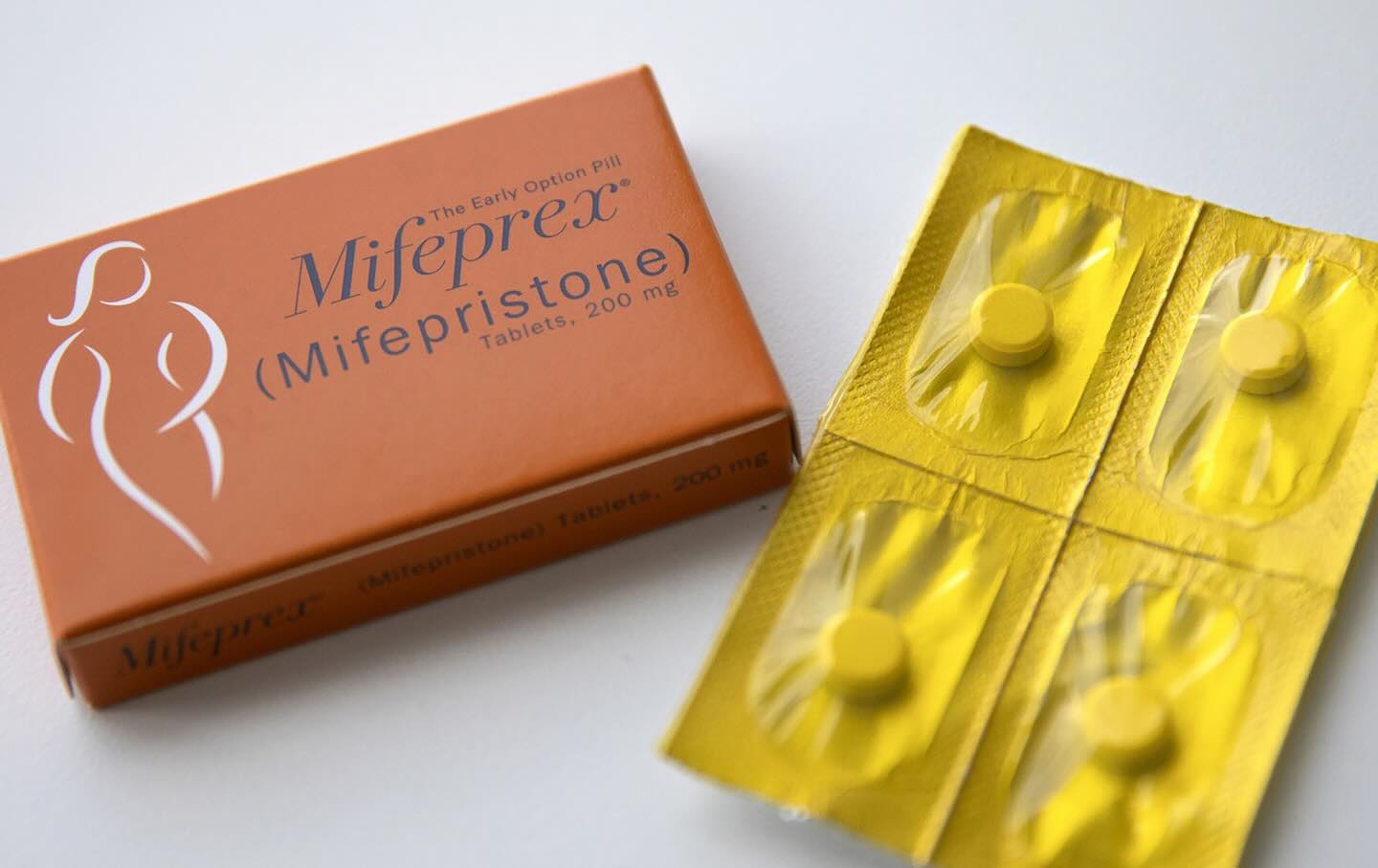
Mifepristone and misoprostol pills
(Erin Hooley / Chicago Tribune)Medication abortion is safe, effective, and widely accepted by patients and providers, which makes it a prime target for political attacks founded on misinformation. However, the newly Trump-appointed FDA commissioner Dr. Marty Makary claimed that he had “no plans to take action on mifepristone” in a PBS interview in late April. When pushed by reporter Amna Nawaz, Makary conceded that should new data come to light, the agency may then consider “taking action.” Four days later, the antiabortion organization Ethics & Public Policy Center self-published a new paper claiming that mifepristone is more dangerous than the current FDA label suggests. The timing of these events seems more than just coincidental, and the paper has subsequently received substantive (and well-deserved) skepticism from mainstream media and medical institutions.
Researchers dedicated to understanding the data behind abortion and clinical providers of abortion care know that disseminating and promoting shoddy science is not a new tactic of the antiabortion movement; this paper, which has since been followed by an equally dubious second one, is no exception. The paper (we will refrain from calling it a “study,” since it does not meet the criteria of rigorous science) falsely claims that one in 10 women experience a serious adverse event when using mifepristone to end a pregnancy. This is 22 times higher than the figure established by medical scientists, who have found mifepristone to be both highly safe and effective. This consensus is based on decades of robust clinical and peer-reviewed studies conducted by reputable researchers in the United States and around the world.
The large body of research on the combined regimen of mifepristone and misoprostol has found that serious adverse events—like hemorrhage or sepsis—are very rare across studies, generally far below 1 percent of all abortions. Likewise, the combined regimen is highly effective, resulting in a completed abortion in more than 95 percent of abortions. Mifepristone is safer than commonly prescribed medications like penicillin and Viagra, and safer than childbirth.
The fact that their findings are such clear outliers means that readers, including policymakers, should approach this paper with a high level of scrutiny. However, the authors have made it difficult to fully evaluate the validity of their findings. Importantly, they do not offer specifics about their methodology, including failing to name the dataset they purchased and the medical diagnosis and treatment codes they used to conduct their analysis—something that is commonly disclosed in studies so that other researchers can attempt to replicate and build on the findings.
We identified many other red flags with the paper.
One of the ways that the authors identify cases to be included in their paper is through the prescription of mifepristone. This is especially problematic because mifepristone is used for other types of care, including miscarriage management (also referred to as “spontaneous abortion” in the medical field), labor induction, and treatment of hyperglycemia in Cushing syndrome. The most common adverse event this paper found is referred to as “other abortion-specific complications,” experienced by 5.68 percent—more than half of their “adverse events”—of their counted abortions. However, the authors also indicate that this category includes “codes specifically related to an abortion or miscarriage (emphasis ours), as well as life-threatening mental health diagnoses.” Thus, it is likely that in some instances the authors have conflated induced abortions with miscarriages in an analysis purportedly focused on induced abortion.
Additionally, the authors count a visit to the emergency room as a serious adverse event attributable to mifepristone, but an ER visit alone is not evidence of a complication. There are many reasons that someone who has had a medication abortion might present at an ER, including to confirm that they are no longer pregnant or for reassurance that the bleeding they are experiencing is normal. For many individuals, the ER serves as their primary point of entry when seeking care for any of their health questions and concerns due to lack of insurance coverage or poor access to care in their own communities.
The conflation of ER visits with serious adverse events is an alarm bell for shoddy science and a methodological flaw that has also featured prominently in other debunked anti-abortion research attempting to attack mifepristone’s safety record.
Also included in the authors’ list of adverse events is subsequent use of procedural abortion to complete a medication abortion. However, this is a common method of care for an incomplete abortion (both spontaneous and induced) and does not indicate serious complications. While the vast majority of medication abortions don’t require this intervention, around 4 percent do. In those cases, providers are able to safely and effectively treat the patient by performing a procedural abortion.
In addition to the methodological flaws, the authors make policy recommendations that are not supported by their own findings. For instance, they claim that “Mifepristone should be administered only in a clinic, medical office, or hospital, by or under the supervision of a physician” and that “Mifepristone should be prescribed only by physicians.” They do not clarify how they came to such conclusions; their data does not capture whether the medication was provided in-person (as opposed to telehealth) or the type of provider that administered the pills (such as nurse practitioners or midwives).
What is clear is that these recommendations are motivated by politics rather than science, since they did not present any data that would justify their reaching these conclusions.
Critiquing this paper, and others like it, is not just as an academic exercise. When the antiabortion movement goes on research fishing expeditions, there are real-life consequences. Lawmakers like US Senators Josh Hawley and Steve Daines have already touted this flawed paper as evidence that the FDA should severely restrict access to mifepristone. Secretary of Health and Human Services Robert F. Kennedy Jr. mentioned the paper during a congressional hearing calling on the FDA to look into mifepristone, despite the fact that decades of research has shown it to be safe, effective, and that it can be a lifesaving medication for those who need it.
If these legislators and administrative officials got their way, then hundreds of thousands of people across the country could lose access to mifepristone—even those in states where abortion is legal—denying them access to a safe, effective and well-studied method.
It is imperative that we refute these attacks each and every time they occur to prevent misinformation from influencing law and policy.
Become a Sustaining Donor This September
Between the reemergence of right-wing red-baiting and Donald Trump’s use of the chilling National Security Presidential Memorandum–7 to criminalize left political organizing, we’re seeing McCarthyism reborn before our eyes.
This assault on democracy cannot be ignored or wished away. Resisting it requires bravery in the face of threats and repression, a steadfast commitment to the truth, and the unwavering belief that we can—and will—overcome this darkness.
We must have an independent media that sets the record straight, unearths corruption and abuses of power, and advances a politics of justice and dignity for all if we’re to win this fight.
That’s why I’m writing to you today. This September, The Nation needs to add 100 monthly donors to sustain our progressive journalism. Your contribution makes the next investigative report, the next truth-speaking column, and the next pathbreaking essay all possible.
I hope you’ll support our work with a recurring donation today. If you donate $10 or more a month, we’ll send you a brand new “Hands Off the Free Press!” sticker to recognise your commitment to our cause. Please, donate today.
Onward,
Katrina vanden Heuvel
Editor and Publisher, The Nation