The Failures Democrats Must Confront
The party is not in inevitable decline, but it is in crisis.
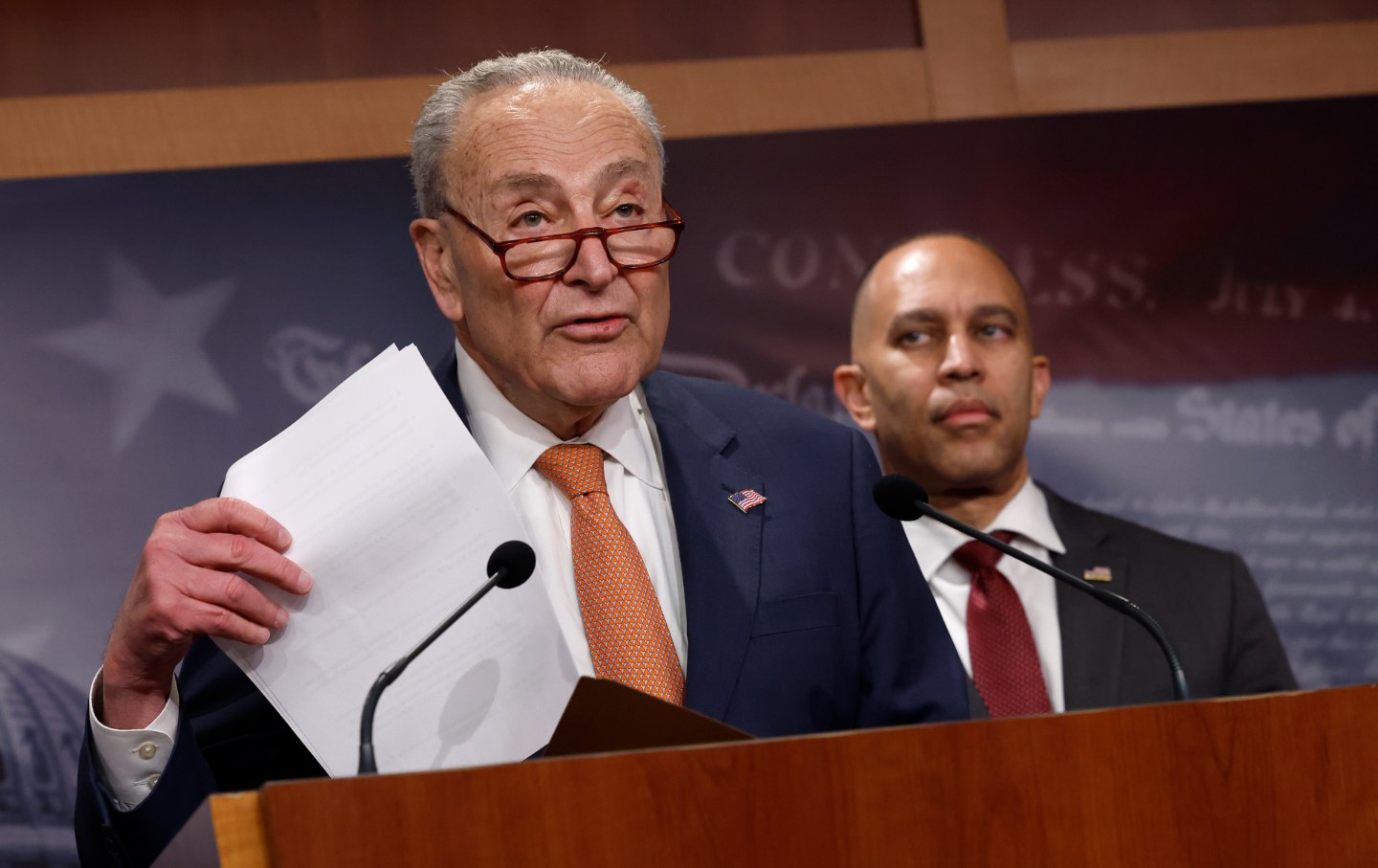
Democrats see themselves as a lighthouse—steady, guiding, a safeguard against chaos. But a lighthouse only works if people look to it. And more and more, they don’t. The problem isn’t just that the light is dimming; it’s that voters have stopped navigating by it altogether. Beneath the surface, something deeper is stirring: economic frustration, cultural disillusionment, and a growing sense that the party isn’t attuned to the struggles of working people. The question isn’t whether Democrats can keep the light shining. It’s whether they understand what’s rising in the darkness, and whether they can adapt before it overtakes them.
The Democratic Party isn’t in inevitable decline. It’s in crisis—one facing center-left parties everywhere—resulting from two fundamental failures.
The first failure is the party’s fraying connection to the working class—not just white working-class voters, whose defection to the Republican Party has been widely discussed, but also young men and non-college-educated voters of color, who have begun shifting away from the Democratic coalition at an alarming rate. A party that once cast itself as the vehicle for working-class political power now struggles to articulate what, exactly, it is delivering for working people. That failure isn’t just about policy, but about perception: More and more working-class voters see the Democrats as a party of affluent professionals, more plugged in to the priorities of college-educated liberals than to the everyday economic struggles of the majority.
In focus groups, voters don’t just see Democrats as out of touch. They see them as slow, weak, ineffective. Slugs. Snails. Sloths. Meanwhile, they describe Republicans as lions and sharks, as tigers on the attack—aggressive, dominant, and willing to fight for what they want. That perception gap is devastating in a moment of economic anxiety. When voters feel like they’re drowning under the cost of rent and groceries, they don’t want a party that explains why change is hard. They want a party that picks a fight and wins.
The Democratic Party needs to throw a punch, to make it clear who is hoarding wealth and power and who is paying the price. And above all, it needs to be relentless about one thing: affordability. Billionaires like Elon Musk and Donald Trump loot from working families while using culture wars to distract, divide, and conquer. They stoke outrage over DEI, put mass deportations on daytime TV, and flood social media with spectacle to keep attention off their smash-and-grab tactics. Meanwhile, life keeps getting more expensive—healthcare, housing, childcare, groceries—and the people in charge keep telling us to blame anyone but them.
The second failure is structural, and just as consequential: Democrats are losing the war for attention. Politics isn’t just about passing laws and winning elections; it’s also about shaping the broader information environment in which those laws and elections take place. Conservatives understand this. That’s why they’ve spent decades building an infrastructure that doesn’t just participate in political debate but defines the terms.
Take the Conservative Partnership Institute. It doesn’t just train far-right movement organizations and leaders; it is a nonprofit that supplies them with staff, strategy, media booking, podcasting platforms, and an ideological home in Washington. It ensures that when the far right takes office, they don’t flounder—they build a movement and execute. It’s not just a think tank; it’s a media-steeped and savvy strategy hub that coordinates the insurgency inside the Republican Party.
Steve Bannon’s “flood the zone” strategy wasn’t just misinformation—it was volume. Trump didn’t just seek headlines; he turned his base into megaphones. Texas Governor Greg Abbott’s migrant busing stunt wasn’t a policy proposal but a viral political weapon designed to seize the conversation and force Democrats into a defensive crouch. The actual policy debate—on asylum law, refugee resettlement, the border—became tangential. Abbott wasn’t trying to win a debate; he was trying to win attention. And by winning attention, score votes and shape reality. Until we build an infrastructure that can contest at this level, we’ll remain stuck playing defense.
The answer isn’t just sharper messaging or a better policy agenda. Political realignment also requires a high-functioning ecosystem, an interplay between movements that mobilize pressure from below and parties that channel that pressure into governance. Movements create political will; parties institutionalize it. Often, they exist in tension. But when aligned, they don’t just win elections—they rewrite history.
Think of movements, media, and parties as interlocking gears. If they aren’t synchronized, nothing moves. Movements generate urgency, expand the base, and push the boundaries of what’s possible. Media shapes how ideas are framed, debated, and absorbed. Politicians can harness that momentum and translate it into governance.
We must engage with surround sound, compel, and move people in this age of populism and the attention economy under Trump and Musk.
Become a Sustaining Donor This September
Between the reemergence of right-wing red-baiting and Donald Trump’s use of the chilling National Security Presidential Memorandum–7 to criminalize left political organizing, we’re seeing McCarthyism reborn before our eyes.
This assault on democracy cannot be ignored or wished away. Resisting it requires bravery in the face of threats and repression, a steadfast commitment to the truth, and the unwavering belief that we can—and will—overcome this darkness.
We must have an independent media that sets the record straight, unearths corruption and abuses of power, and advances a politics of justice and dignity for all if we’re to win this fight.
That’s why I’m writing to you today. This September, The Nation needs to add 100 monthly donors to sustain our progressive journalism. Your contribution makes the next investigative report, the next truth-speaking column, and the next pathbreaking essay all possible.
I hope you’ll support our work with a recurring donation today. If you donate $10 or more a month, we’ll send you a brand new “Hands Off the Free Press!” sticker to recognise your commitment to our cause. Please, donate today.
Onward,
Katrina vanden Heuvel
Editor and Publisher, The Nation