
Marijuana Could Be Legal in Half of US States After the 2024 Election
Florida’s Amendment 3 would legalize recreational cannabis, along with similar ballot proposals in North Dakota, South Dakota, and Nebraska.
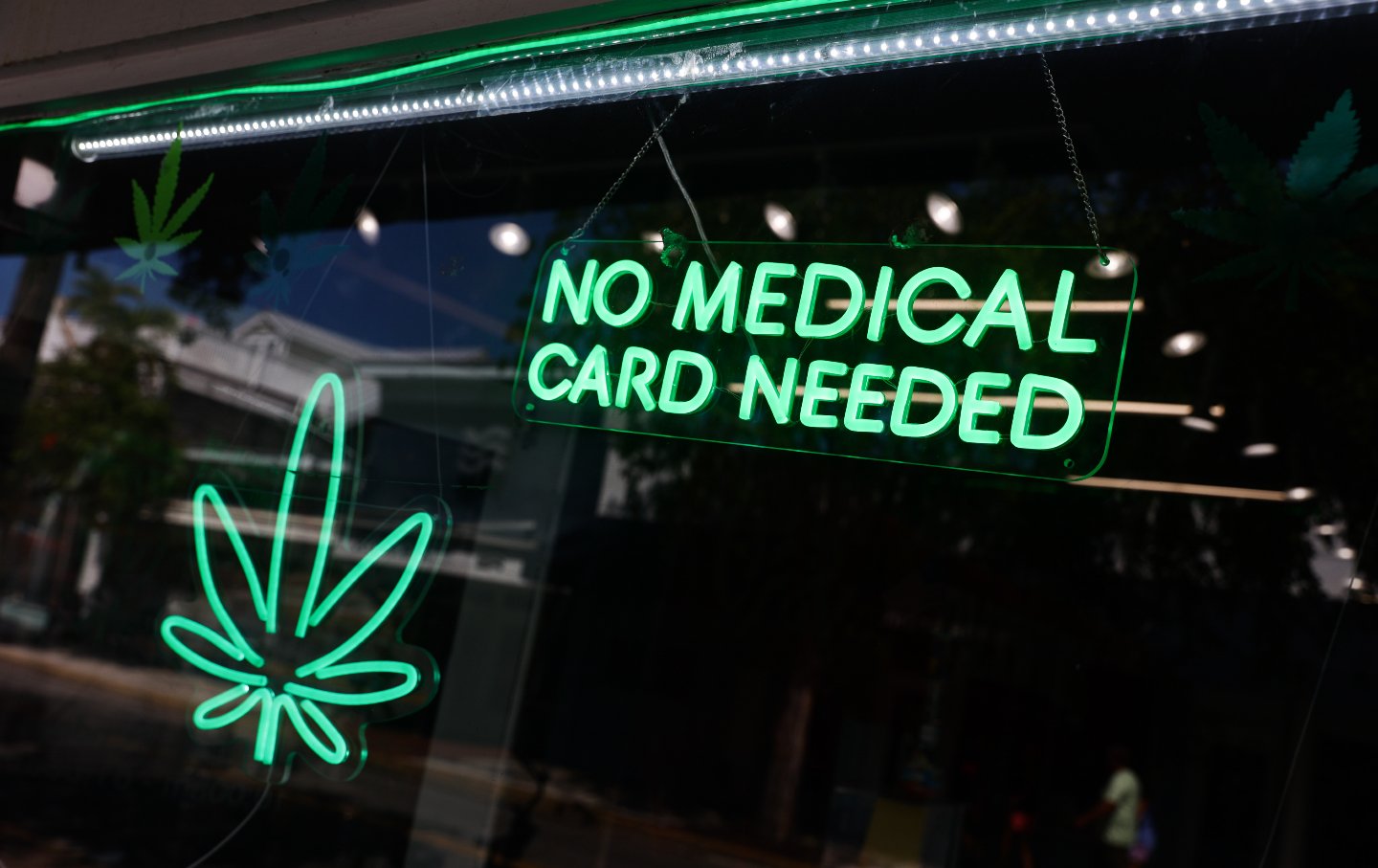
“No medical card needed” sign at a store in Key West, Florida, in May 2024.
(Jakub Porzycki / Getty)
The movement for legalizing marijuana is flying high ahead of the 2024 election.
In North Dakota, South Dakota, Nebraska, and Florida, proposals to legalize recreational cannabis are on the ballot. As it stands today, 38 states and the District of Columbia allow medical use of marijuana, while 24 have legalized it for recreation. Cannabis legalization in Florida would undoubtedly have the biggest implications, as it’s one of the two most populous states that haven’t already permitted recreational use—the other being Texas.
Ballot initiatives in the Sunshine State face an added hurdle, requiring a supermajority of voter approval. But if grassroots energy is any indication, Amendment 3 in Florida could be on its way to exceeding the 60 percent threshold. I should know, as the executive director of Students for Freedom, a Gen Z-led political committee leading campus efforts to turn out Florida college students to vote “YES,” which has visited universities across the state.
As one might imagine, persuasion isn’t as much of a challenge in this race. Generation Z is overwhelmingly in favor of legalization. Around 69 percent of voters under 50 support the amendment, according to a Florida Atlantic University poll from August. While the Dakotas and Nebraska are solidly conservative states, polling suggests that the prospects for their respective ballot measures to legalize recreational cannabis are at least a toss-up—testament to the potential of referendums to pass progressive policy in spite of a bleak partisan landscape.
Instead, the name of the game in Florida is turnout. A number of candidates are reportedly relying on ballot initiatives like Amendment 3 to boost performance up and down the ballot, a stunning realization in what many people are calling “the most important presidential election of our lifetime.”
As part of this turnout work, we registered students to vote and discussed their on-campus voting options. We brought bounce houses to campuses for students to “Get High For Amendment 3.” We set up at tailgates and handed out custom hats, stickers, shirts, and rolling papers. We dropped off thousands of Amendment 3 fliers at dorms and campus apartments. We sent tens of thousands of texts—and made an equal number of calls—to Florida college students offering voting information tailored to their campus. And after October 22, when early voting began in most counties, we sent dozens of golf carts and buses to the University of Florida and Florida State University to take students directly to the polls.
Critics of Amendment 3 are decidedly more lonely in their opposition. Perhaps the only notable voice against recreational use is Ron DeSantis, as the embattled governor’s expected allies in the Republican Party have not uniformly backed his position. Even former president Donald Trump seems to be reading the tea leaves, snubbing DeSantis by endorsing Amendment 3 in September.
Without the uniform support of his party, DeSantis instead used the state government to try to defeat Amendment 3. The taxpayer-funded Florida Department of Children and Families, for example, which is overseen by DeSantis, published notices on its website and other public channels asserting that Amendment 3 is dangerous to children.
These efforts by the DeSantis administration run afoul of the idea that the government should remain neutral and nonpartisan in regards to ballot questions, and some legal experts contend that Desantis’s heavy-handed approach may violate state and federal law.
But Florida voters will get the final say. And if public polling is to be believed, it will be a stunning rebuke of the governor’s position.
If voters pass Amendment 3 and similar measures in the other states, tens of millions of Americans would find themselves no longer at risk of criminal prosecution. The economies of these states would be boosted by a lucrative new market that would bring substantial tax revenue—which is especially beneficial in these states, as their conservative state governments’ low tax yields have come at the expense of quality public services. This election could also officially legalize cannabis recreationally in over half of the US—a significant milestone that may be the spark for legalization federally.
But should these ballot initiatives pass, there is still work to do. None of the referendums this election cycle expunge criminal records or release those sentenced to prison for marijuana possessions. Further, these initiatives grant undue advantages to cannabis monopolies and disproportionately white, affluent entrepreneurs. While decriminalization is an essential first step, equity must be the final goal.
The criminalization and over-policing of cannabis use has been one of the most infamously destructive pillars of the War on Drugs. On November 5, Americans concerned with the state of criminal justice should look past the high-profile races for a glimpse into the future of marijuana legalization nationwide.
Read the rest of StudentNation’s dispatches on the 2024 election here.
Become a Sustaining Donor This September
Between the reemergence of right-wing red-baiting and Donald Trump’s use of the chilling National Security Presidential Memorandum–7 to criminalize left political organizing, we’re seeing McCarthyism reborn before our eyes.
This assault on democracy cannot be ignored or wished away. Resisting it requires bravery in the face of threats and repression, a steadfast commitment to the truth, and the unwavering belief that we can—and will—overcome this darkness.
We must have an independent media that sets the record straight, unearths corruption and abuses of power, and advances a politics of justice and dignity for all if we’re to win this fight.
That’s why I’m writing to you today. This September, The Nation needs to add 100 monthly donors to sustain our progressive journalism. Your contribution makes the next investigative report, the next truth-speaking column, and the next pathbreaking essay all possible.
I hope you’ll support our work with a recurring donation today. If you donate $10 or more a month, we’ll send you a brand new “Hands Off the Free Press!” sticker to recognise your commitment to our cause. Please, donate today.
Onward,
Katrina vanden Heuvel
Editor and Publisher, The Nation
More from The Nation
CEOs Are Losing Control of AI CEOs Are Losing Control of AI
With no slowdown from Trump’s administration.
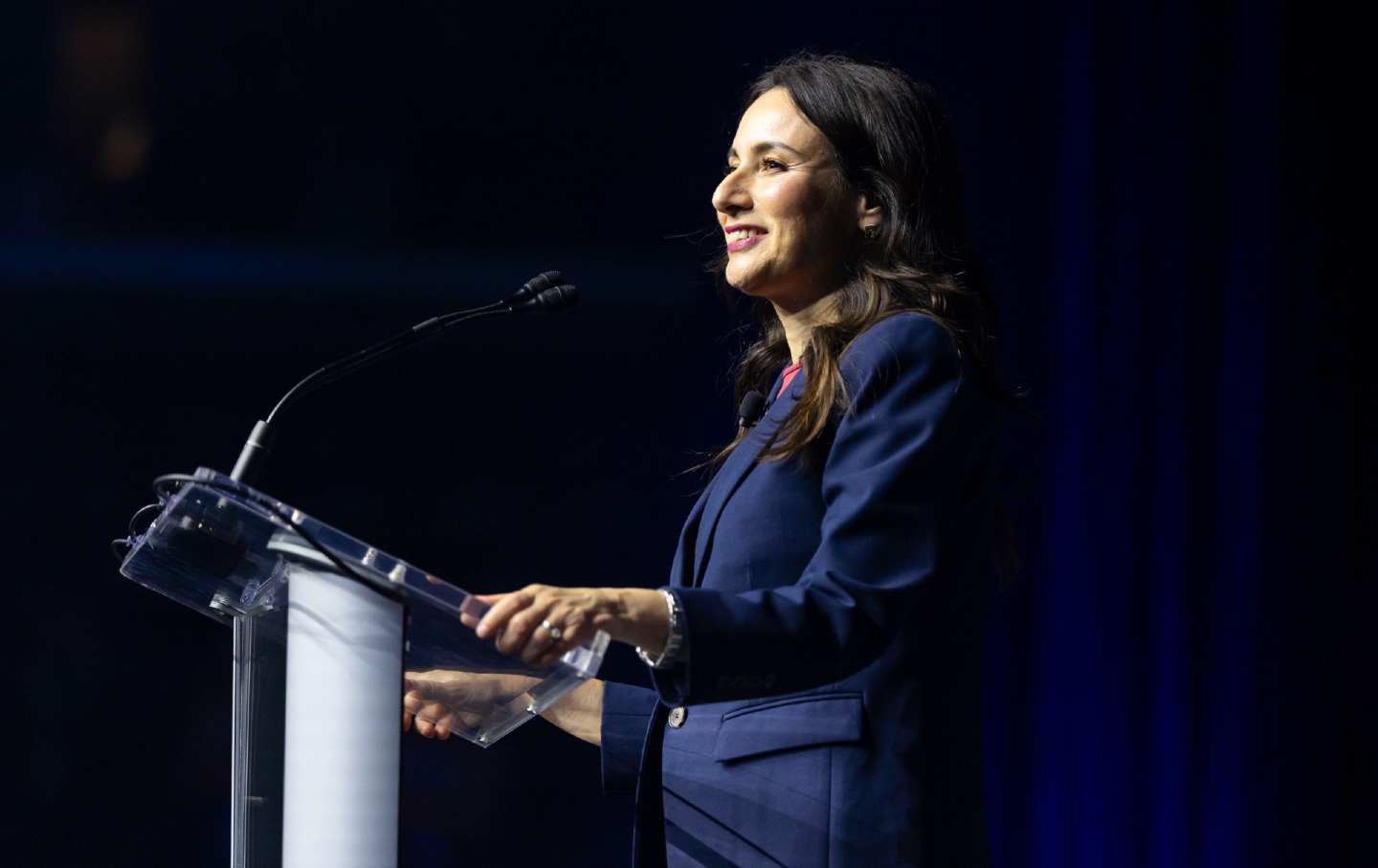
Gina Hinojosa: “We Flip Texas, and It’s Over” Gina Hinojosa: “We Flip Texas, and It’s Over”
Talking to Texas gubernatorial candidate Gina Hinojosa about what redistricting could mean and how a new generation of Democrats is speaking more directly to voters.
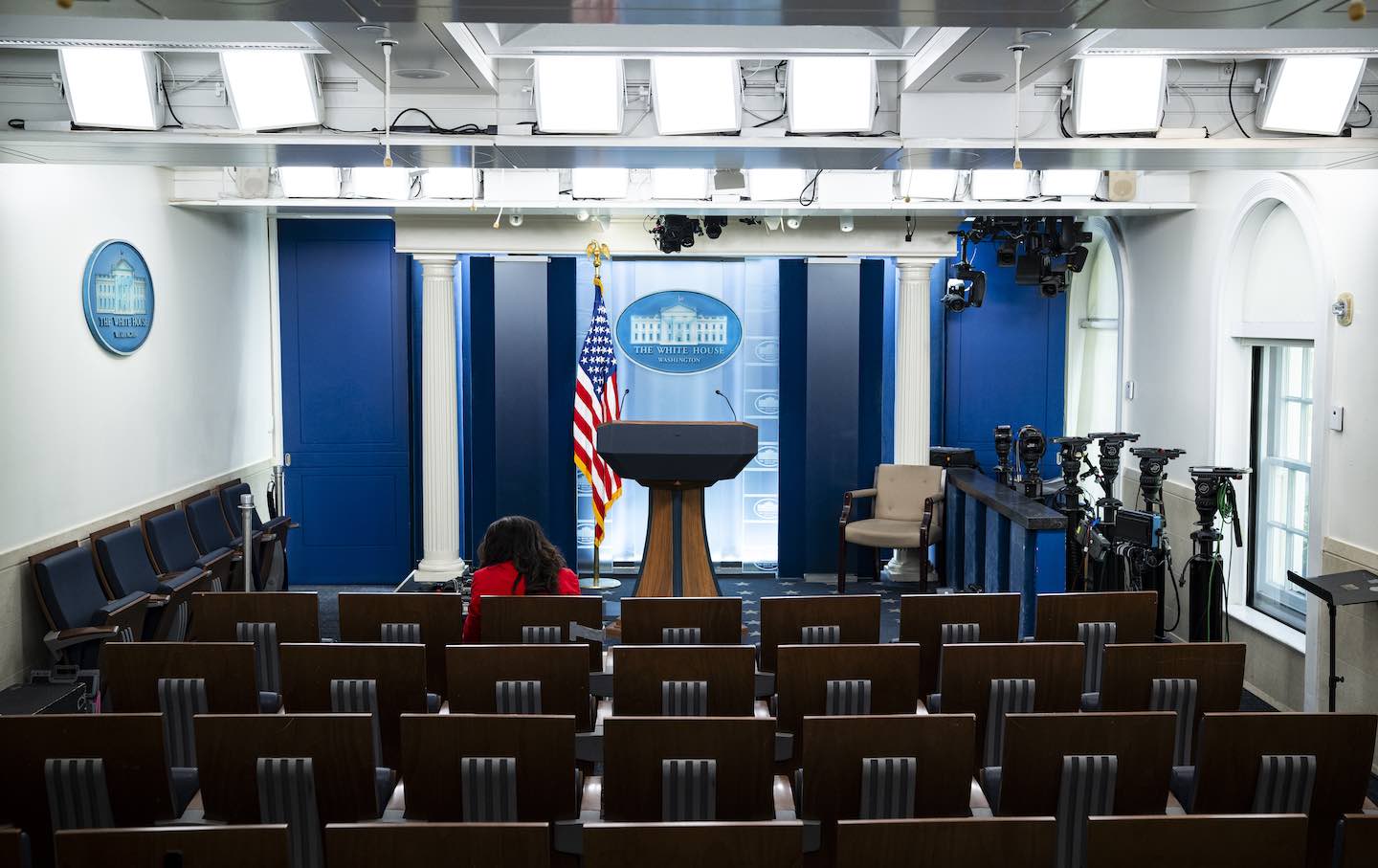
Trump Wants to Keep Journalists Out of the White House. He Should Get His Wish. Trump Wants to Keep Journalists Out of the White House. He Should Get His Wish.
The president has banned MS NOW, CNN, and Politico from attending press briefings. The rest of the media should respond with a boycott.
The GOP’s Incredible Shrinking Senate Map The GOP’s Incredible Shrinking Senate Map
Trump has so badly damaged the Republican Party’s brand that strategists are contemplating bitter fights—and losses—in races they’d been banking on as sure things.
Bernie Sanders: “People Are Sick and Tired of the Status Quo. People Want Change” Bernie Sanders: “People Are Sick and Tired of the Status Quo. People Want Change”
Exclusive: Read the text of a major foreign-policy address delivered by the independent senator at Riverside Church.

Even Republicans Are Figuring Out That Pete Hegseth Is a Disaster Even Republicans Are Figuring Out That Pete Hegseth Is a Disaster
Hegseth was always a horrible choice for defense secretary. At long last, some in the GOP are admitting it.

