The Real Scandal in New York City
What’s worse than taking illegal foreign campaign contributions? Mayor Eric Adams’s failure to meet the city’s glaring needs.
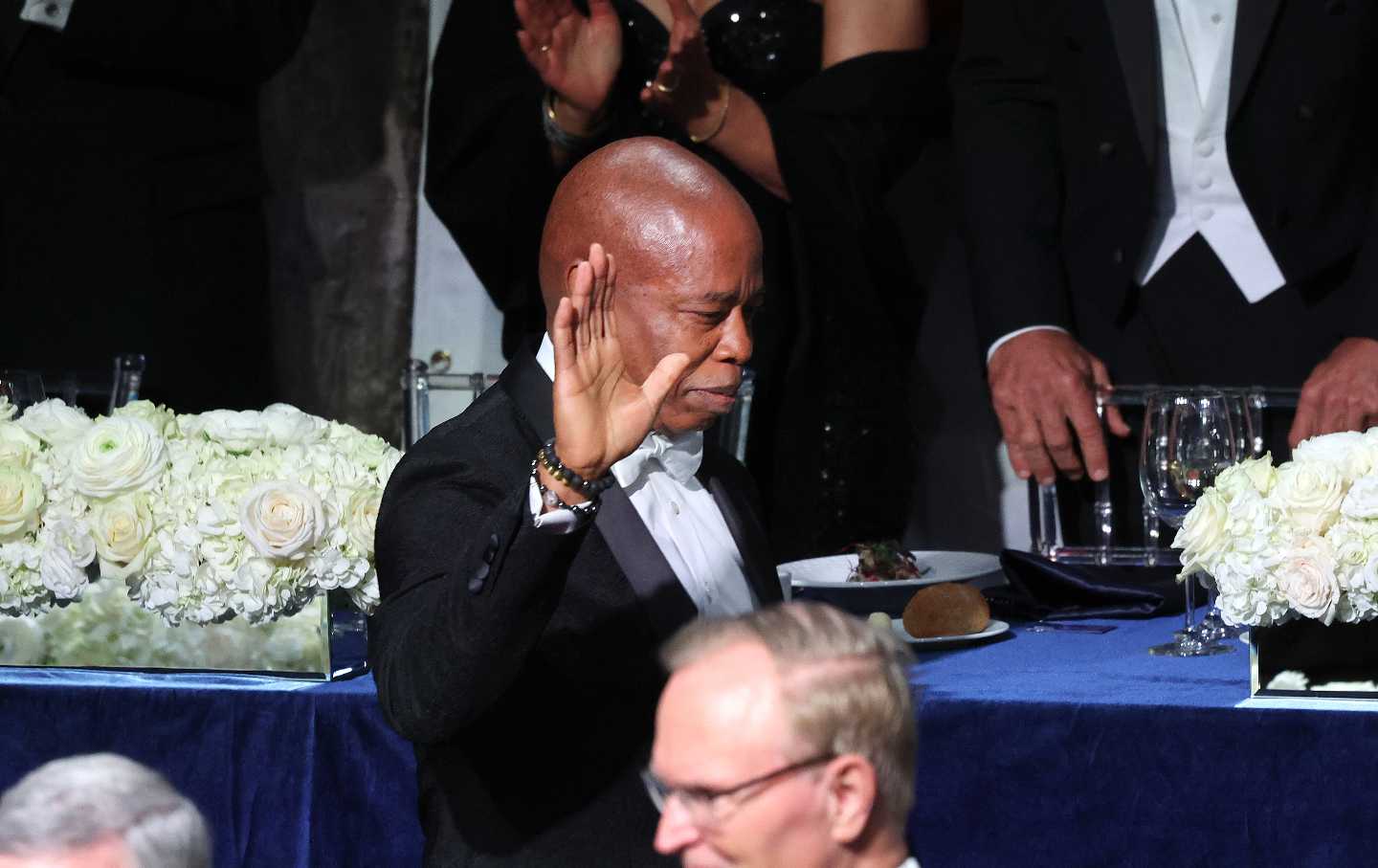
New York Mayor Eric Adams was indicted on September 26 on charges of bribery, wire fraud, conspiracy, and accepting illegal campaign contributions from foreign nationals. Greater men have been forced out of office for lesser offenses, like former governor David Paterson, whose political career ended after he accepted free tickets to the World Series, or his predecessor in the governor’s mansion, Eliot Spitzer, who resigned when it was revealed he had patronized sex workers. And yet there is every chance that by the time you read this, Adams will still be mayor of New York, clinging to office if not to power.
The real scandal is not the money Adams is alleged to have taken from Turkish donors or even the favors he supposedly granted in return—including flouting the city’s fire code. Rather, it is the smallness of imagination Adams brought to governing this country’s greatest city: not just the failure to deliver on his campaign promises, but the stunted and shriveled nature of those promises compared with the city’s glaring needs and enormous untapped potential.
“What’s the Matter With New York?” was the question posed by a 1932 book by Norman Thomas and Paul Blanshard. Thomas was then a leader of the Socialist Party (and the party’s unsuccessful candidate for mayor—and president); Blanshard was an assistant editor at The Nation. The incumbent mayor, Jimmy Walker, a flamboyant figurehead for the city’s Democratic machine, had just been forced to resign by New York Governor (and presidential candidate) Franklin D. Roosevelt in the wake of a bribery and corruption scandal. (Walker avoided indictment by fleeing to France.)
Thomas and Blanshard’s diagnosis makes dismayingly familiar reading: Chapter titles include “The Shame of the Courts,” “Racketeering in Land,” “Housing Human Beings,” and “The Consumer Pays,” as they lament that “the average New Yorker is almost wholly dependent for daily comfort on several great corporations which have monopolies or near monopolies of the things he must have.”
But what’s also worth noting—particularly when the city again finds itself leaderless and adrift—is the two writers’ firm faith that New Yorkers deserved better. And that the problems of city government are the problems of modern collective life. “However bad our city government is,” Thomas and Blanshard write, “it is indispensable to masses of workers who do not grow their own food [but] are fed by complex processes under which the city is never far removed from hunger, who would die of thirst but for a city water system, and who are herded back and forth in city subways. Our health, certainly our protection from epidemic disease, depends…on the city board of health…. The education of our children is in the main a city function. So is our protection from fire and theft.”
Also worth noting: Following a special election for a caretaker mayor, 1933 marked the advent of Fiorello La Guardia, a root-and-branch reformer (running on the Republican and City Fusion lines) who appointed Paul Blanshard as head of the city’s Department of Investigation. Over the next 12 years, La Guardia built the legacy of bridges, tunnels, beaches, parks, playgrounds, hospitals, and other public buildings New Yorkers still rely on today. Working with socialists and communists—and in close coordination with FDR’s New Deal—La Guardia made the city’s schools synonymous with excellence and its public services the pride of its citizens.
Could it happen again here? Like so much else, the answer may well hinge on the results of this month’s presidential election, which as I write remains too close to call. While you’re sweating out the results, why not enjoy John Semley’s account of the return of Jon Stewart, Talia Lavin’s wry engagement with the modern trad wife, and Jesse Robertson’s wild ride through the US military’s love affair with gaming? And because not all news is good news, do heed Jimmy Tobias’s timely warning about the next terrifying animal-borne pandemic and Peter Davis’s reminder of America’s long insistence that war crimes are no big deal.
Plus Karrie Jacobs on a 21st-century approach to park-making, Vikram Murthi on HBO’s Industry, Bruce Robbins on campus free speech, Erin Somers on Taffy Brodesser-Akner’s new novel, and Anna Louie Sussman on optimization parenting.
Since none of us will be getting much sleep, we’ve also got columnists to keep you company, dispatches and editorials to keep you thinking—and even a Q&A with Nancy Pelosi!
See you next month.
D.D. Guttenplan
Editor