
Young People Want Better Than Biden. But What Choice Do We Really Have?
The Sunrise Movement has been hesitant to endorse Biden, and we are far from alone.
The only vote I’ve regretted was my first. In 2012, I was so furious about the Democratic Party’s failure to make meaningful progress on climate change that I used my first-ever ballot to cast a protest vote against President Barack Obama. Rather than forcing my way into the Democratic Party’s big tent, I sat outside it.
That protest vote is on my mind as two startlingly unpopular presidents vie for another four years. Can I stomach a vote for Joe Biden, a man who promised jobs that would be good for the planet and workers’ wallets and delivered the funds for a supercharged domestic clean-energy industry, only to blow all of his goodwill by bear-hugging a far-right leader who is wanted by the International Criminal Court? And what do my personal compunctions matter as the country faces the possibility of another term for Donald Trump, a convicted felon who has vowed revenge on our democracy’s bedrock institutions?
I’m not alone in asking these questions. The Sunrise Movement, the environmental youth organization I’ve had a hand in building over the past seven years, recently announced that it wasn’t yet ready to campaign for Joe Biden. The coverage of this has been billed as a scoop for revealing Biden’s weakening support. It’s not. Sixty-nine percent of young people disapprove of the president’s job performance—and they are far from alone.
Still, the news rankled the pundit class. New York magazine columnist Jonathan Chait questioned the point of a climate group that doesn’t line up behind the only party that believes its issue is real.
This logic is sound, even if it elides the fact that climate change was not a priority for the Democratic Party until the grass roots demanded it. To Chait, withholding an endorsement is immature. If young people can’t reward politicians who make real progress on the issues we care about, why should those politicians work with us at all? The answer is that while politics is transactional, physics drives a harder bargain.
If we think of Biden’s record on climate change as an Econ 101 test, we can score him on two measures: the supply of fossil fuels that drive up global temperatures, and the demand for clean-energy technologies that don’t. Thanks to Biden’s Inflation Reduction Act, solar installations are skyrocketing, and the costs of electric vehicles are plummeting as demand grows. It’s in regard to fossil fuel supply that the president’s record is mixed. Last year, Biden broke a key campaign promise when he approved the Willow oil project in Alaska. And while it’s commendable that the administration paused liquefied natural gas exports earlier this year, the United States remains on track to “produce more crude oil than any country, ever,” according to the US Energy Information Administration. The more of that crude that is burned, the hotter our country will get, and the more people will suffer as a result of fires, floods, and heat waves, no matter the demand for clean energy.
For the pundits who try to wave this all away, consider the recent warning from the secretary general of the United Nations: “We need an exit ramp off the highway to climate hell.” Indeed, scientists at the UN’s World Meteorological Organization have announced that there is an 80 percent chance the globe’s temperature will temporarily surpass the target set by the world’s governments at the Paris climate accords within the next five years.
Whoever is elected president in November will be in office, presumably, the majority of those five years. He will have enormous leverage in either stanching the rising seas or abetting the dominance of fossil fuels for the rest of the decade. This is the strongest point made by Sunrise’s critics: Regardless of how much or how little President Biden has done on climate, who exactly is the alternative to him?
It’s a fair question. It’s also fair to consider that Biden’s support for Israel’s war on Gaza is a major sticking point for young people, forcing not just us but all people of conscience to question our votes in November.
But rather than thoughtfully engage us on these issues, commentators like Chait scold climate activists for not staying in our lane. Evidently, it doesn’t occur to these critics that young people are fighting for a livable future not only for ourselves, but also for those in Israel and Palestine.
I, too, am suspicious of the tendency to link every issue to every other in the name of damning the whole system. At best, it gestures toward solidarity: that I will have your back when you have mine. At worst, it’s inimical to strategy, which demands focus.
Ultimately, politics is a negotiation. Like any negotiation, it pits people with different kinds of power against each other. This is what I did not understand in 2012. My power does not come from standing outside the tent, but from organizing to bring more progressives into it.
For those still asking what Sunrise is for: It’s to show young people that politicians respond to power—and so we must find what makes us powerful. Chait and his ilk seem intent on finger-wagging us out of politics. That would serve the pundit class. It will not serve the country.
More from The Nation
Abby Martin on the Climate Cost of US Empire Abby Martin on the Climate Cost of US Empire
The filmmaker discusses military pollution, her reporting in Hawai’i, and why the climate and antiwar movements belong together.
Trump Is Making Deals With Big Oil Trump Is Making Deals With Big Oil
Democrats and the press should be paying attention to how this pay-to-play behavior relates to the midterms
This Lawsuit Could Make Big Oil Pay for the Harm It’s Caused This Lawsuit Could Make Big Oil Pay for the Harm It’s Caused
The question is whether the Supreme Court will let it.

Germany and California Make Up an Environmental Superpower Germany and California Make Up an Environmental Superpower
The world’s third- and fourth-largest economies have pledged to environmental protections. Will others follow suit?
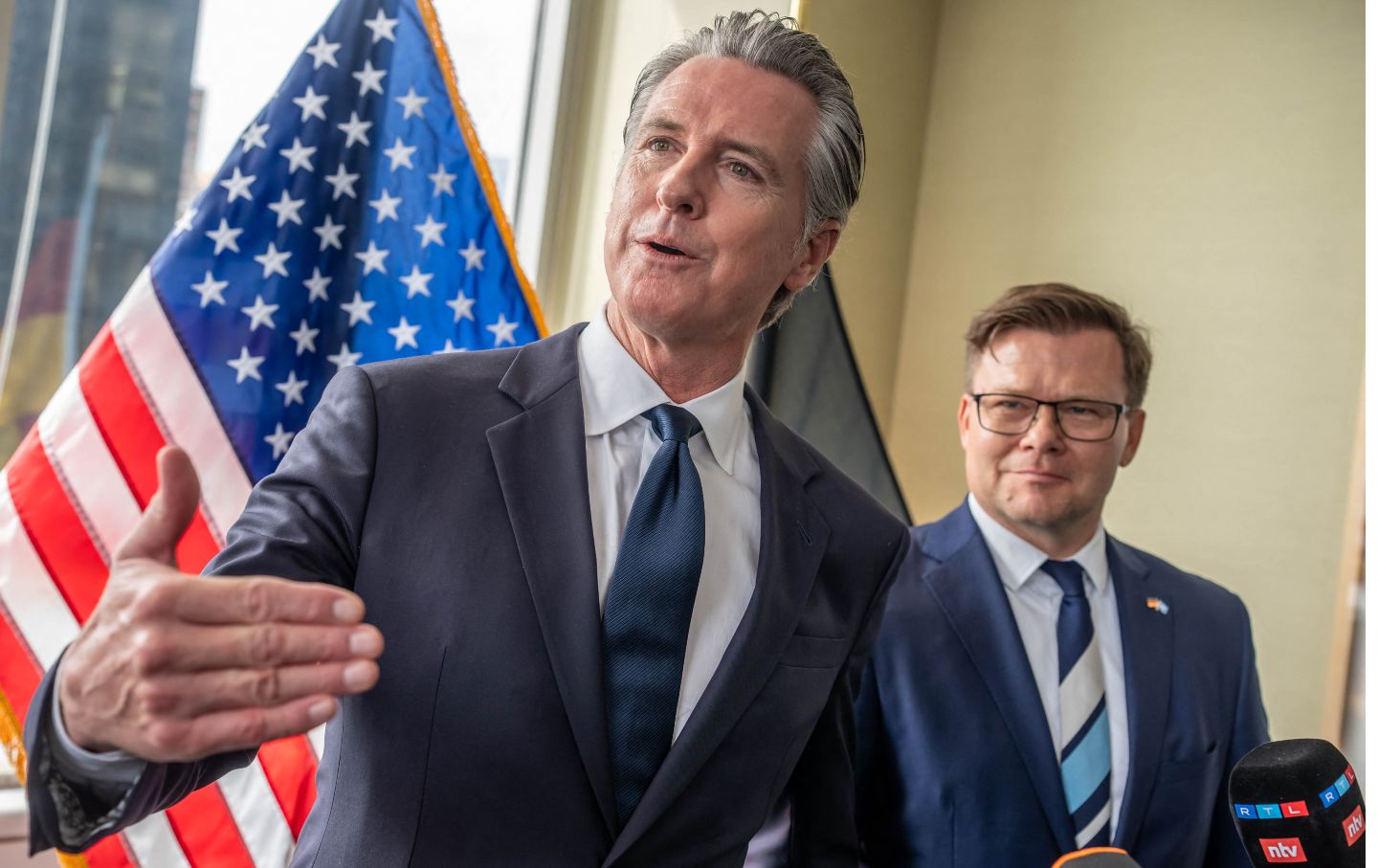
Gavin Newsom Comments on Climate Gavin Newsom Comments on Climate
On the sidelines of the UN General Assembly meeting and New York Climate Week, the California governor called AOC “the real damn deal.”

Cities as Climate Labs: Inside the U20 Summit Cities as Climate Labs: Inside the U20 Summit
Mayors at the Urban 20 Summit worked across borders to confront the climate crisis at the local level.

