
Does Putin Want to End the War in Ukraine?
It’s time to find out.
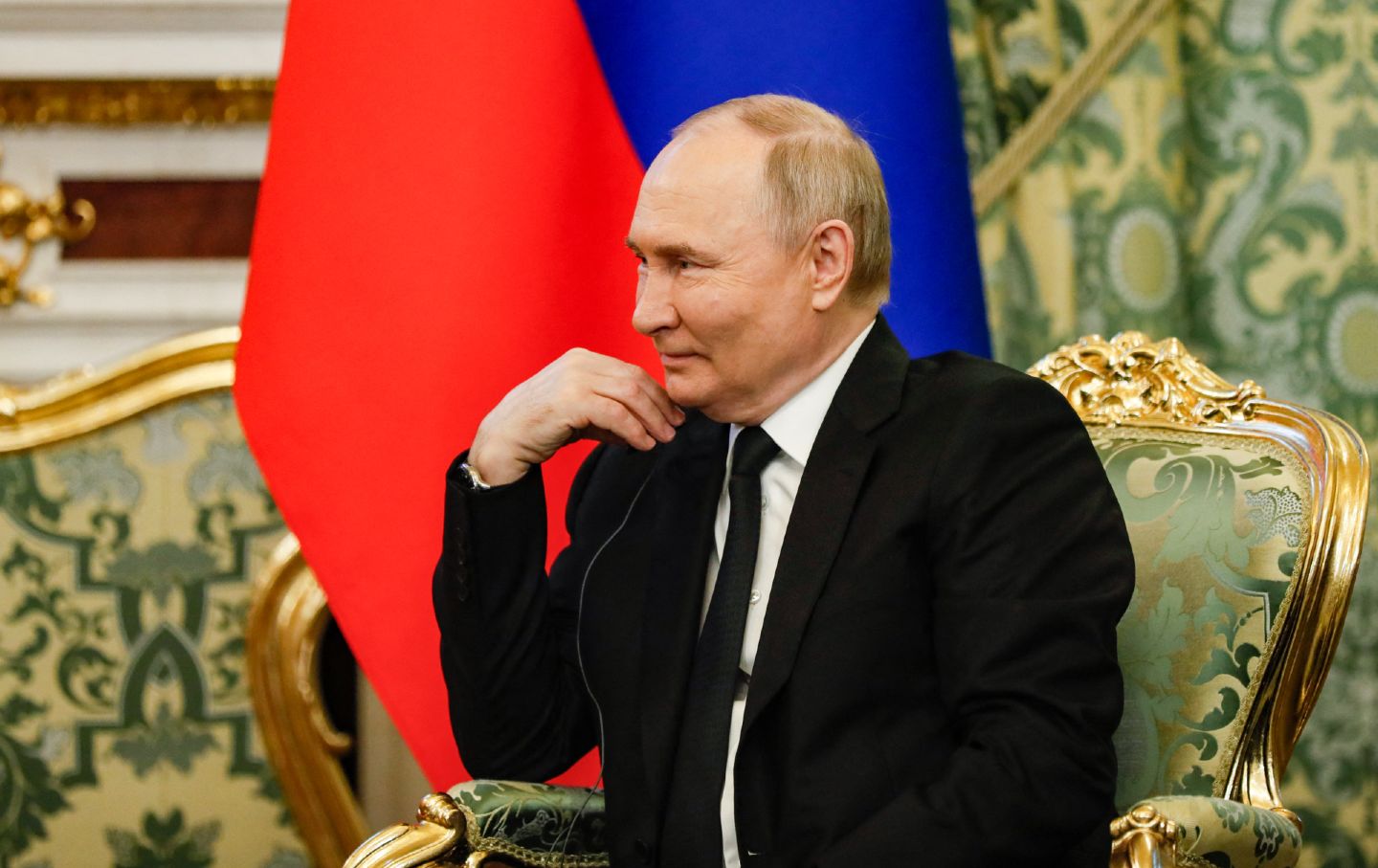
According to a report in Reuters, four Kremlin-connected Russian sources state that Putin is ready to negotiate a cease-fire along current battle lines. When Putin himself was asked about this report, he replied of negotiations: “Let them resume.”
Such statements have been met with skepticism. Putin is said to be “optimistic” about the war, given Russian momentum on the battlefield, and he recently appointed an economist as defense minister, suggesting, many argue, that he is prepared for a long war of attrition. Many speculate that the Kremlin wants to continue fighting until a possible Trump presidency. Thus, the assertion of Ukrainian Foreign Minister Dmytro Kuleba: “Putin currently has no desire to end his aggression against Ukraine.”
Yet there are solid grounds for questioning those assumptions. While Russia has made advances on the front lines in recent weeks, those gains remain largely incremental. Placing an economist at the head of the defense ministry may be a sign that the wartime economy is in danger of overheating, and facing the challenge, as Putin himself noted about the appointment, of providing for both “guns and butter.” The huge increases in military spending—now over 8 percent of Russia’s GDP—have led to record-low levels of unemployment, but at the cost of potentially destabilizing inflation.
Further still, low unemployment entails a manpower shortage, including for war fighting. While Ukraine’s challenges in staffing its army have been well documented, Russia, despite its larger population, is suffering from similar constraints. Three of the Kremlin-connected figures interviewed in the Reuters report stated that “Putin understood any dramatic new advances would require another nationwide mobilization, which he didn’t want,” for understandable reasons.
A previous “limited military mobilization” in September 2022 led hundreds of thousands of young men to flee the country. As noted in The Nation, surveys by the independent Levada Center revealed that “the public mood drastically deteriorated” as a result of the mobilization, so much so that “the country had not seen such a dramatic and swift decline in public mood in thirty years of regular polls.” Such reactions could hardly have escaped Putin’s notice, given his well-documented obsession with poll ratings.
Yet the challenge of recruiting soldiers continues. Having already sent tens of thousands of convicted criminals into battle in exchange for amnesty, the Russian military is now offering pretrial suspects a chance to clear their charges if they agree to serve, and debt collectors are reportedly starting to recruit for the front as well.
Meanwhile, protests by family members against the prolonged deployment of their sons and husbands continue.
Should the war end on current battle lines, Putin will no doubt claim “victory,” with a boast of having successfully stood up to NATO as well as Ukraine, though falling far short of his original goal of toppling Kyiv, or even occupying all the four Ukrainian regions that Russia now asserts are its permanent territory.
Any such settlement, many will no doubt argue, would simply reward Russian aggression. Yet the long-term prognosis for Russia’s economy and society is grim. Absent substantial territorial concessions, something Putin himself has stated he will not tolerate, Russia will remain isolated. The pressure of sanctions will continue to accumulate. The transition from a highly skewed wartime economy to one of peacetime faces the hazard of a recession or worse (and the longer that transition is delayed the greater the hazard becomes). With no successor in sight, a visibly aging Putin—already in power for close to a quarter-century—will struggle to maintain legitimacy in conditions of national decline.
Then again, without direct negotiations the war could continue indefinitely. By refusing to include Russia, the “peace summit” in Switzerland promises only to prolong the conflict. It is understandable why Zelensky, and many Ukrainians, would want to expel Russia from their territory. But Ukraine’s backers in the United States and Europe must provide a realistic and sober assessment about the potential to do so. While Ukraine is currently struggling to defend Kharkiv—its second-largest city—pundits claim that somehow a renewed counteroffensive in 2025 will be more successful than the recent one that failed. Others are urging the Biden administration to allow Ukraine to strike Russian territory with US missiles, while maintaining that, despite threats to the contrary, Russian escalation is “unlikely.” Still others argue, rather cynically, that Biden needs Ukraine to start “winning again” in order to boost his reelection prospects.
Yet still others boldly proclaim to know Putin’s true intentions, as in “Putin remains uninterested in meaningful negotiations” and “the Kremlin will continue to feign interest in negotiations.” However, basing such assumptions on bellicose wartime rhetoric risks a cognitive bias that psychologists call the “fundamental attribution error.” Moreover, such assumptions can be tested: If the Kremlin is truly uninterested in negotiations, it is time to find out. Indeed, evidence suggests the lack of interest is not coming from the Russian side.
To be sure, any such negotiations would be difficult, particularly over questions such as security guarantees for Ukraine. Yet the danger does not lie in agreeing to negotiate. Rather, it lies in greater loss of life and destruction for Ukraine, and the potential, however limited, of a wider war. Well into its third year, it’s time to bring the war to an end, and let the rebuilding of Ukraine begin.
Become a Sustaining Donor This September
Between the reemergence of right-wing red-baiting and Donald Trump’s use of the chilling National Security Presidential Memorandum–7 to criminalize left political organizing, we’re seeing McCarthyism reborn before our eyes.
This assault on democracy cannot be ignored or wished away. Resisting it requires bravery in the face of threats and repression, a steadfast commitment to the truth, and the unwavering belief that we can—and will—overcome this darkness.
We must have an independent media that sets the record straight, unearths corruption and abuses of power, and advances a politics of justice and dignity for all if we’re to win this fight.
That’s why I’m writing to you today. This September, The Nation needs to add 100 monthly donors to sustain our progressive journalism. Your contribution makes the next investigative report, the next truth-speaking column, and the next pathbreaking essay all possible.
I hope you’ll support our work with a recurring donation today. If you donate $10 or more a month, we’ll send you a brand new “Hands Off the Free Press!” sticker to recognise your commitment to our cause. Please, donate today.
Onward,
Katrina vanden Heuvel
Editor and Publisher, The Nation
More from The Nation
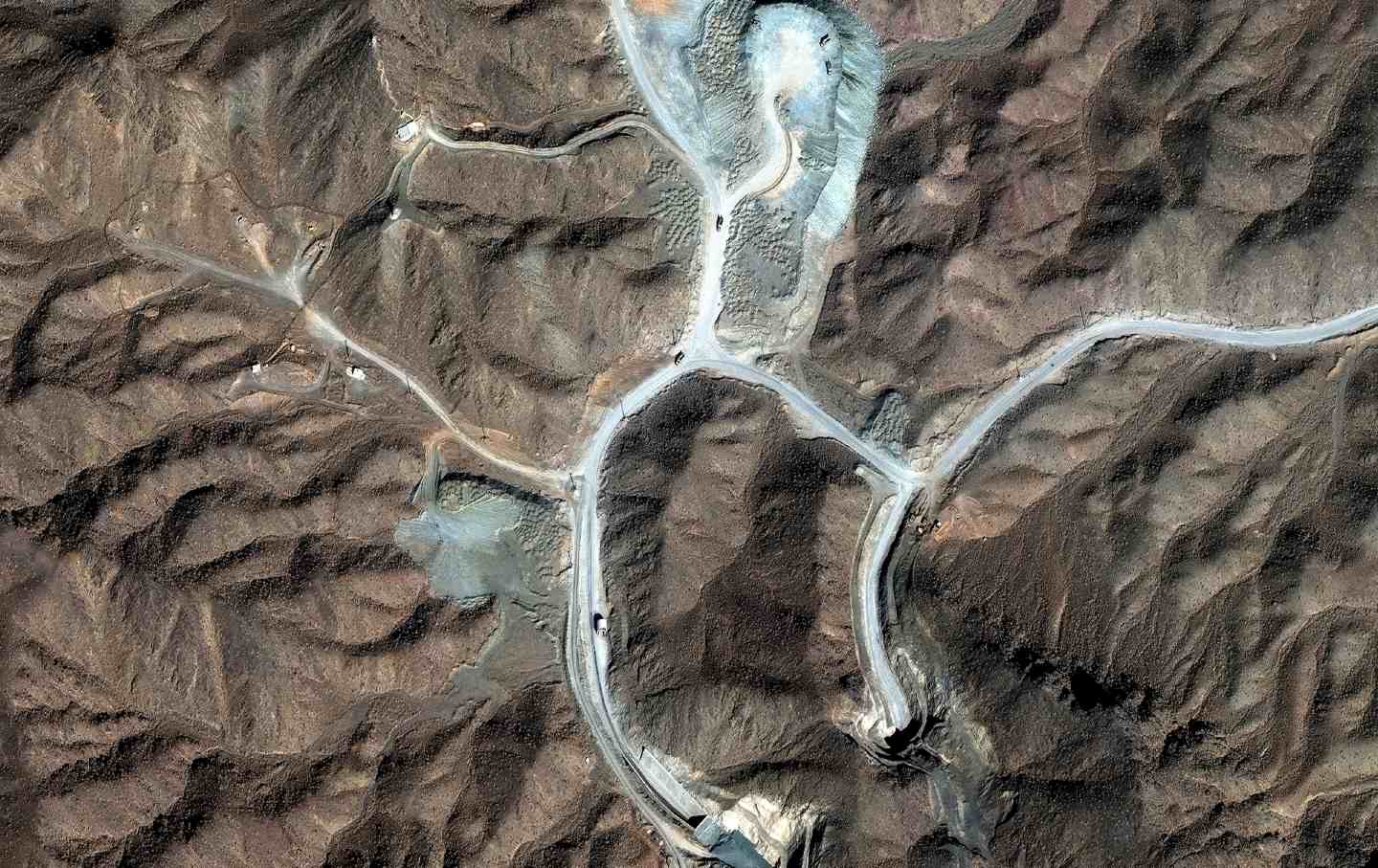
The Peril of Trump’s Final Act: Would He Use a Tactical Nuclear Weapon in Iran? The Peril of Trump’s Final Act: Would He Use a Tactical Nuclear Weapon in Iran?
Trump is trapped in a war that has already been lost, a reality that he will never allow himself to admit.
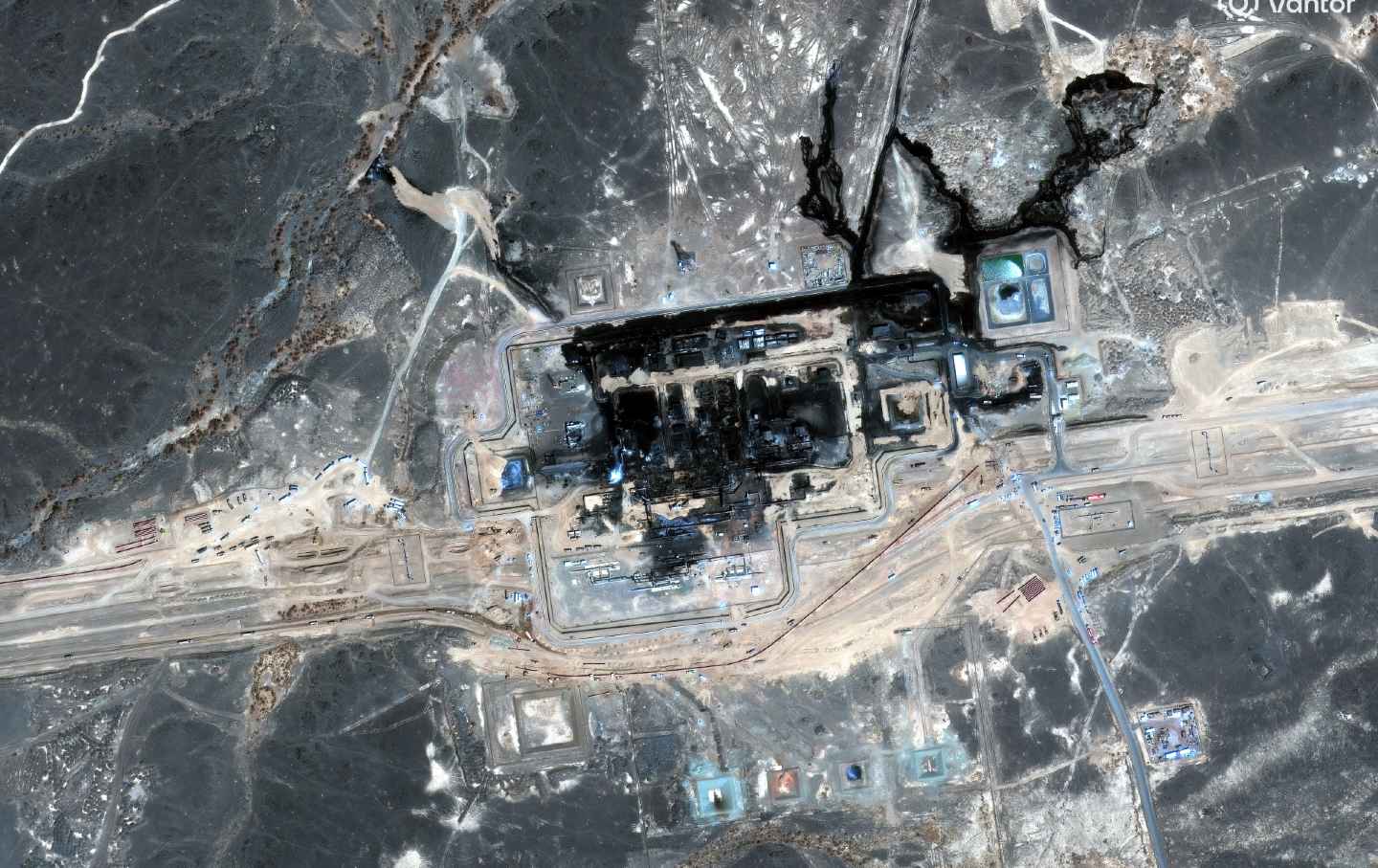
A Spreading War Rattles Global Energy Markets A Spreading War Rattles Global Energy Markets
Analysts say the consequences for energy prices and the world economy may be more serious in this later phase of a war that many had expected to be largely over by now.
The Reality Today Is That Foreign Policy Hawks Are a Minority in the Democratic Party The Reality Today Is That Foreign Policy Hawks Are a Minority in the Democratic Party
It is damn time we all started acting like it.
Trump Has Lost Interest in the Iran War, but It’s Still Quite Interested in Him Trump Has Lost Interest in the Iran War, but It’s Still Quite Interested in Him
The United States is losing the conflict, stoking chaos in the region, and inviting economic calamity—all with no end in sight.

Gloria Steinem: A View From 1990s Moscow Gloria Steinem: A View From 1990s Moscow
“Keep women’s solidarity in mind: Don’t forget how we empower each other through mutual support,” she reminded us.

Accountability for the Gaza Genocide Can’t Focus on Netanyahu Alone Accountability for the Gaza Genocide Can’t Focus on Netanyahu Alone
Getting rid of one bad leader won’t bring justice.

