
Today’s movement for black lives is the latest chapter in a struggle against racist oppression that has occupied black Americans since the country’s founding. In this issue, Dani McClain explores how social media shapes perceptions of leadership in the movement. Below, she recommends five books about organizing the struggle, yesterday and today.
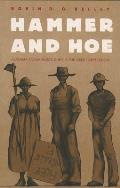
HAMMER AND HOE
Alabama Communists During the Great
Depression
by Robin D.G. Kelley
University of North Carolina Press, 2015
Robin D.G. Kelley’s account of Alabama sharecroppers in the 1930s and 1940s describes the Communist Party’s vision for the United States, revealing a left political program that transcends the Cold War rhetoric with which many of us heard it described as kids. Kelley brings Hosea Hudson and his comrades alive to show how black rural Southern workers organized themselves to fight for access to fair work, civil rights, and equal treatment under the law.
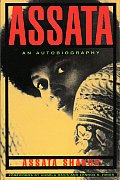
ASSATA
An Autobiography
by Assata Shakur
Lawrence Hill Books, 2001
This memoir tells the story of Assata Shakur, formerly JoAnne Chesimard, a onetime member of the Black Panther Party who escaped from a federal prison in 1979 and has since been living in Cuba under political asylum. Assata offers the reader a look at the conditions that would lead a black woman living in mid-20th-century America to join a black-nationalist organization. And it considers the inner workings of the Panthers as they faced ceaseless manipulations by Hoover’s FBI and other reactionary forces determined to destroy black revolutionary leadership.
Popular
"swipe left below to view more authors"Swipe →
A PEOPLE’S HISTORY OF THE UNITED STATES
by Howard Zinn
Harper Perennial Modern Classics, 2015
This classic work of revisionist history corrects the lies and distortions many of us learned in US history and government classes. Zinn’s work challenges the notion that great men—founding fathers, presidents, wealthy industrialists—are the engines of history, determining the direction of this country from the top down. Instead, Zinn tells the stories of the people who have organized to make a place for themselves at a table that was initially set for just a few.
ROLL, JORDAN, ROLL
The World the
Slaves Made
by Eugene Genovese
Vintage Books, 1976
A must-read for anyone who still believes the Emancipation Proclamation—or any policy pronouncement from Lincoln—freed the slaves. Roll, Jordan, Roll offers a history of enslaved people that details the many ways they worked to preserve their family lives, souls, and daily routines against the crushing institution of slavery. Genovese’s history offers a crucial reminder of the humanity, strong networks, and areas of resistance that enslaved people maintained in this country despite every effort to break them.
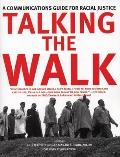
TALKING THE WALK
A Communications Guide for Racial Justice
by Hunter Cutting and Makani Themba-Nixon
AK Press, 2006
Looking back at it now, Talking the Walk reads like a case study in why Twitter and other social-media platforms are necessary. Without the ability to broadcast their own realities, those assumed to be powerless are too often at the mercy of mainstream and corporate media outlets that rely on stereotypes and generalities. Despite the explosion of social media since the time this book was published, Cutting and Themba-Nixon’s guide remains an essential tool for understanding how social-justice organizations might plan their communications strategies and disrupt dishonest media narratives.

