Anna Lappé on cafeteria consciousness, Michael Pollan on the wisdom of Wendell Berry and Alexander Cockburn on Obama's last chance
The death of a Triple Canopy contractor in Iraq bears a striking resemblance to an earlier electrocution ruled to be a "negligent homicide."
How to measure "success" in Afghanistan, the metrics for a war gone to hell.
Employment and labor law violations are still persistent in America. There is hope for change with the new administration.
In an exclusive Nation interview, the deposed Honduran president assesses the significance of his recent meeting with Secretary of State Clinton.
In an exclusive Nation interview, the ousted Honduran president calls the new State Department aid cutoff a "direct blow" against the regime that exiled him.
An African-American community with New Deal roots finds some hope in a farmers' market.
Today's conversation about food was started by dot-connecting writers like Berry in the 1970s.
A frustrating quest for food security has led some residents to grow their own.
Concerned about global warming, students are pushing for change--in their dining halls.
Bill Gates's fortune is funding a new Green Revolution. But is that what Africans need?
To engage a broader audience, food-justice activists need to change their language.
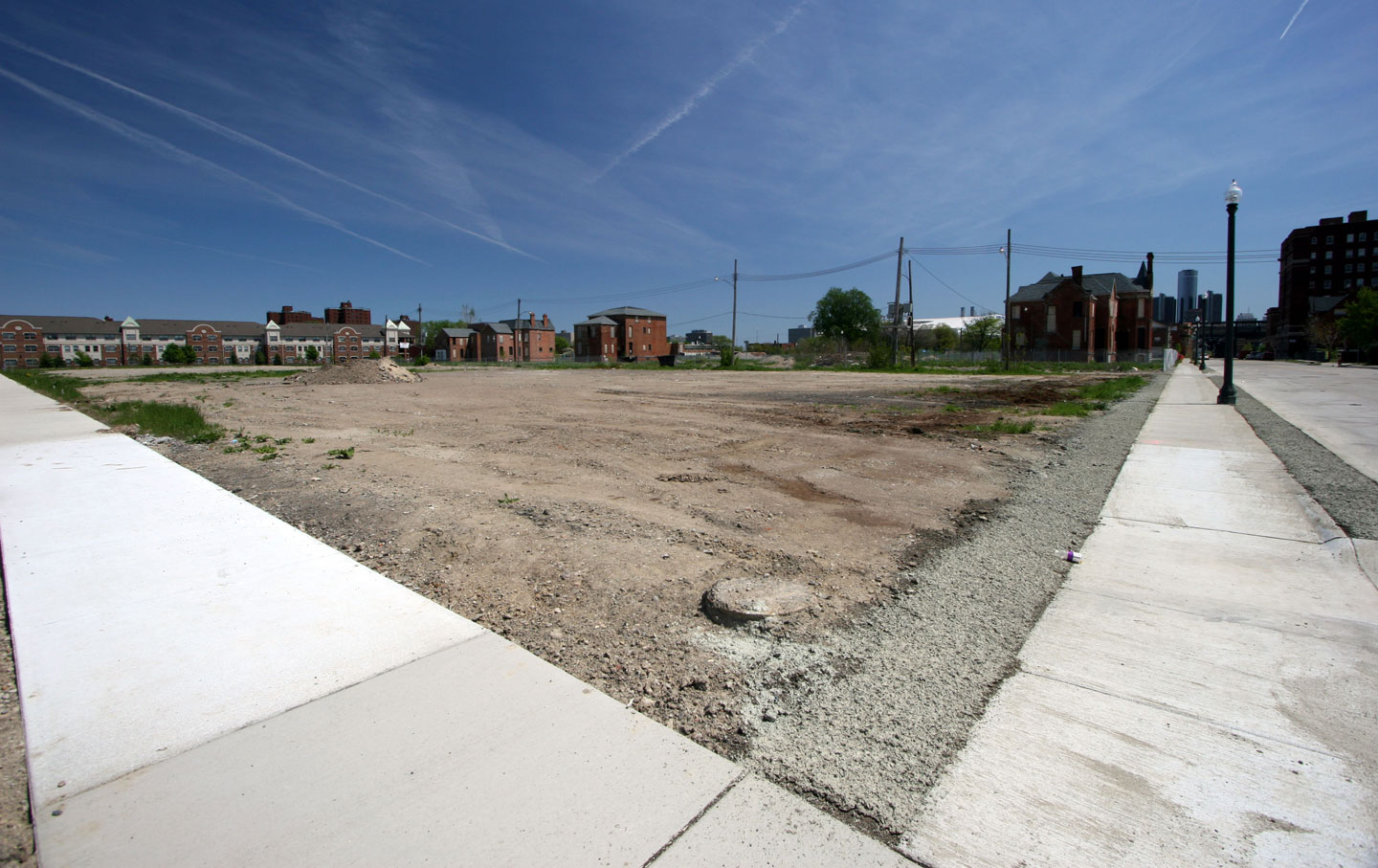
How we came to see vacant lots not as blight but as opportunities to grow our own food.
People are beginning to understand the connection between our stomachs and our common destiny.
The campaign for food democracy needs to start with boning knives and cast iron skillets.
Five leading figures of this country's food movement reflect on how food democracy can be achieved, here and now.
We invited readers to tell us about their most beloved food
institutions.
The president's healthcare speech was not a full-fledged antidote to decades of Reaganism. But it was an eloquent call for a new progressive role for government. We must build on it.
Matthew Murray, a disturbed young gunman behind the the shootings in Colorado Springs, chose to end his nightmare and rebel against Christian-right self-help gurus and cult-like doctrines.
In confusing times like these, it's important to keep the story straight.
Band together to gain control of your own food.
Bad peanuts and killer spinach: that's the food story of 2009. But in the coming months we may see a huge turning point in the fight for safety.
Our investigation into the shootings of African-Americans in the days after Hurricane Katrina seems to have gotten the feds' attention; but in New Orleans, the wheels of justice have rusted.
The window is open for President Obama and a Democratic Congress to finally reform our healthcare system. Success means a bill with a strong public option, not a watered-down "bipartisan" measure.
Rising healthcare costs are killing wage increases.
How will the good-food revolution move beyond its evangelical phase?
Will narrowed on a single object and fixed in the face of adversity--such is the recurring story of Gabriel García Márquez's work and life.
What if eight years ago the World Trade Center had been leveled by a small nuclear bomb that took out most of lower Manhattan as well?
A movie about women's struggle to express their gifts through work? Delicious.
We crave drama, but we're not getting it, except in the form of racist rallies.
Again, Dick says that torture's good.
Tolu Olorunda It's the idea of one legendary black MC, who's dedicated two decades to the fight against rap-related violence.
ACROSS
1 and 6 You can get such things beneath the vendor's place of business being so bodied. (14)