Our Fifty States of Disunion
On this episode of The Nation Podcast, D.D. Guttenplan and Richard Kreitner talk about the centerpiece of our 160th anniversary issue.

The Nation Podcasts
Here's where to find podcasts from The Nation. Political talk without the boring parts, featuring the writers, activists and artists who shape the news, from a progressive perspective.
Our Fifty States of Disunion and Who Could Secede | The Nation Podcast
The term “the nation”—as it refers to the country—has a relatively recent history in American political rhetoric. Until the Civil War, politicians more commonly used “the Union” or “the Republic.” That changed with Abraham Lincoln, who referenced “the nation” five times in his 1863 Gettysburg Address. Two years later, in July 1865, the first issue of our magazine was published.
For our 160th Anniversary issue, we called on fifty of our best writers and artists to depict the current national landscape: what’s being gutted, steamrolled, and eviscerated, and what some of us are doing to keep the national project afloat. Contributor Richard Kreitner joins us to discuss the monumental task of putting this issue together, the history and future of secession, and more.
Advertising Inquiries: https://redcircle.com/brands
Privacy & Opt-Out: https://redcircle.com/privacy
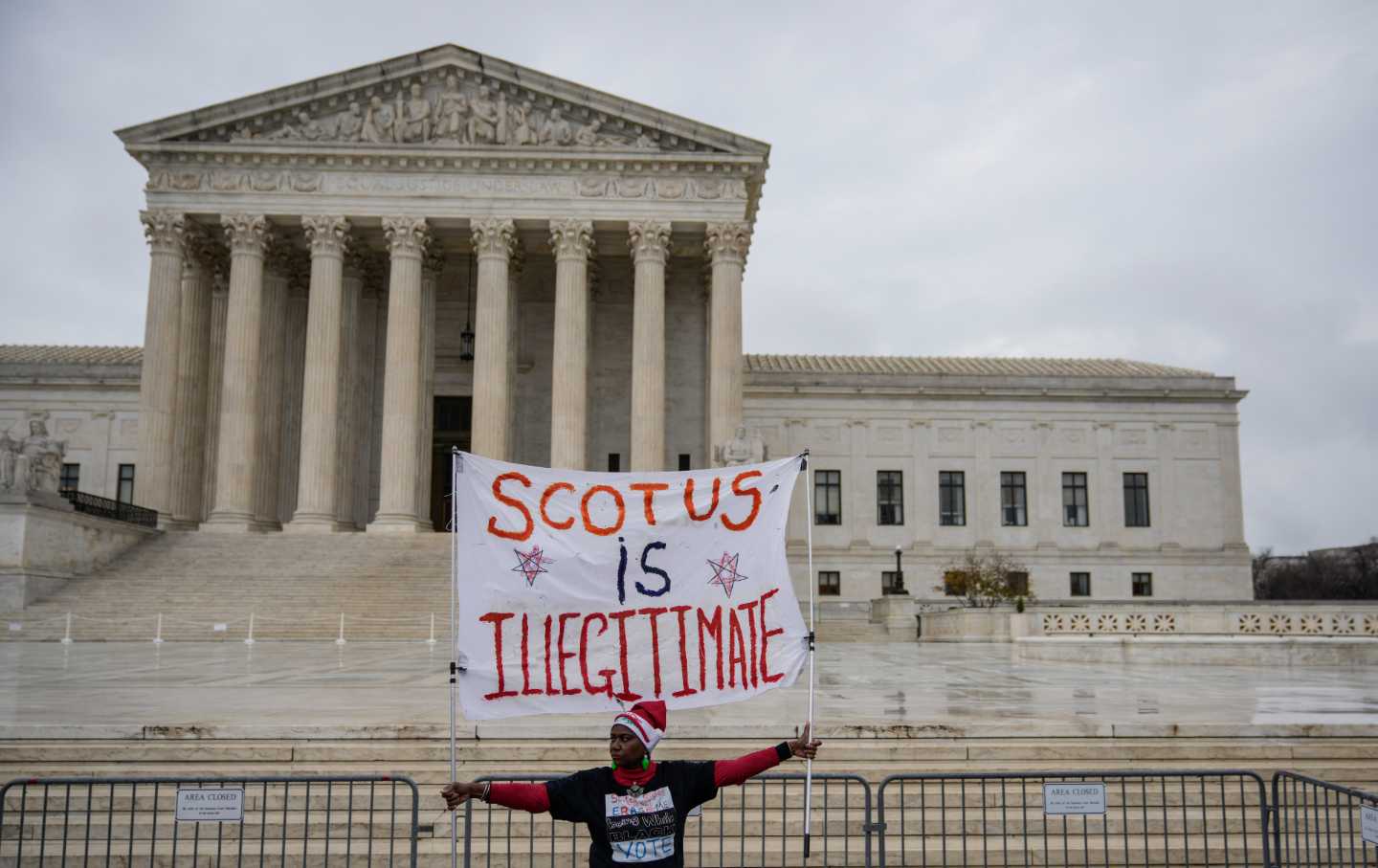
Illustration by Brian Stauffer.
The term “the nation”—as it refers to the country—has a relatively recent history in American political rhetoric. Until the Civil War, politicians more commonly used “the Union” or “the Republic.” That changed with Abraham Lincoln, who referenced “the nation” five times in his 1863 Gettysburg Address. Two years later, in July 1865, the first issue of our magazine was published.
For our 160th anniversary issue, we called on fifty of our best writers and artists to depict the current national landscape: what’s being gutted, steamrolled, and eviscerated, and what some of us are doing to keep the national project afloat. Contributor Richard Kreitner joins us to discuss the monumental task of putting this issue together, the history and future of secession, and more.
Subscribe to The Nation to support all of our podcasts: thenation.com/podcastsubscribe.
The Nation Podcasts
Here's where to find podcasts from The Nation. Political talk without the boring parts, featuring the writers, activists and artists who shape the news, from a progressive perspective.
The Transformation of the New York Waterfront w/ Karrie Jacobs | The Nation Podcast
In its heyday, the Bush Terminal industrial complex spanned several city blocks along Brooklyn’s waterfront and employed more than 35,000 people. Built by Irving Bush in the late nineteenth century, it was an "early intermodal shipping hub." Goods arrived by water and left by rail. Bananas, coffee, and cotton came in through doors on one side of the warehouses and were loaded onto trains on the other.
But after World War II, as trucks replaced rail and shipping patterns changed, the Terminal’s purpose faded and the vast complex slipped into disuse.
Today, Bush Terminal is again at the center of New York’s vision for urban reinvention— and a debate around development, displacement, and the future of work in the city.
Joining us on a deep dive into Bush Terminal is veteran architecture critic and writer Karrie Jacobs. Her essay, “On the Waterfront,” appears in our December issue of the Nation.
Advertising Inquiries: https://redcircle.com/brands
Privacy & Opt-Out: https://redcircle.com/privacy
Search Results placeholder
Subscribe to The Nation to Support all of our podcasts
Support independent journalism that does not fall in line
Even before February 28, the reasons for Donald Trump’s imploding approval rating were abundantly clear: untrammeled corruption and personal enrichment to the tune of billions of dollars during an affordability crisis, a foreign policy guided only by his own derelict sense of morality, and the deployment of a murderous campaign of occupation, detention, and deportation on American streets.
Now an undeclared, unauthorized, unpopular, and unconstitutional war of aggression against Iran has spread like wildfire through the region and into Europe. A new “forever war”—with an ever-increasing likelihood of American troops on the ground—may very well be upon us.
As we’ve seen over and over, this administration uses lies, misdirection, and attempts to flood the zone to justify its abuses of power at home and abroad. Just as Trump, Marco Rubio, and Pete Hegseth offer erratic and contradictory rationales for the attacks on Iran, the administration is also spreading the lie that the upcoming midterm elections are under threat from noncitizens on voter rolls. When these lies go unchecked, they become the basis for further authoritarian encroachment and war.
In these dark times, independent journalism is uniquely able to uncover the falsehoods that threaten our republic—and civilians around the world—and shine a bright light on the truth.
The Nation’s experienced team of writers, editors, and fact-checkers understands the scale of what we’re up against and the urgency with which we have to act. That’s why we’re publishing critical reporting and analysis of the war on Iran, ICE violence at home, new forms of voter suppression emerging in the courts, and much more.
But this journalism is possible only with your support.
This March, The Nation needs to raise $50,000 to ensure that we have the resources for reporting and analysis that sets the record straight and empowers people of conscience to organize. Will you donate today?