Why Democrats Can’t Write Off the Rural Vote
On this episode of See How They Run, Jane Kleeb, Anthony Flaccavento, and Sarah Taber on how the party can win in small-town America.

The Nation Podcasts
Here's where to find podcasts from The Nation. Political talk without the boring parts, featuring the writers, activists and artists who shape the news, from a progressive perspective.
U.S. and Israel Plan Iran Strikes, Ansar Allah Hits Saudi Arabia, Mass Protests Sweep France / American Prestige
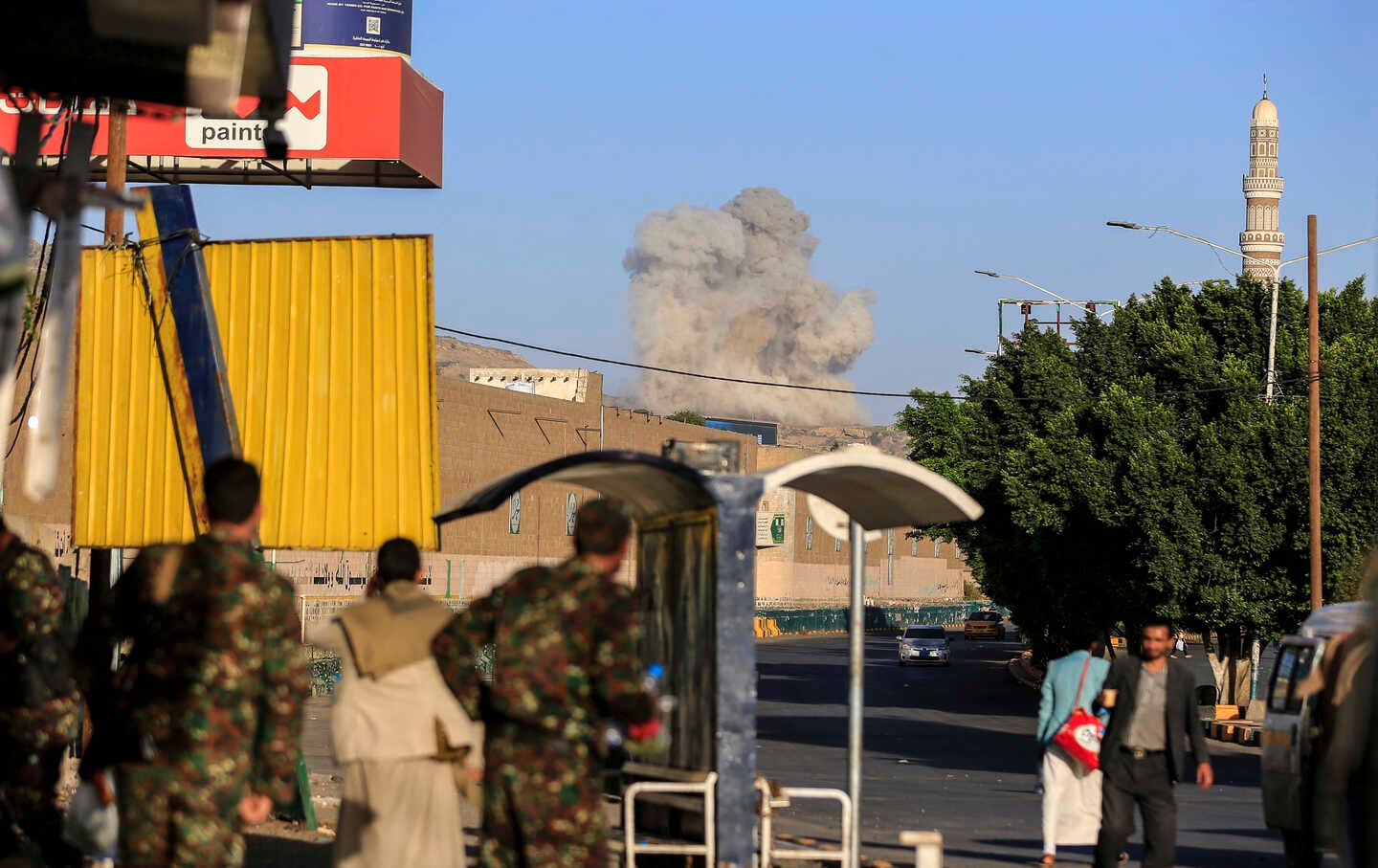
Neera Tanden has not yet posted a tirade about AP, and we’re starting to take it personally. In this week’s news: the U.S. and Israel prepare for renewed strikes against Iran after the midterms (1:07); an Ansar Allah/Houthi missile strike kills at least 73 people at a military camp in Yemen, while continued attacks force Saudi Arabia to cancel a major investment conference and Pakistan, Britain, Egypt, and France offer defensive support to the kingdom (7:52); Israeli settlers assault an American journalist and attack European diplomats, while Israeli forces detain dozens of volunteers in the West Bank (15:05); North Korea announces the resumption of anti-South Korean loudspeaker broadcasts amid unverified rumors that Kim Jong Un has died (19:12); drone strikes kill hundreds in Sudan and the disputed Abyei region (22:28); Ethiopia establishes a new interim administration in Tigray (25:02); the Ebola outbreak in the Democratic Republic of the Congo continues to spread (27:01); Ukraine resumes attacks on Russian oil refineries, angering Trump (29:33); Steve Witkoff meets with Zelenskyy and Putin as the U.S. restores intelligence support for Ukraine (30:41); Russia signals a possible return to peace talks (32:28); massive protests over the high cost of living sweep France (37:30); and Haitian armed groups abduct four Salvadoran soldiers, prompting El Salvador to threaten military action (40:58).
Advertising Inquiries: https://redcircle.com/brands
Privacy & Opt-Out: https://redcircle.com/privacy
Search Results placeholder
US Vice President Kamala Harris helps prepare hygiene related care packages at a health clinic where the N.C. Counts Coalition non-profit is preparing then delivering them to victims of Hurrricane Helene in Charlotte, North Carolina, on October 5, 2024.
(Logan Cyrus / AFP)Few questions have bedeviled Democrats as much as the question of how—or even whether—to reverse their decline in rural and blue-collar America. Long gone are the days when the party was seen as the natural home of the working class. Now, the dominant narrative goes, Democrats are a haven for urban, highly educated elites, while the Trump-led GOP makes inroads among working-class voters of all races, thus imperiling the coalition that has sustained Democrats for decades.
With states like Pennsylvania, Wisconsin, and Michigan on a knife-edge this November, the Democrats need every vote they can get. So on today’s episode, we’re kicking the tires on the party’s relationship to rural voters. We have three guests who live and breathe rural America—and who are adamant that, far from being a lost cause for Democrats, many rural and working-class voters could be up for grabs if the party made a serious effort to win them over.
Jane Kleeb is the chair of the Nebraska Democratic Party and the author of Harvest the Vote: How Democrats Can Win Again in Rural America. Anthony Flaccavento is an organic farmer, co-chair of the Rural Urban Bridge initiative, and the co-author of The Nation’s Rethinking Rural column.
And, in a special bonus segment, we spoke to Sarah Taber, the Democratic candidate for North Carolina Commissioner of Agriculture, about her campaign and how she is trying to bring urban and rural residents in her state together.
The Nation Podcasts
Here's where to find podcasts from The Nation. Political talk without the boring parts, featuring the writers, activists and artists who shape the news, from a progressive perspective.
Where Do We Go From Here? | See How They Run
On this final episode of The Nation's election coverage podcast, See How They Run, D.D. Guttenplan is joined by John Nichols and Jeet Heer to discuss lessons learned from the 2024 Presidential races.
Advertising Inquiries: https://redcircle.com/brands
Privacy & Opt-Out: https://redcircle.com/privacy
Search Results placeholder