
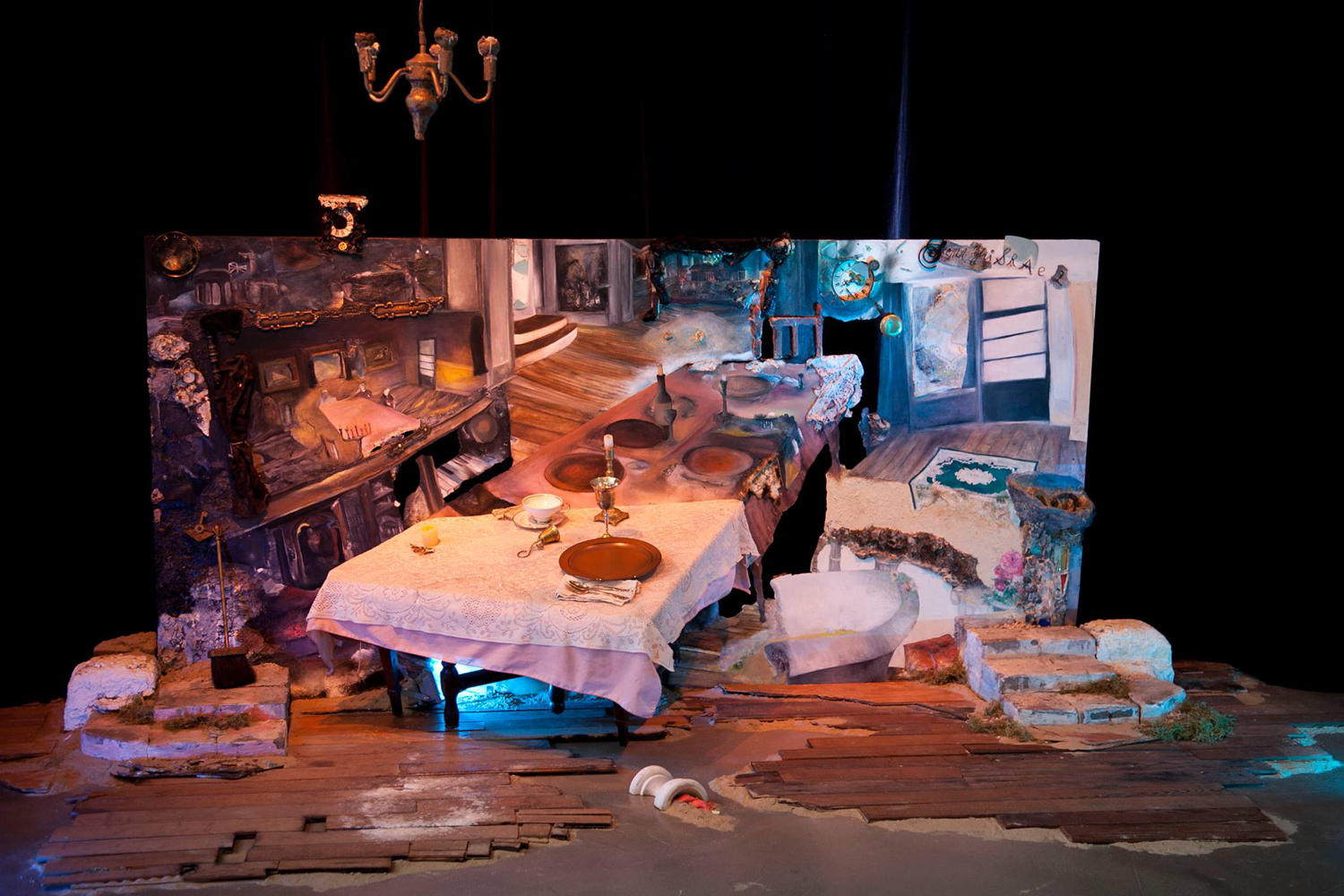
Snapshot: Into Thin Air Snapshot: Into Thin Air
The Seder, by Samuel Eisen-Meyers, dedicated to “a generation that sees hope and justice in a divided sky.” In April, Secretary of State John Kerry criticized Israeli Prime Minister Benjamin Netanyahu for abandoning the promises made in US-brokered peace talks. “And poof!” Kerry said. “That was sort of the moment.”
Apr 15, 2014 / Samuel Eisen-Meyers
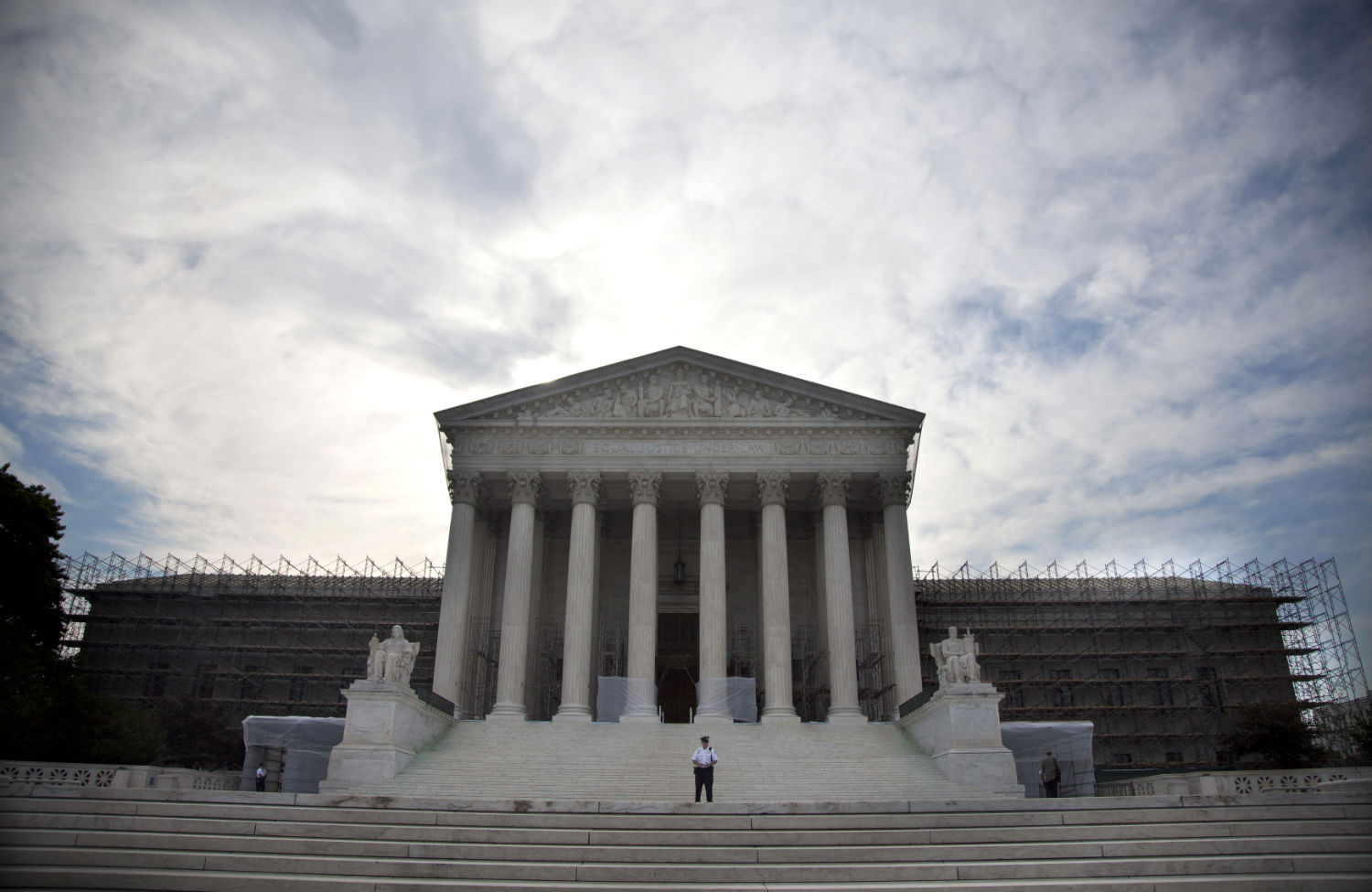
How the Supreme Court Blowtorched Democracy and What You Can Do About It How the Supreme Court Blowtorched Democracy and What You Can Do About It
The McCutcheon campaign finance ruling is only the latest in a series of bad decisions that have sparked growing grassroots resistance.
Apr 8, 2014 / The Editors
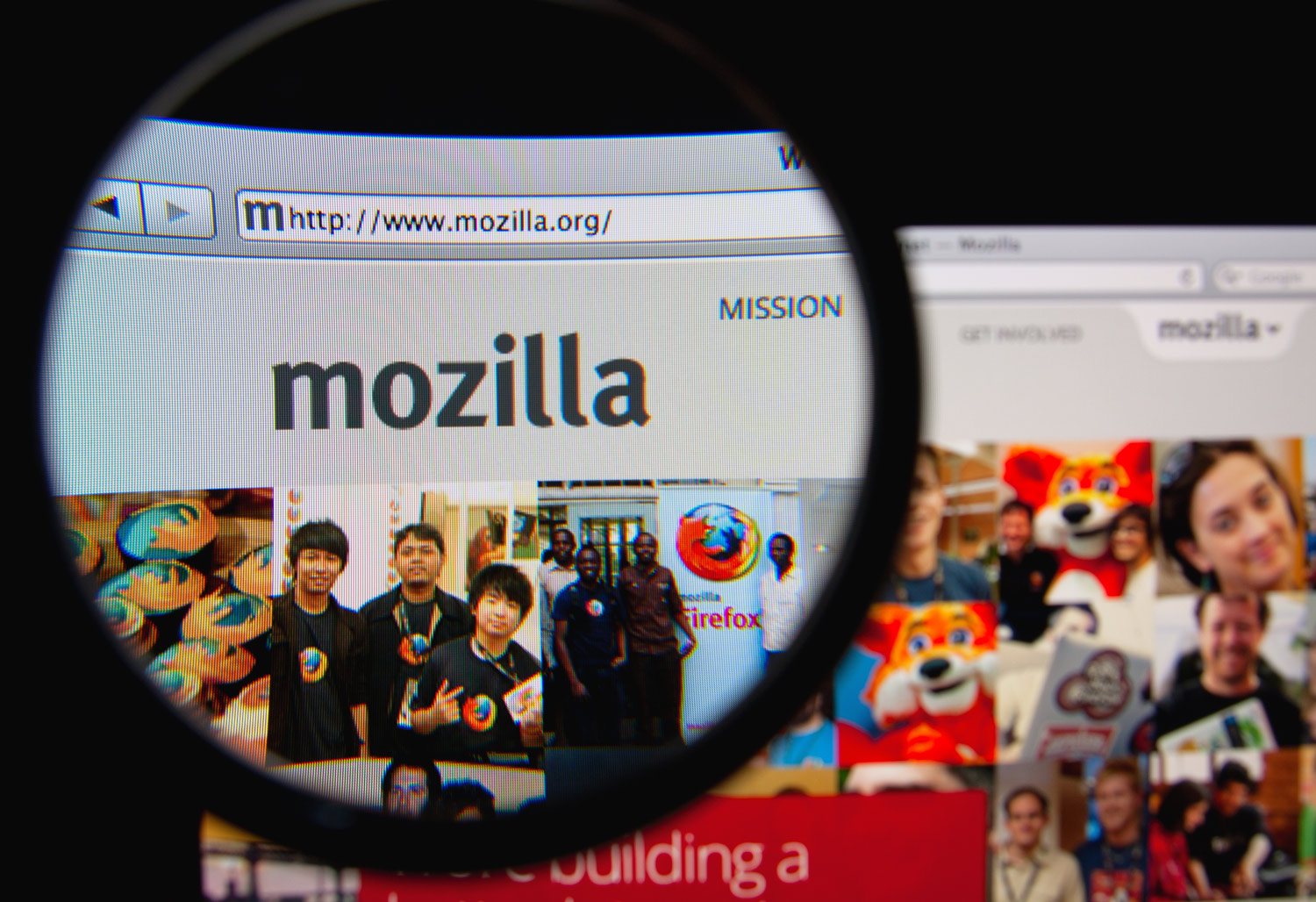
Mozillagate, Brendan Eich and Right-Wing Hypocrisy Mozillagate, Brendan Eich and Right-Wing Hypocrisy
Conservatives are suddenly very unhappy to see moral judgments about sex and families invading the corporate realm.
Apr 8, 2014 / Michelle Goldberg
Noted Noted
In 2011, the Renaissance Providence Downtown Hotel gained some unwanted notoriety when Joey DeFrancesco quit his service job with the help of his bandmates in the What Cheer? Brigade. A video of Joey’s raucous exit has 4.3 million views on YouTube. “They were stealing our tip money, paying us poverty wages, making us work double or triple shifts,” DeFrancesco told The Nation. “When I quit, I didn’t want to go quietly.” On December 4, the workers declared a boycott. The Unitarian Universalist Association, which had intended to hold its annual business meeting at the Renaissance, canceled 847 reservations. Local politicians voiced their support. On March 19, thanks to the combined efforts of students and hotel workers, the Brown University Community Council (BUCC) voted to discourage the Brown community from patronizing the Renaissance. Since the fall, members of Brown’s Student Labor Alliance had been marching with Renaissance workers on the picket lines. When the boycott started, students invited the hotel workers to attend a BUCC meeting and share their stories with administrators. “We have certain leverage at Brown,” says Mariela Martinez, a Brown senior and SLA member, “We have to use it.” Please support our journalism. Get a digital subscription for just $9.50! When the university president cut off hotel worker Santa Brito in the midst of her testimony, the SLA went outside official channels, handing out hundreds of leaflets at Brown’s extravagant 250th anniversary events. At the next BUCC meeting, SLA members packed the room. The council voted almost unanimously to support the resolution, which “encourages the Brown community to take all appropriate measures to avoid holding any events at the Renaissance Hotel in Providence during the current labor dispute.” Martinez, who comes from a working-class family in South-Central Los Angeles, says of the Renaissance workers, “They are facing real intimidation on a daily basis…. We’re just going to class and going to meetings.” Says hotel worker Marino Cruz, “They are fighters, just like us.” Read Next: StudentNation, The Nation blog by and for student activists and journalists
Apr 8, 2014 / The Editors

This Modern World This Modern World
Apr 8, 2014 / Tom Tomorrow
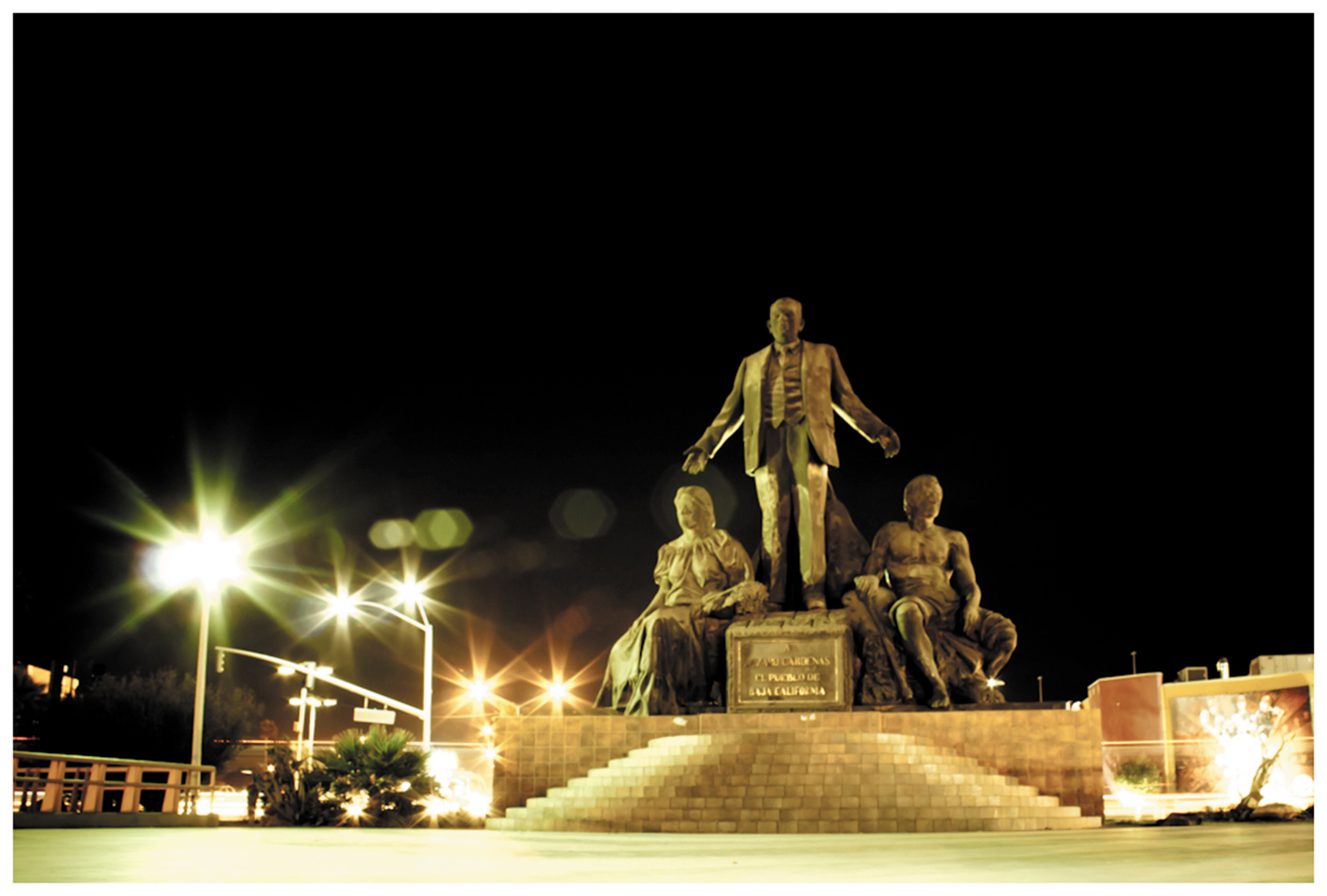
Snapshot: The End of Mexican Oil Snapshot: The End of Mexican Oil
A statue of Lázaro Cárdenas, the Mexican president who nationalized the country’s oil reserves in 1938. In December, a constitutional “reform” measure was passed to open the country to foreign oil companies. Last month the denationalization process began with Pemex, Mexico’s national oil company, naming fields it would like to retain.
Apr 8, 2014 / Brian Tlamintzi
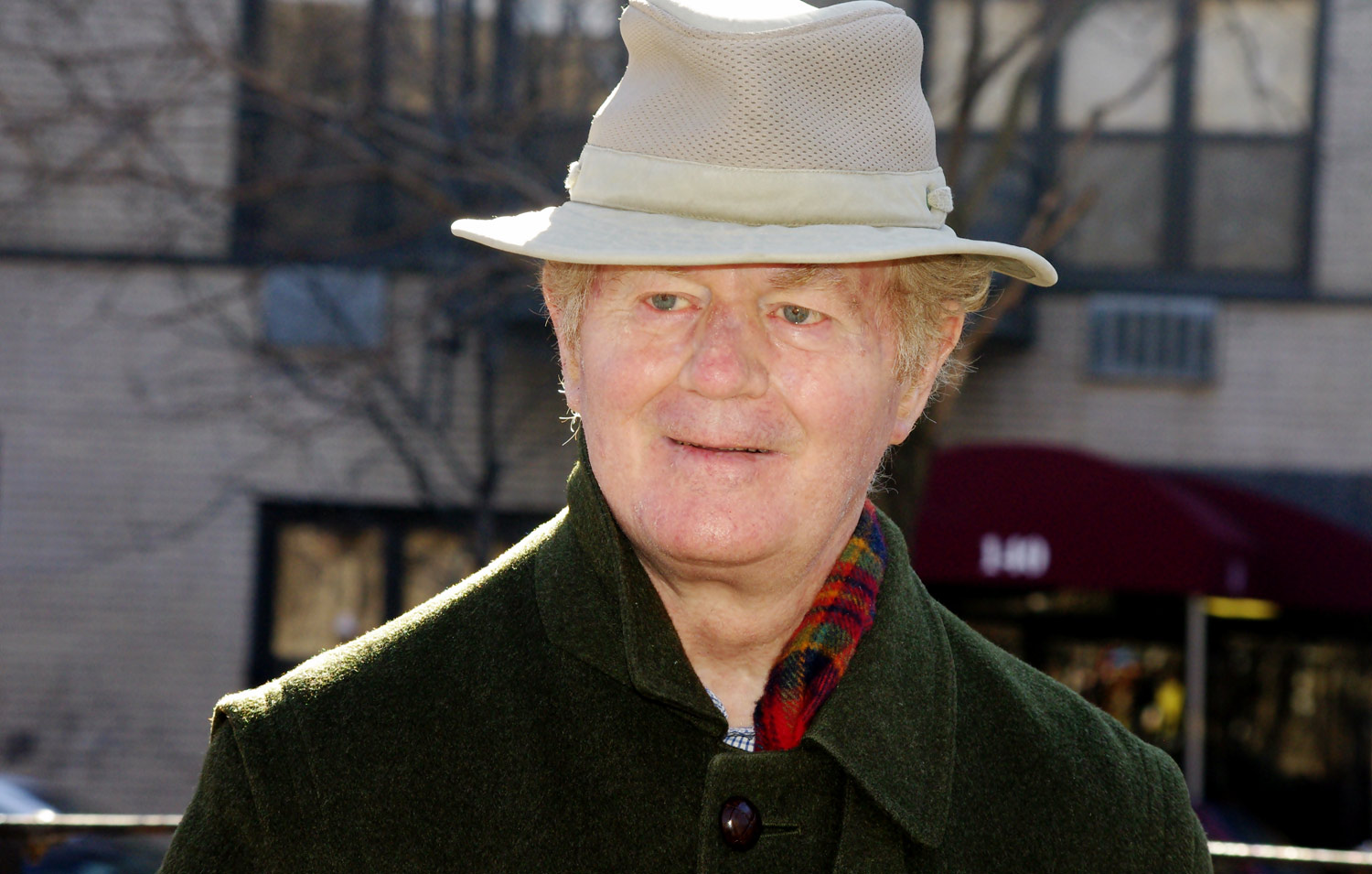
Jonathan Schell, Eloquent Champion of Nonviolence Jonathan Schell, Eloquent Champion of Nonviolence
He made it clear that on matters of conscience, inaction is unacceptable.
Apr 2, 2014 / The Editors

What Jonathan Schell Taught Us About the Power of Nonviolence What Jonathan Schell Taught Us About the Power of Nonviolence
What he gave us was so beautiful, so significant, so strong.
Apr 2, 2014 / Rebecca Solnit
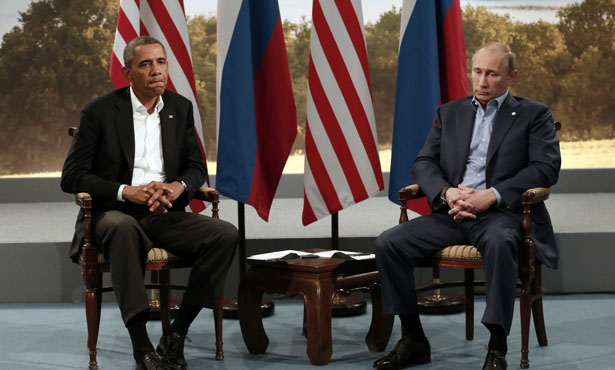
Why Cold War Again? Why Cold War Again?
The East-West confrontation over Ukraine, which led to Moscow’s annexation of Crimea but long predated it, is potentially the worst international crisis in more than fifty years—and the most fateful. A negotiated resolution is possible, but time may be running out. A new Cold War divide is already descending in Europe—not in Berlin but on Russia’s borders. Worse may follow. If NATO forces move toward Poland’s border with Ukraine, as is being called for in Washington and Europe, Moscow is likely to send its forces into eastern Ukraine. The result would be a danger of war comparable to the Cuban missile crisis of 1962. Even if the outcome is the nonmilitary “isolation of Russia,” today’s Western mantra, the consequences will be dire. Moscow will not bow but will turn, politically and economically, to the East, as it has done before, above all to fuller alliance with China. The United States will risk losing an essential partner in vital areas of its own national security, from Iran, Syria and Afghanistan to threats of a new arms race, nuclear proliferation and more terrorism. And—no small matter—prospects for a resumption of Russia’s democratization will be terminated for at least a generation. Why did this happen, nearly twenty-three years after the end of Soviet Communism, when both Washington and Moscow proclaimed a new era of “friendship and strategic partnership”? The answer given by the Obama administration, and overwhelmingly by the US political-media establishment, is that President Vladimir Putin is solely to blame. The claim is that his “autocratic” rule at home and “neo-Soviet imperialist” policies abroad eviscerated the partnership established in the 1990s by Bill Clinton and Boris Yeltsin. This fundamental premise underpins the American mainstream narrative of two decades of US-Russian relations, and now the Ukrainian crisis. But there is an alternative explanation, one more in accord with the facts. Beginning with the Clinton administration, and supported by every subsequent Republican and Democratic president and Congress, the US-led West has unrelentingly moved its military, political and economic power ever closer to post-Soviet Russia. Spearheaded by NATO’s eastward expansion, already encamped in the former Soviet Baltic republics on Russia’s border—now augmented by missile defense installations in neighboring states—this bipartisan, winner-take-all approach has come in various forms. They include US-funded “democracy promotion” NGOs more deeply involved in Russia’s internal politics than foreign ones are permitted to be in our country; the 1999 bombing of Moscow’s Slav ally Serbia, forcibly detaching its historic province of Kosovo; a US military outpost in former Soviet Georgia (along with Ukraine, one of Putin’s previously declared “red lines”), contributing to a brief proxy war in 2008; and, throughout, one-sided negotiations, called “selective cooperation,” which took concessions from the Kremlin without meaningful White House reciprocity and followed by broken American promises. All of this has unfolded, sincerely for some proponents, in the name of “democracy” and “sovereign choice” for the many countries involved, but the underlying geopolitical agenda has been clear. During the first East-West conflict over Ukraine, occasioned by its 2004 “Orange Revolution,” an influential GOP columnist, Charles Krauthammer, acknowledged, “This is about Russia first, democracy only second…. The West wants to finish the job begun with the fall of the Berlin Wall and continue Europe’s march to the east…. The great prize is Ukraine.” The late Richard Holbrooke, an aspiring Democratic secretary of state, concurred, hoping even then for Ukraine’s “final break with Moscow” and to “accelerate” Kiev’s membership in NATO. That Russia’s political elite has long held this same menacing view of US intentions makes it no less true—or any less consequential. Formally announcing the annexation of Crimea on March 18, Putin vented Moscow’s longstanding resentments. Several of his assertions were untrue and alarming, but others were reasonable, or at least understandable, not “delusional.” Referring to Western (primarily American) policy-makers since the 1990s, he complained bitterly that they were “trying to drive us into some kind of corner,” “have lied to us many times” and in Ukraine “have crossed the line,” warning: “Everything has its limits.” We are left, then, with profoundly conflicting Russian-Western narratives and a political discourse of the uncomprehending, itself often the prelude to war. Demonized for years, Putin receives almost no serious consideration in Washington. His annexation speech, for example, was dismissed as a “package of fictions” by former secretary of state Madeleine Albright. Nothing in Washington’s replies diminishes Putin’s reasonable belief that the EU trade agreement rejected by Ukrainian President Viktor Yanukovych in November, and Yanukovych’s overthrow in February by violent street protests, leading to the current “illegitimate” government, were intended to sever Ukraine’s centuries-long ties with Russia and bind it to NATO. (Today’s crisis was triggered by the EU’s reckless ultimatum, despite Putin’s offer of a “tripartite” agreement, which compelled an elected president of a deeply divided country to choose economically between the West and Russia, an approach since criticized by former German chancellors Helmut Kohl and Gerhard Schröder. The EU’s proffered “partnership” also included little-noticed “security” provisions requiring Ukraine’s “convergence” with NATO policies, without mentioning the military alliance.) Meanwhile, on both sides, belligerent rhetoric escalates, military forces are being mobilized and provocations mount in Ukraine’s political civil war, with toughs in black masks, armed militias, “spontaneous” secessionist demonstrations and extremist statements by some of Kiev’s would-be leaders. Anything is now possible—actual civil war, Ukraine’s partition and worse. Tit-for-tat “sanctions” only exacerbate the situation. There is a diplomatic way out. Putin did not begin or want this crisis; among other costs, it obliterated the achievement of his Sochi Olympics. Nor did he initiate the unfolding Cold War, inspired in Washington years before he came to power. Western policy-makers should therefore take seriously the adage, “There are two sides to every story.” Is Putin right, as he also said on March 18, that Russia “has its own national interests that must be taken into account and respected,” particularly along its borders? If the answer is no, as it has seemed to be since the 1990s—if Putin is correct in angrily protesting, “Only they can ever be right”—then war is possible, if not now, eventually. But if the answer is yes, proposals made by Putin’s foreign ministry on March 17 could be the starting point for negotiations. Briefly summarized, those proposals call for a US-Russian-EU contact group that would press for the immediate disarming of militias in Ukraine, as the Ukrainian Parliament ordered on April 1; a new federal constitution giving more autonomy to pro-Russian and pro-Western regions; internationally monitored presidential and parliamentary elections; a “neutral military-political” (that is, non-NATO) government in Kiev shorn of its extreme nationalist (some observers think “neofascist”) ministers; and maintaining Ukrainian-Russian economic relations essential to both countries. In turn, Moscow would recognize the legitimacy of the new government and Ukraine’s territorial integrity, thereby disavowing pro-Russian separatist movements well beyond Crimea, though without returning the annexed peninsula. It would also vote for a UN Security Council resolution affirming the settlement and, possibly, contribute to the multibillion dollars needed to save the country from financial collapse. The Obama administration’s reaction to Moscow’s proposals, which it has barely acknowledged publicly, is less than adequate. While accepting the need for some kind of federal Ukrainian constitution and a presidential election, the White House opposes new parliamentary elections, which would leave the existing Parliament strongly influenced, even intimidated, by its ultranationalist deputies and their armed street supporters, who recently threatened to impose their will directly by entering the building. Nor is it clear how fully Obama shares Putin’s concern that militias are further destabilizing the country. Meanwhile, the White House says Moscow should annul Crimea’s annexation (a nonstarter), remove its forces on Ukraine’s borders and recognize the unelected Kiev regime. Moreover, nothing the West has said suggests that it no longer intends to expand NATO to Ukraine; indeed, on March 31, NATO’s political chief, echoing Krauthammer from a decade ago, declared that the military alliance’s “task is not yet complete.” Still worse, Brussels may use the crisis to deploy troops deeper into Eastern Europe, toward Russia. Please support our journalism. Get a digital subscription for just $9.50! Even if these differences narrow, would Putin be a reliable partner in such negotiations? “Demonization of Vladimir Putin,” Henry Kissinger recently wrote, “is not a policy.” Nor does it recall that the Russian leader has assisted US and NATO troops in Afghanistan since 2001; supported harsher sanctions against Iran in 2010; repeatedly called for “mutually beneficial cooperation” with Washington; generally pursued a reactive foreign policy; and, as a result, been accused by harder-line elements in his own political class of appeasing the West. (No, Putin is not an all-powerful “autocrat”; and, yes, there is a high-level politics around him.) Much, therefore, now depends on President Obama. He will have to rise to the kind of leadership capable of rethinking a twenty-year bipartisan policy that has led to disaster, and do so in Washington’s rabid anti-Putin, Russophobic atmosphere. There is a precedent. Three decades ago, America’s most Cold War president ever, Ronald Reagan, sensing in Soviet leader Mikhail Gorbachev enough in common, resolved to meet him halfway, despite protests by close advisers and much of his own party. Together, those two leaders achieved such historic changes that both believed they had ended the Cold War forever. Read Next: Dimiter Kenarov on the dangers of reporting in Crimea
Apr 2, 2014 / Stephen F. Cohen
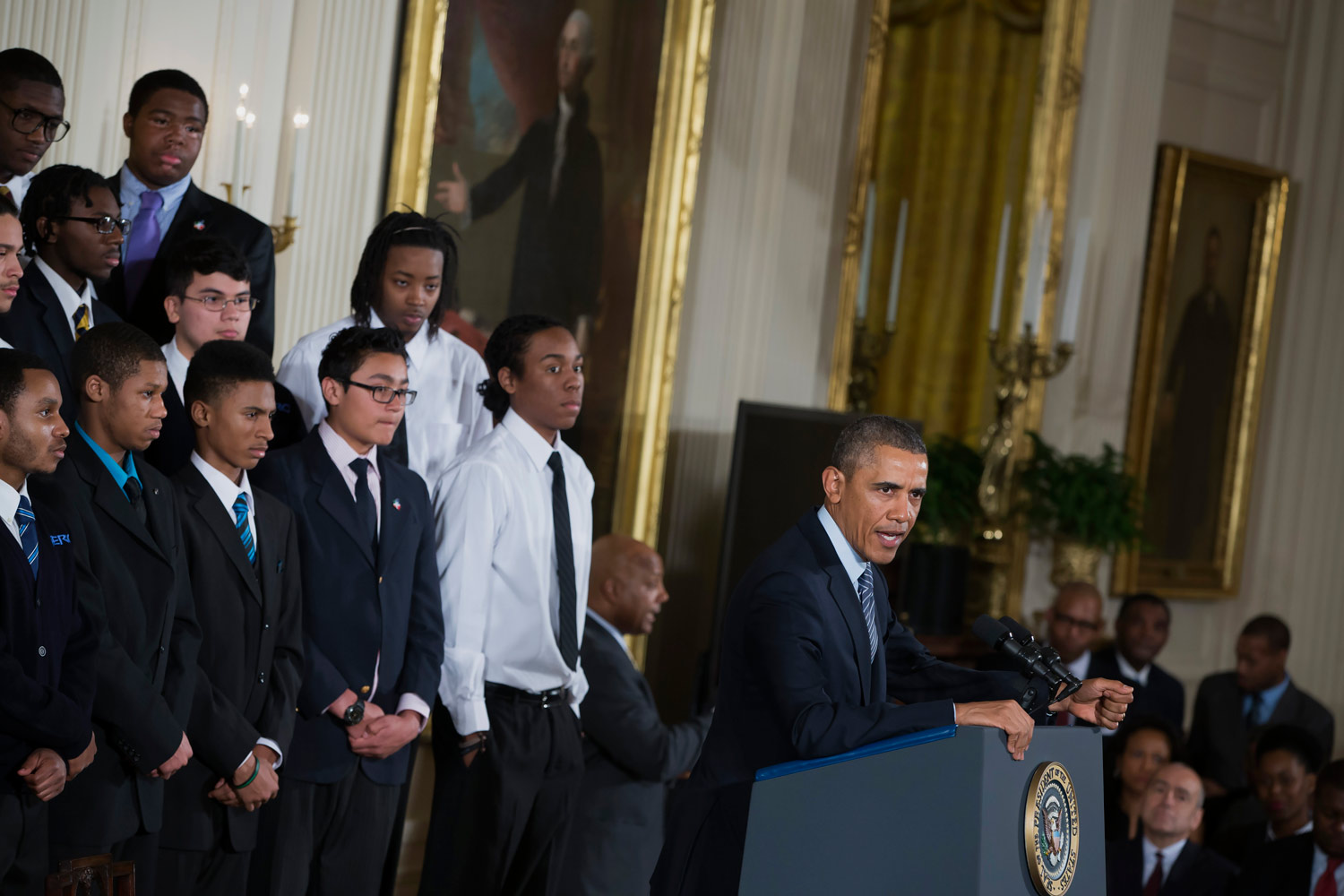
How Obama’s Brother’s Keeper Initiative Could Really Make a Difference How Obama’s Brother’s Keeper Initiative Could Really Make a Difference
Lecturing black men isn’t going to help them overcome the barriers they face. Better jobs and education policies will.
Apr 2, 2014 / Pedro Noguera