
Washington’s Dangerous China Consensus
Fantasies of national unity drive the bipartisan push for a new cold war.
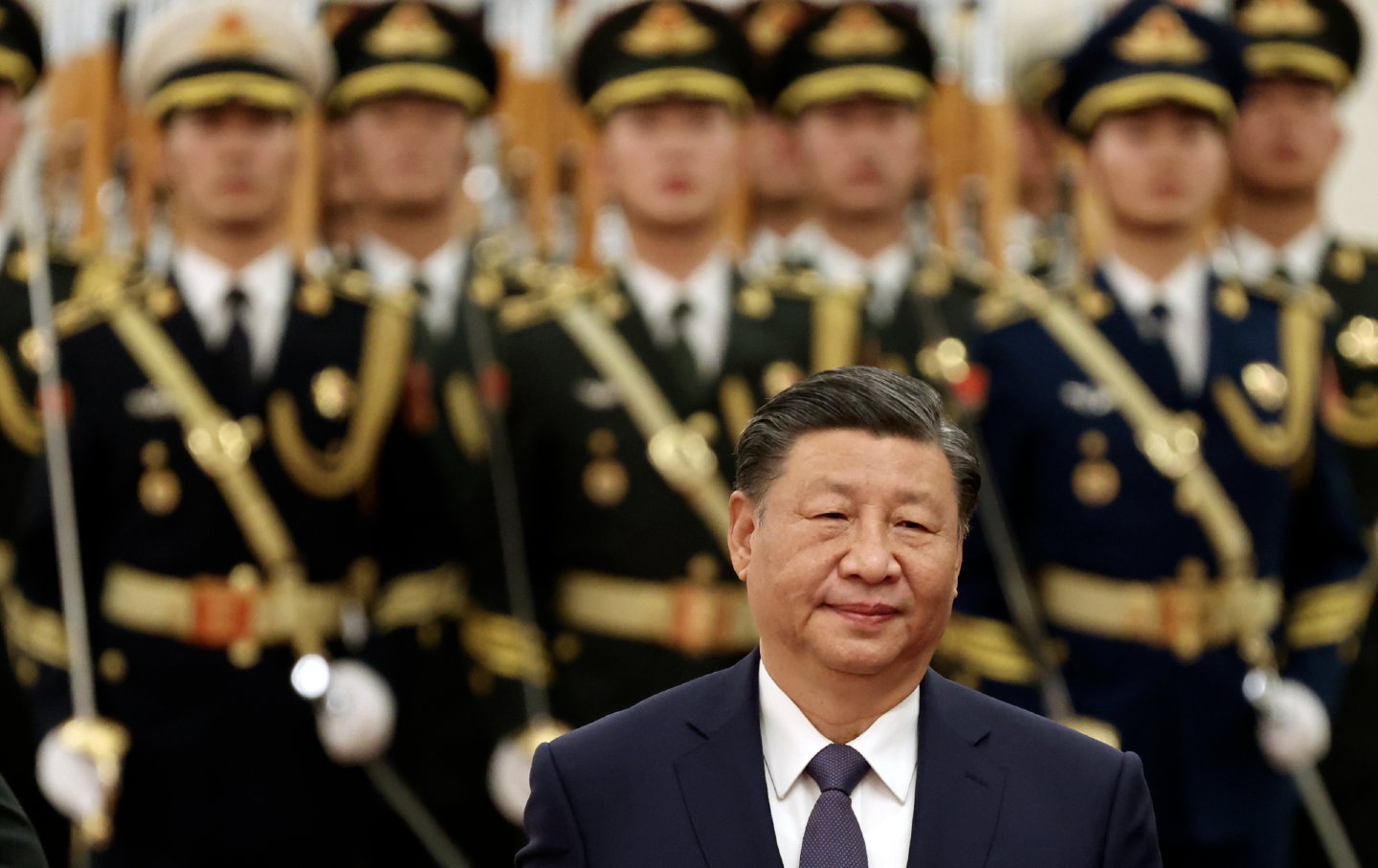
The United States is so polarized that it often seems on the verge of civic breakdown, if not civil war. But one issue still has the power to unite the political elite: the shared desire among Democrats and Republicans to engage in a great-power competition against China.
Internal division and external warmongering frequently go hand in hand. Indeed, the alleged China menace offers policymakers a very convenient foe—one that has to be fended off not just for geopolitical reasons but because the only way to keep America from falling apart is by mobilizing for war. In 2019, Steve Bannon candidly reflected that “in a country so divided…the thing that pulls it together is China.” In 2023, Joe Biden echoed this sentiment by asserting that “winning the competition with China should unite all of us.” Or as Randolph Bourne remarked over a century ago, “War is the health of the state.”
Although Donald Trump has reaped the greatest benefits from being a China-basher, the current policy shift started in the waning days of Barack Obama’s administration. In 2016, Secretary of Defense Ash Carter announced the “return to great-power competition” between the United States and China—a reversal of the rapprochement between the two nations that began under Richard Nixon in 1972. However much they differ on other issues, both Donald Trump and Joe Biden have maintained and intensified this framework of global rivalry.
For Trump, being anti-China is a way of raising the salience of his signature issues: economic protectionism, xenophobia, and foreign policy unilateralism. However repugnant this policy cocktail might be, it has turned out to be more politically successful than the Biden administration’s attempt to revive military Keynesianism by using anti-China rhetoric to build bipartisan support for a new era of spending on domestic rebuilding.
In 2022, then-Representative Stephanie Murphy (D-FL) reflected on the problems of this new consensus, noting that “no politician, Republican or Democrat, can be seen as soft on China, so that pushes us in the direction of not [discussing] smart policy, but politics.” If you want to liberate yourself from this intellectually stifling consensus, you have to turn to voices free from rote thinking or mainstream politics. Fortunately, relief is at hand in the bracing new book The Rivalry Peril: How Great-Power Competition Threatens Peace and Weakens Democracy, by the international relations scholars Van Jackson and Michael Brenes.
The United States and China are the world’s two most powerful countries and, unsurprisingly, have many areas of dispute. From the US point of view, China is militarily aggressive to its neighbors, a human rights abuser domestically, and a cutthroat economic rival. For China, the United States is a world-class hypocrite that talks up the liberal international order while repeatedly disregarding the principle of free trade and repeatedly waging or supporting wars of choice. Both sides have a point, but these are all issues that can be resolved through diplomacy.
Turning these policy disputes into a great-power competition has the same effect as the Cold War, raising the stakes on every disagreement via the risk of rapid escalation.
Jackson and Brenes persuasively demonstrate that the push to make rivalry with China the foundation of a unified domestic and foreign policy rests on an ill-informed nostalgia for the Cold War. For many in the policy elite, the Cold War was a blessed period of national cohesion and purpose during which a common enemy enabled the US to unite behind robust social spending, technological progress, and civil rights. It was the era of the interstate highway and the moonshot, of expanding universities and consensus politics—all conducted under the auspices of a Cold War that was effectively a long peace.
This halcyon view of mid-century America found expression in 2020 in the establishment journal Foreign Affairs. In an essay titled “The China Challenge Can Help America Avert Decline,” Kurt M. Campbell and Rush Doshi—who went on to become major shapers of Asia policy in the Biden administration—argued that the “arrival of an external competitor has often pushed the United States to become its best self.”
Jackson and Brenes do us all a service by reminding their readers that the actual Cold War—which saw 20 million dead in proxy wars as well as intense domestic repression under McCarthyism—was not, in fact, a happy period. Military Keynesianism only increased economic inequality, since it favored highly educated white workers and diverted the economy from a more broad-based redistribution. Civil rights activists were constantly under siege by a surveillance state empowered by anti-communist ideology.
In 21st-century America, the new cold war has also fueled domestic repression and increased the risk of foreign wars—while not creating any progressive consensus in favor of domestic spending.
Wars give a license to xenophobia. It’s hardly an accident that Trump, quick to blame China for everything from the fentanyl crisis to the Covid pandemic, is the dominant politician of the age. The current attack on pro-Palestinian students has its model in the ferocious purge of Chinese students that Trump launched in 2020. Nor is xenophobia exclusively a GOP vice. Early last year, Nancy Pelosi told Code Pink protesters calling for a ceasefire in Gaza to “go back to China where your headquarters is.” The first Cold War was a disaster. The second cold war, which is delaying efforts to tackle the genuine existential threat of climate change, could be truly apocalyptic.
More from
Jeet Heer 
Trump’s Iran Speech Showed the Desperation of a Loser Trump’s Iran Speech Showed the Desperation of a Loser
The president’s war is an ever-escalating disaster. He is increasingly reviled. And his speech won’t change either of those things.
Pete Hegseth’s Holy War Is an Unholy Nightmare Pete Hegseth’s Holy War Is an Unholy Nightmare
The defense secretary is talking about Iran in bloodcurdling tones of religious extremism—and underscoring how much of a dangerous fanatic he is.
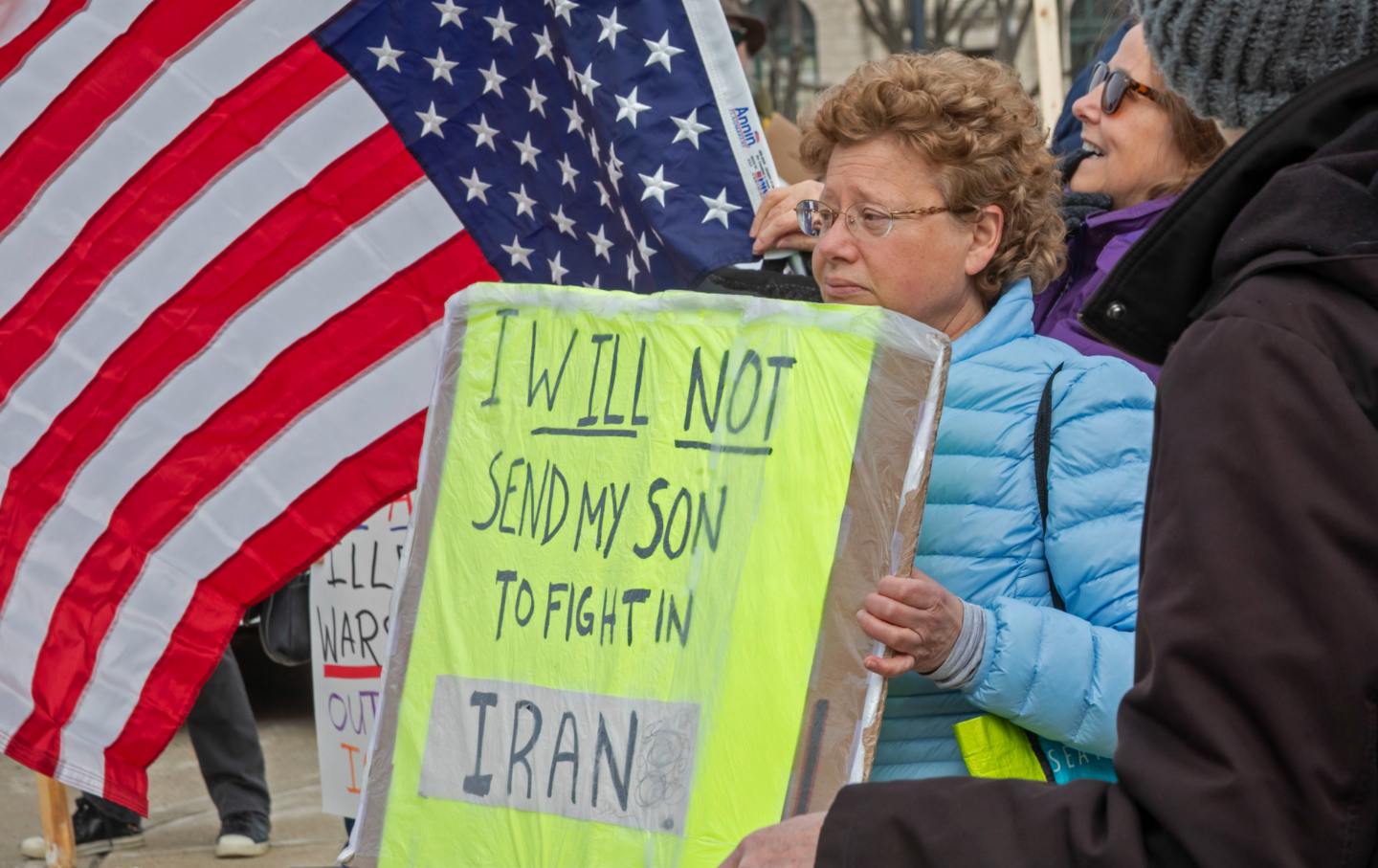
The Politicians Won’t Stop This War. Only the People Can. The Politicians Won’t Stop This War. Only the People Can.
The No Kings movement needs to become a mass anti-war movement.
Robert Mueller Never Should Have Been a Liberal Hero Robert Mueller Never Should Have Been a Liberal Hero
The cult of Mueller foolishly prioritized legal prosecution over political organizing.

Will the Iran War Destroy MAGA? Will the Iran War Destroy MAGA?
Trump’s coalition is splintering over nationalism and Israel.

Canada’s Left Is in Crisis. Can Avi Lewis Revive It? Canada’s Left Is in Crisis. Can Avi Lewis Revive It?
As Mark Carney’s deceptive centrism pushes the country to the right, Avi Lewis offers a compelling alternative.

