
The Supreme Court Could Soon Let Trump Buy All the Guns He Wants
Trump is currently prohibited from buying guns because he’s under criminal indictment. But two big court cases could change that.

Donald Trump poses for a picture at a South Carolina gun store.
(Daily Telegraph screenshot)While making a campaign stop at a South Carolina gun store on Monday, former president Donald Trump, who is currently facing 91 federal and state indictments, apparently bought a Glock handgun with his face emblazoned on it.
I say “apparently” because video of him at the store only shows Trump making an offhand inquiry about buying the gun. Adding to the confusion, while the video was initially posted by Trump campaign spokesperson Steven Cheung with the caption “President Trump purchases a @GlockINC in South Carolina!” Cheung later deleted his tweet and the campaign told reporters that no gun had actually been bought.
From a political perspective, one can see why Trump’s team would want to suggest that Trump is packing, regardless of whether or not he actually bought the gaudy hand-cannon (or whether the campaign is telling journalists he didn’t, since the MAGA mob never believes journalists anyway). But I’m skeptical that Trump bought the gun because… he can’t. Trump is under numerous federal indictments, and current federal law prohibits such individuals from purchasing firearms.
However, that law is under direct attack by Republican judges through the federal judiciary, and the conservative legal-industrial complex. Trump can’t buy a gun today without catching (yet another) criminal indictment, but if he waits until next June, he, and every indicted person in the country, might well have an opportunity to arm themselves for whatever reasons they deem fit.
The case that puts this prohibition into question is called US v. Quiroz. The defendant in the case, Jose Gomez Quiroz, purchased an M1911 .22 caliber semiautomatic handgun while he was under federal indictment for burglary. He was convicted for the illegal purchase but challenged the verdict, saying that it violated his Second Amendment rights. US District Judge David Counts, a Trump appointee, ruled in favor of Quiroz. Counts said that in light of the Supreme Court’s decision in New York State Rifle & Pistol Association v. Bruen (which ruled that even gun registration was a violation of the Second Amendment), the federal government no longer had the authority to restrict gun sales to those under indictment.
The Quiroz case is up for appeal at the US Court of Appeals for the Fifth Circuit, the most rabidly conservative court in the country. The Fifth Circuit could easily uphold Counts’s ruling. If it does, that case will almost certainly be appealed to the Supreme Court.
But Trump likely won’t even have to wait that long if he desperately wants to get his tiny hands on a compensation device. That’s because the Supreme Court is already scheduled to hear a separate case called US v. Rahimi, on November 7 of this year. That case is slightly different from the Quiroz case. There, the defendant, Zachary Rahimi, was under a restraining order for domestic abuse. Federal law also prohibits people under restraining orders from buying guns. Rahimi challenged the law, again under the Second Amendment. The Fifth Circuit ruled in his favor, and now the Supreme Court will weigh in.
The progressive in me is contractually obligated to tell you that Quiroz—and, if he wants to test these laws, Donald Trump—has a stronger case than Rahimi. A restraining order is not a mere accusation: It is a ruling issued by a judge and comes with all the due process rights associated with a legal adjudication. In contrast, an indictment is just a charge. I could argue that people shouldn’t have fundamental rights taken away from them based on a mere accusation from the government.
Of course, when I think of “fundamental rights,” I think of the right to vote and participate in democracy. I don’t think of the right to murder people who are bothering you as one of our most critical rights, and I do not think that the Constitution is a murder-suicide pact. Keeping guns out of the hands of felons or potential felons is a wise and safe policy goal that would be easy to achieve in a less violent country than ours. But I’m not a Republican. For conservatives, the Constitution consists of the sacrosanct Second Amendment and then a bunch of suggestions.
The Supreme Court could well uphold Rahimi’s right to bear arms to menace his ex-girlfriends. And if the court rules for him in a sweeping fashion, it will likely do so in a way that benefits Quiroz as well. The next phase of the conservative plan to turn America into a post-apocalyptic hellscape seems to be to rearm anybody who has had their guns taken away because of their actions or crimes.
The upshot is this: If Trump did buy a gun in South Carolina, it’s just another crime he will likely get away with. I guess I would encourage people to wear bulletproof vests on Fifth Avenue next summer, because the Supreme Court could soon make it a whole lot easier for Trump to test out his theories about whom he can shoot without consequences.
More from The Nation

What Are Democrats Prepared to Do if Trump Rigs the Election? What Are Democrats Prepared to Do if Trump Rigs the Election?
In this week’s Elie v. U.S, our justice correspondent challenges Democrats' lack of a plan if Trump steals the midterms. Plus: the most racist, and honest, AI add ever.
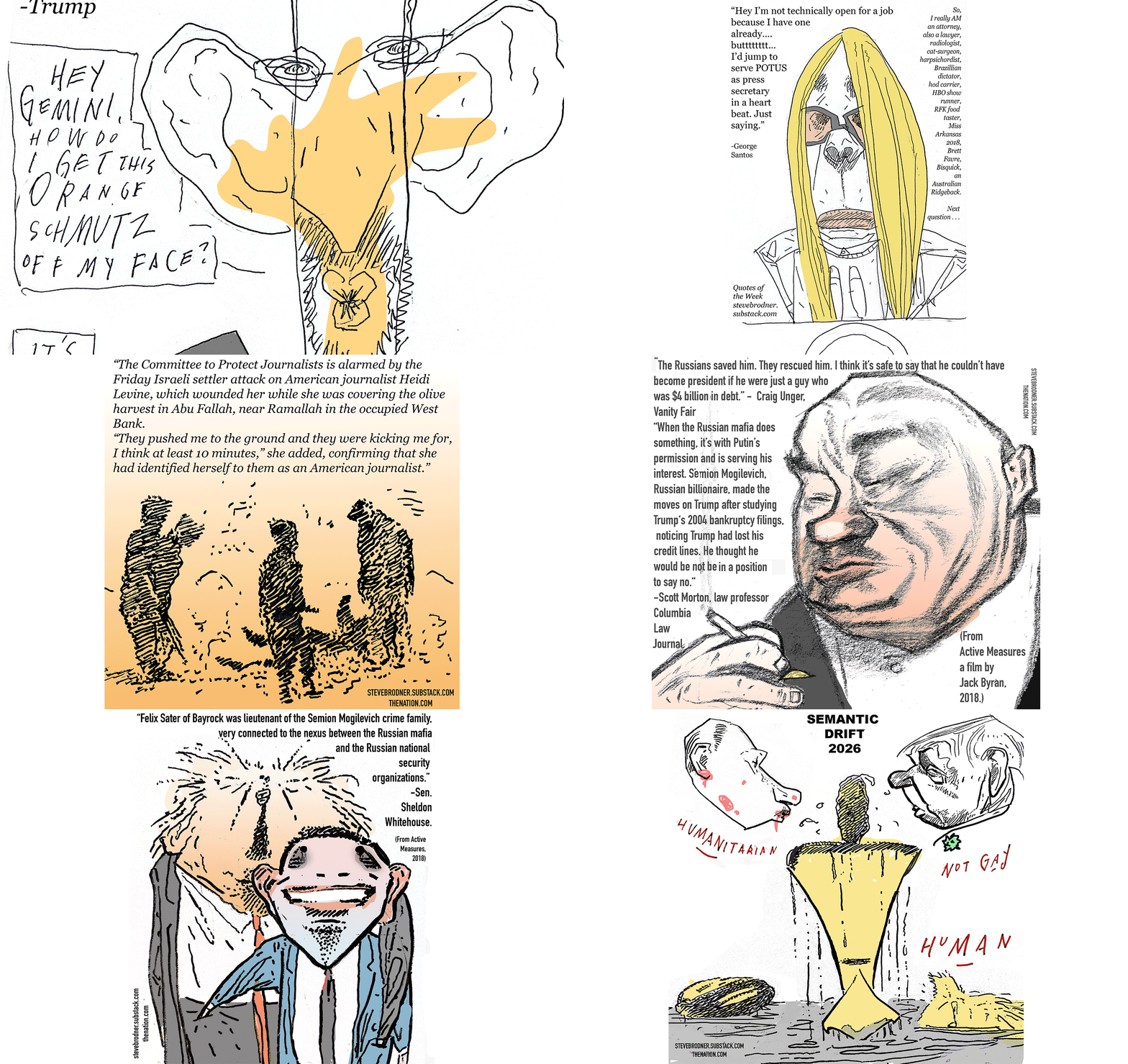
Ramaswamy’s Guide to a Better Vocabulary Ramaswamy’s Guide to a Better Vocabulary
Quotes of the Week.
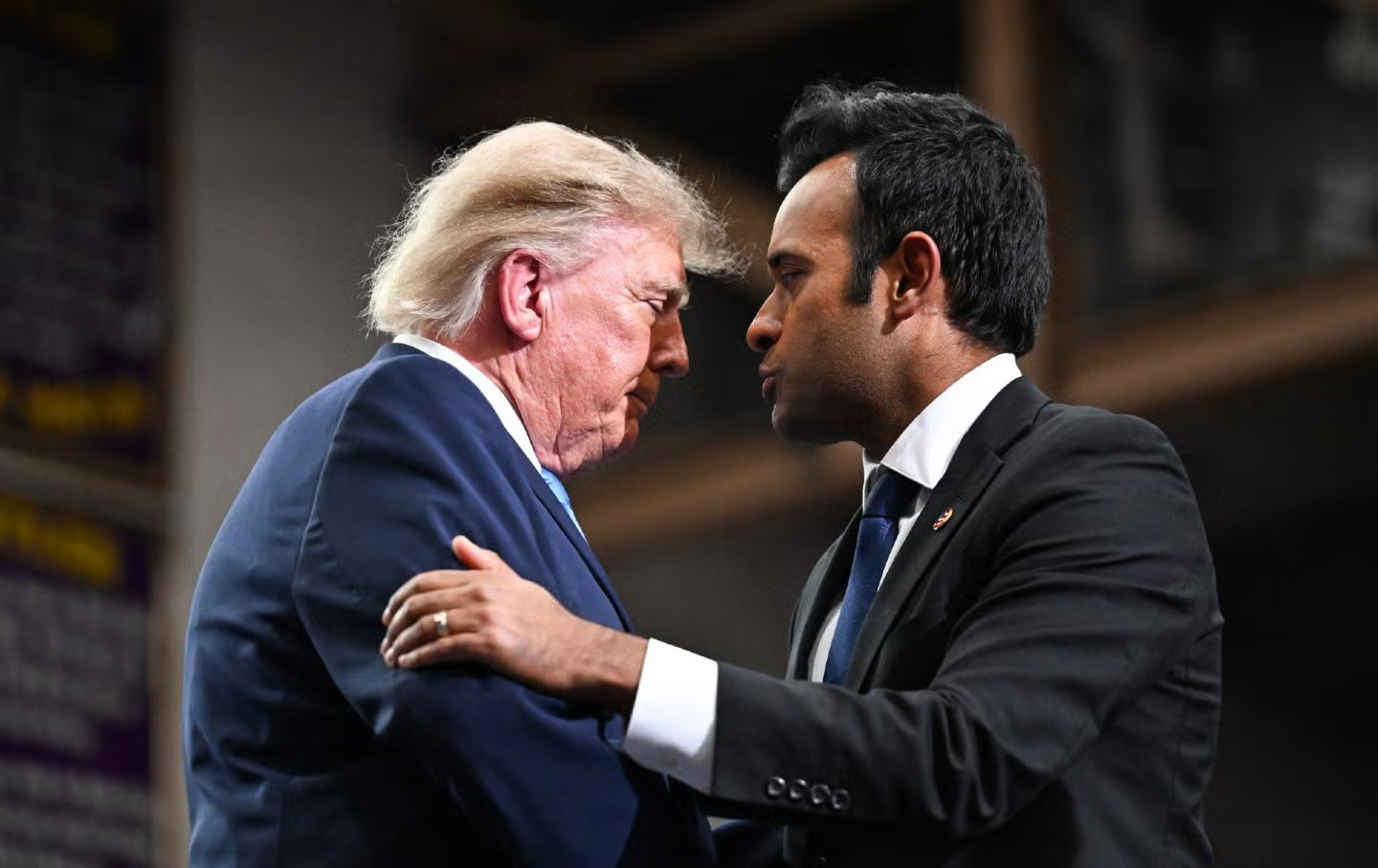
Why Trump Is Embracing Vivek Ramaswamy’s Vile Ad Why Trump Is Embracing Vivek Ramaswamy’s Vile Ad
The president is leaning into the politics of toxic parenting.
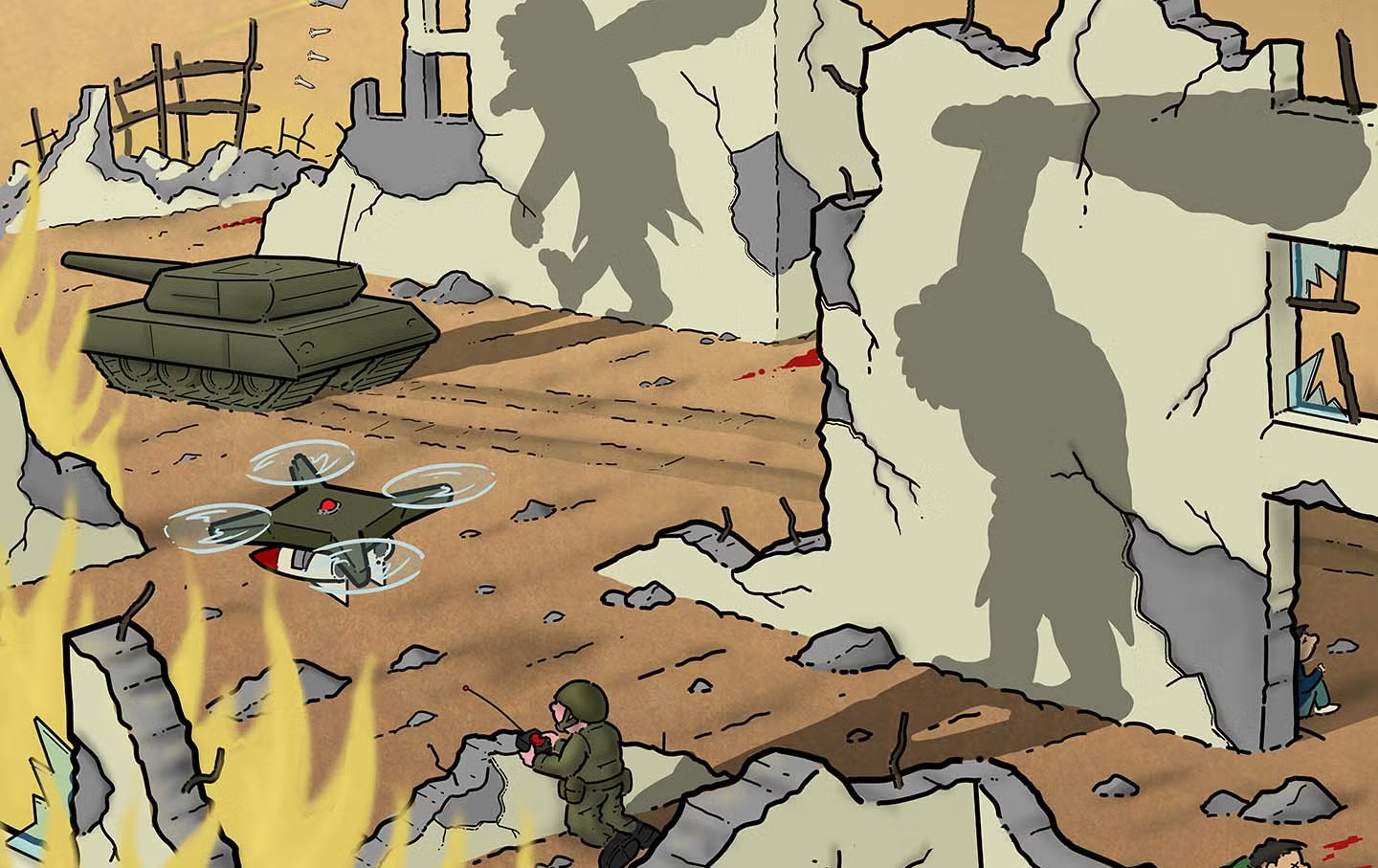
The Shadow Knows The Shadow Knows
High-tech weapons, low-tech intelligence.
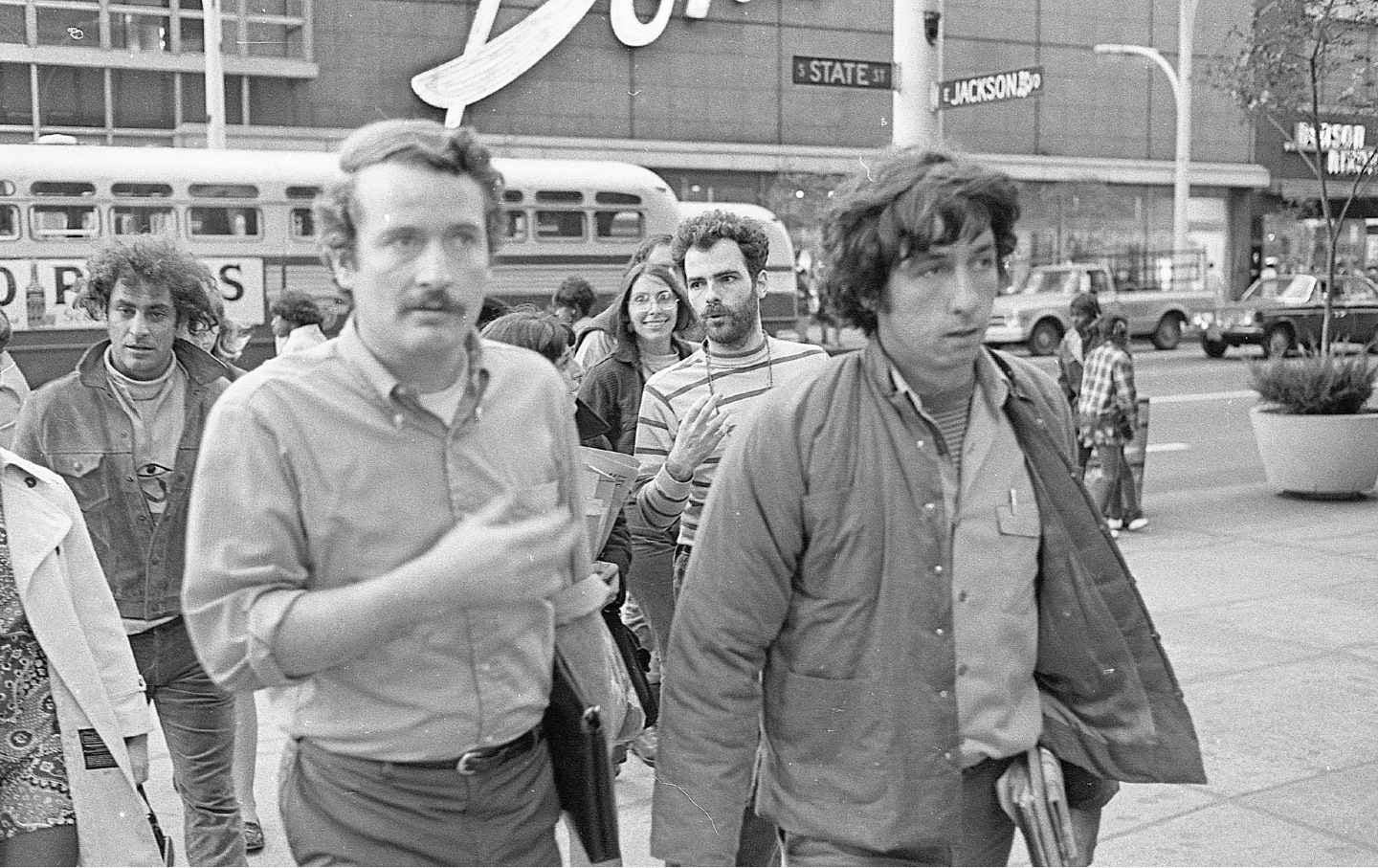
Tom Hayden’s Legacy and the New American Left Tom Hayden’s Legacy and the New American Left
It’s been 10 years since he passed away.
The Decades-Long Battle Within the Democratic Party Establishment Between the Heirs of Dean Acheson and Franklin Roosevelt The Decades-Long Battle Within the Democratic Party Establishment Between the Heirs of Dean Acheson and Franklin Roosevelt
The calamitous history of America’s wars of choice.

