Jamie Raskin’s “Democracy Summer”
It’s a boot camp in civic engagement.
While Democrats try to divine their path to victory just four months before the election, Republicans are practicing presidential politics by predestination. From the first-ever RNC address by a Teamsters leader, to the selection of a running mate miraculously under the age of 40, to evangelical claims of divine intervention ensuring Donald Trump’s second term, the Grand Old Party last week attempted to project not just vivacity but inevitability. A 2016 redux, they seem convinced, is all but assured.
And yet in some ways, the 2016 campaign this raucous convention most evoked was not Trump’s but Clinton’s—a campaign that mistook self-assurance for strategy and paid the ultimate electoral price. (Just swap “Fight Song” for “God Bless the U.S.A.”) Arrogance often invites unforced errors, like Trump ordering his staff to curtail their ground game and focus on “election integrity.” Rather than get out the vote for his supposedly imminent landslide victory, he seems more concerned with contriving evidence to contest a potential defeat. Somehow, both parties have forgotten that, for all the elite-level drama that makes this campaign feel unprecedented, the fundamentals of electioneering have remained the same since Cicero ran for consul of Rome.
Victory this November demands sweat equity, no matter the ascendancy of digital influencers, technocratic consultants, and social-media gimmicks. For proof that the ground game remains indispensable to every campaign, look no further than Representative Jamie Raskin’s Democracy Summer program. Every year, it puts over a thousand young people around the country through democratic boot camp, and the current cohort has already begun pounding the pavement to energize voters. The program is leading the work necessary for progressives to prevail in this election and beyond: mobilizing young people to participate in, and eventually lead, our democracy.
At a time when voters—and especially young voters—are deeply dissatisfied with their choices, Raskin’s project offers a model for renewing Americans’ confidence in the power of civic engagement.
Despite President Biden’s overwhelmingly winning the young adult bloc in 2020, recent polls unbelievably show Trump becoming highly competitive among voters under 30. From the youth and campus protests against the Israel-Hamas war to increasing pessimism about the economy, listing the plentiful reasons for Gen Z’s sudden swing would take more than a few TikToks (even with a 10-minute time limit). But the starkest statistic is that over half of Americans age 18 to 29 may not vote at all. Having never participated in a presidential election that didn’t feature Donald Trump and a centrist Democrat, they’re fed up with voting for the lesser of two evils.
And when it comes to campaigning themselves, younger Americans can hardly find an open office to pursue. In the House of Representatives, Boomers maintain a plurality of seats. The upper chamber, meanwhile, has as many senators over 70 as under 50. Of course, being younger isn’t always better. Nancy Pelosi, to name just one Democratic stalwart, didn’t win higher office until her late 40s. But the best political talent often does attain office at an early age: FDR was a 31-year-old assistant secretary of the Navy, LBJ a 28-year-old congressman, and Joe Biden a 30-year-old senator. What future leader is currently losing valuable experience because octogenarian incumbents continue to white-knuckle their way to reelection?
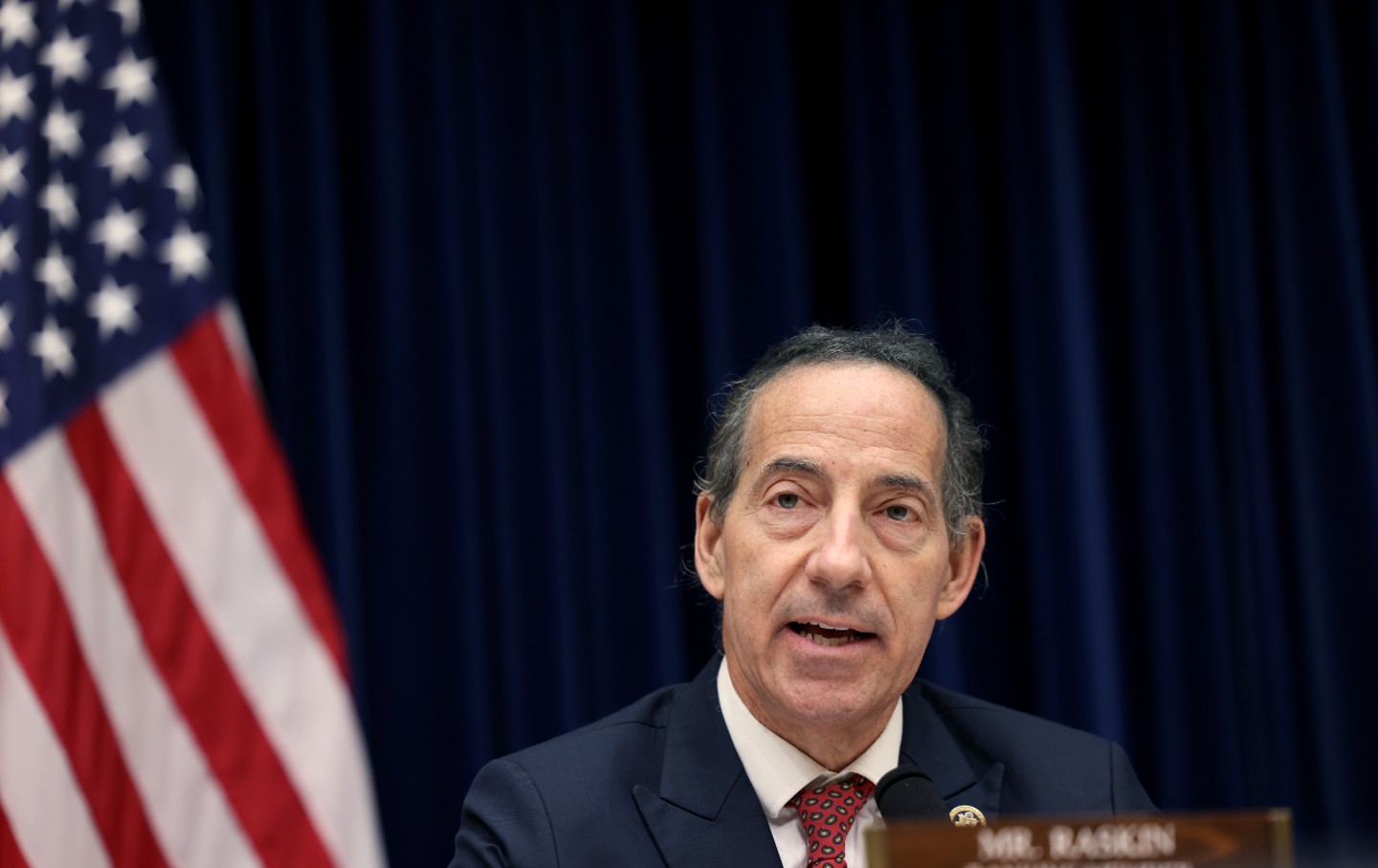
That’s why Jamie Raskin’s efforts to engage young people in the tough but necessary work of field organizing are notable. Though he is a comparatively boyish 61 years old, Raskin became a star during the Trump impeachment hearings, and almost certainly has ambitions beyond the House, Raskin continues to devote himself to Democracy Summer. He describes the program as a “school for democracy.” Over the course of six weeks, high school and college students in 38 states complete a virtual curriculum while working in local congressional campaigns—including in battleground districts from Washington to Pennsylvania. Whether it’s hearing from luminaries like Alexandria Ocasio-Cortez, or canvassing their own neighborhoods, the fellows gain on-the-ground experience while completing essential tasks like campaign research and organizing rallies.
Raskin has long understood the possibilities of mentorship. All the way back in 2006, during his very first campaign, he tapped into the power of engaging young people. By mobilizing the youth of his district, as volunteers and voters, he managed a come-from-behind victory against a 32-year incumbent that launched his political career—and Democracy Summer. As Raskin recounted during a recent talk hosted by the grassroots organization Partners 4 Democracy, pundits initially called his chances “impossible.” After his victory, they switched to describing it as “inevitable,” a testament to the potential held by real organizing. From these humble beginnings—from impossible to inevitable—the passion project has grown to collaborate with the Democratic Congressional Campaign Committee, and now partners with over 100 campaigns. (Disclosure: I supported Raskin in his first campaign, and following ones. And three generations of Raskins, from Jamie’s father to his son, have written for The Nation.)
This expansion hasn’t dulled the program’s focus on the unglamorous but crucial art of organizing. In that first campaign, Raskin personally knocked on over 17,000 doors. Democracy Summer emphasizes the same gritty brand of personal politics. Fellows become experts in voter registration, phone banking, and door-to-door campaigning, while having genuine conversations with community members about the issues that matter most to them.
These tactics show the way forward for reengaging the entire body politic. Many Americans only ever see their elected officials on television, not their front porches. Over half of AAPI voters, for example, have never been contacted by a political party. That distance creates disillusionment, which turns into disengagement. By bringing campaigns to voters’ doorsteps, Democracy Summer helps Americans from every generation feel less like political props and more like active participants.