

The School-to-Prison Pipeline Starts in Preschool The School-to-Prison Pipeline Starts in Preschool
And we wonder why there’s an education gap.
Mar 28, 2014 / Mychal Denzel Smith

De Blasio Administration Appoints NYPD Inspector General De Blasio Administration Appoints NYPD Inspector General
De Blasio distinguished himself from his electoral opponents by advocating an independent overseer of the NYPD—now he’s fulfilled that promise.
Mar 28, 2014 / Jarrett Murphy

GOP Steps Up Attack on Early Voting in Key Swing States GOP Steps Up Attack on Early Voting in Key Swing States
Wisconsin and Ohio are the latest GOP-controlled states to limit access to the ballot.
Mar 28, 2014 / Ari Berman
More is More More is More
Sometimes, we just can't get enough
Mar 27, 2014 / Joshua Kosman and Henri Picciotto

Judges: Texas and Oklahoma Must Lift Veil of Secrecy on Execution Drug Suppliers Judges: Texas and Oklahoma Must Lift Veil of Secrecy on Execution Drug Suppliers
Transparency and civil rights advocates win two victories in a growing battle over anonymous suppliers.
Mar 27, 2014 / Steven Hsieh

Christie Didn’t Do It, Says Christie’s Lawyer Christie Didn’t Do It, Says Christie’s Lawyer
The other investigations proceed, but Randy Mastro releases a 300-page report saying Christie is not guilty.
Mar 27, 2014 / Bob and Barbara Dreyfuss
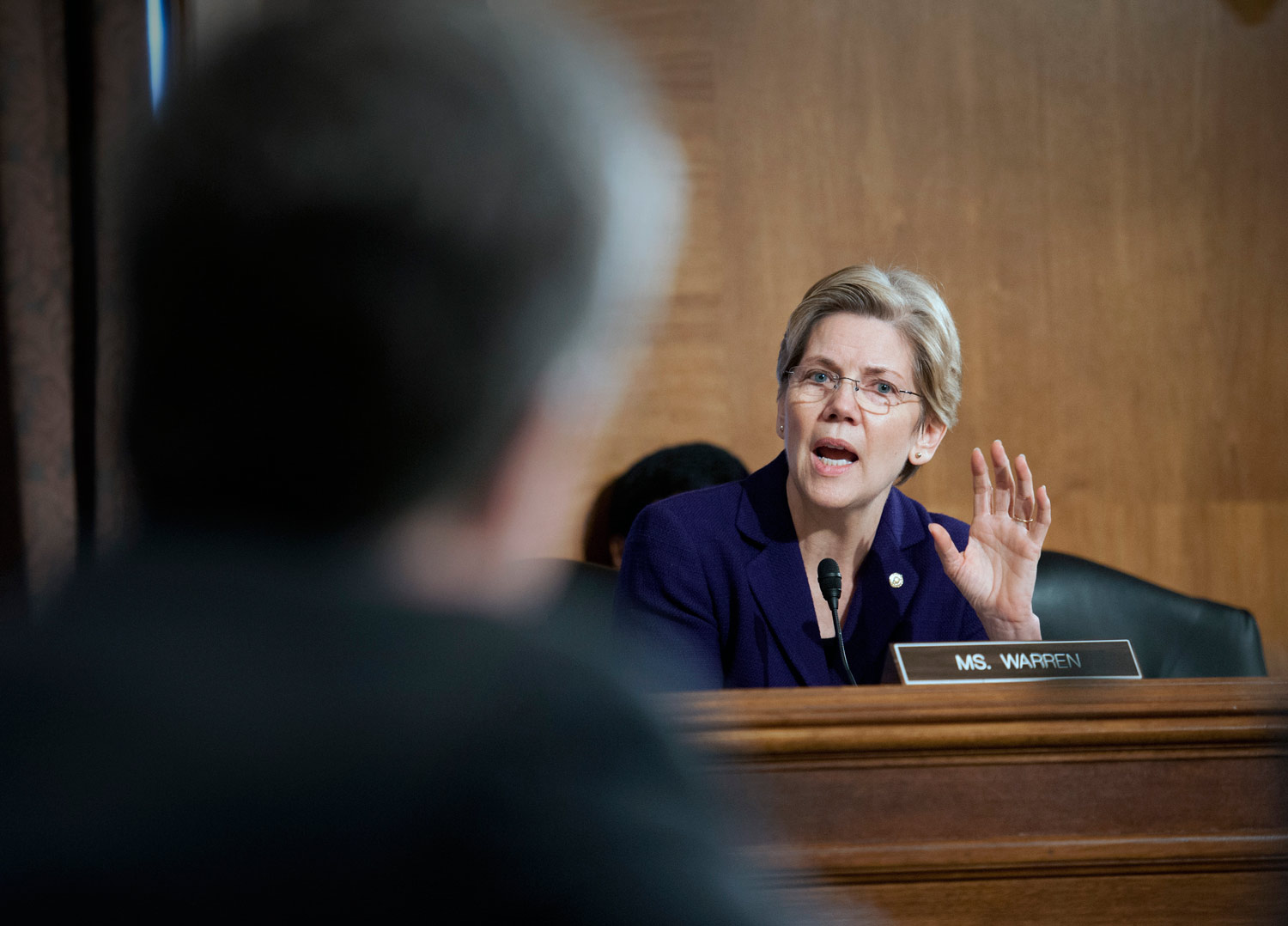
Elizabeth Warren Steps Up for Populist Politics Elizabeth Warren Steps Up for Populist Politics
DC insiders may not be “all in” for South Dakota's Rick Weiland, but a key senator is hailing his candidacy.
Mar 27, 2014 / John Nichols

A Very Serious Problem With Very Serious Journalism A Very Serious Problem With Very Serious Journalism
Can The Intercept make a dent in the overwhelming white maleness of policy reporting?
Mar 27, 2014 / Julia Carrie Wong

Why Is the US Military Averaging More Than a Mission a Day in Africa? Why Is the US Military Averaging More Than a Mission a Day in Africa?
The officers running secret operations there have been calling Africa "the battlefield of tomorrow, today."
Mar 27, 2014 / Nick Turse
Letters Letters
Doubt … More thoughtfulness in the world would make it such a better place. JoAnn Wypijewski’s “Woody, Dylan & Doubt” [March 10/17] is beautifully crafted—fair, compassionate, insightful. “The techno age meets the eleventh century” is a brilliant summary of the public’s involvement in an ongoing family tragedy. Kudos for an advanced twenty-first-century commentary. Jane Myers ann arbor, mich. There’s nothing radical or liberal about giving an accused sex abuser the benefit of the doubt outside of a courtroom. Most patriarchal societies now and throughout history have given the accused rapist/child molester the benefit of the doubt, without such benefit to the (always) less powerful accuser. Sad to see such a reactionary premise masquerading as liberal in The Nation. But too many so-called progressives enjoy Allen’s movies. pjwhite I began reading “Woody, Dylan & Doubt” goofily thinking it was about Woody Guthrie, Bob Dylan and metaphysical uncertainty. I was pleased as well as surprised by JoAnn Wypijewski’s intelligent, thoughtful and fair-minded piece on the latest innuendos concerning Woody Allen. David Lehman new york city Al From in Mississippi During the 1960s, I was a senior field representative for the Office of Economic Opportunity, the official War on Poverty agency—the only federal OEO employee to be stationed in Mississippi, my home state. I had planned with the legendary Jim Draper and several activists to seek employment with OEO so that the movement-related Child Development Group of Mississippi (CDGM) would have a friend in the bureaucracy. OEO was all too eager to employ a young, native, white Mississippian, a former Baptist preacher thrown out of his church for getting involved in civil rights activities. I was in a unique position to know firsthand from the inside the OEO strategy of maximum participation of the poor in controlling the programs and resources of the anti-poverty effort. Al From, who was assigned to the OEO Office of Inspection in Washington, stayed in my home in Jackson several times on his trips to Mississippi, and I have followed his career with great interest. In view of Rick Perlstein’s mostly deserved pillorying of Al for the reactionary role he has played in national Democratic Party politics in the years since the ’60s [“From & Friends,” March 3], I felt I should set the record straight about his participation in the poverty program struggles in Mississippi. Although the Economic Opportunity Act of 1964 required approval by the governor of a state before programs could be funded there, OEO found a loophole, by which programs could be funded through an institution of higher education. In the summer of 1965, the first Head Start programs were funded to local groups growing out of the civil rights movement by passing the grants through historically black colleges/universities (HBCUs): Mary Holmes College and Rust College. Subsequent struggles with the white power structure over who would control the incoming funds resulted in many of these groups continuing on a volunteer basis under the umbrella of the Friends of the Children of Mississippi until the control issue could be resolved. Senators “Big Jim” Eastland and John Stennis urged local white leaders to organize Community Action Programs, which the law required all funds to pass through. Where CAPs were not set up, CDGM and Friends of Children were funded through HBCUs to operate black-controlled programs. In counties where CAPs were set up, including Sunflower and Bolivar counties in the Delta, the movement-based groups were legally made subsidiaries to these power-structure-controlled CAPs. Neither Al From nor OEO could do or say anything about that legality. This was the setting for From’s claim that “Shriver sent me to Sunflower County to investigate a dispute between two Head Start programs, one run with federal funding by the white powers of the county—the Eastland forces—the other run on a volunteer basis by civil rights activists.” Those of us in the OEO committed to empowering local people held strategic discussions for keeping the resources and consequent political power of OEO funding in the hands of the black communities. Ultimate implementation of OEO strategy was up to the Atlanta OEO office, and Al From’s presence and participation were limited. But when he came to Mississippi representing the national office, he participated in those discussions and was on the side of the angels. His statement in his book that the fight was for “an important prize in the political balance of power in the county” was correct, as these were the first substantial institutional funds and jobs the black folks of these counties had ever controlled. In Sunflower and Bolivar counties, two Head Start programs were funded, one to the CAP and one to the local groups: Associated Communities of Sunflower County and Associated Communities of Bolivar County. By law, the funds had to flow through the CAP agencies, but in both cases OEO required that the local movement group be funded as a separate subcontractor of the CAP, with its own board, controlling structure and staff. Under the circumstances, this was the best possible outcome, and OEO relentlessly protected the independence of these groups until 1969, when Head Start funding was removed from OEO. I have no interest in defending Al From. While I was continuing to pursue every third- party and independent left initiative we could stir up over the years and working in community organizing and advocacy, Al was busy at a much higher level, doing perhaps irreparable harm to the political and economic plight of ordinary Americans by helping to restructure the party system so that no real Democratic alternative was on offer, leaving us—still—with a Clintonite-flavored administration somewhat to the right of Eisenhower Republicanism. But you could not ask for a more likable or collegial person to diminish the hopes of your grandchildren than Al From. For a short time, though, he played a positive role in empowering the black communities and children of Sunflower and Bolivar counties. Don Manning-Miller Vice president, Rust College holly springs, miss.
Mar 27, 2014 / Our Readers