
In 2025, Martin Luther King Jr.’s Economic Populism Is More Relevant Than Ever
The political media calls Trump a “populist.” But as Dr. King made clear in a 1965 speech, American populism was a movement against everything Trump stands for.
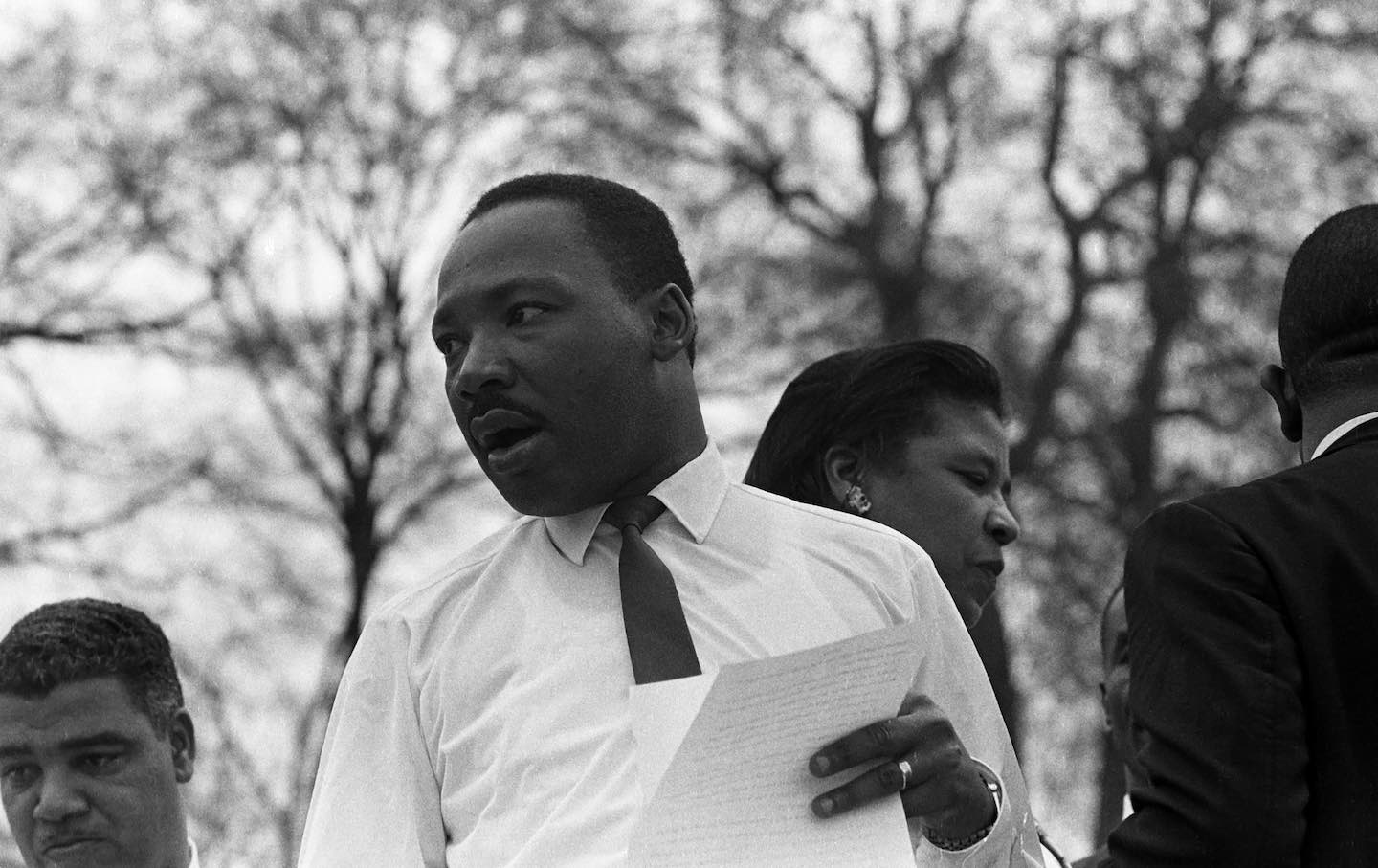
Dr. Martin Luther King Jr. on the steps of the State Capitol in Montgomery, Alabama, on March 25, 1965.
(Morton Broffman / Getty Images)
The name “Donald Trump” and the word “populism” have become so intertwined you would think the latter was invented by Trump’s MAGA movement itself. In one 24-hour period, just days before the reelected president’s inauguration, the political media published nearly a dozen articles linking Trump to populism. Even a Japanese outlet made the connection in an op-ed last week: “Tune in to American populists,” the headline reads, referring to the group of mostly white “working and middle classes” who sent Trump to office.
But the Trump-spawned political rage that the mainstream media likens to “populism” erases the real origins of the idea. This year, on the birthday of civil rights icon Martin Luther King Jr., it’s more important than ever to remember that populism is a political philosophy that’s closer to King’s vision than to MAGA’s.
It’s difficult for some people to envision the Southern, Baptist preacher as a fighter for the working class, because his legacy in the American imagination has largely been confined to his organizing against Jim Crow racism. But King wasn’t committed to integration solely to win equal treatment for Black Americans. He recognized the power of multiracial, working-class solidarity to combat the elite, wealthy interests that dominate American society.
Nearly 50 years ago, on March 25, 1965, King addressed a crowd from the steps of the Alabama State Capitol in Montgomery after leading a historic march from Selma. Since referred to as his “How Long? Not Long” speech (or, alternatively, “Our God is Marching On”), it is remembered as one chapter in the well-known struggle for voting rights, having taken place just a few months before President Lyndon Johnson passed the Voting Rights Act of 1965. But the speech shows the civil rights movement’s fight for voting rights was one part of a larger vision, of upending a social order that was fundamentally exploitative to all workers.
“The segregation of the races was really a political stratagem employed by the emerging Bourbon interests in the South to keep the southern masses divided and southern labor the cheapest in the land,” King said, referring to the big business–aligned “Bourbon Democrats” of the late 19th century. “Toward the end of the Reconstruction era, something very significant happened. That is what was known as the Populist Movement. The leaders of this movement began awakening the poor white masses and the former Negro slaves to the fact that they were being fleeced by the emerging Bourbon interests. Not only that, but they began uniting the Negro and white masses into a voting bloc that threatened to drive the Bourbon interests from the command posts of political power in the South.”
King’s speech deftly encapsulates the divide-and-conquer strategies that have defined the past century of right-wing US politics, before going on to offer prescient remarks about how elites defeated cross-racial solidarity:
To meet this threat, the southern aristocracy began immediately to engineer this development of a segregated society. They saturated the thinking of the poor white masses with it, thus clouding their minds to the real issue involved in the Populist Movement. They then directed the placement on the books of the South of laws that made it a crime for Negroes and whites to come together as equals at any level. And that did it. That crippled and eventually destroyed the Populist Movement of the nineteenth century.
Well into the 21st century, that strategy is still working. Worse, the people who foment these divisions are now called “populists,” with dominant media narratives cementing this historical amnesia and making the Republican Party nearly synonymous with “the working class.”
King’s speech illuminates a brief period of American history when workers organized for their common interests, instead of focusing on arbitrary differences. In this era, populists were just the kind of people Republicans would deride as treacherous communists—and in fact, some of these American populists themselves joined socialist and communist parties in the 1900s.
The Populist movement wasn’t perfect, and it wasn’t as racially harmonious as King implies. Some of its white leaders reinforced the segregation of the day and were indifferent to Black American concerns. But both Black and white populists meaningfully organized together to combat harms wrought by the era’s ruling elites: southern planters and merchants, Wall Street bankers, and railroad barons, a history recounted in detail in Omar Ali’s book In the Lion’s Mouth: Black Populism in the New South, 1886-1900.
Associating Trump with populism isn’t just historically inaccurate, it’s insulting to the legacy of those who sought real power for the working class. Populists fought for organized labor, not to weaken it and frame it under the euphemism of the “right to work.” Populists wanted a strong social safety net, not to whittle it down to bits. Populists fought for the rights of Black voters, not to disenfranchise them. Their legacy is not to seek a common enemy in other workers—Haitian migrants or trans athletes, “modern women” or Mexican farm workers—but in the elites who amplify these divisions, suppress wages, and make a mockery of working-class concerns.
Both the Republican and Democratic Party cater to America’s wealthiest few, but only the GOP has been bestowed with the “populist” crown—regardless of how anti-worker it has become. While King is rightly remembered for his commitment to racial equality, his expansive vision encompassed working-class solidarity with equal conviction. It was King who wrote as far back as 1951 that “capitalism has seen its best days in America” and that it “has failed to meet the needs of the masses.” In the year before his death, King said America needed a “revolution of values” against the “triple evils” of economic exploitation, racism, and militarism. None could be defeated unless they were all defeated.
Celebrating King’s legacy means remembering what he stood for. He, like those who struggled before him, showed America what a true populist movement looks like. It doesn’t look anything like Donald Trump.
Support independent journalism that does not fall in line
Even before February 28, the reasons for Donald Trump’s imploding approval rating were abundantly clear: untrammeled corruption and personal enrichment to the tune of billions of dollars during an affordability crisis, a foreign policy guided only by his own derelict sense of morality, and the deployment of a murderous campaign of occupation, detention, and deportation on American streets.
Now an undeclared, unauthorized, unpopular, and unconstitutional war of aggression against Iran has spread like wildfire through the region and into Europe. A new “forever war”—with an ever-increasing likelihood of American troops on the ground—may very well be upon us.
As we’ve seen over and over, this administration uses lies, misdirection, and attempts to flood the zone to justify its abuses of power at home and abroad. Just as Trump, Marco Rubio, and Pete Hegseth offer erratic and contradictory rationales for the attacks on Iran, the administration is also spreading the lie that the upcoming midterm elections are under threat from noncitizens on voter rolls. When these lies go unchecked, they become the basis for further authoritarian encroachment and war.
In these dark times, independent journalism is uniquely able to uncover the falsehoods that threaten our republic—and civilians around the world—and shine a bright light on the truth.
The Nation’s experienced team of writers, editors, and fact-checkers understands the scale of what we’re up against and the urgency with which we have to act. That’s why we’re publishing critical reporting and analysis of the war on Iran, ICE violence at home, new forms of voter suppression emerging in the courts, and much more.
But this journalism is possible only with your support.
This March, The Nation needs to raise $50,000 to ensure that we have the resources for reporting and analysis that sets the record straight and empowers people of conscience to organize. Will you donate today?
More from The Nation
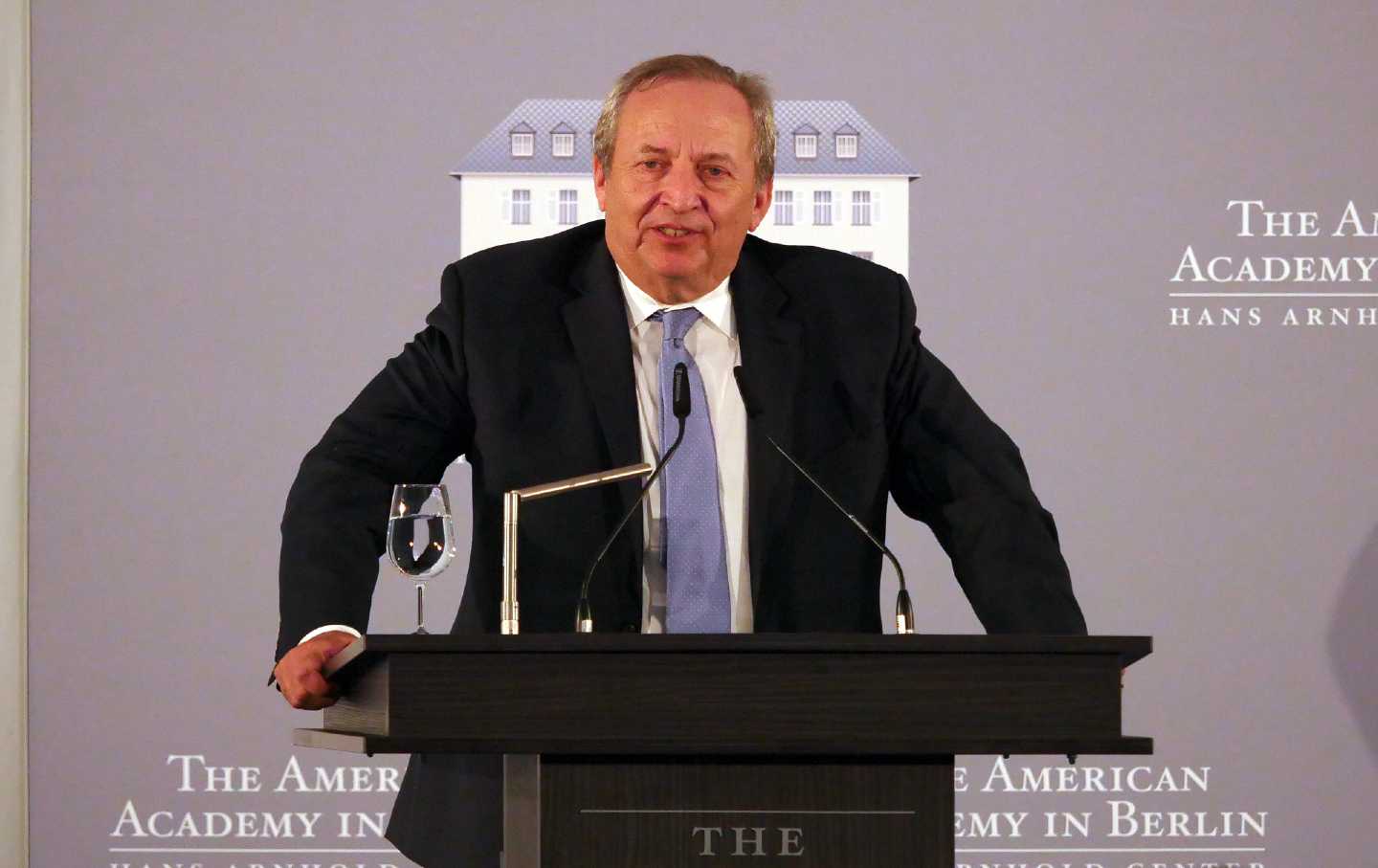
Larry Summers, We Knew Ye Too Well Larry Summers, We Knew Ye Too Well
The former Harvard president and Treasury secretary has resigned over humiliating disclosures in the Epstein files. But will that be enough to keep an ardent neoliberal down?

Binance’s MAGA-Branding Strategy Binance’s MAGA-Branding Strategy
The world’s largest crypto exchange often operates beyond the reach of the law. Now it’s helping to enrich the Trump family.

How Brothel Workers in Nevada Just Made Labor History How Brothel Workers in Nevada Just Made Labor History
The courtesans at Sheri’s Ranch were staring down a horrifying new contract. So they did what workers everywhere do: They got organized.
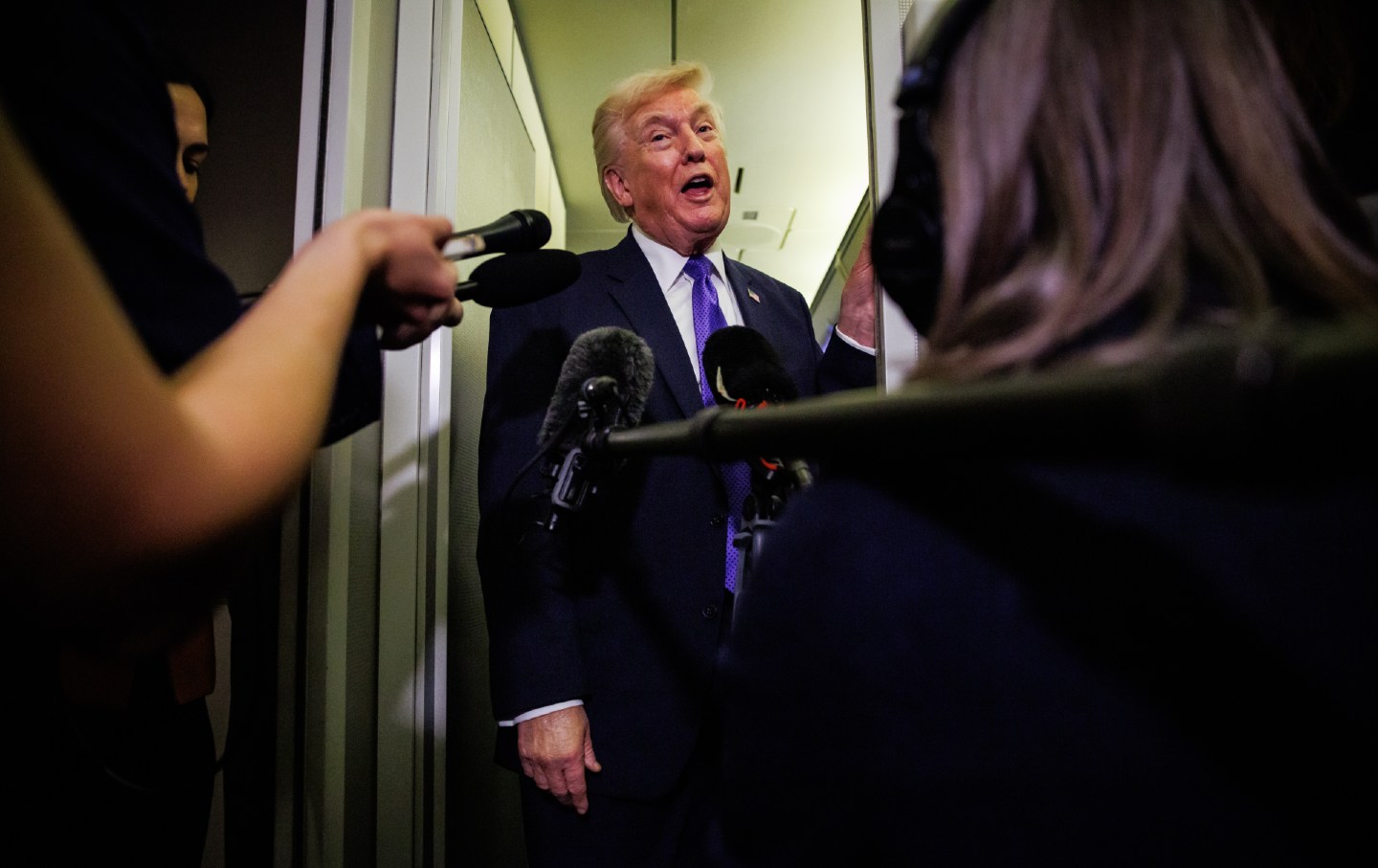
Don’t Let Trump Fool You. The Economy Is Bad, and He Is to Blame. Don’t Let Trump Fool You. The Economy Is Bad, and He Is to Blame.
The Trump administration’s efforts to distract from the bad economy just divert attention from one dumpster fire to another.

Why Elon Musk’s Latest Mega Merger Is Little More than Vaporware Why Elon Musk’s Latest Mega Merger Is Little More than Vaporware
The tech mogul and would-be space pioneer is mashing up his properties once more in a deal that's unlikely to achieve escape velocity .

The Farmland Revolt The Farmland Revolt
America’s farmers are fuming over Trump’s tariffs. Democrats need to channel their anger.

