
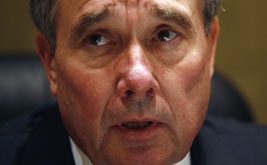
 After assuming the directorship of the Office of National Drug Control Policy in February 2009, Gil Kerlikowske announced that the US would no longer use the term “war on drugs” to describe the government’s approach to controlled substances. In this conversation with Nation reporter Sasha Abramsky in October of this year, Kerlikowske argues that the problem with characterizing his work as a “war” is that “war often has specified enemies…with an outcome, and a win or a loss, and all of those things do not apply very well to the complexity of the drug problem.”
Abramsky’s conversation with Kerlikowske touches on many aspects of Obama’s drug reform agenda, and about the possibility of a more progressive drug policy. Kerlikowske is staunchly against legalization actions in the states—efforts such as California’s Prop 19 campaign, which failed at the ballot this fall—but he says that our drug policy has to strike a balance between law enforcement, prevention and treatment: “It’s not either/or. The president’s strategy is comprehensive, and doesn’t restrict collaboration between law enforcement, prevention and treatment…[We know that] treatment is half the cost of incarceration and could actually keep communities safe.”
For more on possible reforms under the current administration, read Sasha Abramsky’s “Altered State: California’s Pot Economy” in The Nation’s special issue on drug policy. Go here to read a transcript of Abramsky’s conversation with Kerlikowske.
—Joanna Chiu

