
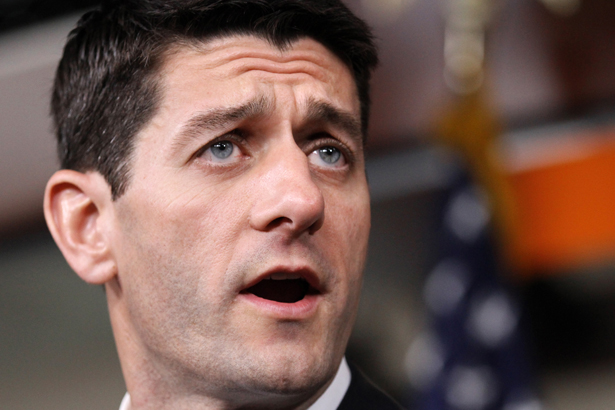
House Budget Committee chairman Paul Ryan Ryan has cited austerity research that was fundamentally flawed. (AP Photo/Jacquelyn Martin.)
Editor’s Note: Each week we cross-post an excerpt from Katrina vanden Heuvel’s column at the WashingtonPost.com. Read the full text of Katrina’s column here.
The austerity claque got it wrong. And the harsh bill is being paid by millions of Americans and millions more in Europe in jobs lost, homes foreclosed, families split apart, hopes crushed.
They can’t repay the costs of their folly. We don’t really need an apology. But could they at least get out of the way so we could get on with the jobs programs that we should have undertaken years ago?
Austerity has been tried and found wanting in practice. Instead of expansion and growth, Europe has been driven back into recession. With Britain’s credit rating downgraded, its economy contracting, its unemployment rolls soaring, its debts rising, three years of rosy forecasts shredded, Tory Chancellor George Osborne’s tears at the lavish funeral for Margaret Thatcher may well have been for the burial of his own reputation. Britain is “playing with fire,” warned the International Monetary Fund’s chief economist, Olivier Blanchard, who told Sky News, “The danger of having no growth, or very little growth, for a long time, is very high. You get a number of vicious circles that come into play.”
Editor’s Note: Each week we cross-post an excerpt from Katrina vanden Heuvel’s column at the WashingtonPost.com. Read the full text of Katrina’s column here.

