
Is 2026 the Year of the Independent?
An unprecedented number of candidates in this year’s midterms are running outside of the two-party system. What’s more, a lot of them could win.
“Our republic has become a political industry dominated by two major corporations, the Republican and Democratic parties,” says South Dakota US Senate candidate Brian Bengs, a retired Air Force officer who has gained considerable traction as an independent challenger to Mike Rounds, a two-term Republican incumbent in one of the reddest states in the country.
Bengs isn’t alone in his frustration with the two-party system. A record number of US voters currently identify as independents: 45 percent, up from 34 percent in 2006, according to a Gallup analysis. Nor is Bengs alone in his bet that rejecting the two big parties is a route to electoral success. An unprecedented number of major candidates are running as independents in the 2026 midterms. Independent Voter News, the tribune of outside-the-box politics, reports that “2026 is seeing one of the largest surges of interest in independent candidates in recent memory.”
This creates a challenge for Democrats, but not as much as it does for the GOP—because most of these contenders have Donald Trump’s increasingly unpopular agenda, and the Republicans who back it without question, squarely in their sights.
America has always had its share of independent and third-party candidates coming from the left, center, and right. But longtime observers say that what’s happening this year feels different. Independents, often with antiestablishment critiques that echo those of US Senator Bernie Sanders, are securing ballot lines from Idaho to Mississippi and beyond.
Why now? Look no further than the bitter experience of Democrats in vast stretches of the West and the Deep South, where competitive statewide elections are increasingly rare. You can drive from the Mississippi River to Oregon, or trace a line from the Canadian to the Mexican border, without passing through a state with a Democratic senator. Some states haven’t elected a Senate Democrat in a generation or more—20 years in Nebraska, 52 years in Idaho, 56 years in Wyoming. That political stagnation has national consequences. A small minority of senators can block constitutional amendments to end gerrymandering or get big money out of politics. Senators from 21 states can band together to sustain a filibuster against popular legislation to feed hungry children or expand the reach of organized labor. And in a year when control of the Senate could be decided by the narrowest of margins, one state could determine whether Trump can add another right-wing judicial activist to the Supreme Court or maintain his war with Iran. If advocates for fairness and accountability cannot compete in whole swaths of the country simply because the Democratic Party’s “brand” has lost its flavor, then the project of upending Trumpism faces high hurdles.
Sanders, the longest-serving independent senator in US history, notes that “there are probably 10, 15 states where the Democratic Party virtually doesn’t exist—despite the fact that there are great progressive activists out there, great working-class activists out there, great trade unionists out there, people who are fighting for justice in every state in this country. And they largely have been ignored” by national Democratic Party donors and leaders. But it also runs deeper than that. In many states, the Democratic “brand” has been so battered that, even with resources and good ideas, the party’s candidates struggle to get their campaigns off the ground.
This is the challenge that Bengs faced in his first Senate bid in 2022, when the lifelong independent decided to run as a Democrat against future Republican Senate majority leader John Thune. Bengs tried to focus on issues where voters were dissatisfied with the GOP. But even when he had a positive encounter, he’d run into the same hurdle. “I’d say, ‘Can I count on your vote in November?’ And the first words out of their mouth were generally, ‘So what are ya?’ And then I would respond, ‘Well, I’m a lifelong independent, but I’m running as a Democrat,’” Bengs recalls. For a reply, “I would get ‘I’ll never vote for a Democrat’—sometimes with an expletive in there as well. And that was it.” Bengs lost by 43 points, carrying just three of South Dakota’s 66 counties. That wipeout was pretty typical in a state that has not elected a Democratic governor since 1974 and where, this year, Democrats have filed to run for just 46 of 105 legislative seats.
The experience convinced Bengs that “I would never do again what I did in 2022. That was just draining and soul-sucking and just beating my head against the wall.” So the lawyer and former college professor struck out on his own, to the vexation of the South Dakota Democratic Party. Now Bengs says he will not caucus with either major party if he’s elected, arguing that “party politics is responsible for our broken government.” Instead, he promises to fight for systemic change to a “zero-sum, winner-take-all political system…where defeating the other party is what matters most.”
The Supreme Court’s destruction of campaign-finance regulations and the rise of unaccountable super-PAC spending has only made it more difficult for outsider candidates to break through. “The Big Money interests funding this partisan warfare are happy with the current political system and its insatiable demand for more of their money, which gives them greater control of elected officials and thus the government,” Bengs states on his campaign website. “Big Money uses this corrupting influence to protect and increase wealth and power for themselves by undermining the political relevance of regular voters.”
That kind of talk is being heard all over the Western United States this year. Many of the independent candidates—including the most prominent, former union leader Dan Osborn, who came close to winning Nebraska’s Senate race in 2024 and is running again in 2026—have been motivated by their deeply rooted nonpartisan convictions. Others are former Democrats. The National Republican Senatorial Committee calls candidates like Osborn “fake Independents who would push liberal Democratic policies in the Senate.”
But many of these independent candidates have taken a tougher line on immigration and gun rights than Democrats in coastal states. Some run to the left of Democrats and Republicans on economics, while others sample from the left, right, and center—often with a dash of libertarianism thrown in. What unites the independents is a recognition that dropping the “D” label makes it easier to build prairie-populist coalitions and defeat the GOP. They are also generally more sympathetic to term limits and much more critical of Democratic leaders such as Senate minority leader Chuck Schumer.
Following Osborn’s dramatically stronger-than-expected finish in 2024, Sanders argued that his campaign was a model for future candidates. “He took on both political parties. He took on the corporate world. He ran as a strong trade unionist. Without party support, getting heavily outspent, he got through to working-class people all over Nebraska,” Sanders said.
After Democrats suffered severe setbacks in the 2024 election, Sanders told The Nation that it was time for the party and progressives to recognize that “where it is more advantageous to run as an independent, outside of the Democratic primary process, we should do that.”
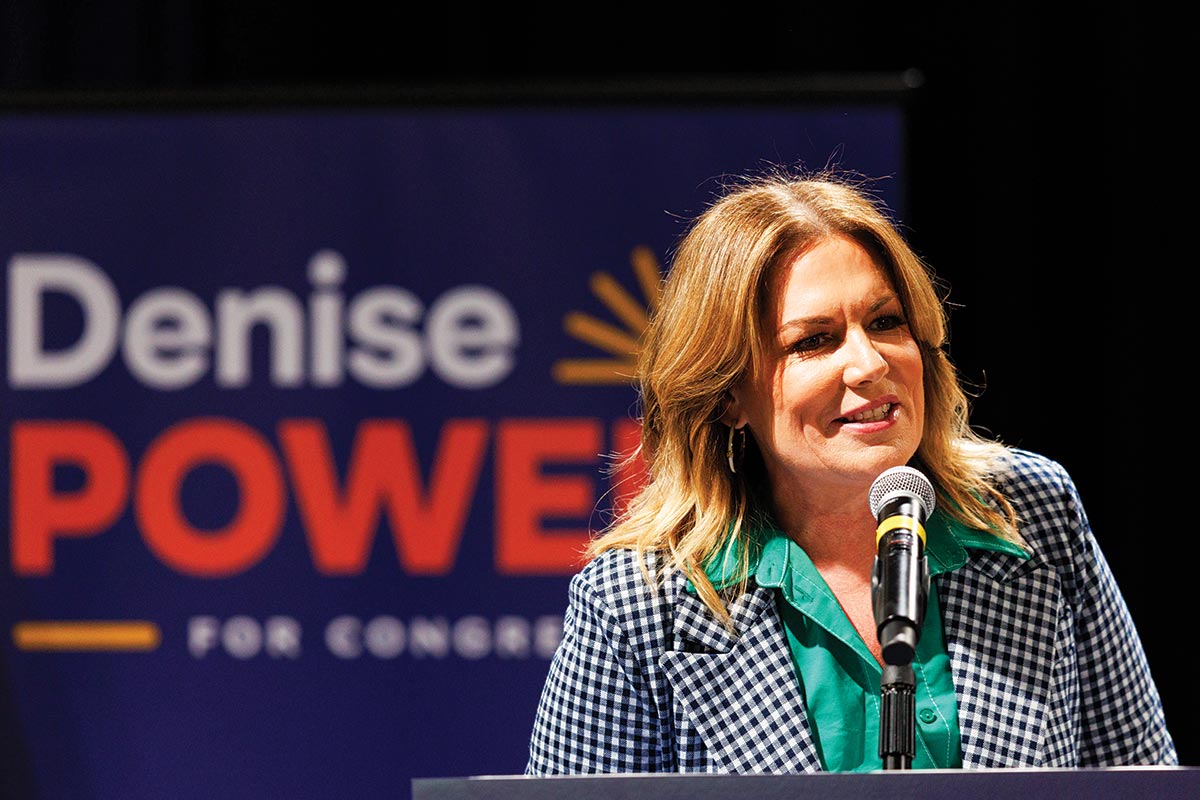
That’s easier said than done. While some Democrats have accepted the notion, others reject it. Osborn is well positioned in Nebraska, where his bid has been embraced by the state Democratic Party. Party chair Jane Kleeb said on X, “We believe a coalition of Dems, Indys and Republicans can beat [GOP incumbent Pete] Ricketts and break up the one-party rule. We like the odds of a mechanic vs a billionaire.” In July, Nebraska Democratic Senate nominee Cindy Burbank dropped out to clear the way for Osborn, just as Alaska Democratic House candidate Matt Schultz quit and endorsed independent Bill Hill. In South Dakota, Democrat Julian Beaudion suspended his bid in early August. But that is not the case everywhere. In Montana, for instance, independent Seth Bodnar is backed by several prominent Democrats but still faces a Democratic rival in November, as well as a Trump-backed Republican.
Should any of the independents overcome the odds and succeed this fall, they could play a critical role in upending the balance of power in the Senate, where the GOP holds 53 seats to the Democrats’ 47 (a number that includes two Democratic-aligned independents, Sanders and Maine’s Angus King). The Democrats might not automatically benefit, as most independents in the Western states say they won’t caucus with either party. But the headache for the Republicans would be worse, with candidates like Osborn pledging to “take on the corporations and their chosen political lapdogs to restore economic liberty and fairness for the working Americans who make this country run.”
That message from Osborn has resonated in Nebraska, where he’s running neck and neck with the incumbent, Pete Ricketts, a reliable Trump ally and the son of billionaire TD Ameritrade founder Joe Ricketts, who was hand-picked in 2003 by the state’s former governor to fill an open Senate seat. A May 2026 survey by a Democratic-aligned polling firm put Osborn five points ahead of Ricketts and suggested that the challenger will get 92 percent of Democratic votes; he also leads among independents by a 62–20 margin and has garnered 14 points among Republicans and 17 points among self-identified 2024 Trump voters.
Osborn is breaking through as a critic of Trump’s so-called One Big Beautiful Bill Act and his war in Iran—while also backing abortion rights and taking a more nuanced position on immigration enforcement than most Republicans. But he remains focused on “paycheck populism,” directing a palpable fury at union-busting corporations and agribusiness monopolies that shutter plants in Nebraska. Texas Senator Ted Cruz traveled to Nebraska in June to label Osborn “a left-wing Democrat,” an echo of when Trump called Osborn “a radical-left person, a Bernie Sanders–type Democrat” in a campaign video for Osborn’s 2024 opponent. But Osborn will not appear on the November ballot with a “D” after his name—and that could make all the difference.
Democrats in DC often scratch their heads when they see polls showing that voters in historically Republican states favor taxing the rich, regulating corporations, strengthening unions, and protecting Social Security, Medicare, and Medicaid—even while electing Republicans who oppose all those priorities. Nebraskans approved a referendum for a $15-an-hour minimum wage in 2022, on the same day that conservative Republicans swept the statewide and congressional races. In 2024, Montanans voted to add abortion-rights protections to their state’s Constitution, even as they rejected the pro-choice Democratic Senator Jon Tester’s reelection bid. In Idaho, petitions with 110,000 signatures have been filed this year to force a referendum that could codify abortion rights in the state.
What Democratic loyalists often fail to take into account is that patterns of partisanship—some decades old, some developed since Trump upended our politics—can overwhelm ideology and, quite frequently, logic. States that once sent liberal lions like Idaho’s Frank Church and South Dakota’s George McGovern to the Senate no longer give Democrats a chance, just as Republicans struggle to compete in former GOP bastions across New England and along the West Coast. But what if Western and Southern voters are given a chance to vote for populist economics—and against forever wars—without having to tick Democratic boxes on their ballots? Could that create a new political dynamic in historically uncompetitive red states?
That’s the question Osborn started asking in 2024 and that’s now being asked by independent House and Senate candidates from Alaska to Mississippi. They are doing so at a turbulent moment when the upheaval that Trump has brought to American politics has reframed partisanship in this country, leading to a situation in which Republicans are under pressure from the president to march in lockstep with his agenda, and Democrats are under equally immense pressure to fall into line as a one-size-fits-all opposition to an erratic and dangerous executive. But tens of millions of Americans bristle at rigid partisan politics.
James Madison warned more than two centuries ago that the nation’s burgeoning democracy would be ill-served by a factionalized partisanship in which “the public good is disregarded in the conflicts of rival parties, and…measures are too often decided, not according to the rules of justice and the rights of the minor party, but by the superior force of an interested and overbearing majority.”
Despite such warnings, the drafters of the Constitution established a haphazard system that was quickly corrupted by partisans. After 1854, when the Republican Party was formed, the two-party system became firmly entrenched—and things have mostly stayed that way ever since. Republicans and Democrats have fought bitterly over the years, yet they have usually been on the same page regarding their duopoly, recognizing that, while they might have to divide power between themselves, they didn’t necessarily have to share it with anyone else.
Entire books have been written on the barriers to independent and third-party candidacies. In states across the country, independents often face staggering requirements to qualify as candidates—including daunting signature demands and tight deadlines for petitions—as well as the prospect of being placed in a hard-to-find spot on the ballot. The hurdles to getting onto the debate stage are high, and the media is inclined to cover two-party horse races rather than the competition of ideas. More than 100 years ago, Eugene V. Debs, the labor leader who ran for president five times on the Socialist Party line, said of his major-party rivals, “They are opposed to each other on no question of principle but purely in a contest for the spoils of office.”
In such a rigged system, third parties and independent movements in the United States are rarely recalled as anything more than momentary blips on the political radar. Most other democracies have robust multiparty systems, usually with their own major parties but also with politically viable minor parties that win places in parliaments, form coalitions, and influence policy. For too many Americans, on the other hand, elections are not a question of which party to enthusiastically support but which party they most despise—a real but limited choice between “the lesser of two evils.” And the tough reality for the Democrats in a number of red states is that most voters hate them more than they do the Republicans.
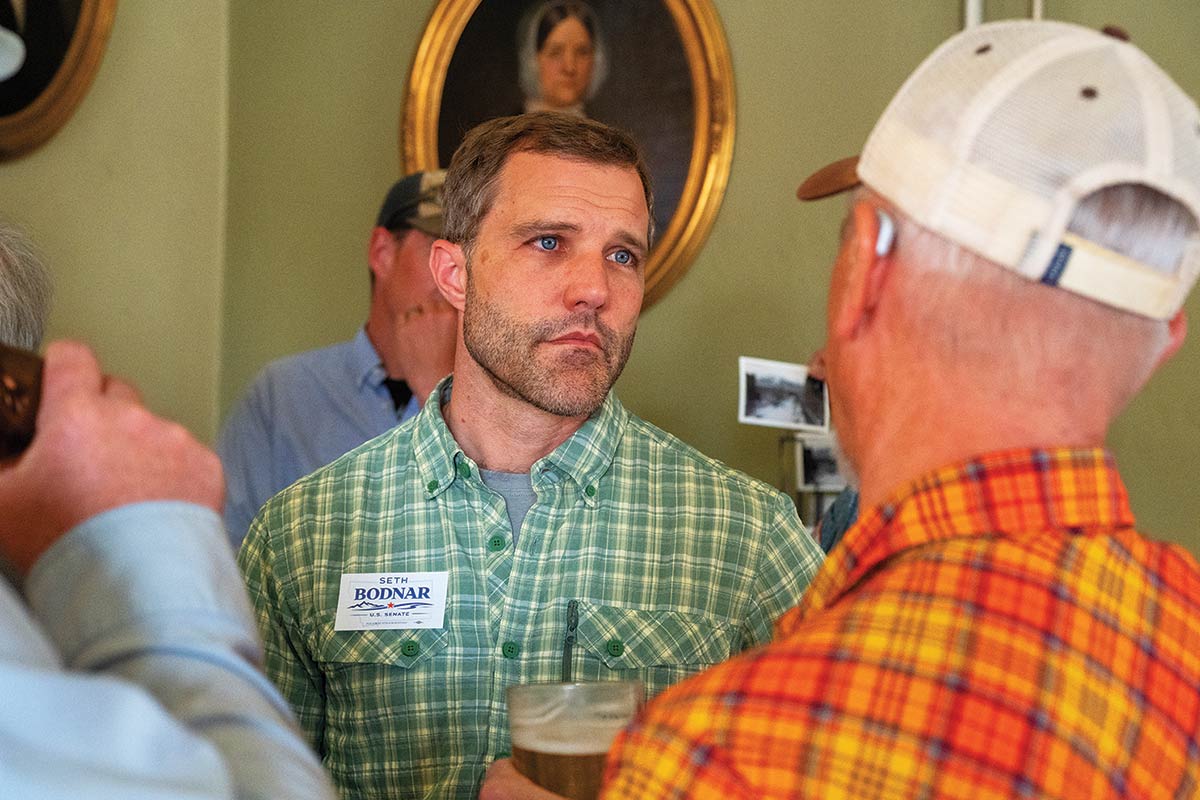
Jon Tester, who represented Montana for 18 years as a rural Democrat with a populist streak, lost his bid for a fourth Senate term in 2024 at least in part because his party label had become toxic. Republicans and their allies have fueled this toxicity by pouring tens of millions of dollars into crude and intentionally divisive campaigns that lie about immigrants, trans people, and diversity programs. But Democrats have not helped themselves by failing at the national level to position themselves as allies of farmers and rural Americans. Whatever the exact reason for the party’s unpopularity, Tester says he’s witnessed a real shift since he first ran for the Senate in 2006. “During my last two races, the Democratic Party was poison in my attempts to get re-elected,” he wrote in a widely circulated text message earlier this year. “That is not to say that is the only reason I got beat in 2024…but it was [a] hell of an anvil.” This year, Tester is backing Bodnar, a Rhodes scholar who served the past eight years as president of the University of Montana.
Bodnar and other red-state independents are distinct from the blue-state candidates who’ve sought independent ballot lines, such as the Chicago Alderman Byron Sigcho-Lopez. The democratic socialist filed to run as an independent after US Representative Chuy García chose not to seek reelection at the last minute, securing the Democratic line for a García aide. Illinois officials have moved to block bids by Sigcho-Lopez and another independent.
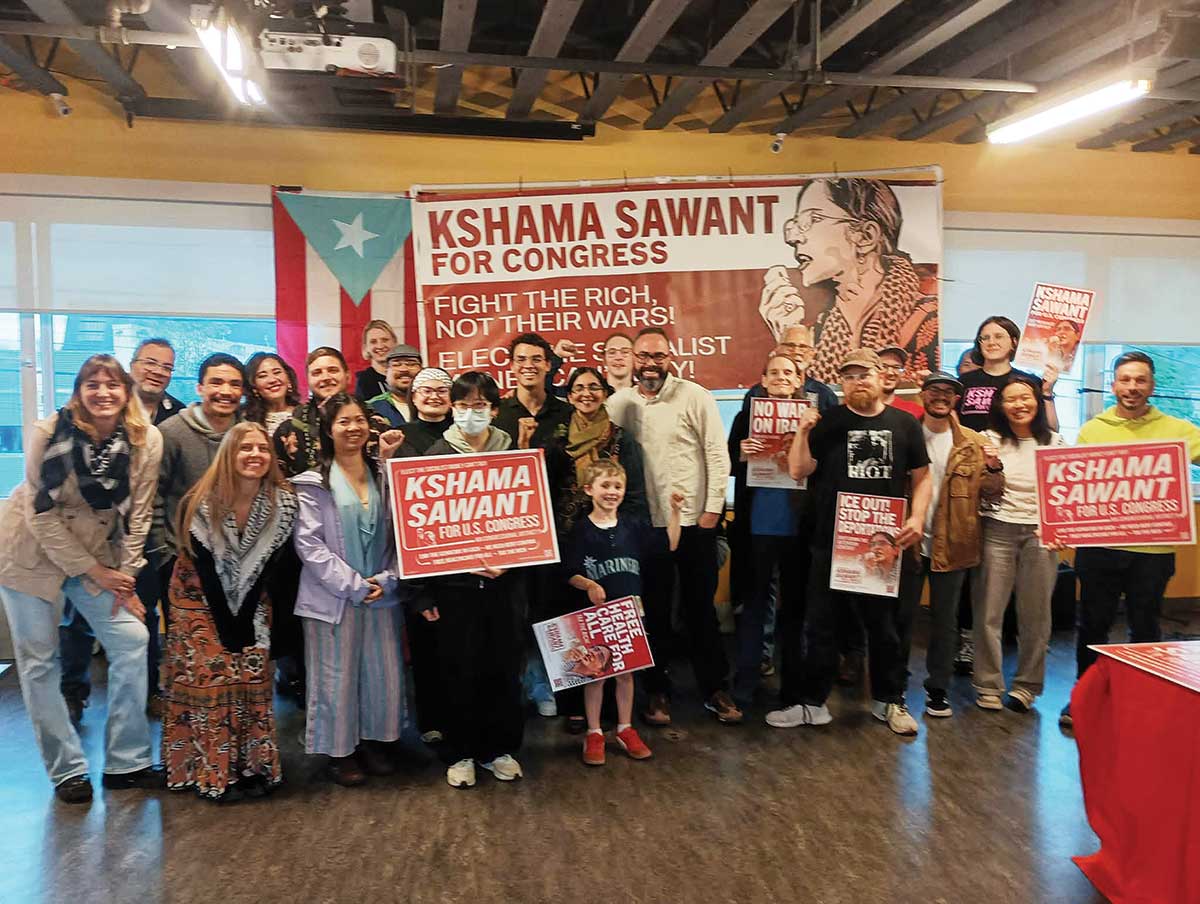
Another candidate running as an independent this year was the former Seattle City Council member Kshama Sawant, who points out, “I’m a revolutionary socialist—I’ve always run as an independent.” She’s challenging Democratic US Representative Adam Smith, the ranking member of the House Armed Services Committee, with the mission of “building the strongest anti-war, anti-genocide election campaign in the nation.” The Stranger, an influential Seattle outlet, gave her campaign a boost in early July when it announced, “Kshama Sawant has the best chance of unseating incumbent Rep. Adam Smith, the unapologetic AIPAC darling whose weapons industry funding and long pro-war career have made him a pariah in his own district.” But Sawant fell short in a multi-party August primary that picked two November candidates.
Plenty of progressive Democrats and reformers have brought antiestablishment messages into the 2026 party primaries, including members and allies of the Democratic Socialists of America who have beaten incumbents and won open-seat contests from New York City to Colorado. But for many of this year’s independent candidates, frustration with the Democratic Party’s deference to the billionaire class has reached a breaking point.
“Ever since the [2010] Citizens United decision, billionaires and super PACs have been able to buy access, write policy, and drown out the voices of everyday working people. It’s not a government of, by, or for the people anymore; it’s a government bought and paid for by the highest bidder. And I refuse to be part of that,” says Ty Pinkins, a Mississippi lawyer who was the state’s 2024 Democratic nominee for the US Senate but this year is running as an independent. Pinkins announced his exit from the Democratic fold in a scathing 2025 essay in which he recalled the party’s response when he started thinking about challenging the Republican incumbent, Cindy Hyde-Smith, in 2026. “The first question, over and over and over again, was, ‘How much money do you have? How much have you raised?’” he wrote. “Not values. Not vision. Just dollars.” Pinkins now faces Hyde-Smith and Democratic jurist Scott Colom in November.
The independents say that the money race has excluded candidates—and even entire states—from the calculations of party strategists. Todd Achilles, a former Idaho Democratic legislator, says he is running as an independent Senate candidate this year because the Democratic Party “has given up on little red states like Idaho.”
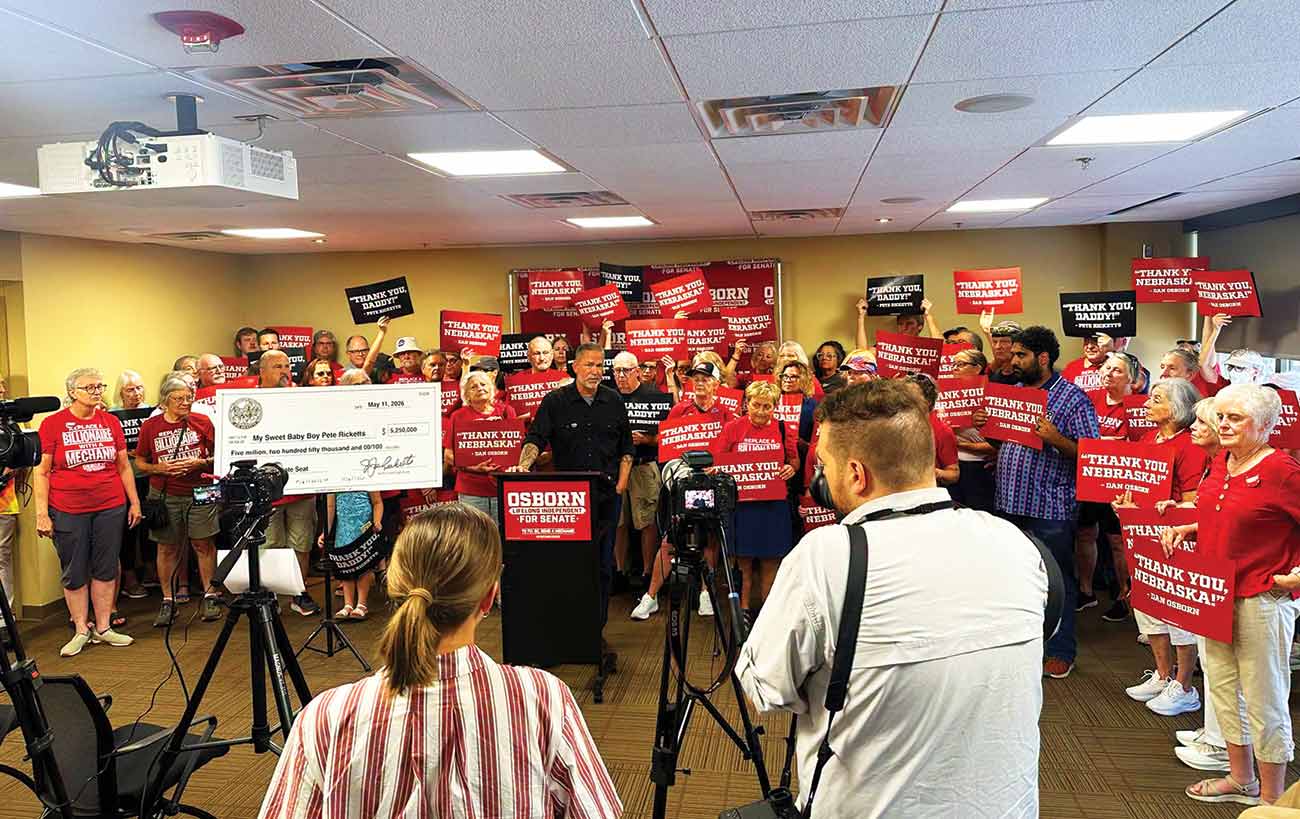
This frustration with both Democrats and Republicans is what inspired Osborn, who in 2024 won 46 percent of the vote for an independent challenge to Republican Senator Deb Fischer. Now back on the ballot in 2026, Osborn is telling Nebraskans that he’s running for the Senate because he wants to “challenge the system.” That’s a popular message: A recent Economist/YouGov poll found that 62 percent of Americans think the country is headed in the wrong direction, while just 30 percent said it’s moving in the right direction.
But Osborn’s critique goes far beyond the objections raised by Democratic candidates about the failure of a Republican-controlled Congress to check and balance the president’s kingly abuses of power. In Osborn’s case, the challenge is to the Democrats themselves, and to an American political process that has historically limited voters’ options to a pair of entrenched but not particularly well-liked parties.
Osborn rips into both parties for all “the millionaires” in Congress who are “working for the billionaires and doing their bidding.” An industrial mechanic by trade, he led members of the Bakery, Confectionery, Tobacco Workers and Grain Millers International Union Local 50G in a nationally recognized strike at a Kellogg’s plant in Omaha in 2021. “I feel like there is still an appetite for my brand of politics,” he says. “I still believe that we need more champions for people who work for a living. I don’t think we have enough of that.”
Voters appear to agree. The number of Americans who identify as independents is now almost twice that of either major party. Trump’s miserable second term has led many independents who backed Republicans (including Trump himself) just a few years ago to lean toward the Democrats as the 2026 midterms approach. But as a Gallup analysis points out, “these party shifts do not indicate that Americans are warming to the Democratic Party. In fact, favorable ratings of the Democratic Party are no better than those of the Republican Party, and are among the worst Gallup has recorded for the Democratic Party historically.”
The inability of the Democrats to lock in an advantage even in the midst of Trump’s failed presidency cannot be severed from the frustration voters have with money in politics and its corruption of policy on everything from healthcare and gas prices to the development of AI data centers.
Sixty percent of voting-age Americans now say billionaires have too much influence on the politics of the country, according to a recent Politico survey. The poll also found that 39 percent of adults believe that money has the power to buy election results, and another 34 percent say it can significantly influence who and what gets on the ballot.
“People understand that the political system in this country is largely corrupt—both parties,” Sanders says. “Why is that? You know the answer. The answer is that you have billionaires in both political parties [who] determine what legislation gets to the floor and who is the candidate.”
This fall’s election results will help determine whether it’s possible to break these patterns. Osborn argues that now is the time “to create a coalition that the state of Nebraska’s never seen before…under one umbrella, with the idea and the truth that working-class people deserve a seat at the table in the United States Senate.”
Become a Sustaining Donor This September
Between the reemergence of right-wing red-baiting and Donald Trump’s use of the chilling National Security Presidential Memorandum–7 to criminalize left political organizing, we’re seeing McCarthyism reborn before our eyes.
This assault on democracy cannot be ignored or wished away. Resisting it requires bravery in the face of threats and repression, a steadfast commitment to the truth, and the unwavering belief that we can—and will—overcome this darkness.
We must have an independent media that sets the record straight, unearths corruption and abuses of power, and advances a politics of justice and dignity for all if we’re to win this fight.
That’s why I’m writing to you today. This September, The Nation needs to add 100 monthly donors to sustain our progressive journalism. Your contribution makes the next investigative report, the next truth-speaking column, and the next pathbreaking essay all possible.
I hope you’ll support our work with a recurring donation today. If you donate $10 or more a month, we’ll send you a brand new “Hands Off the Free Press!” sticker to recognise your commitment to our cause. Please, donate today.
Onward,
Katrina vanden Heuvel
Editor and Publisher, The Nation
More from The Nation
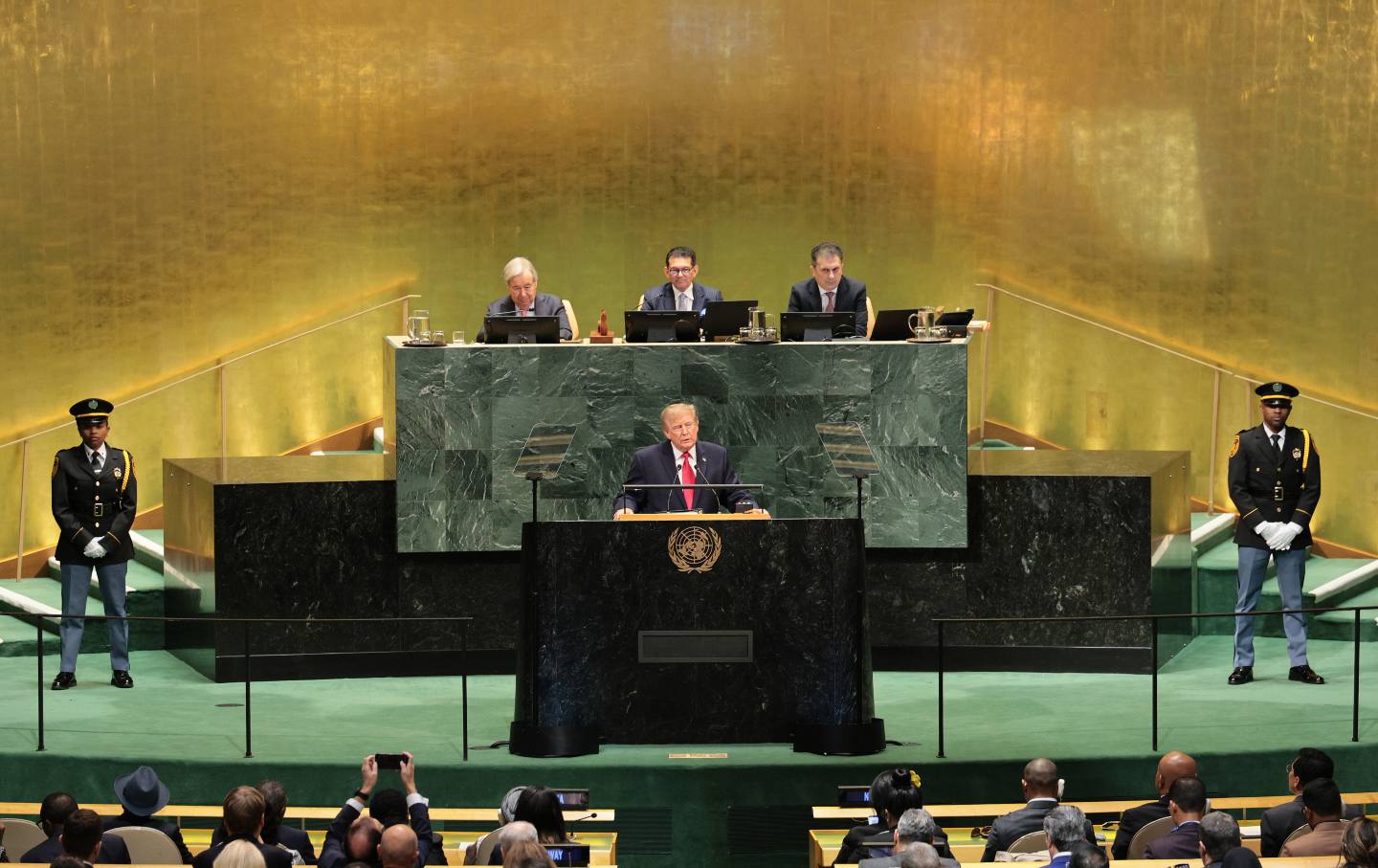
Trump Impersonated Hitler at the United Nations Trump Impersonated Hitler at the United Nations
It was just one more of many examples of the president mirroring a fascist leadership.
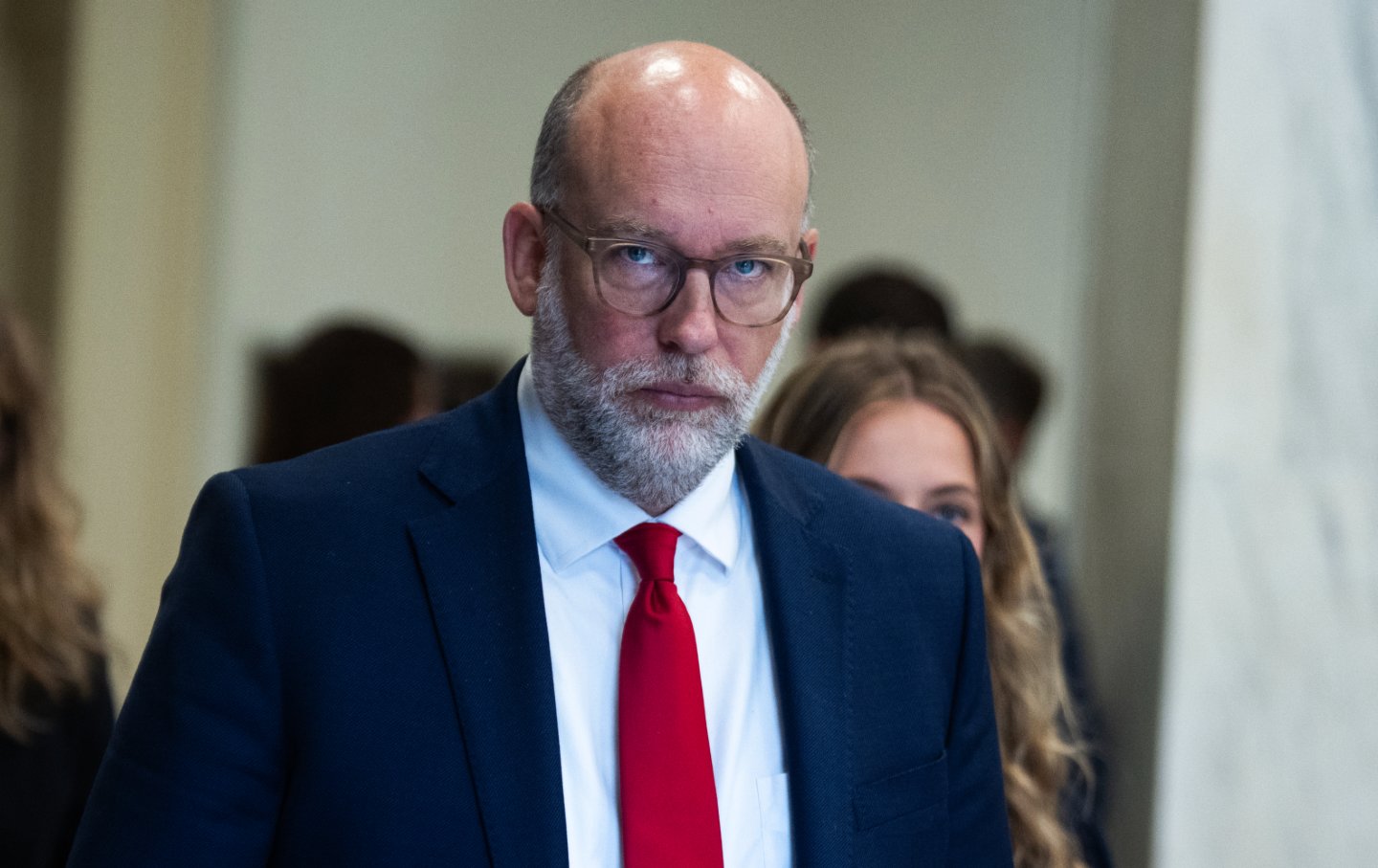
Trump Is Destroying Public Health. Democrats Need to Fight Back. Trump Is Destroying Public Health. Democrats Need to Fight Back.
If they win in the midterms, the party must move quickly and aggressively to undo the harm Trump and his cronies have caused.
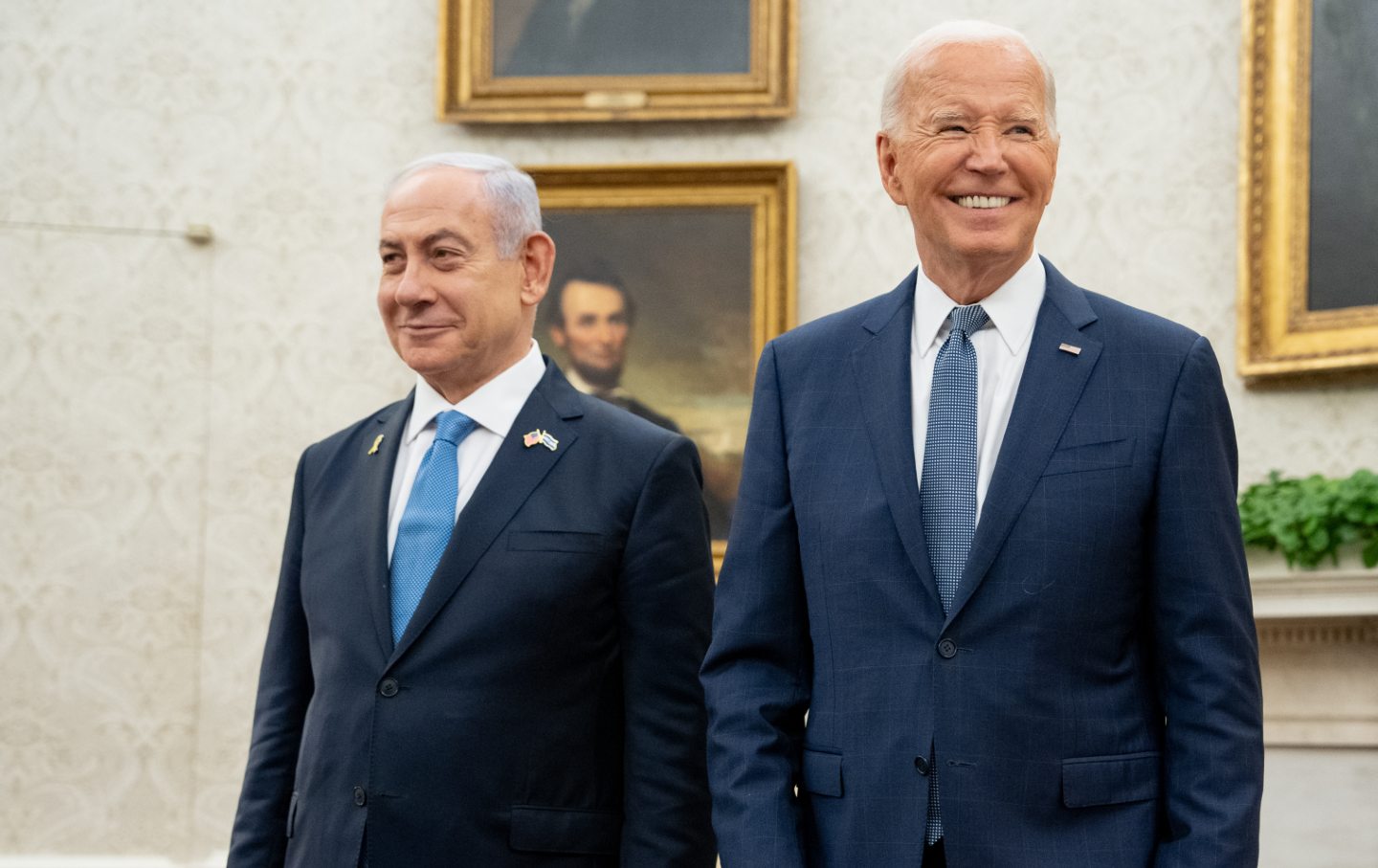
How Joe Biden Helped Cause a Genocide in Gaza How Joe Biden Helped Cause a Genocide in Gaza
An interview with reporter Akbar Shahid Ahmed about his new book, “Crossing the Red Line.”
A Premature Farewell to the Ignominious Speaker Mike Johnson A Premature Farewell to the Ignominious Speaker Mike Johnson
If Democrats win the House in the midterms, as expected, Mike Johnson won’t hold the gavel in any meaningful way again.
Transphobia Isn’t Winning Votes. But It Is Making Our Lives Much Worse. Transphobia Isn’t Winning Votes. But It Is Making Our Lives Much Worse.
Trans people must now live out another election cycle knowing our friends, family, coworkers, and neighbors are being flooded with agitprop designed to dehumanize us.

