
Trump’s Plan for “Taking” Cuba
“I can do anything I want with it,” the president says. Can he?
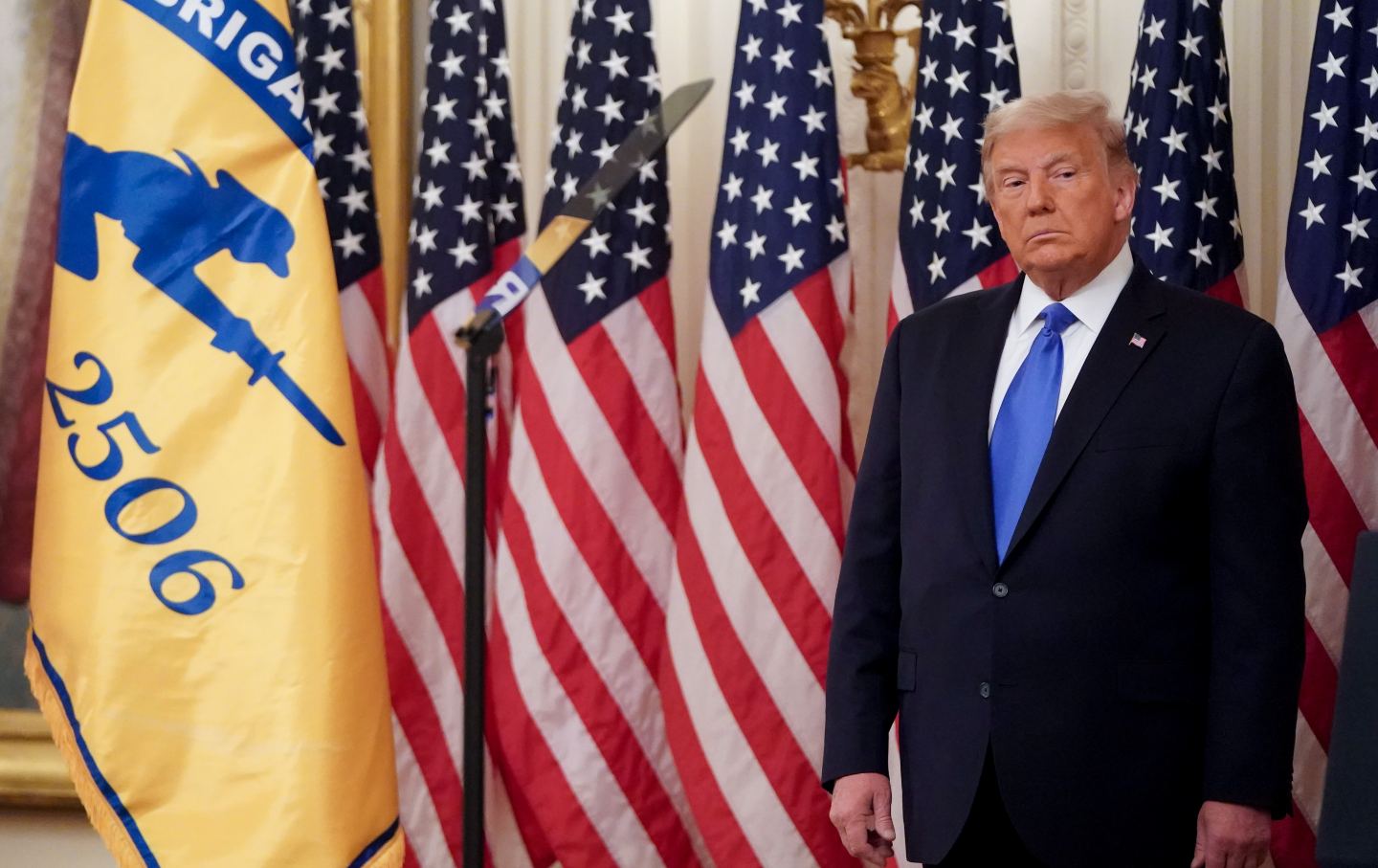
“You know, all my life I’ve been hearing about the United States and Cuba. When will the United States do it?” Donald Trump mused to a gaggle of reporters gathered in the Oval Office this week, flaunting his power to lord over other nations. “I do believe I’ll be having the honor of taking Cuba. That’d be good.” Taking Cuba? asked a Fox News reporter. “Taking Cuba in some form, yeah,” Trump declared. “I mean, whether I free it, take it, I think I can do anything I want with it, [if] you want to know the truth.”
An aspiring emperor needs an empire. Trump seems to have settled on the Western Hemisphere as his imperial domain, as laid out in his National Security Strategy. The liquidation of regimes that Trump regards as adversaries began with Venezuela, and now Cuba is in the crosshairs.
Trump’s brazen claim that he can do anything he wants with Cuba is typical of his audacious bluster, but this time it cannot be discounted. He has Cuba over the proverbial barrel… and literally barrels of oil. After cutting off Venezuelan oil shipments, Trump threatened to sanction any other country sending oil to Cuba, imposing a complete oil blockade on the petroleum-dependent island.
While Washington is strangling the Cuban economy, behind the scenes the two countries are engaged in the delicate dance of back-channel diplomacy—an effort which could, conceivably, result in a “deal,” rather than a war. As president of the United States, Trump’s leverage is his ability to inflict pain on other countries— through tariffs, economic sanctions, and high explosives. In international relations, this is called “coercive diplomacy.” On the street, it is called extortion. Having cut off Cuba’s oil supply, Trump no doubt believes he can make Cuban leaders “an offer they can’t refuse.”
But what the Vatican calls a “dialogue-based solution” offers some slim hope that Cuba might avoid Venezuela-style surgical strikes or a massive Iran-style military attack. Depending on how negotiations unfold, Cuba could emerge with duress-induced economic reforms that portend a better future for the Cuban people, who are currently suffering one of the worst humanitarian crises their country has ever endured.
Contours of a Deal
Almost every day for a month President Trump has openly stated that “we are talking” to “high level” Cubans and that he expects to make a deal. “They want to make a deal, and so I’m going to put Marco [Rubio] over there and we’ll see how that works out,” he told CNN on March 5. This weekend he once again told reporters, “I think we will pretty soon either make a deal or do whatever we have to do.”
Making a “deal” requires sensitive negotiations. For that reason, back-channel talks are usually conducted in the utmost secrecy, to avoid political pressures that could undermine their success—an inherent danger in any effort between Washington and Havana to change relations. Unlike Trump, the Cubans took their obligations of confidentiality seriously, repeatedly denying that they were engaged in a secret negotiation with the United States, despite Trump’s claims and multiple media reports to the contrary.
But in a rare press conference on March 13, President Miguel Díaz-Canel finally admitted that the two sides were quietly talking. “These are processes that are carried out with great discretion; they are long processes that must begin by establishing contact, creating opportunities for dialogue, and fostering a willingness to engage in dialogue,” Díaz-Canel noted. “[A]gendas are built, negotiations begin, conversations take place, and agreements are reached.”
High-level talks have been taking place between Secretary of State Marco Rubio’s senior advisers and Raúl Castro’s 41-year-old grandson, Col. Raúl Guillermo Rodríguez Castro. “Raulito,” as he is known in Cuba, is in charge of his grandfather’s security. Rodríguez Castro’s international business connections, through the military business conglomerate GAESA that his father ran before his unexpected death, appear to have caught the attention of US officials who view him as “representing younger, business-minded Cubans for whom revolutionary communism has failed,” according to Axios, “and who see value in rapprochement with the US”
When and how Rubio and Raulito began their back-channel communications remains unknown. But at least one meeting with a Rubio deputy took place on the island of St. Kitts during the meeting of the Caribbean Community—CARICOM—on February 25; the discussion focused on economic reforms Cuba would implement in return for the Trump administration’s progressively lifting various sanctions on oil, trade, and travel that are currently suffocating the Cuban economy.
Indeed, rather than toppling Cuba’s Communist government, the Trump administration appears to be far more focused on opening Cuba’s economy to US investment and restoring Washington’s pre-revolution position as the dominant influence over the island nation—“regime compliance rather than regime change,” as The New York Times describes US goals.
To provide Trump with a symbolic victory, the Times reported, the administration has “signaled to Cuban negotiators that the president [Díaz-Canel] must go” as part of any deal. Cuba will have to change its leadership to address US concerns, as Secretary Rubio stated publicly this week. “They’re in a lot of trouble, and the people in charge, they don’t know how to fix it, so they have to get new people in charge.”
Sacrificing Díaz-Canel to such imperious demands is a concession that the Cuban Communist Party leadership is unlikely to make. But to advance the secret negotiations, the Cuban government has already taken steps responsive to other US interests. On May 12, Díaz-Canel announced that Cuba would be freeing 51 prisoners—a human rights gesture intended to create good will. During his press conference the next day, the Cuban president extended an olive branch to the Cuban diaspora, vowing “to welcome them, listen to them, assist them and provide them with a space to participate in economic and social development.” Deputy Foreign Minister Oscar Pérez Fraga has since announced that US and Cuban Americans investors will soon be able to financially engage in the Cuban private sector ventures, own businesses and property on the island, and even partner with state enterprises.
This initiative addresses one of Trump’s oft-voiced demands: for his wealthy Cuban-American friends in Miami to be able to return to the island. Opening the Cuban economy to such foreign investment is a long-overdue and much-needed reform. Cuban American participation would quickly build an influential constituency for lifting the embargo and removing Cuba from the State Department’s Terrorism list, which imposes severe restrictions on international banking and financial transactions. “As the Cuban authorities recognize our rights to be part of the Cuban nation, to participate in the economic transformation and the potential political reforms of the future,” Cuban American entrepreneur Hugo Cancio said in an interview, “we will be the ones that will change Washington.”
Obama 2.0: Carrots vs Sticks
“This is not the first time we’ve had conversations like this,” President Díaz-Canel stated during his March 13 press conference. “During the Obama era we had similar talks, and now we are having them again.” Indeed, after two years of furtive meetings in Canada and Mexico and at the Vatican between White House officials and Raúl Castro’s representatives, Obama and Castro dramatically announced a new rapprochement on December 17, 2014. In an attempt to make this historic accord “irreversible,” President Obama traveled to Havana to exactly ten years ago, on March 20, 2016. “I have come here to bury the last remnant of the Cold War in the Americas,” Obama announced to much applause during a major speech at Havana’s Grand Theater. “I have come here to extend the hand of friendship to the Cuban people.”
Obama’s goals were not unlike Trump’s: to expand US economic interaction with Cuba and bolster the growth of private-sector development with expectations that Cuba’s economic transformation would eventually lead to political transformation as well. But Obama’s approach was civil and respectful, based on the concept of “positive engagement.” In short order, the opening to Cuba reestablished official diplomatic ties, lifted restrictions on US travelers, restored commercial air service, licensed US corporations to do business, and produced 22 agreements on issues of mutual interest, among them cooperation on counterterrorism, counter-narcotics, environmental protection, public health, and orderly immigration. A national security review of Obama’s engagement policy, conducted during the first months of Trump’s presidency in 2017, determined it was successfully advancing US interests.
Trump abrogated the rapprochement agreement anyway. “I am canceling the last administration’s completely one-sided deal with Cuba,” he declared at the time. “Our policy will seek a much better deal for the Cuban people and for the United States of America.”
In stark contrast to Obama, who offered the carrots of normalized US-Cuba relations, Trump prefers the big sticks of US power; his methods to secure “a better deal” can only be characterized as collective punishment. Since seizing control of Venezuela’s oil industry in January, he has terminated oil exports from that country to Cuba, while intimidating Mexico, Russia, and other oil exporters into halting their petroleum shipments as well. US strategy has been to strangle Cuba’s energy supply such that the lights literally go off, economic activity shuts down, and people go hungry. “Without energy, there can be no economy, no education, no healthcare, no food production,” says Jorge Piñón, the leading expert on Cuba’s oil needs. “If you don’t have that engine, the rest of the country collapses.” Fulfilling that prophecy, this week the national electrical grid suffered a “complete dislocation,” as Cuban authorities described the grid’s failure, plunging the entire country of 10 million people into darkness for hours.
As if depriving a nation of fuel and electricity were not cruel enough, the Trump administration has also attacked one of Cuba’s last remaining sources of hard currency—its international medical services program. Under Secretary Rubio’s supervision, the State Department has implemented a “Freedom Framework for Self-Sufficient Healthcare in the Americas”—a plan to coerce some 14 countries in the Western Hemisphere to eject the Cuban medical workers in return for US assistance to modernize their national healthcare programs. Over the last several weeks, Honduras, Jamaica, and Guyana have all succumbed to US pressure to terminate the services of hundreds of Cuban doctors and technicians who were providing medical care for their citizens.
By design, the result of Trump’s tightened sanctions has been a catastrophic humanitarian crisis that is worsening by the day. Dire shortages of fuel, electricity, food, refrigeration, transportation and basic health services are taking a devastating toll on the Cuban people. “Doctors here say across the country people are dying because of the fuel crisis,” NBC News reported from Havana this week on the impact on Cuban hospitals. Food insecurity is also spreading, according to a recent report by the International Crisis Group (ICG). “Cuba is confronting the most acute humanitarian crisis and greatest threat to its political status quo in decades,” the ICG stated, because of the US cutoff of oil.
The Return of the Platt Amendment
During his Havana speech, President Obama spoke directly to President Castro in the audience: “I want you to know, I believe my visit here demonstrates you do not need to fear a threat from the United States.” The United States, Obama asserted, “has neither the capacity, nor the intention to impose change on Cuba.”
But a short decade later, Trump’s United States does have both the capacity and intention to impose change on the island. And Trump has made it clear that Cuba’s leadership should fear an escalating threat from Washington. As a credible warning, he has already set the examples of Venezuela, where US special forces killed 32 Cuban security and intelligence personnel, and Iran, where the US and Israel assassinated the Iranian leadership and continue to rain death and destruction on that country. Cuban leaders cannot escape the reality that both Venezuelan and Iranian leaders were engaged in negotiations with Washington when the impatient president of the United States ordered surprise military strikes.
Popular
“swipe left below to view more authors”Swipe →Yet a “dialogue-based solution,” backed by the pope and major countries such as Mexico still offers the best hope for Cuba’s future. To find common ground, Cuba’s leadership may have to make uncomfortable concessions, especially on economic issues, and will have to navigate the dangerous waters of Trump’s arrogance and imperial pretensions if they hope to avoid the ominous danger of not satisfying his demands. “It may be a friendly takeover, it may not be a friendly takeover,” Trump warned in early March. “They’re going to make either a deal, or we’ll do it, just as easy, anyway.”
To be sure, Cubans have faced such threats from the colossus of the North before, and not just after the revolution, when they resisted and survived CIA-led paramilitary invasions, assassination plots, and the trade embargo aimed at overthrowing their revolutionary government. The seeds of this conflict date back to the beginning of the 20th century when President William McKinley, whom Trump admires, went to war with Spain to free Cuba from colonial rule. US troops occupied the island, forcing the Cubans to concede to the Platt Amendment and become a client state. The legislation locked in economic concessions to US investors, granted Washington rights in perpetuity to the Guantánamo naval base, limited Cuba’s relations with third countries, and gave the United States “the right to intervene for the preservation of Cuban independence” and “the maintenance of a government adequate for the protection of life, property, and individual liberty.” Cuba escaped the fate of Puerto Rico, which the United States claimed as its territorial possession, but it became a de facto colony nevertheless—until 1959 when Cuban nationalism powered Fidel Castro’s dramatic revolution.
With his imperious policy to “do anything I want” with Cuba, Trump is brazenly reenacting this imperialist history. But Cubans spent almost 100 years fighting for their national sovereignty, first against Spanish colonialism and then against US neocolonialism. They will not surrender it easily.
Support independent journalism that does not fall in line
Even before February 28, the reasons for Donald Trump’s imploding approval rating were abundantly clear: untrammeled corruption and personal enrichment to the tune of billions of dollars during an affordability crisis, a foreign policy guided only by his own derelict sense of morality, and the deployment of a murderous campaign of occupation, detention, and deportation on American streets.
Now an undeclared, unauthorized, unpopular, and unconstitutional war of aggression against Iran has spread like wildfire through the region and into Europe. A new “forever war”—with an ever-increasing likelihood of American troops on the ground—may very well be upon us.
As we’ve seen over and over, this administration uses lies, misdirection, and attempts to flood the zone to justify its abuses of power at home and abroad. Just as Trump, Marco Rubio, and Pete Hegseth offer erratic and contradictory rationales for the attacks on Iran, the administration is also spreading the lie that the upcoming midterm elections are under threat from noncitizens on voter rolls. When these lies go unchecked, they become the basis for further authoritarian encroachment and war.
In these dark times, independent journalism is uniquely able to uncover the falsehoods that threaten our republic—and civilians around the world—and shine a bright light on the truth.
The Nation’s experienced team of writers, editors, and fact-checkers understands the scale of what we’re up against and the urgency with which we have to act. That’s why we’re publishing critical reporting and analysis of the war on Iran, ICE violence at home, new forms of voter suppression emerging in the courts, and much more.
But this journalism is possible only with your support.
This March, The Nation needs to raise $50,000 to ensure that we have the resources for reporting and analysis that sets the record straight and empowers people of conscience to organize. Will you donate today?
More from The Nation
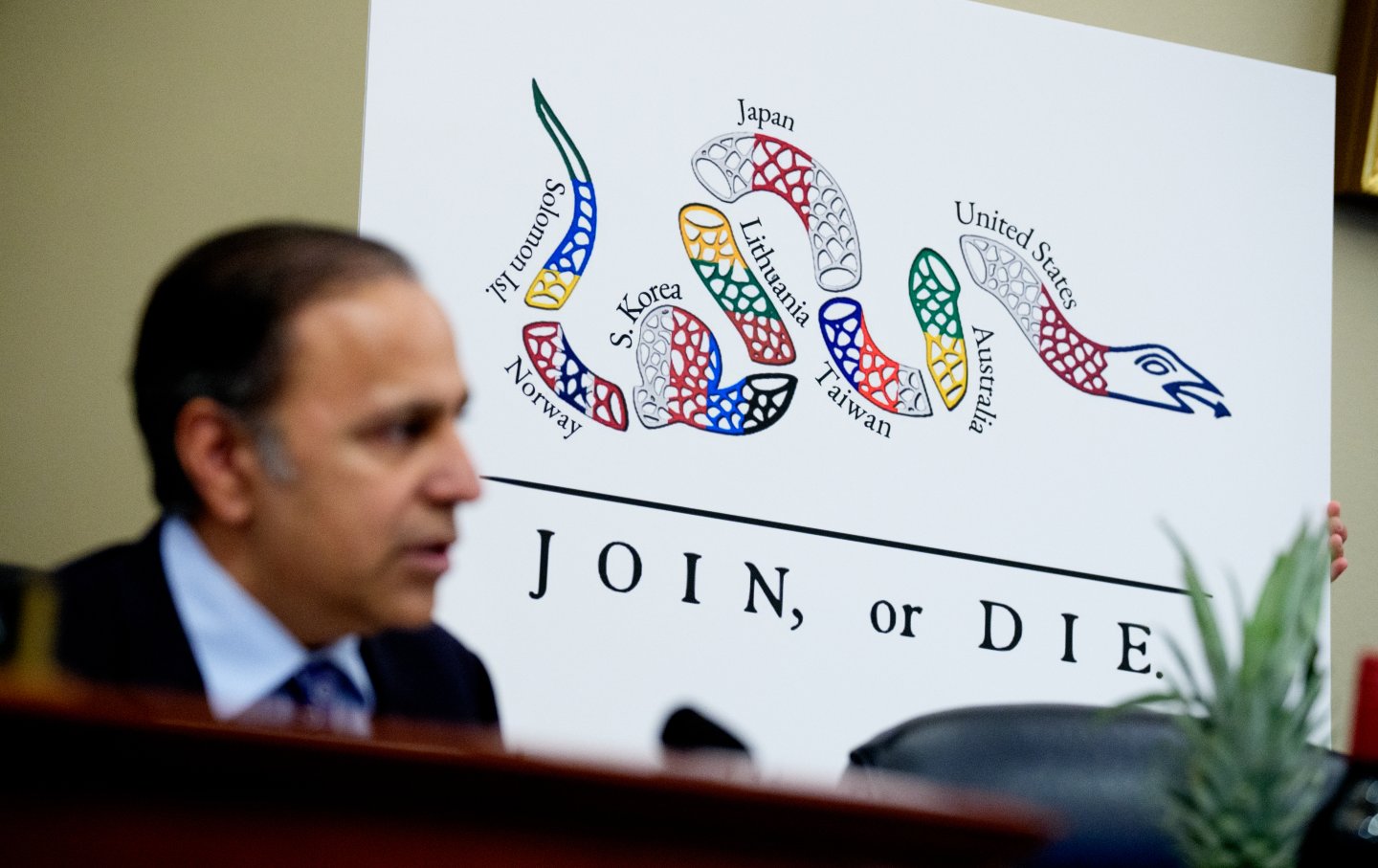
Democrats Have a Chance to Offer a Smarter China Policy. Will They Take It? Democrats Have a Chance to Offer a Smarter China Policy. Will They Take It?
It’s time to pursue a more pragmatic strategy—one that prioritizes domestic strength, targeted competition, and continued engagement.

In Ukraine, Weaving Grief Into a New Collective Memory In Ukraine, Weaving Grief Into a New Collective Memory
After four years of war, Ukrainians are reckoning with irreparable loss and finding ways to persist in the face of it.
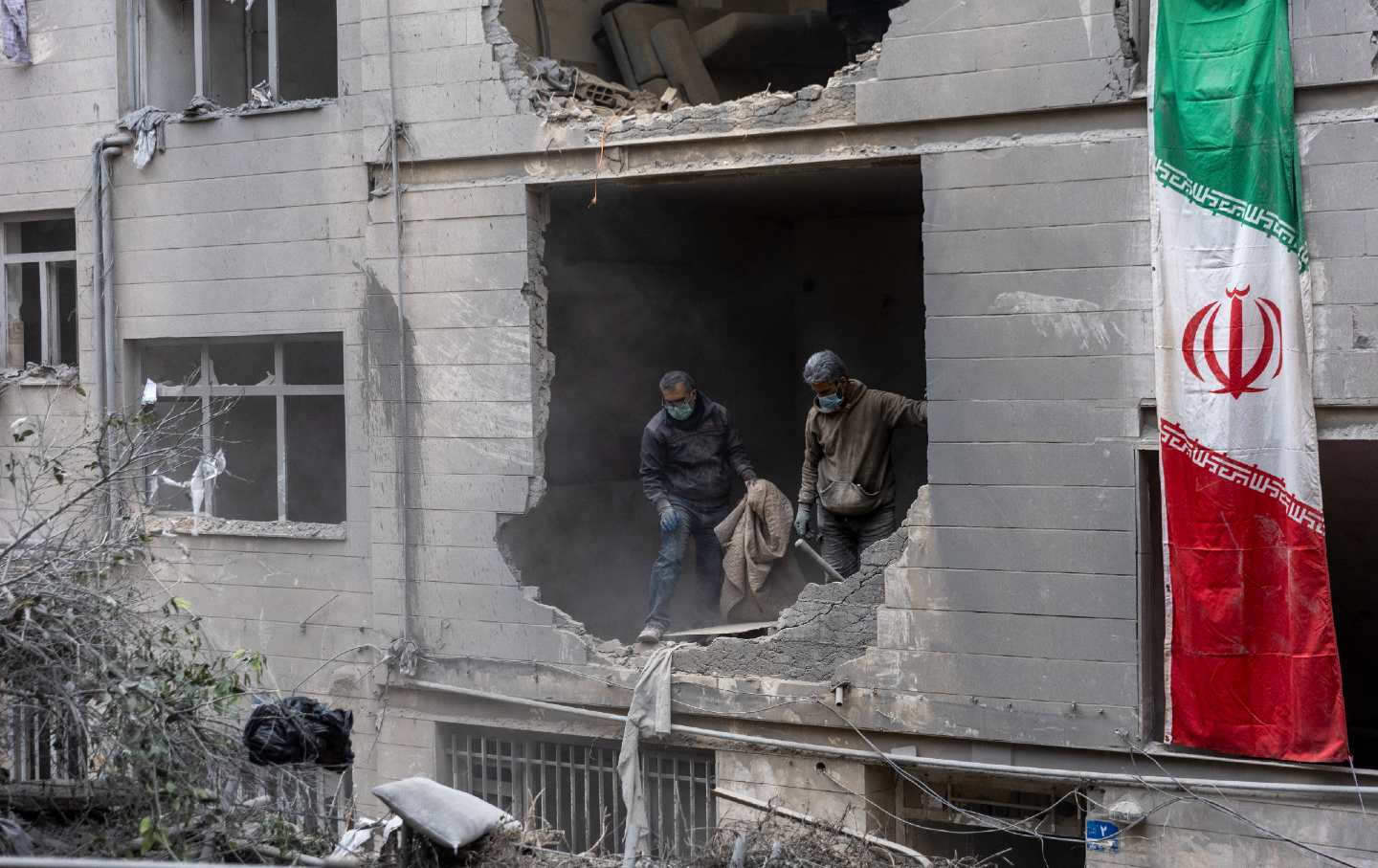
Getting Iran Wrong, to the Nth Power Getting Iran Wrong, to the Nth Power
Trump’s unhinged war in Iran is but an escalation of our willful misapprehension of the country’s history and makeup.
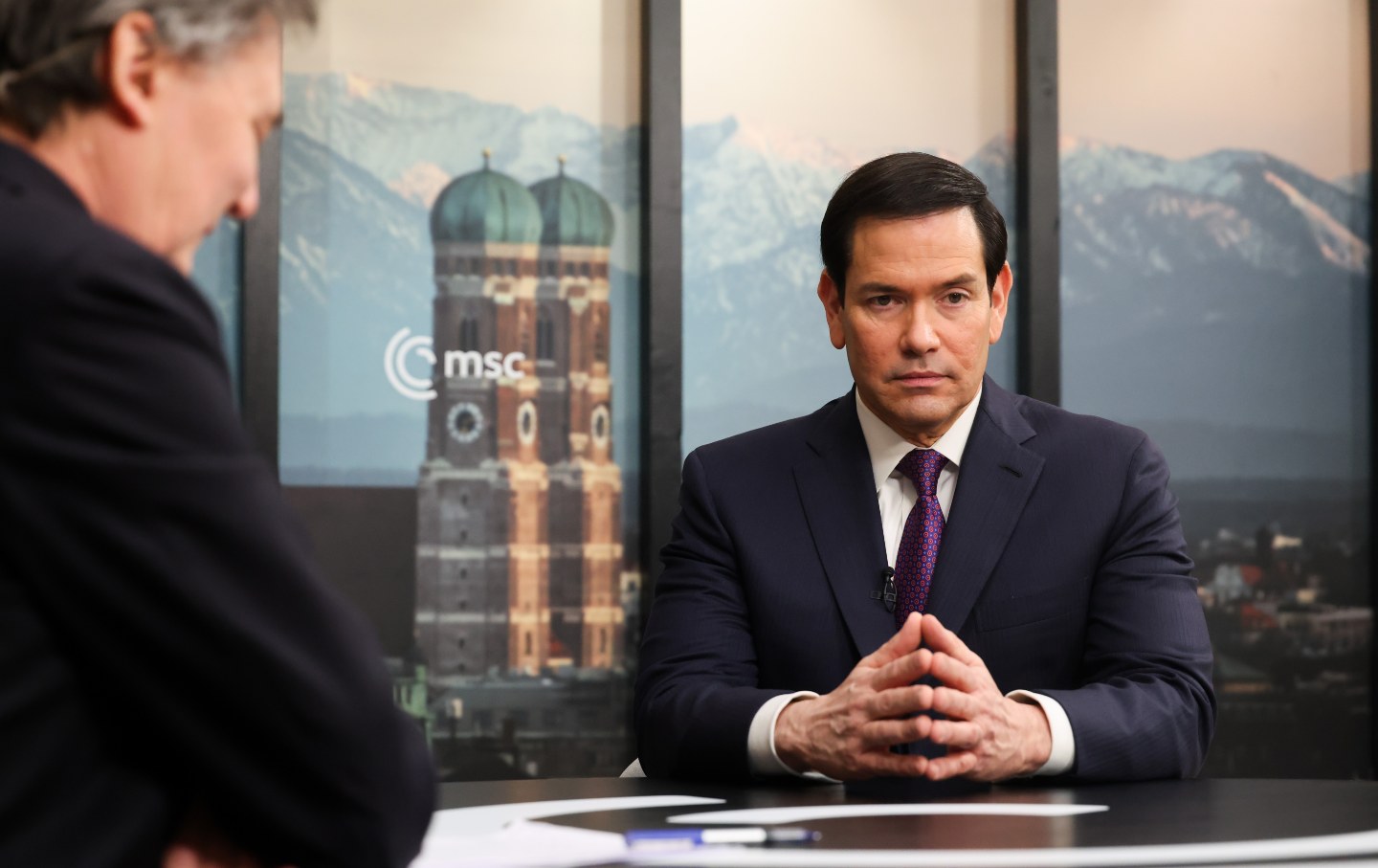
Trump’s National Security Strategy Is a Blueprint for White Nationalism Trump’s National Security Strategy Is a Blueprint for White Nationalism
Trump’s foreign policy reasoning mirrors the crackpot logic of a runaway authoritarian.
The Iran War Is America’s Own Suez Crisis The Iran War Is America’s Own Suez Crisis
The recent US military assault on Iran looks like past desperate bids to reclaim fading imperial glory.

