Hunter Biden and the Future of Clemency
Biden knows there is a better way to use it—other people’s children also deserve mercy.
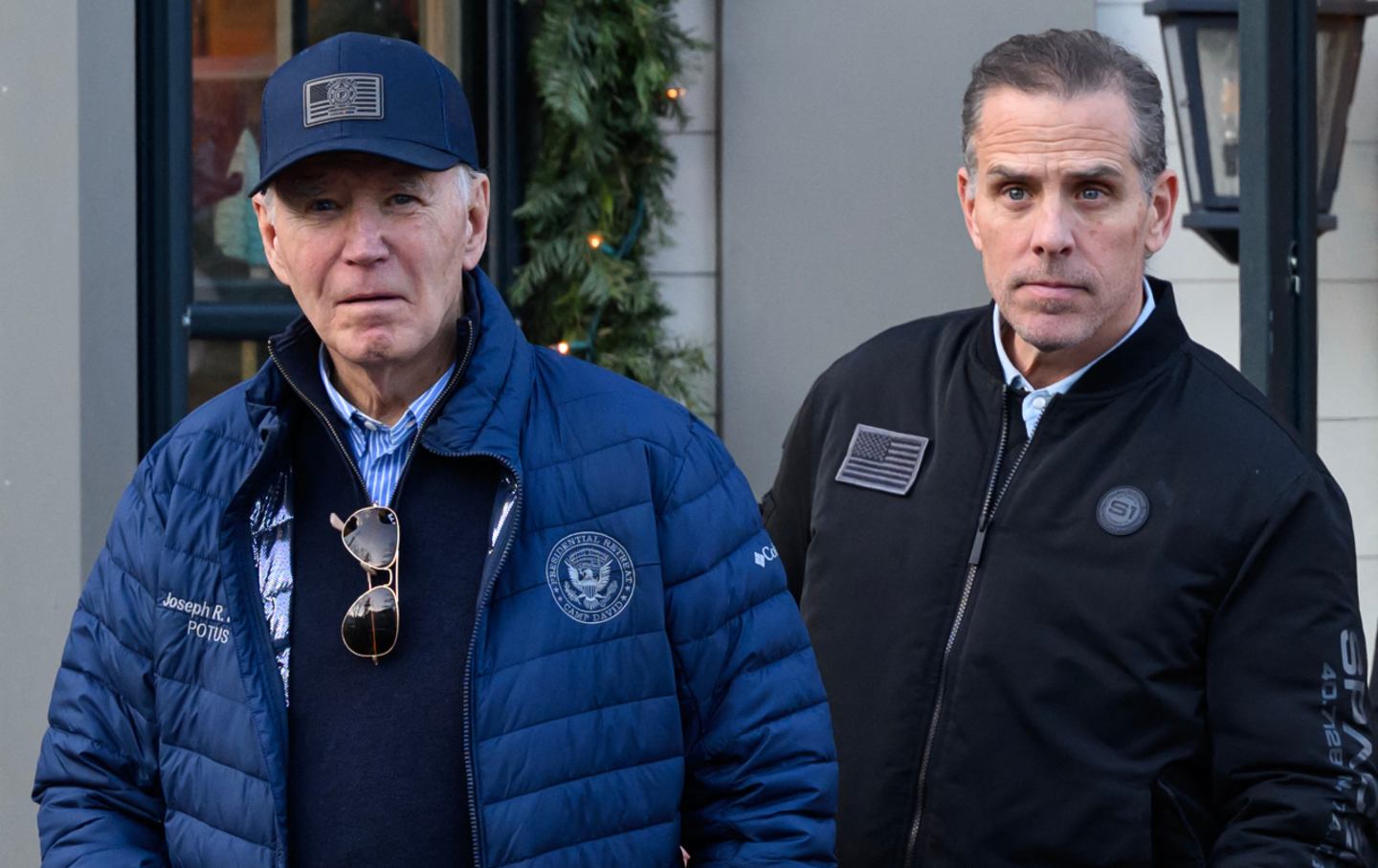
President Joe Biden’s December 1 pardon of his son Hunter was singular and startling. It stands alone among modern clemency grants because of the family relationship involved, the breadth of the grant, the broken promise not to do it, and the isolation of the grant from other clemency decisions. Much as Bill Clinton is still remembered for his pardon of Marc Rich, decades from now Joe Biden will carry the unfortunate weight of this single moment. He can mitigate the damage, though, by using his remaining weeks to employ the pardon power in a principled and assertive way to make thousands of grants in a wave of deserved forgiveness.
People related to recent presidents (Bill Clinton’s half-brother, Roger; Ivanka Trump’s father-in-law, Charles Kushner) have gotten clemency—but none of them were as close a relation as a president’s son. Biden made no secret of the emotional basis for his pardon: In the statement he made explaining it, he concluded by saying, “I hope Americans will understand why a father and President would come to this decision.” Remarkably, and probably intentionally, he put “father” before “President” in that sentence.
The breadth of the grant was stunning, too, and probably crafted in anticipation of further pursuit of Hunter Biden by the incoming Trump administration. The pardon’s language provides a “full and unconditional pardon.… For those offenses against the United States which he has committed or may have committed or taken part in during the period from January 1, 2014, through December 1, 2024.” On its face, this covers even federal crimes that are unknown at this time. The only comparable grant was given to Richard Nixon, and that covered a shorter time period—something Biden’s staff might have been aware of, as the formal language pardoning Hunter Biden tracked the language used by Gerald Ford to relieve Nixon of potential prosecution.
Biden’s insistence for months that he would not give a pardon to Hunter was both awkward and unnecessary. In June of 2024, Biden was unambiguous when interviewed by David Muir of ABC News, and as recently as early November, his press secretary denied for the sixth time that a pardon would be issued. They could have just said that they had not addressed the issue or that clemency decisions were something Biden would focus on later (sadly, a true statement given that he rarely used the power in his time in office).
Obviously, Biden was either lying or changed his mind. Even with that, he should have issued the grant in a much more principled way, showing that Hunter was not the only one for whom Biden had compassion—that he was truly acting as not only a father but also as a president. He could have bundled Hunter Biden’s pardon with pardons and commutations for hundreds or thousands of other deserving people who actually followed the rules and filed a petition with the pardon attorney, petitions that were (unlike Hunter Biden’s) thoroughly reviewed and recommended for a grant. It’s likely that there are several hundred such petitions at the White House, given the age of pending petitions and the hard work of Pardon Attorney Liz Oyer and her staff. By the pardon attorney’s most recent numbers, there are 9,378 pending petitions for clemency right now. Biden has granted only 157 (25 pardons and 132 commutations of sentence), a historically low grant rate for modern presidents.
Biden knows that there is a better way to use clemency than to replicate the “friends and family” approach adopted by Donald Trump in his first term. He was an eyewitness to Barack Obama’s principled (if incomplete) clemency initiative that gave freedom not to family members or cronies but to hundreds of unknown but deserving petitioners serving overly long narcotics sentences.
We and other clemency advocates have been urging him to use this authority from the beginning of his time in office, and although it would have been preferable for him to have prioritized this from the outset, there is still time for him to do better. In September, we highlighted the easiest categories for grants: petitions that already have a positive recommendation from the Pardon Attorney; commuting all federal death sentences to life sentences; extending his marijuana pardon to those convicted of distribution offenses; and giving permanent relief to people already out under the CARES Act, an emergency measure passed during the pandemic that provided temporary release to vulnerable incarcerated people. He could do still more, like providing relief to the elderly individuals who cannot get compassionate release because they fall under an old law regime of parole that is never granted in practice.
Whatever the specific package, he needs to be bold. Hunter should be one of thousands. He can, and should, leave behind a legacy of compassion that extends beyond his own son. Other people’s children also deserve mercy.