Scared of E. Coli? Donald Trump Should Terrify You.
During his presidency, Donald Trump worked to deregulate food safety—a deadly idea—and he has promised to roll back more protections if he is elected again.
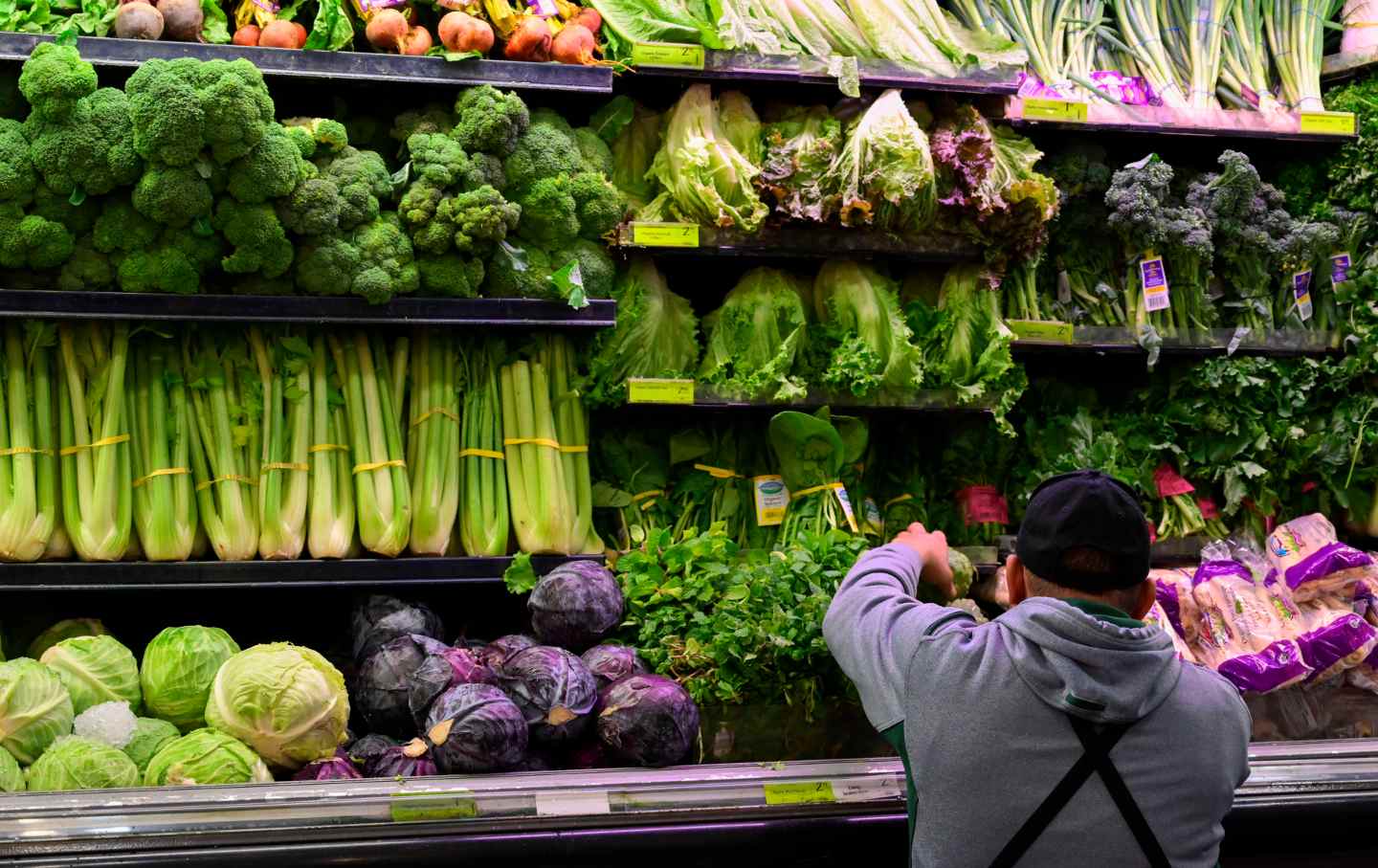
A produce worker stocks shelves at a supermarket in Washington, DC.
(Andrew Caballero-Reynolds / AFP via Getty Images)
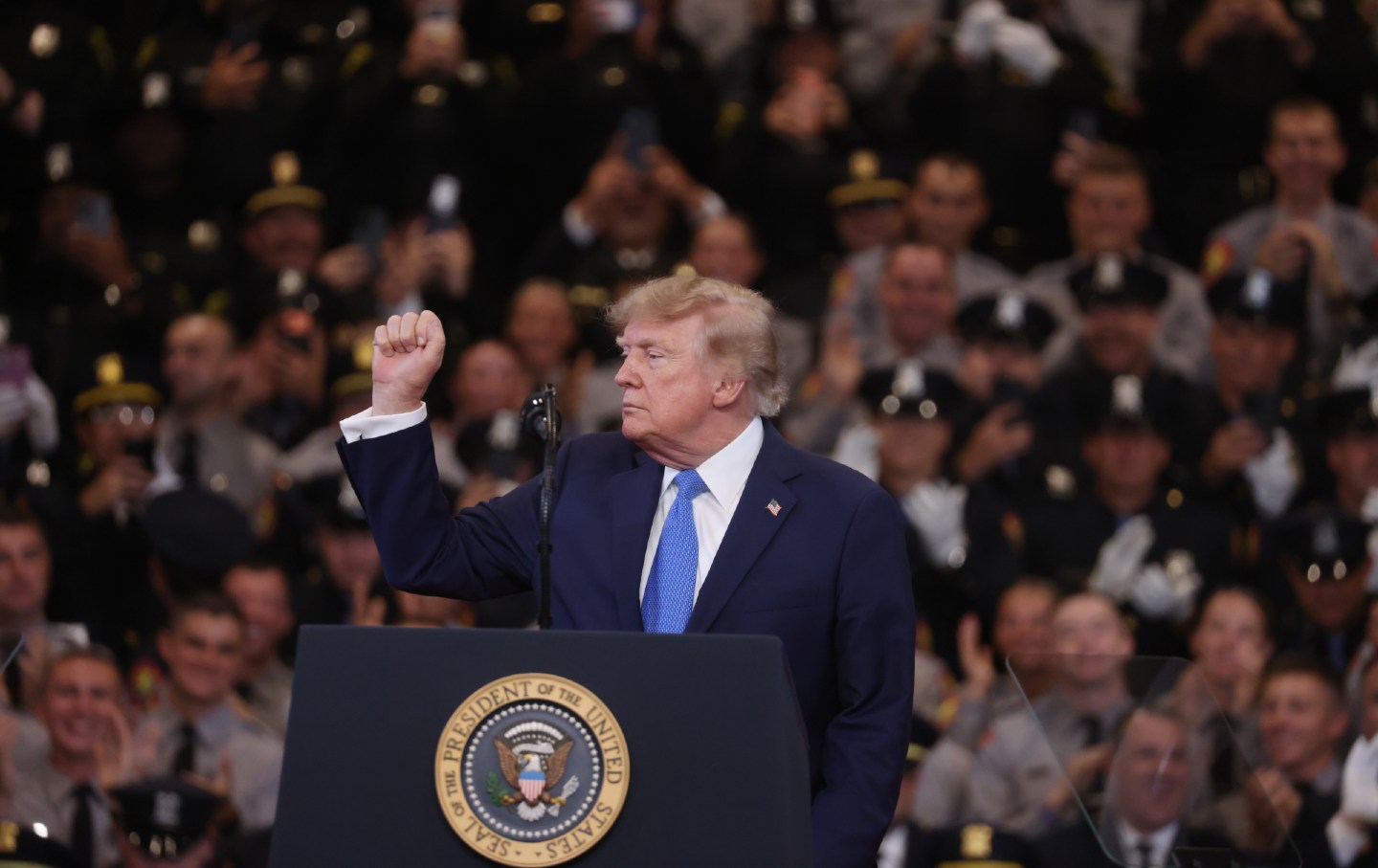
Last weekend, former president Donald Trump made a campaign visit to a McDonald’s. Days later the US Centers for Disease Control and Prevention issued a food safety alert about deadly E. coli linked to the fast-food chain. So far, the outbreak has sickened at least 75 people in 13 states, sending 22 to the hospital and killing one. This outbreak is part of a broader wave of food safety recalls that has been on the rise recently, impacting everything from waffles to deli meat.
These recent tragedies are only the tip of the iceberg. The CDC estimates that each year roughly one in six Americans (or 48 million people) gets sick, 128,000 are hospitalized, and 3,000 die of food-borne diseases. Almost everyone reading this has been made sick, or knows someone who has, from contaminated food.
When it comes to food safety, deregulation is a terrible and deadly idea. This is a huge issue that will take time and money to solve. But one thing is for sure: A second Trump presidency would make this problem much, much worse. During his presidency, Donald Trump worked to deregulate our food safety laws, and he has promised to continue doing so by rolling back regulations if he is elected again.
Former President Trump has a clear track record on this issue, and it isn’t good. His administration dramatically reduced funding for food safety, proposing deep cuts to the Food and Drug Administration—including proposing cutting $83 million specifically for food safety. For all of Trump’s bluster about China, he actually negotiated a dangerous trade deal that allowed China to import chicken into the United States without its having to be labeled as such for American consumers, despite long-standing concerns about China’s poultry farming and slaughter operations. Finally, after significant lobbying, the Trump administration allowed hog slaughter plants to speed up processing, which experts at the time said might increase the likelihood of disease outbreaks. It is no surprise that independent analysis found that food safety enforcement plummeted under the Trump administration.
It has been widely reported that if he is elected, Trump’s team plans to use Project 2025 (an extensive policy document produced by the Heritage Foundation) as a blueprint—and Project 2025 calls for even greater rollbacks on food safety. It calls for downsizing the US Department of Agriculture, removing federal safeguards on selling meat from state-inspected facilities across state lines, and more. The recent E.coli outbreak is just one example of the harm these policies would do. State inspectors have no ability to recall tainted food sold elsewhere—leading to harmful and costly delays in recalls. Chefs, food professionals, and Americans across the country agree that we don’t need to weaken rules, capacity, or enforcement of commonsense food safety regulations.
Many of us remember how Trump’s focus on deregulation brought deadly consequences during the Covid-19 pandemic, when he put the CEO of a meatpacking company on the Economic Advisory Council and reopened a slaughterhouse that was closed because of an outbreak. In 2021, a House of Representatives subcommittee reviewing the coronavirus pandemic found plants owned by five major meatpacking companies accounted for at least 59,000 Covid-19 cases and 269 deaths. Trump’s mismanagement of the pandemic was a failure of leadership in many ways, and the consequences hit home in states across the country who depend on responsible regulations and food safety for their industry and to ensure the health and trust of consumers.
By contrast, during the peak of the Covid-19 pandemic, then-Senator Kamala Harris introduced the Closing the Meal Gap Act of 2020 and the bipartisan FEMA Empowering Essential Deliveries Act. The first bill expanded Supplemental Nutrition Assistance Program benefits for Americans in need during the pandemic. The second allowed the federal government to partner with small and midsize restaurants and nonprofit organizations to provide nutritious meals to vulnerable individuals. But her efforts did not end there.
Vice President Kamala Harris and President Biden dedicated $1 billion in their American Rescue Plan to expansion of independent processing capacity, including over $100 million to increase local capacity and increase competition in the sector. They have made historic investments in workforce training for meat and poultry processing workers, invested in lending programs that help small poultry and meat processors start up and expand operations, and fought for increases to FDA programs that protect and promote a safe US food supply while making food prices fairer for farmers and consumers.
We cannot afford to make deadly outbreaks the new normal—we must have confidence when we shop for basic food supplies, feed our children, or eat at a restaurant. That fight is still going on, and it requires an effective and empathetic president. We need to go forward and not back on food safety, but also in our nation’s leadership. I pride myself on being a great judge of food and of character as the manager of many restaurants and businesses. Kamala Harris is a great leader who will put our safety first and lead with compassion. I am confident that as president she will protect the future of agriculture and the food industry—without sacrificing the safety of other Americans.