10 Questions for the Candidates
On US foreign policy, the war in Ukraine, and US-Russia relations.
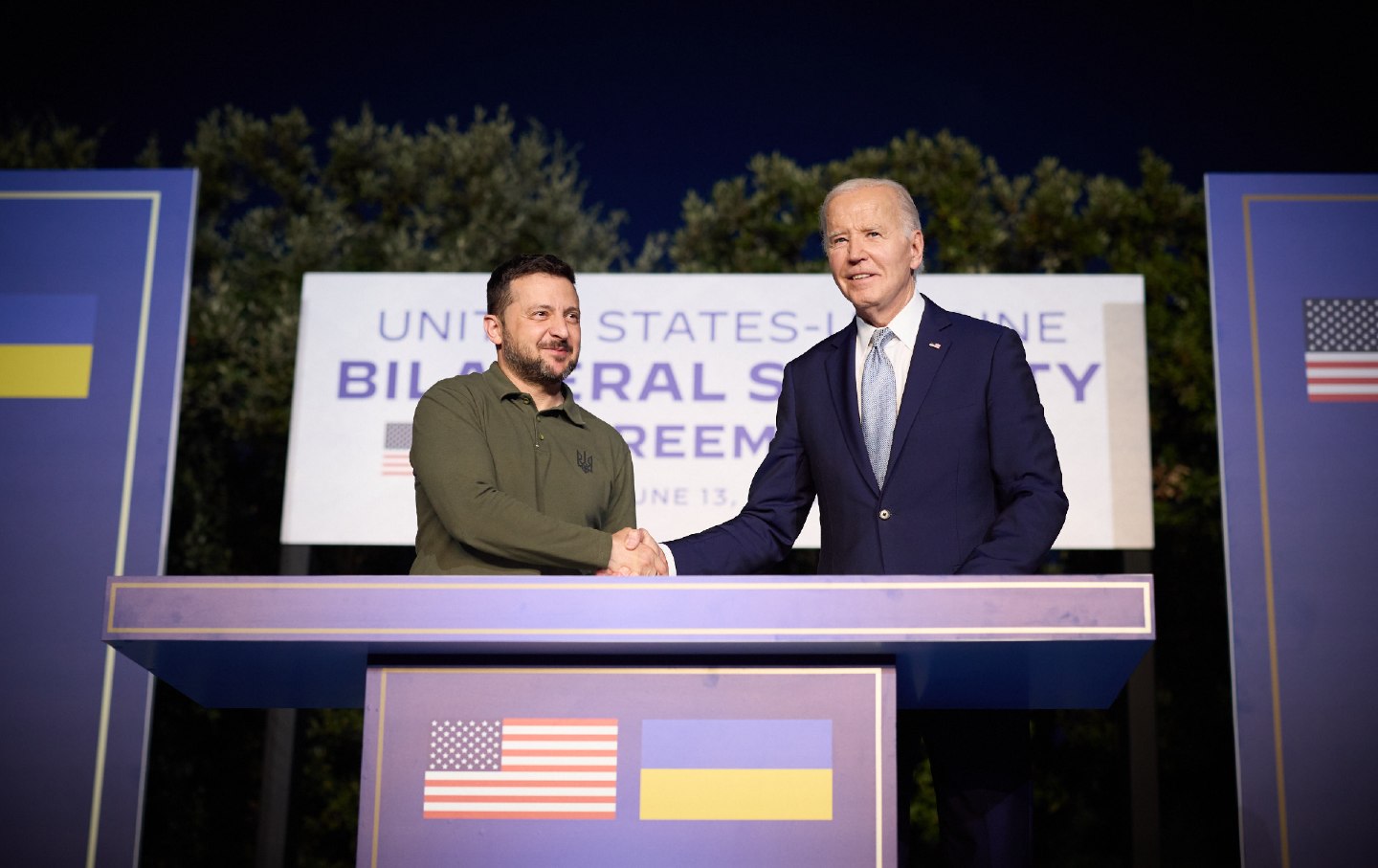
Tonight, the presumptive Democratic and Republican nominees for US president, Joseph R. Biden and Donald J. Trump, will face off on CNN in Atlanta. Below are 10 questions we suggest moderators Jake Tapper and Dana Bash might usefully pose to the respective candidates on US foreign policy, US-Russia relations, and the war in Ukraine.
President Joe Biden, you have said with regard to the war in Ukraine, “If Putin takes Ukraine, he won’t stop there…. He’s going to keep going…” Can you explain to us the difference between this theory of Russian expansion and the domino theory that was used to justify the US war in Vietnam?
Mr. Trump, under your administration a number of crucial Cold War–era arms control treaties between the US and Russia were torn up, including the landmark 1987 Intermediate Range Nuclear Forces Treaty or INF and the Open Skies Treaty. Russia has suspended its participation in the New START treaty, which is set to expire in February 2026. Yet arms control agreements such as these have been crucial in keeping relations between the nuclear superpowers stable. Given the heightened nuclear risks we now face, do you plan on rebuilding the ravaged infrastructure of arms control in your second term? If not—what do you see as the alternative?
To both candidates: Over the weekend the Kremlin accused the US of being behind the deaths of civilian beachgoers in Crimea, going so far as to summon US Ambassador Lynne Tracy on Monday to accuse Washington of waging a “proxy war” while promising that retaliatory measures would “definitely follow.” Given this, do you see any significant risks of escalation in Ukraine—possibly even nuclear escalation? If not, why not?
President Biden, earlier this month various peace plans have been put forward, one by Russian president Vladimir Putin, and another by a peace conference near Lucerne, Switzerland. Yet the US has not come forward with any substantive plans for negotiations—why not? Would now not be the time to seek a cease-fire or undertake tough diplomacy? If not, why not?
Mr. Trump, in only the last two days or so, it was reported that your advisers have presented you with a peace plan that would, among other things, take NATO membership for Ukraine off the table for a unspecified period of time, while tying future US aid with Ukraine’s participation in peace talks with the Russians. What would your administration’s response be if neither Russia nor Ukraine come to the table?
To both candidates: Will you commit to never sending American men and women to fight in Ukraine?
President Biden, figures show that, far from damaging the Russian economy, various sanctions packages put in place against Russia have done more damage to the economies of our allies, in particular Germany, than to Russia. The IMF projects the Russian economy to grow 3.2 percent this year. Russia is also outproducing the US and our Western allies in the production of artillery shells at a rate of three to one. Given this, can you explain why you think sanctions have been successful?
Mr. Trump, your former national security adviser Robert O’Brien, who is said to be vying for a key position in a second Trump term should you win, wrote a programmatic article for Foreign Affairs in which, among other things, he asserts that America “must test new nuclear weapons for reliability and safety in the world.” Do you agree? If so, why?
President Biden, do you believe that NATO, at its upcoming 75th anniversary summit in Washington, should offer Ukraine a “Bridge to NATO” as has been previously suggested by members of your administration, including Secretary of State Antony Blinken? If so, can you explain how Ukraine’s membership in NATO would strengthen the alliance, and by extension, strengthen US national security?
To Both Candidates: President Richard Nixon’s 1972 opening to China was made in part to drive a wedge between what was seen as a Sino-Soviet bloc. Today, Russia and China are closer than perhaps they have ever been—they are, for all intents and purposes, allies—which is something Nixon and Kissinger would have considered a strategic failure. Are American policies partly responsible for driving together Russia and China, and has it been in America’s interest to do so? What is your plan to deal with this new global balance of power?