Print Magazine
February 22, 2010 Issue
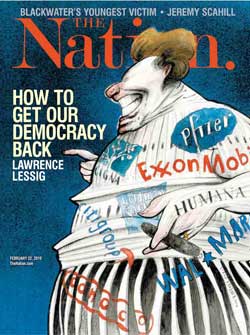
Cover art by Cover image by Steve Brodner, design by Gene Case & Stephen Kling/Avenging Angels
Purchase Current Issue or Login to Download the PDF of this Issue Download the PDF of this Issue
Editorial
Noted.
Morton Mintz on what Rehnquist would have thought of Citizens United; John Nichols on net neutrality.

Column
Wall Street Wants a Refund
"Buyer's remorse" is the way John Cornyn, the Senate Republicans' fundraiser, gleefully refers to Wall Street moguls' current disenchantment with the US president they...
Letters
Letters
Letters published in the February 22, 2010 issue of the Nation.
Feature
Political Awakenings: An Unpublished Howard Zinn Interview
In this unpublished interview from 2001, Howard Zinn talks about his coming-of-age as a radical thinker.
Blackwater’s Youngest Victim
Nine-year-old Ali Kinani died from a gunshot wound to the head in the Nisour Square massacre. His father may be the one man standing between Blackwater and total impunity.
Books & the Arts
Swing Time: On Morris Dickstein
Morris Dickstein's elegant cultural history of the Great Depression.