People Power and the Flint Water Crisis–With LaTricea Adams
“People were literally paying for poison.”

The Nation Podcasts
Here's where to find podcasts from The Nation. Political talk without the boring parts, featuring the writers, activists and artists who shape the news, from a progressive perspective.
People Power and the Flint Water Crisis w/ LaTricea Adams / A People’s Climate
“People were literally paying for poison.”
Ten years after the Flint Water Crisis was declared a federal disaster, the majority-Black community is still living with its consequences. What began as a cost-cutting decision by state officials became a public health disaster, poisoning residents with lead and causing lasting health, financial, and psychological harm.
In total, an estimated 140,000 people were exposed to contaminated drinking water, including 14,000 children under the age of six. All in a town that had one of the highest water rates in the country.
But Flint's story is also one of people power. For LaTricea Adams, traveling to Flint and witnessing the devastation firsthand became a turning point in her life's work. She saw what communities could accomplish when they organized and refused to accept decisions that put financial and political interests ahead of their lives.
In this episode, LaTricea joins host Shilpi Chhotray to revisit what happened in Flint and why.
She also speaks candidly about the failures of the political system, arguing that neither party has consistently put the needs of everyday people ahead of personal interests. From environmental policy to the response to Flint, she sees a pattern of elected officials failing the communities they are supposed to serve. It has led her to a clear conclusion: real change is driven by the people organizing and demanding more.
LaTricea also draws a direct line from Flint to the fight unfolding in her hometown of Memphis, where she's organizing against Elon Musk's xAI data centers. The work is bringing together an unexpected coalition of Black and white residents, crossing racial and political divides to challenge powerful corporate interests. For LaTricea, it's a reminder that communities facing environmental harm have more in common than the forces working to divide them.
Key Topics
- The Flint Water Crisis: how state cost-cutting decisions, government negligence, and environmental racism poisoned a majority-Black community.
- The lasting consequences of the crisis, from lead exposure and reproductive health impacts to trauma and ongoing distrust of public water systems.
- The grassroots organizing led by Flint residents and other organizers that brought national attention to the crisis and forced officials to respond.
- Political failure and accountability: why LaTricea believes both parties have prioritized corporate interests over constituents, and why people must use their power to hold elected officials accountable.
- The fight against xAI's data center expansion in Memphis and South Haven, and the unexpected coalition forming across racial and political divides.
- The power of multiracial, cross-class solidarity and sustained organizing to challenge corporate influence and protect communities.
- The personal cost of organizing: LaTricea’s experience with doxxing, online harassment, and politically motivated attacks for her environmental justice work.
Resources:
- Young Gifted & Green – LaTricea Adam’s Organization
- Memphis vs Musk with Rep. Justin J. Pearson, A People’s Climate Season 1 Ep 6
- AI’s Fossil Fuel Future by Shilpi Chhotray
- Water Protectors Rise Up – Water contamination and justice in Hawai’i
Credits
Presented by Counterstream Media and The Nation
Powered by Wildseeds Fund
Host: Shilpi Chhotray
Executive Producer: Mindy Ramaker
Engineer: Ameeta Ganatra
Project Manager: Asia Simms
LaTricea Adams
LaTricea Adams, a native of Memphis, Tennessee, is the Founder and CEO of Young, Gifted & Green, an organization focused on environmental justice and civil rights. Ms. Adams is a proud HBCU graduate from Tennessee State University and a member of Alpha Kappa Alpha Sorority, Inc.. She was the youngest African American woman and only K-12 educator appointed to the White House Environmental Justice Advisory Council, where she was a champion for children's and maternal health. LaTricea is a proud, lifelong Urban Leaguer for nearly two decades, serving as both a former Young Professionals President in Washington, DC and Memphis, TN. Throughout her career, she has held various leadership roles in local & state government, community, K-12 education, environment, policy and public health. LaTricea has received numerous accolades for her activism and environmental justice work.
Advertising Inquiries: https://redcircle.com/brands
Privacy & Opt-Out: https://redcircle.com/privacy
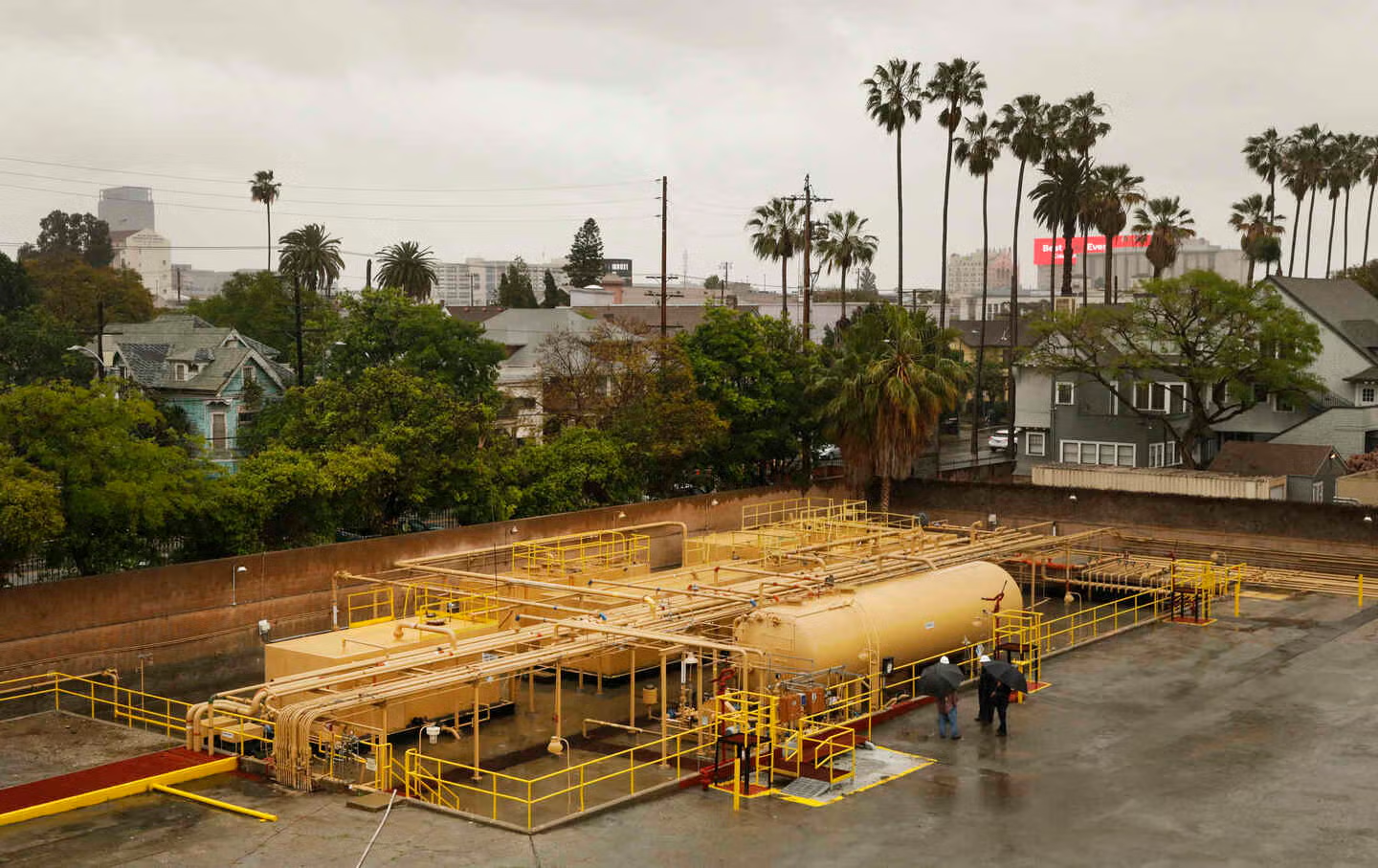
The City of Flint Water Department in Flint, Michigan, on September 17, 2024.
(Jeff Kowalsky / AFP via Getty Images)Ten years after the Flint water crisis was declared a federal disaster, the majority-Black community is still living with its consequences. What began as a cost-cutting decision by state officials became a public health disaster, poisoning residents with lead and causing lasting health, financial, and psychological harm.
In total, an estimated 140,000 people were exposed to contaminated drinking water, including 14,000 children under the age of 6. All in a town that had one of the highest water rates in the country.
But Flint’s story is also one of people power. For LaTricea Adams, traveling to Flint and witnessing the devastation firsthand became a turning point in her life’s work. She saw what communities could accomplish when they organized and refused to accept decisions that put financial and political interests ahead of their lives.
In this episode, LaTricea joins host Shilpi Chhotray to revisit what happened in Flint and why.
She also speaks candidly about the failures of the political system, arguing that neither party has consistently put the needs of everyday people ahead of personal interests. From environmental policy to the response to Flint, she sees a pattern of elected officials failing the communities they are supposed to serve. It has led her to a clear conclusion: Real change is driven by the people organizing and demanding more.
LaTricea also draws a direct line from Flint to the fight unfolding in her hometown of Memphis, where she’s organizing against Elon Musk’s xAI data centers. The work is bringing together an unexpected coalition of Black and white residents, crossing racial and political divides to challenge powerful corporate interests. For LaTricea, it’s a reminder that communities facing environmental harm have more in common than the forces working to divide them.
Key Topics
- The Flint Water Crisis: how state cost-cutting decisions, government negligence, and environmental racism poisoned a majority-Black community.
- The lasting consequences of the crisis, from lead exposure and reproductive health impacts to trauma and ongoing distrust of public water systems.
- The grassroots organizing led by Flint residents and other organizers that brought national attention to the crisis and forced officials to respond.
- Political failure and accountability: why LaTricea believes both parties have prioritized corporate interests over constituents, and why people must use their power to hold elected officials accountable.
- The fight against xAI’s data center expansion in Memphis and South Haven, and the unexpected coalition forming across racial and political divides.
- The power of multiracial, cross-class solidarity and sustained organizing to challenge corporate influence and protect communities.
- The personal cost of organizing: LaTricea’s experience with doxxing, online harassment, and politically motivated attacks for her environmental justice work.
Resources:
- Young Gifted & Green – LaTricea Adam’s Organization
- Memphis vs Musk with Rep. Justin J. Pearson, A People’s Climate Season 1 Ep 6
- AI’s Fossil Fuel Future by Shilpi Chhotray
- Water Protectors Rise Up – Water contamination and justice in Hawai’i
Credits
Presented by Counterstream Media and The Nation
Powered by Wildseeds Fund
Host: Shilpi Chhotray
Executive Producer: Mindy Ramaker
Engineer: Ameeta Ganatra
Project Manager: Asia Simms
LaTricea Adams
LaTricea Adams, a native of Memphis, Tennessee, is the Founder and CEO of Young, Gifted & Green, an organization focused on environmental justice and civil rights. Ms. Adams is a proud HBCU graduate from Tennessee State University and a member of Alpha Kappa Alpha Sorority, Inc.. She was the youngest African American woman and only K-12 educator appointed to the White House Environmental Justice Advisory Council, where she was a champion for children’s and maternal health. LaTricea is a proud, lifelong Urban Leaguer for nearly two decades, serving as both a former Young Professionals President in Washington, DC and Memphis, TN. Throughout her career, she has held various leadership roles in local & state government, community, K-12 education, environment, policy and public health. LaTricea has received numerous accolades for her activism and environmental justice work.
Subscribe to The Nation to support all of our podcasts: thenation.com/subscribe.
The Nation Podcasts
Here's where to find podcasts from The Nation. Political talk without the boring parts, featuring the writers, activists and artists who shape the news, from a progressive perspective.
People Power and the Flint Water Crisis w/ LaTricea Adams / A People’s Climate
“People were literally paying for poison.”
Ten years after the Flint Water Crisis was declared a federal disaster, the majority-Black community is still living with its consequences. What began as a cost-cutting decision by state officials became a public health disaster, poisoning residents with lead and causing lasting health, financial, and psychological harm.
In total, an estimated 140,000 people were exposed to contaminated drinking water, including 14,000 children under the age of six. All in a town that had one of the highest water rates in the country.
But Flint's story is also one of people power. For LaTricea Adams, traveling to Flint and witnessing the devastation firsthand became a turning point in her life's work. She saw what communities could accomplish when they organized and refused to accept decisions that put financial and political interests ahead of their lives.
In this episode, LaTricea joins host Shilpi Chhotray to revisit what happened in Flint and why.
She also speaks candidly about the failures of the political system, arguing that neither party has consistently put the needs of everyday people ahead of personal interests. From environmental policy to the response to Flint, she sees a pattern of elected officials failing the communities they are supposed to serve. It has led her to a clear conclusion: real change is driven by the people organizing and demanding more.
LaTricea also draws a direct line from Flint to the fight unfolding in her hometown of Memphis, where she's organizing against Elon Musk's xAI data centers. The work is bringing together an unexpected coalition of Black and white residents, crossing racial and political divides to challenge powerful corporate interests. For LaTricea, it's a reminder that communities facing environmental harm have more in common than the forces working to divide them.
Key Topics
- The Flint Water Crisis: how state cost-cutting decisions, government negligence, and environmental racism poisoned a majority-Black community.
- The lasting consequences of the crisis, from lead exposure and reproductive health impacts to trauma and ongoing distrust of public water systems.
- The grassroots organizing led by Flint residents and other organizers that brought national attention to the crisis and forced officials to respond.
- Political failure and accountability: why LaTricea believes both parties have prioritized corporate interests over constituents, and why people must use their power to hold elected officials accountable.
- The fight against xAI's data center expansion in Memphis and South Haven, and the unexpected coalition forming across racial and political divides.
- The power of multiracial, cross-class solidarity and sustained organizing to challenge corporate influence and protect communities.
- The personal cost of organizing: LaTricea’s experience with doxxing, online harassment, and politically motivated attacks for her environmental justice work.
Resources:
- Young Gifted & Green – LaTricea Adam’s Organization
- Memphis vs Musk with Rep. Justin J. Pearson, A People’s Climate Season 1 Ep 6
- AI’s Fossil Fuel Future by Shilpi Chhotray
- Water Protectors Rise Up – Water contamination and justice in Hawai’i
Credits
Presented by Counterstream Media and The Nation
Powered by Wildseeds Fund
Host: Shilpi Chhotray
Executive Producer: Mindy Ramaker
Engineer: Ameeta Ganatra
Project Manager: Asia Simms
LaTricea Adams
LaTricea Adams, a native of Memphis, Tennessee, is the Founder and CEO of Young, Gifted & Green, an organization focused on environmental justice and civil rights. Ms. Adams is a proud HBCU graduate from Tennessee State University and a member of Alpha Kappa Alpha Sorority, Inc.. She was the youngest African American woman and only K-12 educator appointed to the White House Environmental Justice Advisory Council, where she was a champion for children's and maternal health. LaTricea is a proud, lifelong Urban Leaguer for nearly two decades, serving as both a former Young Professionals President in Washington, DC and Memphis, TN. Throughout her career, she has held various leadership roles in local & state government, community, K-12 education, environment, policy and public health. LaTricea has received numerous accolades for her activism and environmental justice work.
Advertising Inquiries: https://redcircle.com/brands
Privacy & Opt-Out: https://redcircle.com/privacy
Search Results placeholder
Ep. 9 – People Power and the Flint Water Crisis with LaTricea Adams
Shilpi Chhotray [00:00:00] This is A People’s Climate, powered by Wildseeds Fund, from Counterstream Media and The Nation. I’m your host, Shilpi Chhotray.
CLIP [00:00:11] We begin tonight with a water crisis in Flint that frankly should have everyone’s attention.
CLIP [00:00:18] My youngest were telling me, mom, it’s yellow and it’s a filmy, gross, foamy thing, and it would smell like open sewer. But we were being told it’s safe, it is okay.
CLIP [00:00:27] But it wasn’t okay, far from it. Flint’s tap water was laced with dangerous levels of lead.
CLIP [00:00:34] The state knew about it. and did nothing.
CLIP [00:00:39] The city’s unelected emergency manager switched the city’s water source from the Detroit system to the long-polluted Flint River in an attempt to save money.
CLIP [00:00:49] For a year and a half, the city failed to treat the water with standard anti-corrosion chemicals, so the pipes corroded, releasing the lead.
Shilpi Chhotray [00:01:01] Ten years after the Flint water crisis was declared a federal disaster, the majority Black community is still living with its consequences. And when the headlines faded, the harm didn’t. Flint matters because it’s not unique. These same conditions—aging infrastructure, regulatory failure, and disinvestment in communities with the least political power—continue to show up across the country. And for LaTricea Adams, Flint was a turning point. What she witnessed reshaped the trajectory of her life’s work. Today she’s based in her hometown of Memphis, Tennessee, where she’s organizing against the rapid expansion of data centers. She’s also the founder of Young, Gifted, and Green. Her work connects these dots as a through line to the present and to what it takes to keep going long after the spotlight moves on. Hey, LaTricea, welcome. Thank you so much for joining us today in Memphis.
LaTricea Adams [00:02:00] Yeah, I’m really excited to be speaking with you all today and so excited that you all think so much of my beloved hometown.
Shilpi Chhotray [00:02:07] What I find fascinating is that, you know, you were based in DC at that time, Flint wasn’t your hometown, Memphis is actually your hometown. But you made your way to Flint, you are so pulled as this crisis was unfolding. So I would really love for you to take us back to that moment when you arrived in Flint.
LaTricea Adams [00:02:27] Yeah, so, you know, the person that stood out to me the most was a mom, and essentially she had miscarried twins just because of how much lead was in her blood. That literally broke me down. And we were canvassing because at the time Flint, Michigan was paying one of the highest water rates in the country for water that they could not even use. It was insane.
Shilpi Chhotray [00:02:54] The disconnect is… wild.
LaTricea Adams [00:02:55] Right? Like, the audacity. And so when we went house to house, people were showing us their lesions. Like, I mean, it was horrific. Our heart was just so broken. And just the imagery is one thing to see the horrors from afar, but to see it up close and personal, I was really mad about what was happening but that was gut-wrenching hurt. And the lack of expediency to address this issue. To this day, it’s been, what, 12 years? There’s been no settlement. Monies still have not even been distributed, but the lawyers got paid, though. There was a complete waste of taxpayer dollars for former Governor Snyder, you know, who was clearly guilty. Like you caused like deaths and you know a myriad of things. I just felt like it was divine purpose for me to be so riled up before I even saw things. But when I saw it, I’m like, nope, I don’t know what I should do. But I know that I have to do more than what I’ve done already.
Shilpi Chhotray [00:04:07] So I think a lot of people, a couple things, they don’t realize what actually led to this moment when you were there on the ground. And then also that there is still the chronic disinvestment that’s happening now. Can you walk us through why we had this Flint water crisis?
LaTricea Adams [00:04:27] On the political side of this is where it really gets insidious. So essentially, the governor at the time, which was Rick Snyder, there was the desire to have state control over Flint. The reason why there was a switch to the Flint River is literally because they wanted to save money. But here’s the thing. The nickname for Flint, Michigan is Vehicle City. The automobile industry had been illegally dumping in the Flint River for decades. The mere thought of using the Flint river as a drinking water source is wild. And when you talk to Flint natives and people that have lived there for a long time, they were very much so like concerned before they even did the switch. And then a lot of people weren’t even aware that they were going to do this switch.
Shilpi Chhotray [00:05:23] But there was no announcement, like a public safety announcement or anything like this?
LaTricea Adams [00:05:26] Right? No, no.
Shilpi Chhotray [00:05:28] Wow.
LaTricea Adams [00:05:28] So it literally was just like a backroom deal.
Shilpi Chhotray [00:05:31] So they could save money?
LaTricea Adams [00:05:32] So they could save money — and it was only like a million dollars. Like you literally killed people, unalived people, for a measly million dollars and you ended up spending much more than that.
Shilpi Chhotray [00:05:44] There was this crazy fact I read that Flint’s general motors engine plant discontinue using Flint tap water because high levels of chloride were corroding the engine parts and still the government didn’t do anything and you’ve touched on this but this is a crisis that heavily impacted a Black majority low-income community with a long history of chronic disinvestment. And you hit on this already, but the government response was delayed really at every level.
LaTricea Adams [00:06:13] Yeah, and also gaslighting people, there were signs immediately like the discolored water, the water literally corroding appliances. So what makes the Flint water crisis a little bit more unique than some of the other lead pipe issues that we see across the country is that when they made the switch to the Flint River, they didn’t apply the correct anti-corrosives. And so it literally started to eat away at the pipes. So that meant that crazy levels of lead and other heavy metals too, right? Leached into the water. And so that means that people’s sinks, their indoor plumbing was destroyed. Washing machines were destroyed. Shower heads were corroded. It was a disaster. And there was no relief for that. That economic burden still lied on people who were completely innocent. So people were literally paying for poison.
Shilpi Chhotray [00:07:18] I think there was huge gaps in government response at every level, and the grassroots organizing really had to step up. Can you talk to me about what you experienced with the really incredible organizing power that came together?
LaTricea Adams [00:07:34] Yeah, so, you know, Flint is really small, and I was just so inspired by how, from this smaller city, literally rock the nation. The organizers in Flint, they put everybody on notice and on guard. They made everybody in this country, every city, every town, every municipality be like, ooh, Jesus, wait, what’s going on? You know, with our pipes, right? And The majority of these grassroot leaders were Black folk and really borrowing the strategies from our ancestors and from the civil rights movement, canvassing, door knocking, that was a major strategy that existed to see people from the ground up telling the state of Michigan, ‘we not paying for this water’ and getting it done, like getting a whole moratorium as they should. It really just demonstrated people power. And it was so inspirational.
CLIP [00:08:38] Water for Flint! Water for Flint!
CLIP [00:08:42] Flint lives matter! Flint lives matters! Flint Lives Matter!
CLIP [00:08:47] They marched for a mile, with the Reverend Jesse Jackson leading the way. Chopper 7 overhead as the crowd made their way to the Flint water plant. There, the anger boiled over.
CLIP [00:08:58] What Governor Rick Snyder did goes beyond criminal. It goes into reprehensibly immoral. He would never have pumped poison water into a rich white community. He chose Flint.
CLIP [00:09:13] Who’s tired of this? All of us. Who’s tired of trying to fight for a human rights? Who’s tiered of not being able to turn on your faucet and drink water? We are! This is enough!
CLIP [00:09:32] When I have four-year-olds asking me if they’re going to die, how do you sit by and let people be hurt and know about it and do nothing?
CLIP [00:09:40] I’m angry, I am very angry and I want justice for all of us.
Shilpi Chhotray [00:09:52] A lot of the ramifications that we saw at the height of the crisis, they have persisted. And one of the stats that really blew my mind was that of the 100,000 residents exposed between 6,000 and 14,000 children were exposed to drinking water with high levels of lead. Fertility rates dropped by 12% while fetal deaths rose by 58%. I mean, you saw that with the example of the mother with the twins she miscarried. And the other part of this is perhaps less overt, but nearly one in four Flint residents had PTSD five years after the water crisis. I know you’re very close with the community. What are you seeing now?
LaTricea Adams [00:10:38] Yeah, so I want to actually uplift who is now my board chair — shout out Ashley Stroser — Ashley’s oldest daughter, she was a toddler at the time that the Flint water crisis happened. She was one of the youngest children diagnosed with Legionnaires. And she almost lost her child. She almost lost a life. She was in a hospital for a significant amount of time. But it goes even deeper than that. The impacts on reproductive health are lingering. It’s not isolated. Several years later, with Ashley’s youngest daughter, she was born significantly premature. So these are the aftermath that have kind of got lost in the media, where these stories are, you know, they continue on. Lead poisoning is forever, it’s not curable. And I’ve heard her speak about how no matter where she is now, she never drinks the water.
Shilpi Chhotray [00:11:40] Oh, wow.
LaTricea Adams [00:11:42] So can you imagine that? Psychologically, the fear of water, no matter where you are.
CLIP [00:11:49] When we see all over the TV about our toxic water in our hometown, it makes you fearful.
CLIP [00:11:57] I don’t trust them. I don’t trust– no, I don’t. I don’t. Because we people, and they’re not treating us like we people.
CLIP [00:12:05] More than a decade since the switch people still have fears and doubts about the city’s water many use bottled water for cooking and drinking.
CLIP [00:12:14] I don’t trust the water, I would never drink this water.
CLIP [00:12:17] This is trauma. Their children were exposed to a poison. They can’t sell their home. They’re afraid of where they live.
Shilpi Chhotray [00:12:33] Why do you think crises like these keep happening? I mean, Flint was 12 years ago and there are still ongoing issues there. And we’re going to get into this next, but we’re also seeing a new form with the data center expansion that’s going on all over the country, especially in communities of color and lower income communities in the South.
LaTricea Adams [00:12:51] So, and this is going to be a really bold statement, but I’m going to say it anyway. Politicians are the same type of evil, no matter what side they serve, because they serve themselves. As a Black person, it hasn’t really mattered who was in office. My people have been suffering ever since we were forced to be here. Now we’re at a point of, we’re like in this awakening moment, right? Where we’ve been saying, particularly as Black activists, we’ve been warning, like, they’re gonna come for you next. We’re seeing it. We’re seein’ it right now. And with the Democratic Party, who I’ve said this before, is very elite, is very arrogant, very much so know-it-alls, very detached from their base on all accounts, they still fold to capitalism every time. Like, there’s very rarely an occasion where they stand on business, regardless of money being involved. Tell me how that’s any different than the other side of the aisle, it’s not. There’s not a service to constituents — it’s to investors, it’s to the oligarchs. The 1% is to the billionaires. And we’re tired of that. We’re tired to that. We’re tired of the entire… Political system that continues to fail us. You know, from an environmental perspective, I think about even a long time ago, with like build back better. EJ organizations were really leery around carbon with carbon management and this whole investment around climate tech. We know that we need to reduce CO2 emissions, but not if it’s going to cause additional harm. But guess what? Neither side cared. You had a whole administration that invested billions into carbon management, these unfounded technologies, that got more money than the EJ funding.
Shilpi Chhotray [00:14:57] That’s right.
CLIP [00:15:01] Congress is spending billions on carbon capture and asks, while it is good in theory, is it really a climate savior?
[00:15:10] But people like John Beard, Jr., a Southeast Texas activist, questions its cost to the community.
CLIP [00:15:17] Then why don’t we stop the emissions at their source and not try to use carbon capture to pull it out of the air with direct air capture or from faucet streams? What are we giving up in exchange for that?
CLIP [00:15:28] It’s all a big money grab.
CLIP [00:15:31] The question, you know, once you’ve captured the carbon, what do you do with it? Historically, companies that have successfully used carbon capture tend to sell that CO2. They sell it to oil companies to actually extract more oil. From an environmental point of view, that is the last thing that we want to be doing.
LaTricea Adams [00:15:47] So I’m like, beyond that just being called out, and this might be the radical in me, the whole entire political system needs to be dismantled because the system was never meant for Black people, Latino people, Indigenous people, and women to succeed. We’re pretty much like working within the parameters of something that always was established to benefit white men.
Shilpi Chhotray [00:16:16] Alright, so I’m hearing you speak about how politicians are really failing us on both sides. What is the solution?
LaTricea Adams [00:16:27] So the solution is for elected officials to know that you work for us and not the other way around. The audacity of some of these elected officials is wild. Part of the work that we do is to get community to understand just that. I’ll just say with both parties, they pretty much serve who their master is and then try to convince constituents that this is the right way. No! You’re supposed to take demands from your constituents. We’re the taxpayers. And then also with the widespread voter apathy, that’s why it exists because people are like, no matter who is in office, they’re gonna do what they wanna do anyway. We have got to take back the reins of power. We really have to show them who’s boss, and it’s us. They say that Congress has the power of the purse, but all the power lives with the people. You don’t exist without the people, and we have to really come together to let them know just that. So the solution is to continue to build people power, whether it be local, county, state, federal. Every election matters, and it doesn’t just stop at the ballot box. You got to hold these folks accountable. And when you don’t hold them accountable, get them out.
Shilpi Chhotray [00:17:55] That’s fundamentally what a democracy should be.
LaTricea Adams [00:17:57] Exactly.
Shilpi Chhotray [00:18:12] So I want to move into what’s happening right now in your hometown of Memphis, Tennessee, and in the neighboring town of South Haven, Mississippi, which is about 15 minutes away. Both towns are now dealing with Elon Musk’s xAI data centers.
CLIP [00:18:26] Elon Musk, artificial intelligence company, will soon open a new data center in South Haven which will be the third in the Memphis metro area.
CLIP [00:18:35] Home to more than 50,000 people, South Haven, Mississippi is a quiet suburb. That is, residents say, until Elon Musk’s AI power plant came to town. For months now, this is the sound communities near the plant hear. The Environmental Protection Agency has said gas turbines are a major source of hazardous air pollutants, including formaldehyde and other probable human carcinogens.
Shilpi Chhotray [00:19:04] But this entire time, you know, local residents have been pushing back with hundreds of people showing up to voice concerns at community meetings and town halls.
CLIP [00:19:13] I got asthma. My mom got asthma, my grandma at home, 87 years old, got asthma and she never had it before. I can’t breathe at home. It smells like gas outside.
CLIP [00:19:24] We’ve shown up here today because we’re tired of going in and out of hospitals, going in and out in funeral homes. We’ve been paying taxes, and we’ve been dying, and what we’re saying is, that stops now!
Shilpi Chhotray [00:19:41] And in April, NAACP filed a federal lawsuit against xAI, alleging illegal operation of gas turbines. So now we’ve got this battle happening on both sides of the state line. Can you tell me what’s going on with the organizing there?
LaTricea Adams [00:19:57] South Haven and Memphis are very much so different, even though we’re right here beside each other. And so while from a racial perspective, there is a difference between Memphis and South Haven, this is a largely white community, but it’s not affluent and that matters. However, we might look different and we might have different political views, but what unites us is we don’t want these data centers here. And what has been so intriguing for me is to see the unity between — not everybody, but people I know that will never have a conversation with me as a Black woman. With people being very vulnerable and leaning in to learn about what we did in Memphis. The fact that, yes, they decommissioned the methane gas turbines in Memphis, but they drove right up the street and placed it in this community. Now, something that also comes to mind is I think about the legacy of Reverend Dr. Martin Luther King and specifically about the Poor People’s Campaign.
CLIP [00:21:06] In this America people are poor by the millions and they find themselves perishing on a lonely island of poverty in the midst of a vast ocean of material prosperity. It is necessary for us to realize more than ever before that the destinies of the Negro and the white man are tied together.
LaTricea Adams [00:21:39] And so there was this woman, I don’t know her, but she was at the South Haven Appeal hearing some weeks back, and she said, I’ve never had to do anything like this before, right? They think that they can dump anything they want on us because we’re poor white trash or we’re Black. Woo, epiphany. The nation is the most divisive that I’ve seen in my lifetime. What a powerful moment where that was the point that MLK was trying to make. We have the same common enemy. It’s the oligarchs, it’s the capitalists. That’s the common enemy, not each other. And so honestly, it has been a huge learning experience for me being from a place like Memphis that is still very much so segregated, still very racially volatile in many different ways. If you’re from Memphis, you don’t really mess around in Mississippi. A lot of us are raised to be that way, to proceed in Mississippi with caution. And to think that we are crossing all sorts of lines, crossing state lines, crossing racial lines to collaborate and work together has really been so eye opening and it’s almost like the definition, you know, of like a phoenix, it’s beautiful.
Shilpi Chhotray [00:23:06] This is exactly what they’re terrified of. They don’t want the multiracial organizing because the narrative right now is that it’s a race war.
LaTricea Adams [00:23:12] Mm-hmm. It’s a class war.
Shilpi Chhotray [00:23:15] At least in this political climate in 2026. Does that give you a sense of hope?
LaTricea Adams [00:23:22] It does, you know, we don’t experience the same types of obstacles of oppression, not just racial oppression, but economic oppression. But it was very powerful for like these younger Black people to be doing a training with a bunch of white folks. When did we ever see things like that?
Shilpi Chhotray [00:23:40] That is rare, yeah.
LaTricea Adams [00:23:41] It is, it is.
Shilpi Chhotray [00:23:43] I definitely see a through line with Flint and Memphis in particular, and of course now what’s happening in South Haven, but in both Flint and Memphis, just to kind of paint a picture here for our listeners, these are both majority Black lower income communities that are facing the risks of long-term infrastructure neglect that, as LaTricea has pointed out, it doesn’t happen overnight and that leads to this economic and environmental vulnerability.
LaTricea Adams [00:24:09] Yeah, so in addition to the deployment of this data center, there have been such a long legacy of concentrated pollution in 3A109. 3A109 is one of the, if not the most polluted zip codes in Memphis and Shelby County. You have the Valero refinery that’s literally in the middle of a residential community beside MLK park. If you live in the Riverside community, you can literally walk over to an oil refinery. Before it was Valero, it was Delta refinery, so you really see an experience to intersection of the remnants of redlining.
Shilpi Chhotray [00:24:53] Can you actually break down what the racial redlining, the history of it, just very briefly, and what the outcomes are today, you know, present day 2026?
LaTricea Adams [00:25:03] Being a southern city, very much so in the shadows of Jim Crow, we still see that today as it relates to placement of polluting industry. It’s not lost on us and it’s not ironic, it’s on purpose that the very same place that they tried to put the Byhalia pipeline is the same exact community where they would place these polluting methane gas turbines. These polluted industries, these polluting developments always go in the same places. And if you took a historic redlining and map, you would see an overlap with places that are designated for heavy industry. Why would anything that is within a five mile radius of people’s homes be considered industrial? It’s on purpose.
Shilpi Chhotray [00:25:56] Literally designated areas for these sites to not just profit, but proliferate for generations to come. I do want to talk about the cost. 2025 was a really tough year for you. You had some real serious political attacks and it came at a time where there was targeting of other Black women leaders. Are you willing to talk to me a little bit about what happened?
LaTricea Adams [00:26:25] During the Biden and Harris administration, I was the youngest Black woman that was appointed to the White House Environmental Justice Advisory Council. And so we applied for an EPA community change grant. Fast forward into January of 2025, immediately day one, all of the EJ investments, even the word EJ was pretty much banned. And I remember getting like an email from the Washington Free Beacon, I hadn’t even heard of this before, I’m like, what is this? And so essentially they ran a story erroneously saying that there was quote unquote ‘favoritism’ with us getting the EPA Community Change Grant because I was a White House appointee, which is wild. When you broke down that grant, we literally gave it all away. So the only funds that we kept, like with Young Gifted and Grant, was just administrative things so that we can be in compliance with the grant. But nevertheless, that story ran on Fox News.
CLIP [00:27:37] LaTricea Adams. She was an advisor to the Biden White House. How she got that job, I have no idea. The Free Beacon reports that while she was working as a White House advisor, our friend LaTricea applied for a $20 million contract for environmental justice. Her group, Young, Gifted and Green got the 20 million, more like young, grifted and green.
LaTricea Adams [00:27:57] And then MAGA-land took it and went crazy with that. I got like horrible emails, hate emails. I had people that were emailing me saying like, she needs to be lynched. That was triggering. And then because my name is LaTricea, I literally even had people saying. ‘Is she American? Like, she needs to be deported.’ I’m like, y’all are dumb.
Shilpi Chhotray [00:28:21] They pulled the Obama narrative. Give me a break.
LaTricea Adams [00:28:24] So the strategy that we took was, we’re not going to fight fire with fire because this is really ignorance. Because they wanted to run these stories with tearing down Black women. They ran stories with me and Stacey Abrams. I’m, like, ooh, you put me with the goat though. They also attacked another mother-daughter founding organization, Democracy Green in North Carolina. It was very, very blatant, like the misogynoir that was embedded in this.
Shilpi Chhotray [00:28:53] Well, once you said Fox News, I was thinking the work that your involvement is so much about fighting this narrative war as much as it is addressing these environmental harms. What is it about this particular work that makes people respond this way? Is it fear?
LaTricea Adams [00:29:11] So people have told me, like, if you make it to Fox News, then that means that you’re doing something good, right? Like, it’s working. But I think specifically for the story that they were trying to run, it very much so coincided with DOGE. So they were really trying to demonstrate how these funds that went to EJ organizations, that it was not only just wasteful, but also trying to create this narrative that, like we didn’t know how to manage money. Again, you know, the DEI component was in there too, like trying to make it seem like you’re not qualified. Like in the Fox News clip, they were like, she was just a Spanish teacher. She has a degree in Spanish. Is that an insult? I do. I have three degrees. And then that she’s just a teacher, that really pissed people off. So people were like, I think that’s a noble profession to have, you know, to be a teacher.
Shilpi Chhotray [00:30:11] Absolutely. They were exposing their own gaps in the narrative, right?
LaTricea Adams [00:30:16] Yes, and it also, I tell, you know, cause we work with young people. I’m like, see, this is why you guys stop putting crazy stuff on the internet. So that was the only stuff that they can find about me.
Shilpi Chhotray [00:30:28] What you went through is one of the most difficult circumstances to be publicly scrutinized like that. And getting through that with such grace and clarity is such a testament to your leadership. And I want to ask what keeps you motivated to keep going?
LaTricea Adams [00:30:42] I’m going to lift up conversations that I have consistently with one of my favorite mentors in the movement, which is Dr. Beverly Wright. And she consistently says, ‘baby, this is not the first time we’ve been here.’ And so literally, what keeps me grounded is I have to keep telling myself there there’s nothing that I have experienced and I pray to God that I don’t, that would even be remotely comparable to what my elders and what my ancestors experienced. Part of why I will continue to be bold in my speak is when Fannie Lou Hamer, another plus-size Black woman from the South, when she was vocal, she got beaten. It is my responsibility to continue to carry this torch. Even though I’m really tired, but I’m like, we have like an organization, we have resources, our elders and our ancestors absolutely didn’t have that. So it’s kind of like the mantra of just focusing on what we do have, which at the core of it all, we have people power. I don’t care how much money somebody has. Elon Musk probably never thought in a million years, in fact, some of his representatives said that they were really shocked that we appealed. You have to show them, you know, I know who I am and whose I am, and I don’t really have any fear. If I’m on assignment, my God-given assignment, I know that God’s got me, and I know the community that I fight for has my back too.
Shilpi Chhotray [00:32:24] LaTricea, thank you so much for showing us why sustained attention and grassroots action are critical to changing things.
LaTricea Adams [00:32:34] Thank you so much.
Shilpi Chhotray [00:32:41] What happened in Flint is an egregious example of environmental injustice. When decisions get made without the community, the people pay the price. But what LaTricea shows us is that the story doesn’t have to end when the headlines do. When we continue to organize and continue to push back against the status quo, we can hold people in power to account and even change the course of history. Thank you to Wildseeds Fund for making this podcast possible. This episode of A People’s Climate is executive produced by Mindy Ramaker with engineering and sound design by Ameeta Ganatra. Theme music by Khafre Jay. Additional research by Asia Simms. Recorded at Studio 132 in Oakland, California. From Counterstream Media and The Nation, I’m your host, Shilpi Chhotray. Until next time.