Building Power Against the State—With Kamau Franklin
“No one has a right to tell you how to organize, to free yourself, and to liberate yourself.”

The Nation Podcasts
Here's where to find podcasts from The Nation. Political talk without the boring parts, featuring the writers, activists and artists who shape the news, from a progressive perspective.
Building Power Against the State with Kamau Franklin / A People’s Climate
“No one has a right to tell you how to organize, to free yourself, and to liberate yourself.”
The fight over Cop City was never just about a police training center. In Atlanta, a multiracial, multigenerational movement brought together environmental justice, land conservation, police abolition, and grassroots organizing to challenge the destruction of a forest and expansion of police power.
In this episode of A People’s Climate, Shilpi Chhotray talks with organizer Kamau Franklin about the strategies behind the Stop Cop City movement—and the lessons it offers for fights still to come. Although the Atlanta Public Safety Training Center was ultimately built, the movement showed how organizers can build power across ideologies, work through decentralized networks, shape the public narrative, and connect struggles that are often treated as separate.
Franklin and Shilpi also discuss the criminalization of protesters, including the killing of forest defender Manuel “Tortuguita” Terán. They examine what it means to organize under state repression and ultimately, what the Stop Cop City movement can teach those fighting for justice.
Key Topics
- Climate & the forest: Why protecting Atlanta’s South River Forest was an environmental justice fight
- Movement tactics: The organizing strategies behind Stop Cop City, from town halls and petition drives to direct action, civil disobedience, and decentralized organizing.
- Defining violence: Why organizers challenged the idea that property destruction is equivalent to violence—and who gets to define legitimate protest.
- Organizing across differences: How a decentralized movement brought together people with different ideologies, tactics, and political traditions.
- The power of narrative: How organizers turned “Cop City” into a powerful frame and pushed back against efforts to portray protesters as outsiders or extremists.
- Criminalizing dissent: The killing of forest defender Manuel “Tortuguita” Terán and the sweeping RICO charges brought against protesters.
- Building power under repression: How movements can organize when the state is working to divide, intimidate, and silence them.
- Lessons for future fights: What Stop Cop City can teach organizers fighting for climate, racial, and environmental justice beyond Atlanta.
Resources
- Community Movement Builders
- No Cop City, No Cop World: Lessons from the Movement Edited by Micah Herskind Mariah Parker, and Kamau Franklin
Credits
Presented by Counterstream Media and The Nation
Powered by Wildseeds Fund
Host: Shilpi Chhotray
Executive Producer: Mindy Ramaker
Engineer: Ameeta Ganatra
Project Manager: Asia Simms
Kamau Franklin
Kamau Franklin (he/him) is the founder of Community Movement Builders. He’s been a dedicated community organizer for over thirty years. For 18 years, Kamau was a leading member of a national grassroots organization dedicated to the ideas of self-determination and the teachings of Malcolm X. He’s spearheaded organizing work in areas, including youth organizing, police misconduct, and developing sustainable urban communities. Kamau has coordinated community cop-watch programs, liberation schools for youth, electoral and policy campaigns, large-scale community gardens, organizing collectives and alternatives to incarceration programs. Kamau was an attorney for ten years in New York with his own practice in criminal, civil rights and transactional law. He now lives in Atlanta with his two children.
Advertising Inquiries: https://redcircle.com/brands
Privacy & Opt-Out: https://redcircle.com/privacy
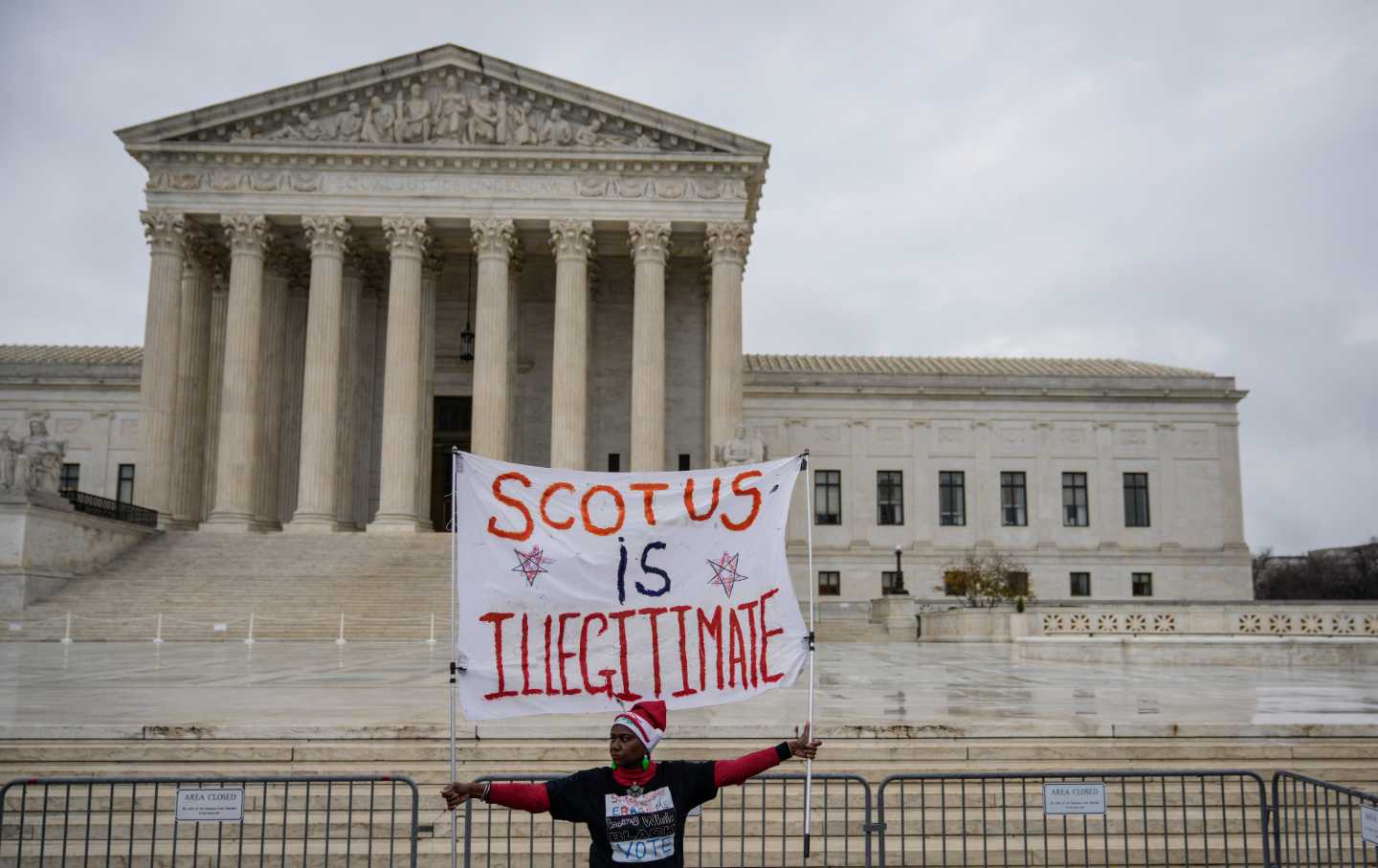
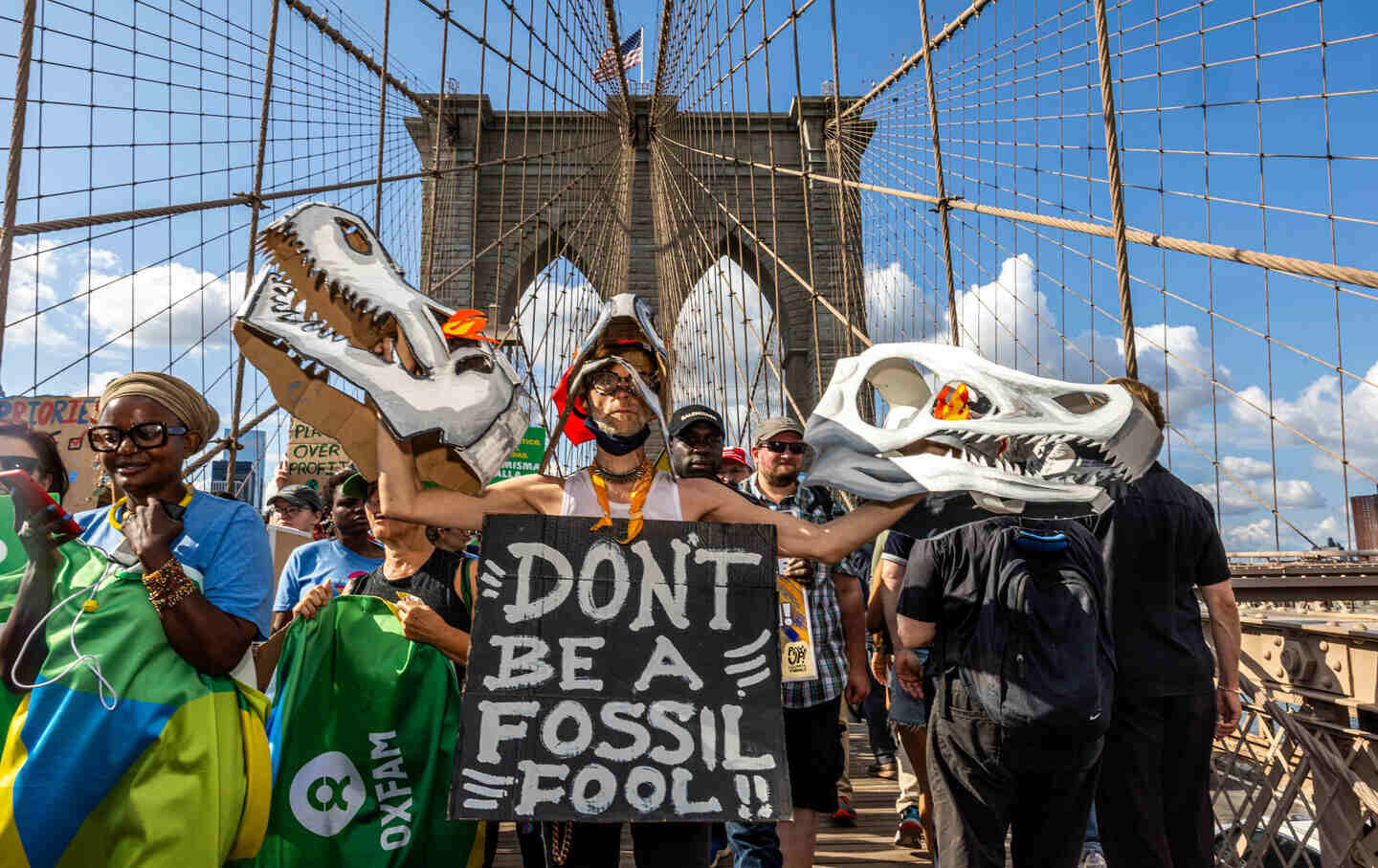
Protest against the proposed Cop City being built in an Atlanta forest on March 9, 2023, in New York City.
(Spencer Platt / Getty Images)The fight over Cop City was never just about a police training center. In Atlanta, a multiracial, multigenerational movement brought together environmental justice, land conservation, police abolition, and grassroots organizing to challenge the destruction of a forest and expansion of police power.
In this episode of A People’s Climate, Shilpi Chhotray talks with organizer Kamau Franklin about the strategies behind the Stop Cop City movement—and the lessons it offers for fights still to come. Although the Atlanta Public Safety Training Center was ultimately built, the movement showed how organizers can build power across ideologies, work through decentralized networks, shape the public narrative, and connect struggles that are often treated as separate.
Franklin and Shilpi also discuss the criminalization of protesters, including the killing of forest defender Manuel “Tortuguita” Terán. They examine what it means to organize under state repression and ultimately, what the Stop Cop City movement can teach those fighting for justice.
Key Topics
- Climate & the forest: Why protecting Atlanta’s South River Forest was an environmental justice fight
- Movement tactics: The organizing strategies behind Stop Cop City, from town halls and petition drives to direct action, civil disobedience, and decentralized organizing.
- Defining violence: Why organizers challenged the idea that property destruction is equivalent to violence—and who gets to define legitimate protest.
- Organizing across differences: How a decentralized movement brought together people with different ideologies, tactics, and political traditions.
- The power of narrative: How organizers turned “Cop City” into a powerful frame and pushed back against efforts to portray protesters as outsiders or extremists.
- Criminalizing dissent: The killing of forest defender Manuel “Tortuguita” Terán and the sweeping RICO charges brought against protesters.
- Building power under repression: How movements can organize when the state is working to divide, intimidate, and silence them.
- Lessons for future fights: What Stop Cop City can teach organizers fighting for climate, racial, and environmental justice beyond Atlanta.
Resources
- Community Movement Builders
- No Cop City, No Cop World: Lessons from the Movement Edited by Micah Herskind Mariah Parker, and Kamau Franklin
Credits
Presented by Counterstream Media and The Nation
Powered by Wildseeds Fund
Host: Shilpi Chhotray
Executive Producer: Mindy Ramaker
Engineer: Ameeta Ganatra
Project Manager: Asia Simms
Kamau Franklin
Kamau Franklin (he/him) is the founder of Community Movement Builders. He’s been a dedicated community organizer for over thirty years. For 18 years, Kamau was a leading member of a national grassroots organization dedicated to the ideas of self-determination and the teachings of Malcolm X. He’s spearheaded organizing work in areas, including youth organizing, police misconduct, and developing sustainable urban communities. Kamau has coordinated community cop-watch programs, liberation schools for youth, electoral and policy campaigns, large-scale community gardens, organizing collectives and alternatives to incarceration programs. Kamau was an attorney for ten years in New York with his own practice in criminal, civil rights and transactional law. He now lives in Atlanta with his two children.
Subscribe to The Nation to support all of our podcasts: thenation.com/subscribe.
The Nation Podcasts
Here's where to find podcasts from The Nation. Political talk without the boring parts, featuring the writers, activists and artists who shape the news, from a progressive perspective.
Building Power Against the State with Kamau Franklin / A People’s Climate
“No one has a right to tell you how to organize, to free yourself, and to liberate yourself.”
The fight over Cop City was never just about a police training center. In Atlanta, a multiracial, multigenerational movement brought together environmental justice, land conservation, police abolition, and grassroots organizing to challenge the destruction of a forest and expansion of police power.
In this episode of A People’s Climate, Shilpi Chhotray talks with organizer Kamau Franklin about the strategies behind the Stop Cop City movement—and the lessons it offers for fights still to come. Although the Atlanta Public Safety Training Center was ultimately built, the movement showed how organizers can build power across ideologies, work through decentralized networks, shape the public narrative, and connect struggles that are often treated as separate.
Franklin and Shilpi also discuss the criminalization of protesters, including the killing of forest defender Manuel “Tortuguita” Terán. They examine what it means to organize under state repression and ultimately, what the Stop Cop City movement can teach those fighting for justice.
Key Topics
- Climate & the forest: Why protecting Atlanta’s South River Forest was an environmental justice fight
- Movement tactics: The organizing strategies behind Stop Cop City, from town halls and petition drives to direct action, civil disobedience, and decentralized organizing.
- Defining violence: Why organizers challenged the idea that property destruction is equivalent to violence—and who gets to define legitimate protest.
- Organizing across differences: How a decentralized movement brought together people with different ideologies, tactics, and political traditions.
- The power of narrative: How organizers turned “Cop City” into a powerful frame and pushed back against efforts to portray protesters as outsiders or extremists.
- Criminalizing dissent: The killing of forest defender Manuel “Tortuguita” Terán and the sweeping RICO charges brought against protesters.
- Building power under repression: How movements can organize when the state is working to divide, intimidate, and silence them.
- Lessons for future fights: What Stop Cop City can teach organizers fighting for climate, racial, and environmental justice beyond Atlanta.
Resources
- Community Movement Builders
- No Cop City, No Cop World: Lessons from the Movement Edited by Micah Herskind Mariah Parker, and Kamau Franklin
Credits
Presented by Counterstream Media and The Nation
Powered by Wildseeds Fund
Host: Shilpi Chhotray
Executive Producer: Mindy Ramaker
Engineer: Ameeta Ganatra
Project Manager: Asia Simms
Kamau Franklin
Kamau Franklin (he/him) is the founder of Community Movement Builders. He’s been a dedicated community organizer for over thirty years. For 18 years, Kamau was a leading member of a national grassroots organization dedicated to the ideas of self-determination and the teachings of Malcolm X. He’s spearheaded organizing work in areas, including youth organizing, police misconduct, and developing sustainable urban communities. Kamau has coordinated community cop-watch programs, liberation schools for youth, electoral and policy campaigns, large-scale community gardens, organizing collectives and alternatives to incarceration programs. Kamau was an attorney for ten years in New York with his own practice in criminal, civil rights and transactional law. He now lives in Atlanta with his two children.
Advertising Inquiries: https://redcircle.com/brands
Privacy & Opt-Out: https://redcircle.com/privacy
Search Results placeholder
Shilpi Chhotray [00:00:00] This is A People’s Climate, powered by Wildseeds Fund, from Counterstream Media and The Nation. I’m your host, Shilpi Chhotray.
CLIP [00:00:11] The Atlanta Police Foundation is building a massive urban warfare training facility with bomb testing, tear gas explosions, a shooting range. Didn’t people march to defund the police? It looked like they refunded the police. Yes, they did.
CLIP [00:00:24] Activists have dubbed this development Cop City, an 85-acre, $90 million complex including a shooting range, burn buildings, and a mock city that includes apartments, a school, even a bar.
CLIP [00:00:35] The state of Georgia has handed down RICO indictments against 61 activists protesting against the development of an Atlanta police training facility known as Cop City.
CLIP [00:00:46] I don’t understand how holding a sign that says ‘Stop Cop City’ is domestic terrorism. I don’t understand how opposing the government, using your legal right to protest, your right to freedom of speech, is domestic terrorism.
Shilpi Chhotray [00:01:06] In April 2025, ultimately, Cop City opened, but the movement against it became one of the most powerful fights in the country, bringing together multicultural organizers, abolitionists, land defenders, and Atlanta residents who opposed destroying a forest to build a massive police training facility. I’m thrilled to be joined by Atlanta-based Kamau Franklin. A leading organizer in the efforts to stop Cop City. He’s also the founder of Community Movement Builders and the co-editor of No Cop City, No Cop World. Today, he’s going to share lessons from the movement and where the fight goes from here.
Shilpi Chhotray [00:01:49] Welcome, Kamau. Thank you so much for being here today. You know, last season, we had Patrisse Cullors on our show after Cop City was officially built in Atlanta and Cop City really rose to the top as an example of direct action and multicultural organizing. So again, really, really grateful to have you here today and just kind of get a sense of where the movement is at right now.
Kamau Franklin [00:02:11] Well, thank you for having me. I appreciate you guys having me on.
Shilpi Chhotray [00:02:15] I’d love to know more about you and your personal ethos. You’ve talked about reading the autobiography of Malcolm X in college as a turning point. What did that unlock for you? I’m just really curious how Malcolm X in particular influences how you organize now.
Kamau Franklin [00:02:32] Oh, I think it greatly influenced me then and until now. Reading Malcolm was someone who, I think they said back in his day, made it plain. And so he spoke directly to the masses of Black folks in particular, but everybody talking about the way in which wealth is distributed, white supremacy, oppression, racism, and most importantly, how the oppressed need to fight back. And fight back via any means necessary, which means fighting back the weapons of their choice, right? To be colloquial about it. That no one has a right to tell you how to organize, to free yourself, and to liberate yourself. And in fact, I think Malcolm X is noted, obviously, for his brilliant speech making, but I think one of the things that’s really underplayed is that Malcolm was an on-the-ground organizer who spent time in the streets, who built up infrastructure, built up organization. Had a particular vision of the world. So I would say they were sort of a seminal moment for me in becoming an organizer and the type of organizer I became, which was part of the Black radical tradition.
Shilpi Chhotray [00:03:38] Is there a particular speech or quote that stays with you?
Kamau Franklin [00:03:42] Oh, there’s so many.
Shilpi Chhotray [00:03:43] There’s so good ones.
CLIP [00:03:46] That’s no revolution. Revolution is based on land. Land is the basis of all independence. Land is a basis of freedom, justice, and equality. The white man knows what a revolution is. He knows that the Black revolution is worldwide, in scope, and in nature.
Kamau Franklin [00:04:11] Land is the basis of revolution was something that always stuck with me the idea that we are not outnumbered we are out organized has become a real like something to hang up and to look at and to read. The media will have you thinking that the oppressor is a good guy and I’m paraphrasing in this one. For many people of my age and even after and before, the autobiography of Malcolm X was something that put us on a path or made us at least start thinking about the world differently in terms of how we understood it to be.
Shilpi Chhotray [00:04:42] I would love to get into Cop City a little bit here. Could you possibly take me into the forest or a vivid moment that you remember that really paints what this fight and this organizing power was all about?
Kamau Franklin [00:04:56] Part of the earliest work was classic organizing and doing town halls and walking streets and talking to people, showing up at city hall. We had this idea of different collectives and organizations and individuals of various political stripes working together, but not necessarily being bound to each other via the actions. There was a clear understanding that this was not a top-down movement, but this was a movement that a variety of tactics and strategies and ideas would be used. And our common purpose was to, one, most importantly, was to stop Cop City. Two, was also to make sure that the force was protected. The forest, which we dubbed the Weelaunee Forest, was connected to a working class Black community that was supposed to be handed over or preserved for that community for the use of walking trails, campsites, playgrounds.
Shilpi Chhotray [00:05:54] Green space.
Kamau Franklin [00:05:56] Green space, exactly.
Shilpi Chhotray [00:05:57] Just beautiful access to green space, which we don’t talk about enough.
Kamau Franklin [00:06:01] And when the city decided that it was gonna build Cop City coming out of the 2020 demonstrations against police violence and police murder, they scrapped all the plans for keeping it preserved as a green space and for use of that community and totally decided to go make a 180 degree turn and literally tear down over a hundred acres of forest to build this monstrosity that no one asked them to build.
Shilpi Chhotray [00:06:27] Your tax dollars.
Kamau Franklin [00:06:28] Yes.
Shilpi Chhotray [00:06:29] Right, I mean, the people that were against this ended up paying for it.
Kamau Franklin [00:06:33] Claiming that it was all going to be private-funded as a way to get the public to back it, but through research, through open records requests, we found out almost immediately that the city was putting in a tremendous amount of money, basically to pay a private organization, the Atlanta Police Foundation, millions of dollars to be the first private organization to actually run the training of a municipal police department. Through FOIA requests and other requests found out that it was actually double what they were talking about, upwards of $70 or $80 million of the city’s taxpayers’ money have gone to this project. And so there’s a lot of ways in which this pulled on the strings of not only corruption but capitalist ideas around safety and protection for a certain class of people, all in an effort to stop organizing on the ground.
Shilpi Chhotray [00:07:24] And I want to talk about the raising of the forest, the significance of Atlanta and the four lungs of the city. This area of Atlanta has so much tree canopy, and it’s directly tied to the fight for climate. This particular forest area, it cools the city, it cleans the air, it soaks up the floods. I want people to hear directly how you as an organizer connect defending this forest and watershed to fighting the police.
Kamau Franklin [00:07:53] So the total tearing down of large acres of forested community, which you are correct, did certain things of value to stop flooding or slow down flooding, helped with the environment. These things are important fights because sometimes people don’t realize that Black communities are at the forefront of environmental racism in terms of the dumping that happens in our communities, the polluted water. Those things are never spoken about as also racial justice issues. And so the combination thereof of building a huge militarized police center, which I said was meant to go against activists and organizers based on 2020, but was also meant to continue with the over-policing of the larger Black community. But Atlanta is a vastly gentrifying city, and part of that gentrification has made Atlanta, which is referred to as the so-called Black Mecca, a city which is longer 50% Black. But yet, over 90% of the arrests that happen in Atlanta are Black men who are accused of crimes of various types. And part of this was to build this training center to keep that momentum going.
Shilpi Chhotray [00:09:01] Just to name a couple of the environmental justice pieces here, Atlanta is the 19th fastest warming city in the U.S. Over the last 70 years. It has experienced a 75% increase in heavy rainstorms and flooding events. So the soil and the trees, they matter here. This is also known as the urban heat island effect, where the loss of this dense type of tree canopy means reduced shade, lower local humidity, and increased heat retaining concrete and asphalt, which of course is what the police training facility is using is a lot of concrete and asphalt. Some experts also believe the burn tower sites and the shooting ranges on this facility could cause toxic chemicals to seep into the South River and Entrenchment Creek, which also run through the forest. So it’s really a textbook environmental justice issue. The other piece of it when you were talking about who is being surveilled and who is being arrested. And Cop City is indeed part of the most expansive surveillance network of any city in the U.S., part of more than 60,000 public and private cameras linked to law enforcement across the metro area. So I thought that was also pretty startling. Going into some of the things, Kamau, that you were talking about. The power in politics of it all is like, I would like our listeners to understand what we’re up against here. Let’s talk about who made Cop City possible started with the funding.
Kamau Franklin [00:10:32] Yeah, Cop City was made possible by a private and public partnership of some of the biggest Fortune 500 corporations in the world and the ideas of the city of Atlanta, the counties of both DeKalb County and Fulton and the state government. So you had here a teaming up of a so-called liberal Black Democrat and a very conservative white Republican who were aligned with the idea of building this Cop City. I go back to the 2020 uprisings because those were extremely important for this idea. It was during the 2020 uprising and demonstrations after Breonna Taylor was murdered, George Floyd was murdered here in Atlanta, Rayshard Brooks was murdered.
CLIP [00:11:17] Y’all say Black lives, y’all said matter. Black lives! Matter! Black lives! Matter!
CLIP [00:11:22] Outrage and a demand for justice in Atlanta after the death of another Black man at the hands of police. Rayshard Brooks, who was shot twice after police found him asleep in his car at a Wendy’s on Friday night.
CLIP [00:11:37] Justice! Justice! It’s unbelievable that we have to keep doing this. It’s embarrassing for our nation. And if we have be violent, we have to be violent but I definitely roll with peace.
CLIP [00:11:52] As you can see here behind me a very tense situation. National Guard troops are here. Tear gas has just been deployed. I can feel it.
CLIP [00:12:00] When do we want it? Justice! When do I want it?! Now!
Kamau Franklin [00:12:06] Millions of people came out in the streets all across the country, and it was those series of murders by the police that brought that to bear. Basically, the city of Atlanta and the powers that be decided that they did not want to be caught flat-footed again, and or they wanted to have better training, and in my estimation, somewhat of a trial balloon of what a bigger militarized police training center could look like with standard training, which train police officers from around the country, and from other Western nations including Israel.
Shilpi Chhotray [00:12:41] It’s so mind-boggling.
Kamau Franklin [00:12:42] Yeah, so this idea is something the same organizations who two or three years prior to 2020 were talking about Black Lives Matter – Home Depot, Delta, Coca-Cola at the beginning, who were putting out statements, were the same ones who were putting up a million dollars to build Cop City. The Cox Foundation, Cox, which is the owner of the biggest newspaper in Atlanta, Atlanta Journal-Constitution. So there was a confluence of interests between basically the economic powers and the political powers. One of the things in which, whether they were Democrat or Republican, they all agree upon is cops and capitalism. And so this building of Cop City was something that came out of these 2020 uprisings that brought together all of these different elements to say, we want this. This will help with police morale. This will make businesses feel safer. And again, essentially was a way to create a national policing, if not international policing, policing ethos to stop movements on the ground. And they did not expect the ways in which the movement sort of returned from the 2020 uprisings.
Shilpi Chhotray [00:13:56] I do want to talk about Cox Enterprises a little bit more, because they are the third largest cable provider in the U.S., and they donated about $10 million to the training center. And in No Cop City, No Cop World, there is a section on how the fight was just as much about the narrative war, too, and how do we control the narrative, and there were so many creative organizing strategies in such a decentralized movement infrastructure. So I’d love to hear a little bit more about how that played out.
Kamau Franklin [00:14:25] Yeah, I think one of the greatest narrative stories that is probably yet to be told is even the creation of the name Cop City and how that became the name that everyone refers to Cop City as, right? So no one calls it by its official title, even in the newspapers or online stories or media stories, it was almost like the official name had to be put in parentheses. So as a narrative battle, that was one of earliest victories. And it took hold, right? It took hold as part of the narrative that this was a playground for police. This wasn’t about training the police. This wasn’t about achieving justice. So that early victory was in getting the name of it identified as cop city or what people became known as.
Shilpi Chhotray [00:15:10] I didn’t even know that. That’s really cool.
Kamau Franklin [00:15:13] The other part of it that really is striking for me is the continued narrative battle over who was involved in Cop City.
CLIP [00:15:21] State Attorney General Chris Carr said yesterday that most of the defendants are from out of state and are members of a group called Defend the Atlanta Forest. He also called the defendents extremists who are anti-police and anti-business.
CLIP [00:15:36] Police arrested more than two dozen. Atlanta’s police chief says what happened was not a legitimate protest and that many of those arrested were not from Georgia.
CLIP [00:15:45] This was a very violent attack that occurred this evening, very violent attack. This wasn’t about a public safety training center, this was about anarchy and this was the attempt to destabilize.
Kamau Franklin [00:15:54] We had, again, Black liberal mayors trying to use the language of southern segregationists and calling people outside agitators who came to defend the force or to be involved in the Cop City movement. And we had to fight back against that. We welcomed everybody. But the central organizing components of Cop City was led by organizations and individuals and collectives who were part of the Atlanta scene for many decades. The other thing is that in terms of the tactics and strategies, we had to develop a narrative story so that people would understand that if people use civil disobedience or direct action, if they burnt a tractor, immediately people like me who did a lot of media work would be asked, do you support this violence or you guys because you did marches and demonstrations were doing it the right way. Others were ruining your movement by doing it the wrong way. And we had to clearly make sure that we did not allow either the media or the city to cause a divide amongst organizers and activists. So we immediately made sure that a part of our line was that we do not consider the burning of a tractor to be violent. No one is being killed, but the arrests, the over-policing, the police murders that have taken place over the last few years, those are actual instances of violence that you’re not covering as such. And if you don’t call that violence, please don’t come to us with questions around a burning tractor.
Shilpi Chhotray [00:17:23] I think the narrative piece was one of the most successful aspects of Cop City and how quickly folks were able to mobilize. I was really impressed as to somebody that works in media, right, and how, how quickly you were able to get those stories out.
Shilpi Chhotray [00:17:49] Kamau, were there any other strategies or narrative battles that you had to fight?
Kamau Franklin [00:17:54] I don’t want to be remiss and not talk about the petition drive, right, to the referendum to get cop city on the ballot was another important narrative fight for us. And so if millions of dollars of city money is going to be spent on this, shouldn’t the people get a chance to vote? Early on, the mayor said they would allow the vote. You know, I wasn’t as naive to think that they would allow of vote, but I thought this is a tremendous organizing opportunity. That this was probably our most mass-based action or strategy during the cop city struggle, because we got to talk to hundreds of thousands of people, have well over 100,000 people sign a petition to get this on the ballot. So that was another great narrative battle that we waged to try to put this in the public sphere in a way of like, this is not a vote that simply corporations should make or city council people should make. This is so important that the people of Atlanta themselves should be making the decision on this.
Shilpi Chhotray [00:18:52] I actually have the numbers here, it was September 2023, please correct me if I’m incorrect here, but organizers submitted 116,000 signatures for the referendum. This would essentially cancel the lease for cop cities. And I also think it’s important to name only 60,000 to 70,000 signature were required, but then the city council refused to count them. So again, a blatant example of how politicians ignored the people. And to that, you have a famous quote here. ‘Is this enough Black folks for you, Andre Dickens?’
Kamau Franklin [00:19:26] Mm-hmm. Yeah, I mean, part of it, I was going to say we collected more signatures than Andre Dickens got votes to be the mayor. In fact, we collected-
Shilpi Chhotray [00:19:35] This is a Black mayor, by the way, for folks that are…
Kamau Franklin [00:19:38] Yes, in fact, we collected more signatures than everybody who voted in the prior mayoral election. So that’s how much people wanted to have a say. But what I referred to earlier when Mayor Dickens started coming out and saying we had outside agitators, it was basically his way of trying to speak to, if not a majority Black city, one with a high Black population and say, this wasn’t good Atlantans who are causing all these issues and trouble. This was folks were outside of Atlanta, this were white folks or anarchists. And this even started to show up in terms of the arrests that were made during the Cop City battle. If you had an ID that was Georgia-based, we have evidence that shows that they would let people go. But if you had a an ID that was outside of Georgia, there was a higher propensity that if the police stopped you, that they would arrest you and charge you with something to fit into their own narrative that this was outside agitators. We did polls during this time period that showed the majority of white folks who mostly lived in Buckhead, the richer parts of Atlanta, were for Cop City, but there was a majority of Black folks who were against it. So we thought that was being ignored and we had to make sure that there was an understanding that the people that Andre Dickens was speaking to, they were in our corner. They were on our side around the struggle in this fight.
Shilpi Chhotray [00:21:00] That’s super helpful to break down. And I do want to go back to this question around violence and how violence gets defined in this movement. You’ve said that this destruction of property is not the same as violence. You know, we’re talking about the, was it the bulldozers?
Kamau Franklin [00:21:16] Yeah, bulldozers, contract equipment. I think there was a truck that was burnt at one point in the forest. At times there were fence cuttings. We had groups that showed up at the home of politicians or at the home of corporate leaders to basically rally and tell them that they should be against or opposed to what they were doing. So there were many different tactics that were strong tactics, right? They were up-in-your-face tactics, but we knew again that the regular tactics of just doing demonstrations were not enough, but there was much more that needed to get done to make the city see that people were willing to risk their lives by actually camping in the forest, which was civil disobedience. To have many of the people who were arrested for domestic terrorism charges were people who were just sitting in trees or sitting in tents. Those were the folks that they went after and called those folks terrorists. And we thought those tactics were part of the tradition of the civil rights movement. The city that hails the idea of getting into good trouble through the ideas of John Lewis, that’s what we thought we were engaged in. We were getting into a good trouble. But as you know, if you do that good trouble against the state, they want to demonize you and that is exactly what they attempted to do with organizers and activists.
Shilpi Chhotray [00:22:33] Well, I did want to get a little bit more clear on that because it’s not just the state, even in, you know, the environmental and climate circles I’m in, property destruction is where funders or NGOs and many people do draw the line. What do you think people are getting wrong in that framing? And we literally had someone killed in the forest, right? And we’re going to get into that next. But how should we understand that question in the context of state violence? I mean, this also reminds me of how MLK’s legacy has been so tamed.
Kamau Franklin [00:23:02] I mean, it goes back to the beginning of our conversation when you asked me about Malcolm X. To have someone else define for you your tactics and strategies and to say that the only way that you can protest is to show up where we tell you to show with a permit that we give you to stay on the sidewalk, to come at this hour and to leave at this hour, you’re not going to be able to influence or move the state at all. There’s a propaganda machine that’s built into organizing more than ever. That says that there’s a right way to do things and a wrong way to things. Just speaking to City Hall, they would do a performative act of like, yes, everybody gets there three minutes, we will sit here through all of this. And then when it’s done, because a lot of these politicians, in my estimation are paid off, they voted the same way they were gonna vote anyway. So this performative aspect of organizing, we wanted to shake that tree a little bit. We wanted to make sure that we were not caught in that bubble of, oh, we could only do it this way. After Tortuguita was murdered, and this became more of a national movement, we let other groups know, like, you know, we are not asking you to come in here and define the movement that’s been started on the ground.
Shilpi Chhotray [00:24:12] That’s been decentralized this entire time, right?
Kamau Franklin [00:24:14] Yes, exactly. It’s been decentralized. We’re not asking for leadership structure. We want folks to contribute what they can contribute, to bring resources, to bring people, to bringing ideas. But we don’t want to be dictated to, because that’s not how the struggle was began, and it’s not how it operated at its most fullest.
Shilpi Chhotray [00:24:32] And sometimes that’s hard for more hierarchical or bureaucratic movement spaces, you know, and I think that’s fundamentally the divide and why a lot of climate and environmental NGOs just couldn’t wrap their heads around even how to get involved. I want to spend some time on Tortuguita, because this was earth-shattering for so many of us. You know, this was the first time an environmentalist was killed by police in the United States.
CLIP [00:24:54] As we turn to Georgia, we’re a newly released independent autopsy of the activist fatally shot by Atlanta police in January, concludes their hands were raised up and in front of their body when they were killed.
CLIP [00:25:08] Lawyers say an independent autopsy previously done shows they were shot 14 times, which led to 57 gunshot wounds.
CLIP [00:25:15] Dave Peisner who profiled Terán. Terán was an earnest and joyful person who once told him quote ‘The right kind of resistance is peaceful because that’s where we win. We’re not going to beat them in violence. They’re very very good at violence. We are not. We win through non-violence.’
Shilpi Chhotray [00:25:33] I saw your segment on Democracy Now! a few years ago when you went on to talk to Amy Goodman about this right after it had happened and you had called for an independent investigation of how they were killed. Not by the Georgia Bureau of Investigation, the same state agency that organized the police raid, but an actual independent investigation. So I have a couple of questions here and one of them is, has there since been an investigation or kind of where are we in that process?
Kamau Franklin [00:26:03] The lawyers themselves that the family hired for a civil rights lawsuit against the murder had a private autopsy done and did somewhat of an investigation. So part of the investigation and or the autopsy that was done disputed the police version of events in which Tortuguita was shooting and firing flares and so forth at them. We had this young person who was murdered in the forest. Sitting crisscross with the ways in which the entry wounds were displayed, palms up trying to protect their face, but they were portrayed as some sort of superhuman being who was throwing grenade launchers and shooting and all of this in a paper tent or a plastic tent in which they were murdered. And so making sure that Tortuguita’s image was put out there as someone who was there to defend the forest, someone who had family, they had friends, they had comrades. And someone who was murdered by the police. And their primary purpose was to try to make a better world as they saw it. But as expected, the court system and the policing system and the political system protected the cops that killed Torchaguita.
Shilpi Chhotray [00:27:10] Oh, so they never got…
Kamau Franklin [00:27:12] No, not only did, they were never indicted and they threw out the civil lawsuit eventually.
Shilpi Chhotray [00:27:17] I guess one follow-up question I have here is curious to know, did you expect justice from the courts? Did you feel like with the escalation and the murder of Tort that things would change or were you expecting this sort of ridiculous propaganda machine to continue?
Kamau Franklin [00:27:33] The latter. No, I used to be a practicing attorney in New York. I understood right away that this was more of a, again, a propaganda war than it was a war that had anything to do with justice, to be honest. It wasn’t that we were going to win justice in the court system. Obviously, people still put hope into the idea that there will be little ways in which the justice system will see the truth and validate that truth. But, you know, it should never be the expectation of any organizer who has any understanding of U.S. policy and practices and ideology and so forth. The state is here to protect itself and institutions that it’s built. It is not here to seek justice for particularly those who put their body on the line and make huge changes in how things are done.
Shilpi Chhotray [00:28:16] Okay. Well, I’m disappointed to hear that, but also not surprised. May I ask, what does honoring Tortuguita look like instead? How do we honor them now?
Kamau Franklin [00:28:28] I think we honor them through some of the work of Tort’s mom, which is developing a retreat center from, I think she’s doing that, if I’m not mistaken, in Panama. She’s purchased land. She’s having other organizers and folks who are not only part of the Cops City struggle, but other struggles to come down as space for them to heal, to talk, to strategize. I think the ways in which that Tort became sort of an international symbol of resistance. Is another way to honor Tort who, you know, most people who unfortunately become martyrs, they’re not doing it on purpose, right? They’re not expecting to lose their lives. But when those things happen, we have to make sure that we hold up the politics that those folks held and the actions that they took in order to preserve another version of what life should be like. And so I think making sure that any time Cop City is mentioned. And the forest defenders are mentioned, that Tortuguita’s name is called and that we understood the sacrifices that they made.
Shilpi Chhotray [00:29:30] Wow, thank you. Thank you so much for naming that. I wanna talk a little bit more since we’re on this conversation point right now is this criminalization of protest and some of the broader implications. You know, 61 people were charged by Atlanta in the largest racketeering case against any protest movement in US history.
CLIP [00:29:51] The basis for the domestic terror charges are things like wearing camo, having a jail support number written on their arm, having mud on their clothing.
CLIP [00:30:02] That means any person moving forward that dissents in any way, just sleeping in a hammock, now you’re a terrorist and your life is over.
CLIP [00:30:10] A Fulton County judge plans to toss the RICO charges against 61 so-called stop Cop City protesters. They faced a long list of allegations ranging from throwing Molotov cocktails at police to giving food to fellow activists.
CLIP [00:30:24] But the judge says State Attorney General Chris Carr never had the authority to prosecute the case.
CLIP [00:30:29] Well, Carr says that he is now appealing that decision, taking the case to a higher court.
Shilpi Chhotray [00:30:40] So what is the state trying to do here?
Kamau Franklin [00:30:43] I think the state is using a playbook which is used throughout history, which is to charge organizers as a way to scare people into not being organizers or not being out in the street. As a way, to get the general public to be scared of these people by saying these people are doing bad things, look we had to charge them. And so I think they’re mostly intimidation tactics. They’re tactics that are meant to take us away from what we started in terms of what we’re organizing around and instead to have to work on stopping repression or supporting, of course, the folks who were arrested. So as you stated, a lot of these charges were dropped because the intent, if they can get a couple of convictions, that’s great, but the intent is the intimidation tactic. And then, you know, I think it was really important to notice the RICO indictments by the state of Georgia. But their claim is that that criminal conspiracy started the day that George Floyd was murdered by the police. So they’re saying that the day people found out about George Floyd and again took to the streets, that that was the birth of a criminal conspiracy. Not a movement, not a radical organizing to change how policing was done, but a criminal conspiracy in their mind. So it’s very interesting to me to think about how they think about us. Those of us who want to change society for the better. And again, as we’ve seen throughout history and today, they won’t stop short of anything, whether or not that’s murder, whether or that that’s jailing people, imprisoning people charging people, ruining people’s careers. Many people who were charged lost their jobs. They were kicked out of school. The state would do that.
Shilpi Chhotray [00:32:25] The Trump administration, from what I’m hearing, is really trying to crack down on all forms of dissent. He recently issued an executive order labeling Antifa, which is basically just anti-fascism, right, as a terrorist organization, despite the fact that there’s no formal organization called Antifa. And I want to also bring up what’s happening in Prairieland Detention Center in Texas, where activists who protested this detention center, they’ve received now sentences of at least 50 years. So kind of what you’re saying is like Cop City is one example, but the Justice Department is using that framework for a number of different cases and organizing moments.
Kamau Franklin [00:33:07] Yeah, I would say we’re at a stage where the left is under total attack, right? And it just obviously didn’t start with the Trump administration. Cop City started under the Biden administration.
Shilpi Chhotray [00:33:17] That’s right. That’s really important to name.
Kamau Franklin [00:33:19] There are some distinctions between, well, a Democrat, so-called liberal regime, and a hardcore right-wing conservative one. So I think that there is a total assault now that has gone further than Biden, of course, but was started under Biden on left organizing and activism. So I there’s a real onslaught with this overtly white supremacist right- wing government that now governs the United States and attacked against left movements, left organizers. Ideologically left ideas. Their stratum of folks they’re going after includes groups like the DSA and or liberal aspects of the Democratic Party. But I think their harshest tactics will of course be on the ground grassroots movements and organizations that those are the people who are not in a position to defend themselves.
Shilpi Chhotray [00:34:11] They’re the most vulnerable, of course. Even being visible at these town halls and speaking up is scary right now. But how can movements respond given the risk that’s at stake now feels a little bit more severe than it was even three years ago, four years ago, five years ago.
Kamau Franklin [00:34:31] People may not sort of appreciate this particular point of view all the way, but part of me says that the more that the state attacks you, the more effective your work is. So in some ways, I think we should take it as a compliment that the left has made some impact, right? Not enough, of course, but some impact that the right wing is extremely worried and wants to demonize the left even more as red bait for its own constituency. So I think the left has to look at it through an ideological lens of, if you’re claiming or saying that the governments of the Western world are capitalist and therefore are looking out to protect development classes and to hoard resources and to literally at times enslave people, of course they’re going to go after you, right? It’s not a game. You’re not playing a game, it’s not something that you can dip a toe in and dip out. There are going to be consequences for your actions when you take on the government. And despite the harm that may come to some individuals, most people will survive this, and it’s an opportunity for us to build organizations and institutions and movements and collaborations, which can only push these politics further.
Shilpi Chhotray [00:35:39] Kamau, I have just a little bit more time with you. I wanna end with one last question here. What’s one lesson from the movement that you want to leave our listeners with?
Kamau Franklin [00:35:49] I think the ability to organize across ideologies is a huge lesson for our larger movement or people who are interested in being a part of movement. Ideas are extremely important because they guide us into how we act and what we do, but I think they’re left organizing and they leave out the self-criticism part. So I think it’s extremely important for organizers to be able to look beyond their individual ideas and thoughts. And to work in camaraderie with other people who may not have the exact same shared ideas, but are close enough to where as you can get some really important work done. So looking at a vision of the world in which we are, we have an understanding that there is a left spectrum, but across that left spectrum there’s a lot of work that we can do together as opposed to continually arguing about where the other person has it wrong.
Shilpi Chhotray [00:36:39] Okay, that’s super, super helpful. I was so excited to finally get a chance to sit with you and have this chat after reading the book and just kind of following your work for the last three years. Your 35 years of organizing power and experience is really, really helpful at time, and we’re just grateful to be able to share this work with our listeners, so thank you.
Kamau Franklin [00:37:01] Thank you, I appreciate the kind words. Thank you so much for having me.
Shilpi Chhotray [00:37:07] Kamau reminds us that movements aren’t necessarily defined by a project being stopped. Success also looks like exposing who’s complicit, building new coalitions and allies, and ultimately shifting what people are willing to fight for. We’ve got a lot more conversations at the intersection of climate, power, and politics dropping every Saturday. We’ll catch you next time. Thank you to Wildseeds Fund for making this podcast possible. This episode of A People’s Climate is executive produced by Mindy Ramaker, with engineering and sound design by Ameeta Ganatra, theme music by Khafre Jay, additional research by Asia Simms. Recorded at Studio 132 in Oakland, California. From Counterstream Media and The Nation, I’m your host, Shilpi Chhotray. Until next time.