
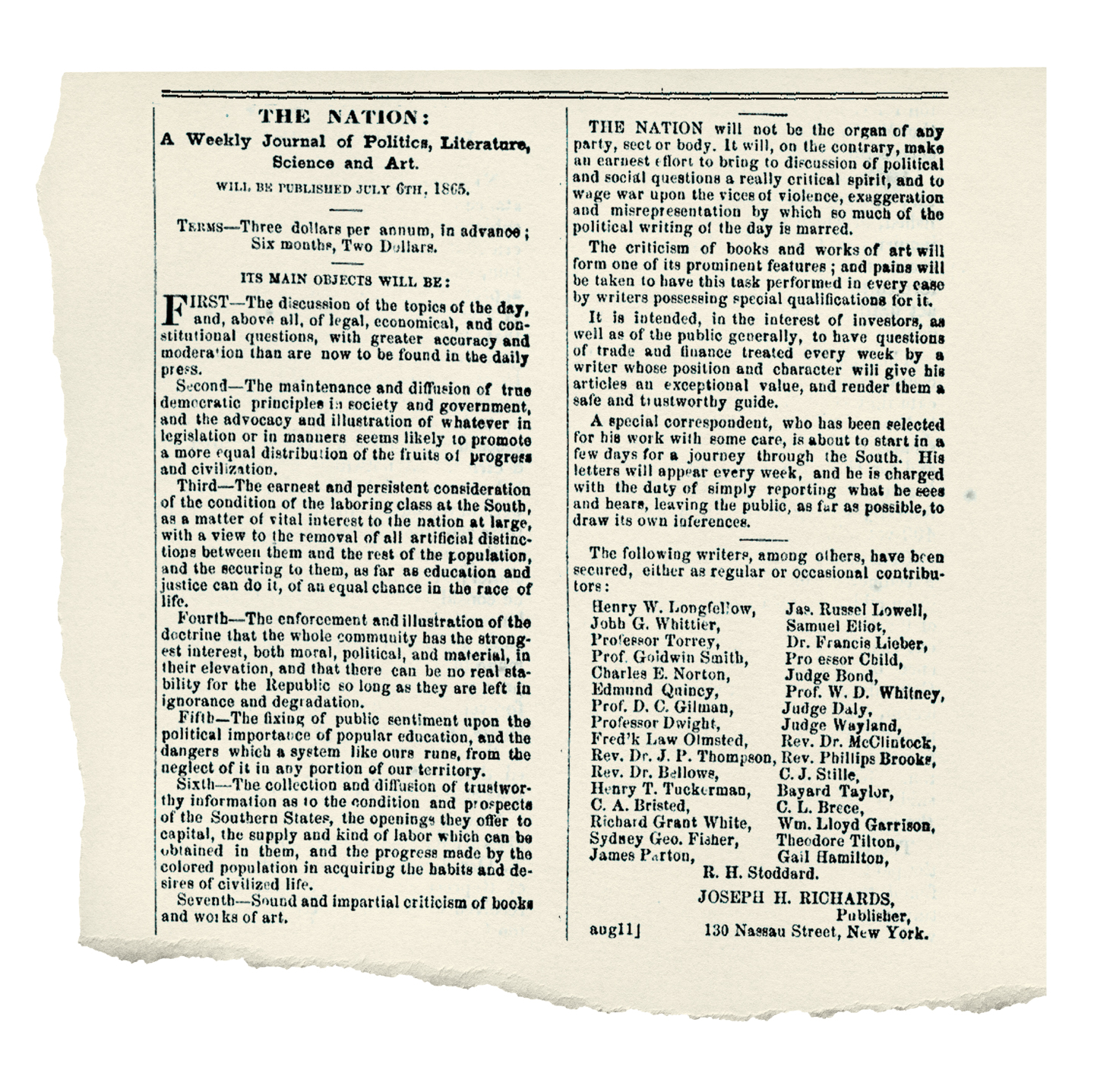
Founding Prospectus Founding Prospectus
The Nation will not be the organ of any party, sect or body.
Mar 23, 2015 / The Nation
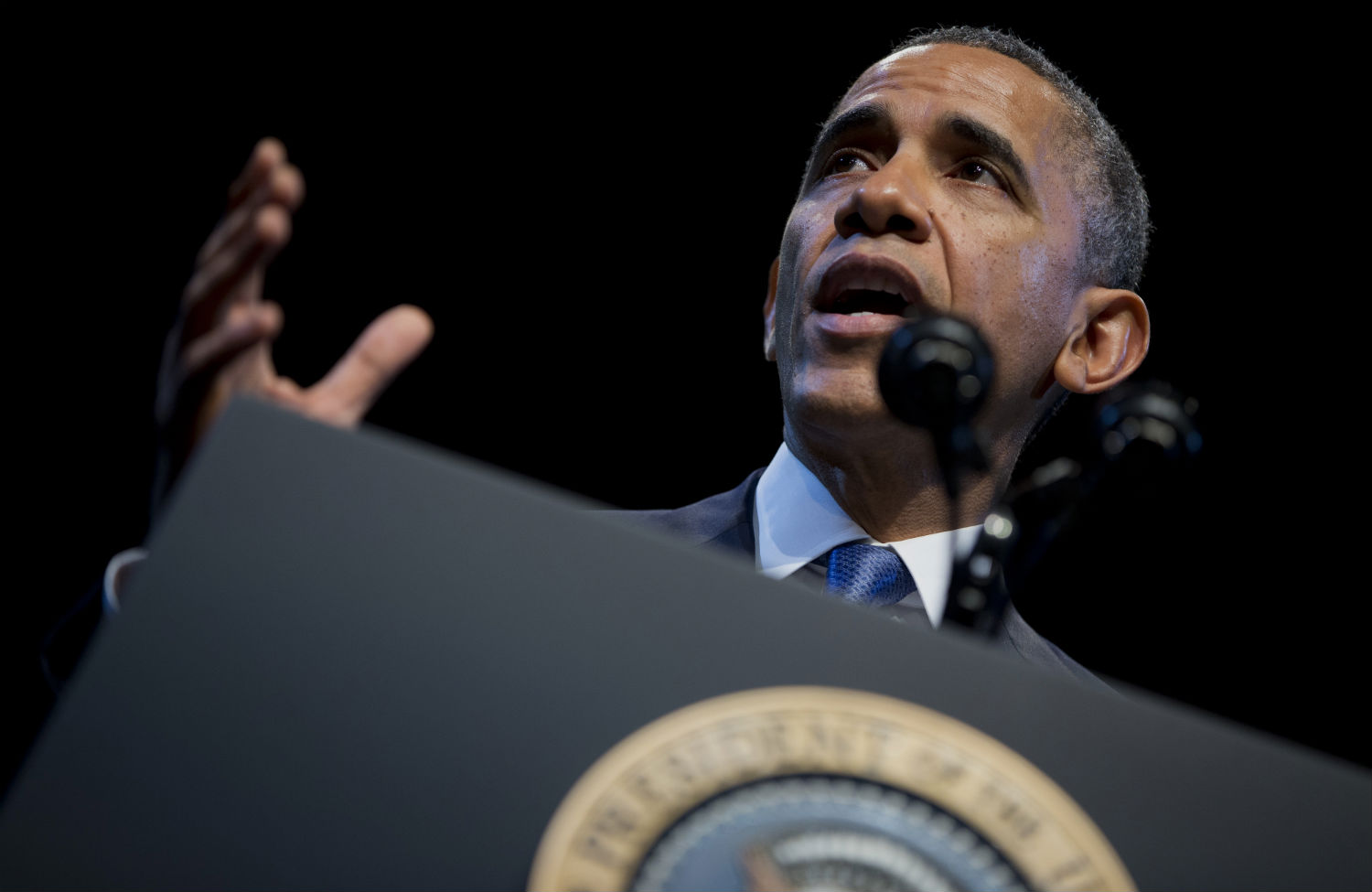
A Message From President Barack Obama A Message From President Barack Obama
The Nation is more than a magazine—it's a crucible of ideas.
Mar 23, 2015 / President Barack Obama
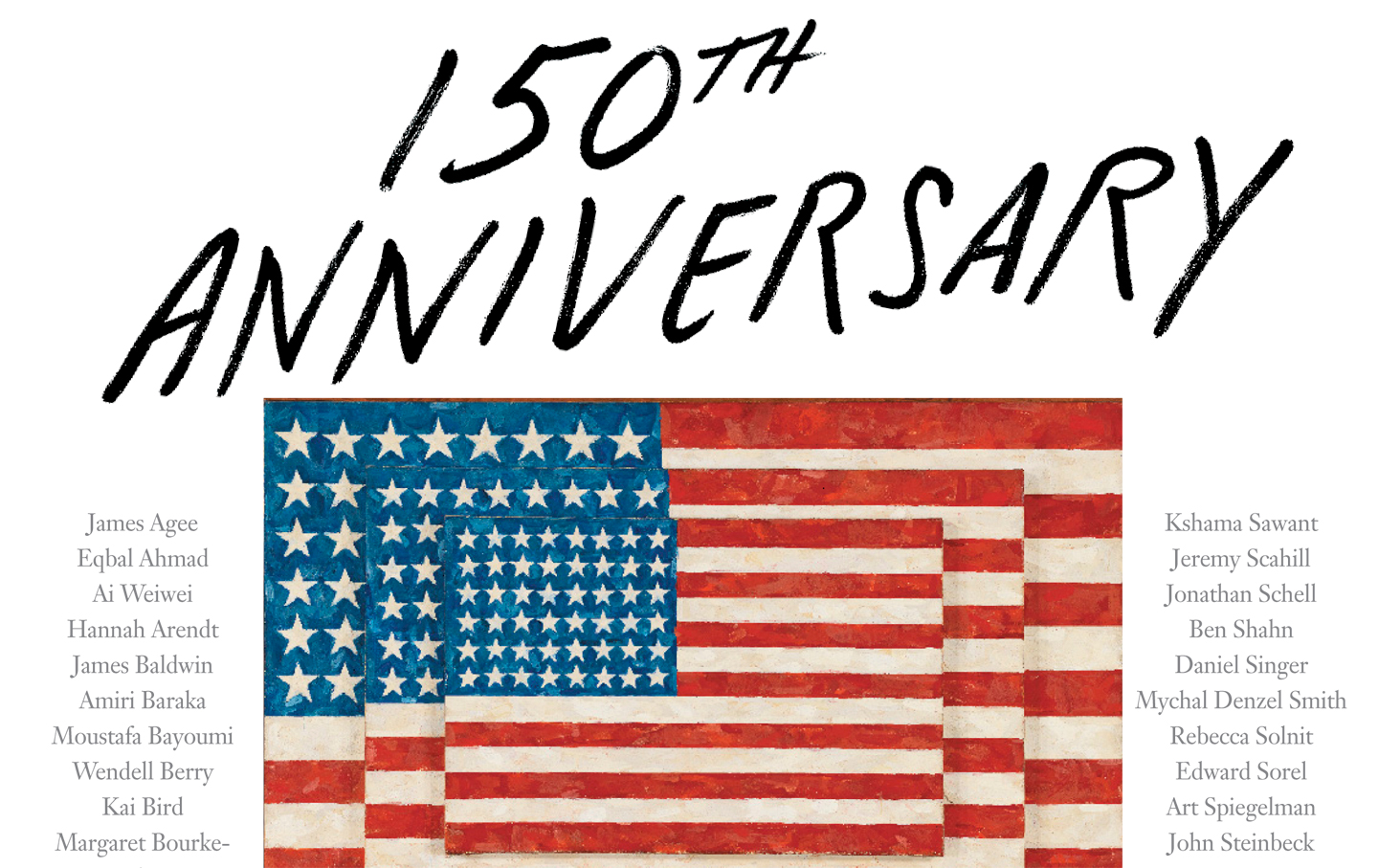
150 Years of Telling the Truth 150 Years of Telling the Truth
Independence—one of the keys to The Nation’s longevity—has become ever more important in an age that urgently needs dissident and rebellious voices.
Mar 23, 2015 / Katrina vanden Heuvel
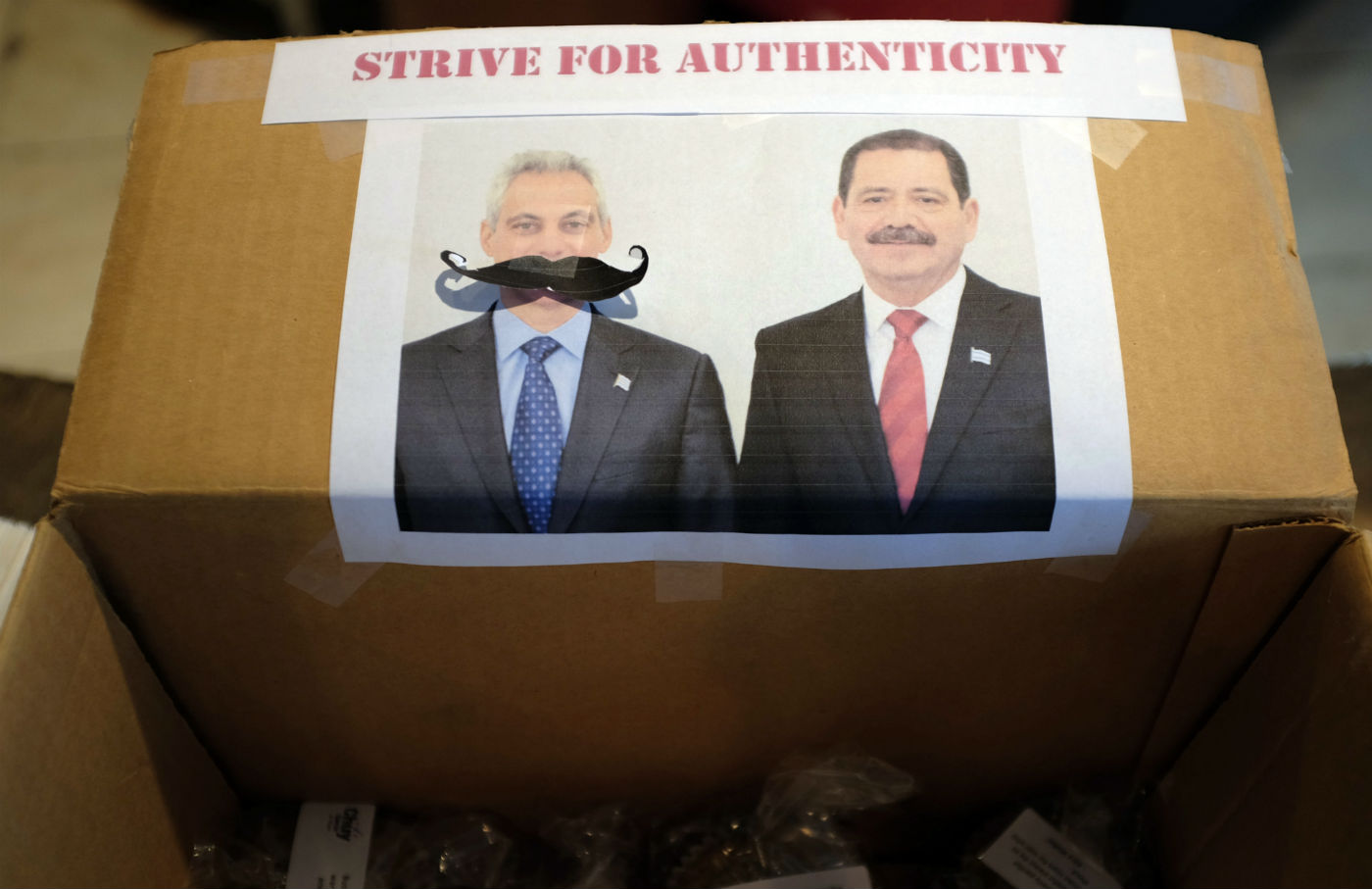
How the Movement to Unseat Rahm Emanuel Is Challenging ‘1 Percent’ Urbanism How the Movement to Unseat Rahm Emanuel Is Challenging ‘1 Percent’ Urbanism
As Chuy Garcia gains momentum, another city seems possible.
Mar 4, 2015 / John Nichols
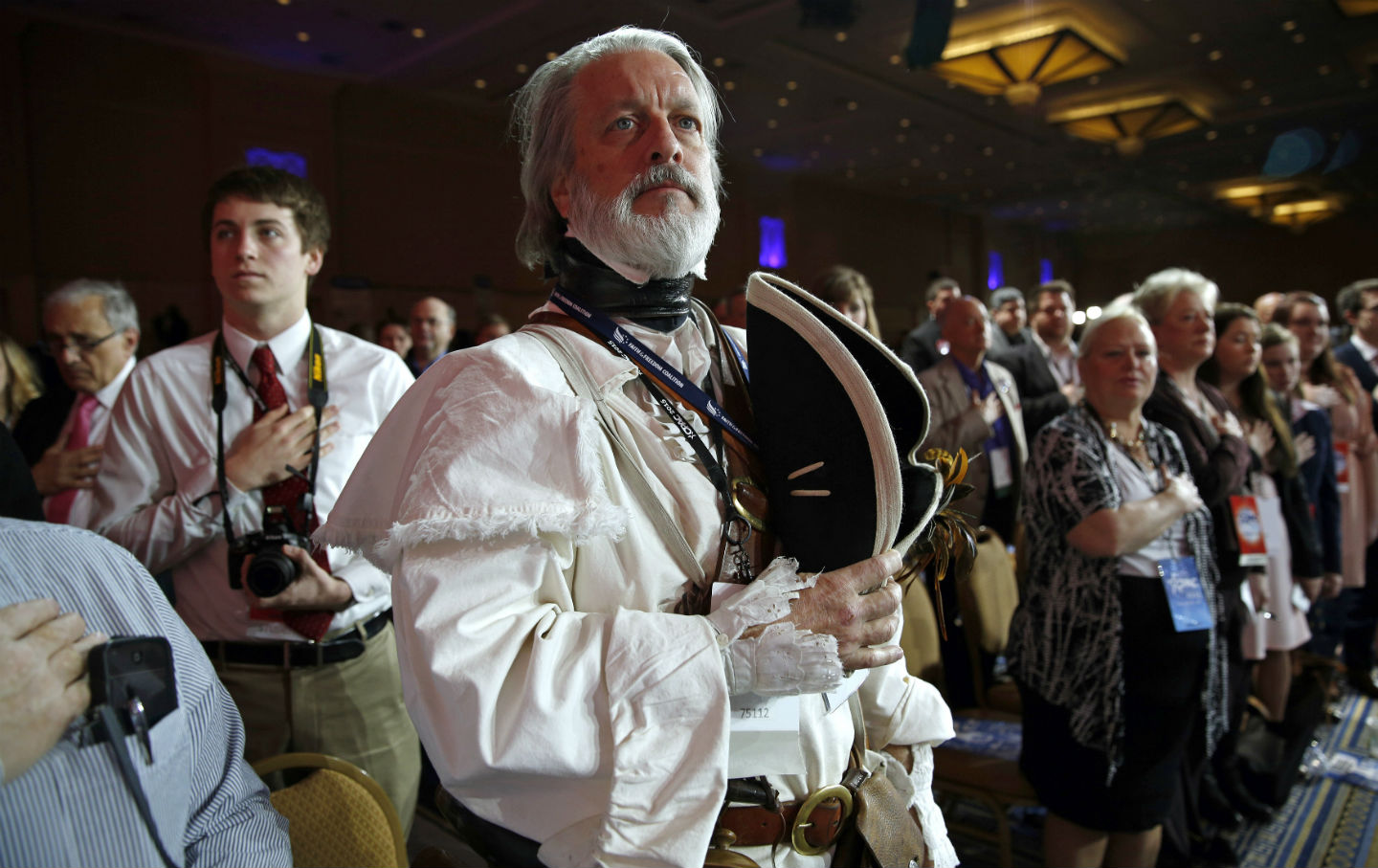
CPAC, On Script CPAC, On Script
As long as the GOP can put a patina of reasonableness over its conservative ideology, its candidates stand a chance.
Mar 4, 2015 / Michelle Goldberg

Why Are Liberals Resigned to Low Wages? Why Are Liberals Resigned to Low Wages?
Focusing on unsolvable problems excuses them from dealing with tough political problems.
Mar 4, 2015 / Mike Konczal
True Grit? True Grit?
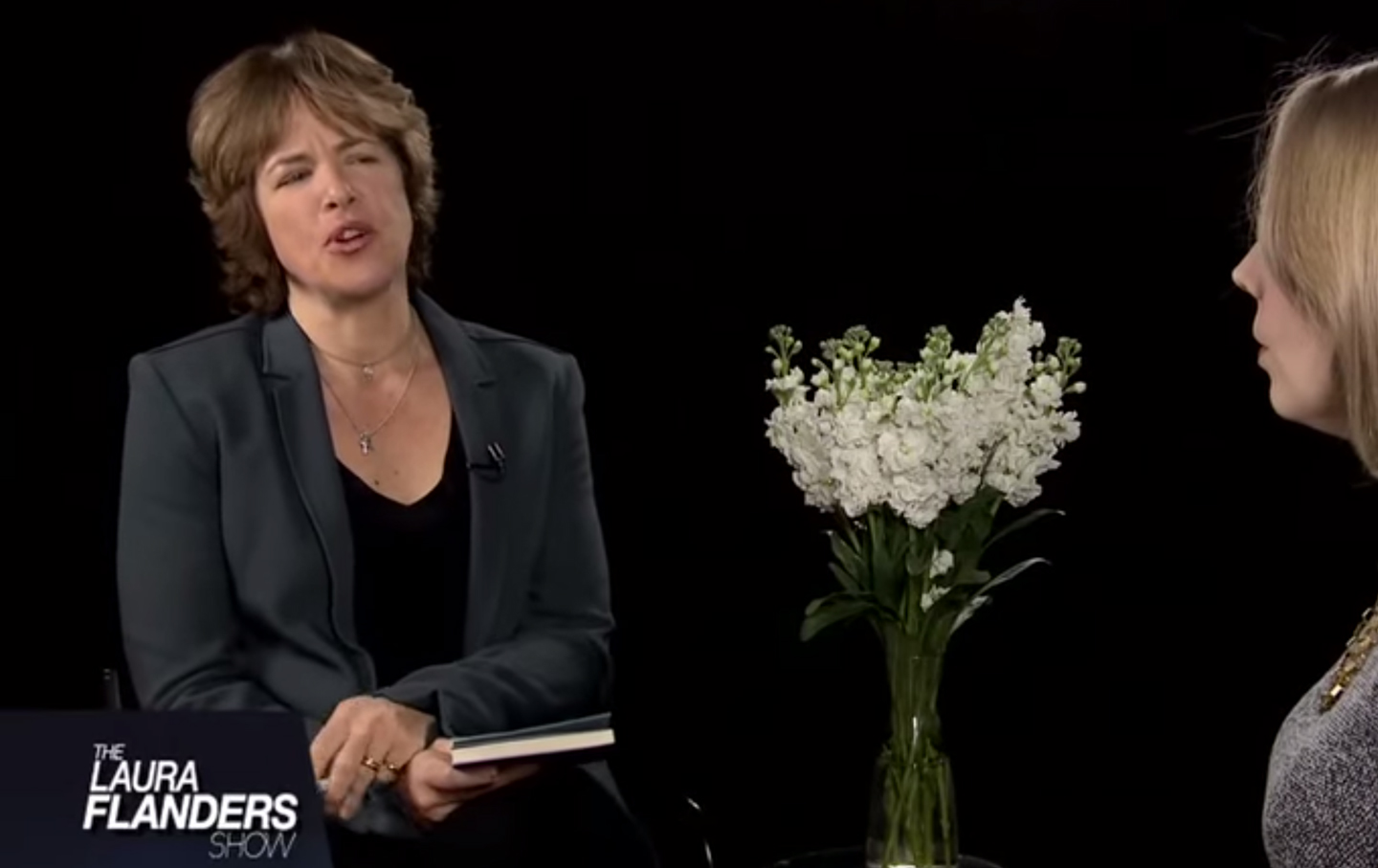
Nation contributor and TV host Laura Flanders isn’t the first feminist to face down some gun-toting cowboys, but her battle is a little unusual. Since 2008, Flanders’s GRITtv has broadcast the voices of marginalized experts and grassroots activists on cable, satellite and public television, as well as online. “I interview people with grit,” Flanders explained in a phone interview. But last summer, she received a phone call asking if she was aware that there was another Grit TV station in town. Flanders jumped online, where she discovered the new Grit (grittv.com), an “action-oriented” digital channel targeting men between 25 and 54 (sexagenarians, beware!). Launched on August 18, the new Grit is “built around the classic male hero, with a focus on western, war and action movies,” said Jonathan Katz, president and CEO of Katz Broadcasting, which operates the network. Please support our journalism. Get a digital subscription for just $9.50! No sane person is likely to mistake Harrison Ford for Naomi Klein—but viewers might find it difficult to separate the near-identical branding. Flanders says her voicemail and e-mail have been filled with messages from viewers frustrated with the quality of Grit’s digital signal. Viewers confuse contact information on her website for Grit’s—and even the programming. One disgruntled viewer wrote to Flanders: “Your channel showing war films is propaganda!” Last fall, GRITtv’s lawyer sent Grit a cease-and-desist letter. GRITtv has applied for a trademark; Grit has, too. Legally, Flanders’s longtime prior use of “GRIT” gives her the right to the brand. The Grit guys have yet to acknowledge the consumer confusion, but even a cowboy could tell you that intellectual property law no longer resembles the Wild, Wild West. That frontier mentality goes by another name now: theft. Read Next: Greg Grandin on Venezuela after Chávez
Mar 4, 2015 / Ava Kofman
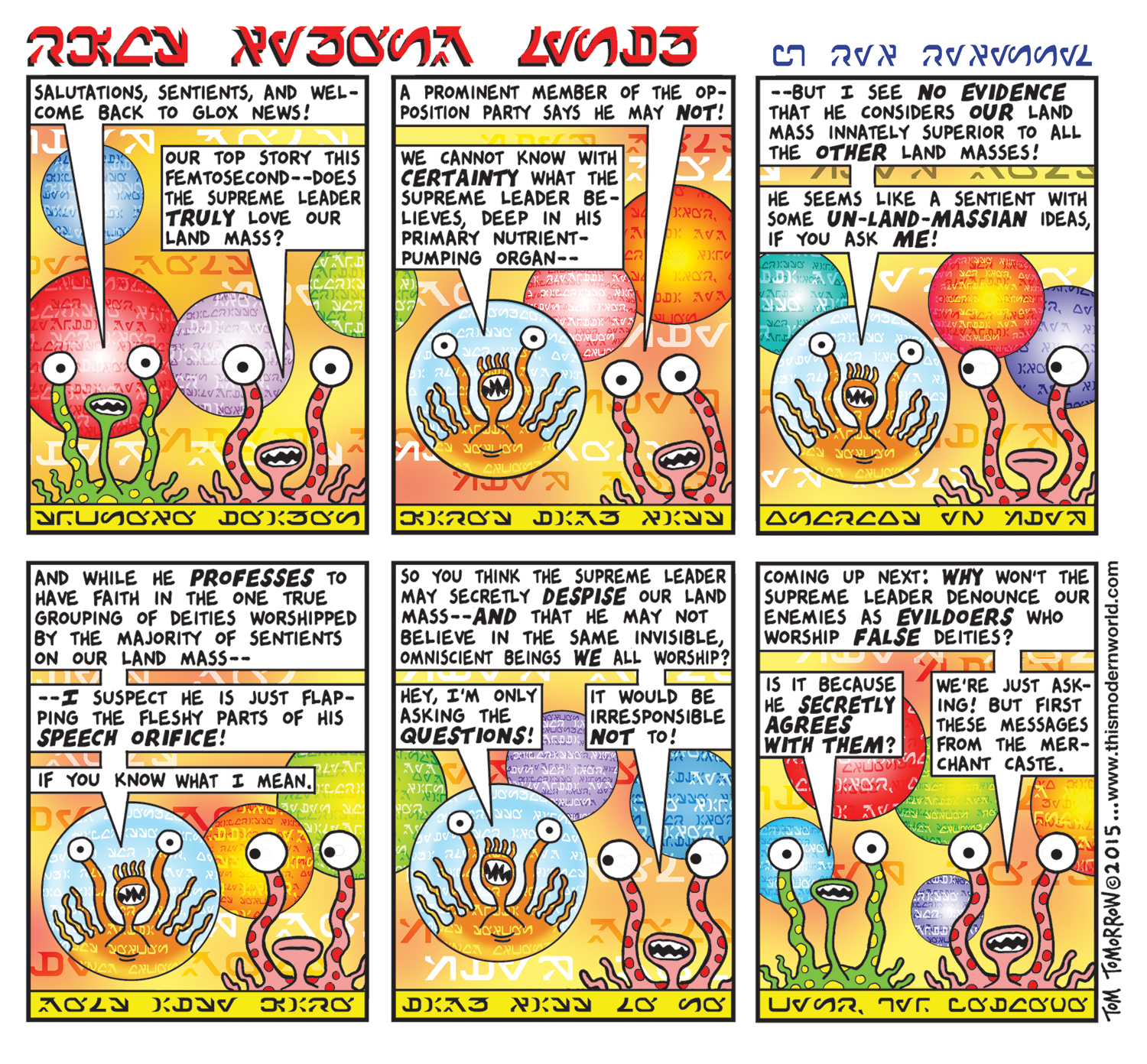
Comix Nation Comix Nation
Mar 3, 2015 / Tom Tomorrow

Snapshot: Protesting Assassination in Moscow Snapshot: Protesting Assassination in Moscow
Russian protesters hold signs with the image of Boris Nemtsov, a prominent opposition leader murdered in Moscow on February 27. A physicist and former governor of Nizhny Novgorod province, Nemtsov was an ally of the late Russian president Boris Yeltsin. His body was found just blocks from the Kremlin, shot six times in the back.
Mar 3, 2015 / Sergei Karpukhin
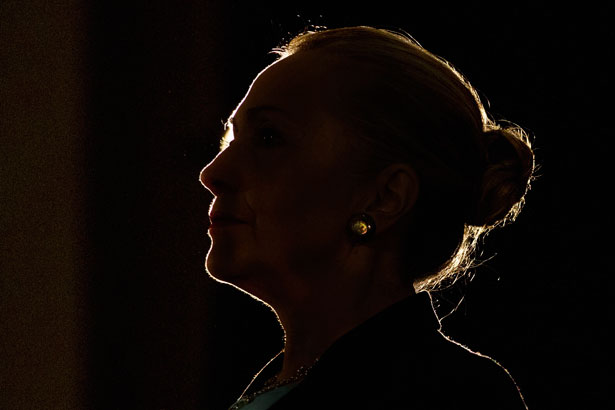
A Contested Primary Is Good for the Candidates, the Democratic Party and Democracy A Contested Primary Is Good for the Candidates, the Democratic Party and Democracy
The issues that matter most to Americans won’t be adequately explored by a coronation of Hillary Clinton.
Feb 25, 2015 / The Editors