
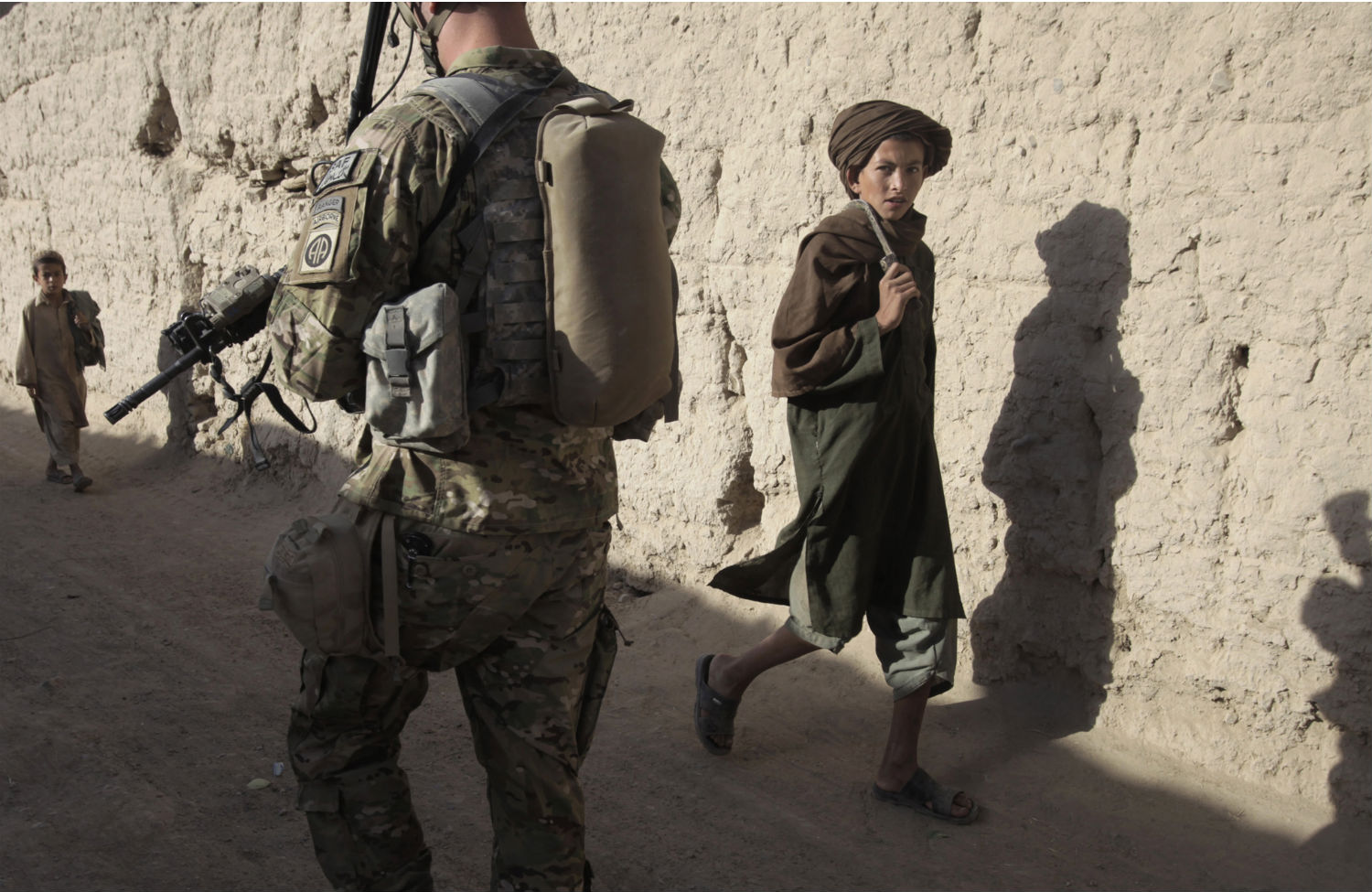
US soldiers on patrol north of Kandahar in 2010. (Reuters/Bob Strong.)
Tim Kudo, a former Marine who served in Afghanistan, pens an op-ed in The Washington Post that describes the killing of civilians in that unnecessary war whose end is long overdue. In the headline he asks: “I killed people in Afghanistan. Was I right or wrong?”
The answer: Well, it depends.
No one will ever know, except Captain Kudo, whether he’s guilty of killing civilians or not. Yes, he killed civilians, as have countless Americans dropped into a nightmarish war that has done no good for anyone. Tens of thousands of Afghan civilians have died since 2001, perhaps ten or twenty or more for every single American innocent who died at the World Trade Center. But only Kudo knows, in his heart, if he acted criminally.
Here’s what he says happened:
One day on patrol in Afghanistan in 2010, my patrol got into a firefight and ended up killing two people on a motorcycle we thought were about to attack us. They ignored or didn’t understand our warnings to stop, and according to the military’s “escalation of force” guidelines, we were authorized to shoot them in self-defense. Although we thought they were armed, they turned out to be civilians. One looked no older than 16.
Kudo, at least, is deeply troubled by the killings, and he says he thinks about them every day. That’s an awful burden to carry. The resulting trauma, he says, "isn’t the kind of injury you recover from with rest, physical therapy and pain medication.” By explaining himself and telling his story, Kudo says that he “makes the next war less likely.”
Count me skeptical. In reporting a forthcoming package for The Nation on civilian casualties in the war in Afghanistan, I’ve become cynical about the idea that Americans collectively care at all about dead Afghans. As John Tirman writes in his book The Deaths of Others, in none of America’s wars has the public paid much attention to innocents abroad who suffered and died, whether at Dresden, Tokyo and Hiroshima or at My Lai and Fallujah.
Read Kudo’s moving piece, and decide for yourself if he’s guilty or not. But there’s no doubt at all that the people who put him there, at that moment, as that motorcycle approached his position, are guilty of murder.
Read Robert Dreyfuss's argument against Western intervention in Mali.

