Hollywood’s Hidden Oil Wells—With Nalleli Cobo
“We’re real people with human lives and dreams and aspirations. Our lives should not be cut short because of our socioeconomic status or zip code.”

The Nation Podcasts
Here's where to find podcasts from The Nation. Political talk without the boring parts, featuring the writers, activists and artists who shape the news, from a progressive perspective.
Hollywood’s Hidden Oil Wells w/ Nalleli Cobo / A People’s Climate
“We're real people with human lives and dreams and aspirations. Our lives should not be cut short because of our socioeconomic status or zip code.”
When we think of oil towns, we think of Texas or the Middle East, not Hollywood. But Los Angeles is home to the largest urban oil field in the United States.
There are thousands of oil wells operating in the middle of densely populated neighborhoods. Many are hidden in plain sight, disguised as ordinary buildings just feet from homes, schools, and hospitals.
Approximately one in three LA County residents lives within a mile of an active oil and gas well, and these operations are disproportionately concentrated in Black and Latino communities.
Nalleli Cobo knows what it's like to grow up in the shadow of the oil industry. Only minutes from the University of Southern California, her childhood home in Los Angeles sat just 30 feet from an active oil drilling site. She suffered chronic nosebleeds, asthma, and debilitating health problems, including reproductive cancer. So at just nine years old, she began organizing alongside her mother, knocking on doors and mobilizing neighbors to fight back against the oil industry that was poisoning the community.
Her organizing helped secure the permanent closure of the Allen Co. drilling facility near her home. She went on to help lead a statewide campaign against Big Oil that secured historic protections for millions of Californians, including new restrictions on oil drilling near homes, schools, and hospitals.
Nalleli joins Host Shilpi Chhotray to talk about the hidden oil infrastructure beneath Los Angeles, the devastating toll of urban drilling on frontline communities, and what she’s learned from taking on the fossil fuel industry.
Key Topics
- LA's hidden oil empire: Los Angeles is home to the largest urban oil field in the country, with thousands of active, idle, and abandoned wells embedded in residential neighborhoods, often disguised as ordinary buildings.
- Sacrifice zones: Oil drilling is disproportionately concentrated in low-income Black and Latino communities. These areas are often called "sacrifice zones” because the communities’ health and livelihoods are sacrificed in exchange for industry profits.
- The human health toll of urban drilling: Nalleli shares her personal experience growing up across the street from an oil well as well as the health struggles she witnessed throughout her community.
- Grassroots organizing against Big Oil: How Nalleli and her mother turned their fight for clean air into a community-wide movement, knocking on 1,700 doors, documenting pollution, mobilizing neighbors, and forcing government agencies to respond.
- From local resistance to statewide policy victories: The campaign that permanently closed and sealed all 21 wells at AllenCo, securing California's landmark SB 1137 setback law, and Los Angeles' decision to permanently phase out oil drilling.
- Fighting fossil fuel power: How organizers defeated Big Oil's $20 million effort to overturn SB 1137, and why Nalleli believes people must keep organizing for a fossil-free future.
Resources:
Credits
Presented by Counterstream Media and The Nation
Powered by Wildseeds Fund
Host: Shilpi Chhotray
Executive Producer: Mindy Ramaker
Engineer: Dennis Maxwell
Project Manager: Asia Simms
Nalleli Cobo
Nalleli Cobo is an environmental justice activist and storyteller who led a grassroots campaign to permanently shut down a toxic oil-drilling site in her community in March 2020 at the age of 19—an oil site that caused serious health issues for her and others. Her organizing against urban oil extraction has yielded major policy movement within the Los Angeles City Council and Los Angeles County Board of Supervisors, which voted unanimously on bans of new oil exploration and phasing out existing sites.
She co-founded People Not Pozos, which aims to secure a safe and healthy neighborhood, and the South Central Youth Leadership Coalition, which focuses on environmental racism in the community. In March 2020, Nalleli's tireless organizing culminated in the definitive closure of the AllenCo drilling site across the street from her childhood home. In addition, thanks to her work, AllenCo executives are facing over 24 criminal charges for environmental health and safety violations. Moreover, Nalleli's leadership spurred preliminary votes in the City Council in favor of banning oil extraction in the city in 2020.
Nalleli's story and leadership also inspired the enactment of SB 1137, which bans all new oil wells within 3,200 feet of communities in California. Nalleli won the 2022 Goldman Environmental Prize, was named on the 2022 Time 100 Next list, California Energy Commission Hall of Fame, Activist of the Year, Agente de Cambio, and more.
Advertising Inquiries: https://redcircle.com/brands
Privacy & Opt-Out: https://redcircle.com/privacy
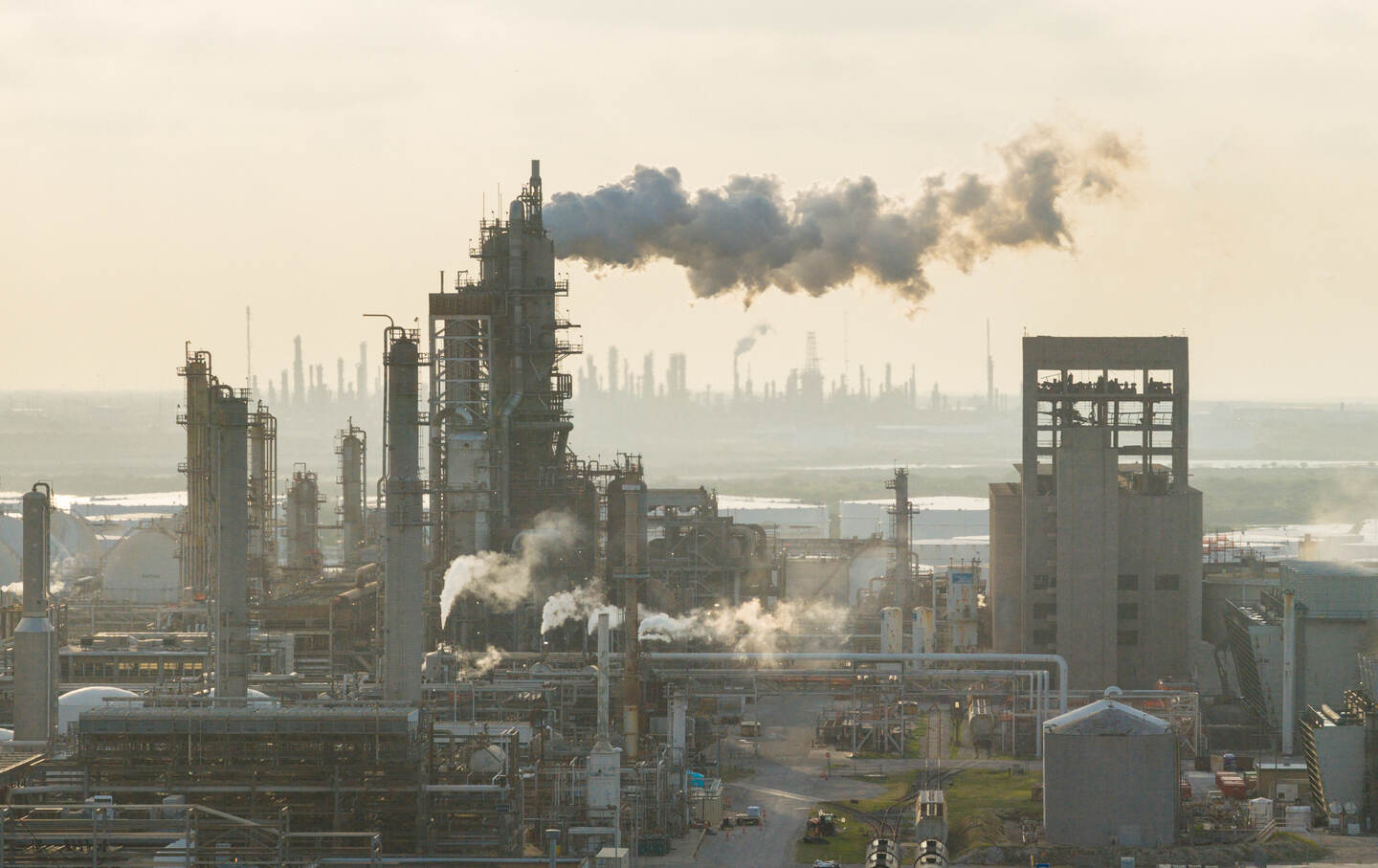
Oil wells at the Allen Co site in South Los Angeles on March 28, 2022.
(Carolyn Cole / Los Angeles Times via Getty Images)When we think of oil towns, we think of Texas or the Middle East, not Hollywood. But Los Angeles is home to the largest urban oil field in the United States.
There are thousands of oil wells operating in the middle of densely populated neighborhoods. Many are hidden in plain sight, disguised as ordinary buildings just feet from homes, schools, and hospitals.
Approximately one in three LA County residents lives within a mile of an active oil and gas well, and these operations are disproportionately concentrated in Black and Latino communities.
Nalleli Cobo knows what it’s like to grow up in the shadow of the oil industry. Only minutes from the University of Southern California, her childhood home in Los Angeles sat just 30 feet from an active oil drilling site. She suffered chronic nosebleeds, asthma, and debilitating health problems, including reproductive cancer. So at just 9 years old, she began organizing alongside her mother, knocking on doors and mobilizing neighbors to fight back against the oil industry that was poisoning the community.
Her organizing helped secure the permanent closure of the Allen Co. drilling facility near her home. She went on to help lead a statewide campaign against Big Oil that secured historic protections for millions of Californians, including new restrictions on oil drilling near homes, schools, and hospitals.
Nalleli joins Host Shilpi Chhotray to talk about the hidden oil infrastructure beneath Los Angeles, the devastating toll of urban drilling on frontline communities, and what she’s learned from taking on the fossil fuel industry.
Key Topics
- LA’s hidden oil empire: Los Angeles is home to the largest urban oil field in the country, with thousands of active, idle, and abandoned wells embedded in residential neighborhoods, often disguised as ordinary buildings.
- Sacrifice zones: Oil drilling is disproportionately concentrated in low-income Black and Latino communities. These areas are often called “sacrifice zones” because the communities’ health and livelihoods are sacrificed in exchange for industry profits.
- The human health toll of urban drilling: Nalleli shares her personal experience growing up across the street from an oil well as well as the health struggles she witnessed throughout her community.
- Grassroots organizing against Big Oil: How Nalleli and her mother turned their fight for clean air into a community-wide movement, knocking on 1,700 doors, documenting pollution, mobilizing neighbors, and forcing government agencies to respond.
- From local resistance to statewide policy victories: The campaign that permanently closed and sealed all 21 wells at AllenCo, securing California’s landmark SB 1137 setback law, and Los Angeles’ decision to permanently phase out oil drilling.
- Fighting fossil fuel power: How organizers defeated Big Oil’s $20 million effort to overturn SB 1137, and why Nalleli believes people must keep organizing for a fossil-free future.
Resources:
Credits
Presented by Counterstream Media and The Nation
Powered by Wildseeds Fund
Host: Shilpi Chhotray
Executive Producer: Mindy Ramaker
Engineer: Dennis Maxwell
Project Manager: Asia Simms
Nalleli Cobo
Nalleli Cobo is an environmental justice activist and storyteller who led a grassroots campaign to permanently shut down a toxic oil-drilling site in her community in March 2020 at the age of 19—an oil site that caused serious health issues for her and others. Her organizing against urban oil extraction has yielded major policy movement within the Los Angeles City Council and Los Angeles County Board of Supervisors, which voted unanimously on bans of new oil exploration and phasing out existing sites.
She cofounded People Not Pozos, which aims to secure a safe and healthy neighborhood, and the South Central Youth Leadership Coalition, which focuses on environmental racism in the community. In March 2020, Nalleli’s tireless organizing culminated in the definitive closure of the AllenCo drilling site across the street from her childhood home. In addition, thanks to her work, AllenCo executives are facing over 24 criminal charges for environmental health and safety violations. Moreover, Nalleli’s leadership spurred preliminary votes in the City Council in favor of banning oil extraction in the city in 2020.
Nalleli’s story and leadership also inspired the enactment of SB 1137, which bans all new oil wells within 3,200 feet of communities in California. Nalleli won the 2022 Goldman Environmental Prize, was named on the 2022 Time 100 Next list, California Energy Commission Hall of Fame, Activist of the Year, Agente de Cambio, and more.
Subscribe to The Nation to support all of our podcasts: thenation.com/subscribe.
The Nation Podcasts
Here's where to find podcasts from The Nation. Political talk without the boring parts, featuring the writers, activists and artists who shape the news, from a progressive perspective.
Hollywood’s Hidden Oil Wells w/ Nalleli Cobo / A People’s Climate
“We're real people with human lives and dreams and aspirations. Our lives should not be cut short because of our socioeconomic status or zip code.”
When we think of oil towns, we think of Texas or the Middle East, not Hollywood. But Los Angeles is home to the largest urban oil field in the United States.
There are thousands of oil wells operating in the middle of densely populated neighborhoods. Many are hidden in plain sight, disguised as ordinary buildings just feet from homes, schools, and hospitals.
Approximately one in three LA County residents lives within a mile of an active oil and gas well, and these operations are disproportionately concentrated in Black and Latino communities.
Nalleli Cobo knows what it's like to grow up in the shadow of the oil industry. Only minutes from the University of Southern California, her childhood home in Los Angeles sat just 30 feet from an active oil drilling site. She suffered chronic nosebleeds, asthma, and debilitating health problems, including reproductive cancer. So at just nine years old, she began organizing alongside her mother, knocking on doors and mobilizing neighbors to fight back against the oil industry that was poisoning the community.
Her organizing helped secure the permanent closure of the Allen Co. drilling facility near her home. She went on to help lead a statewide campaign against Big Oil that secured historic protections for millions of Californians, including new restrictions on oil drilling near homes, schools, and hospitals.
Nalleli joins Host Shilpi Chhotray to talk about the hidden oil infrastructure beneath Los Angeles, the devastating toll of urban drilling on frontline communities, and what she’s learned from taking on the fossil fuel industry.
Key Topics
- LA's hidden oil empire: Los Angeles is home to the largest urban oil field in the country, with thousands of active, idle, and abandoned wells embedded in residential neighborhoods, often disguised as ordinary buildings.
- Sacrifice zones: Oil drilling is disproportionately concentrated in low-income Black and Latino communities. These areas are often called "sacrifice zones” because the communities’ health and livelihoods are sacrificed in exchange for industry profits.
- The human health toll of urban drilling: Nalleli shares her personal experience growing up across the street from an oil well as well as the health struggles she witnessed throughout her community.
- Grassroots organizing against Big Oil: How Nalleli and her mother turned their fight for clean air into a community-wide movement, knocking on 1,700 doors, documenting pollution, mobilizing neighbors, and forcing government agencies to respond.
- From local resistance to statewide policy victories: The campaign that permanently closed and sealed all 21 wells at AllenCo, securing California's landmark SB 1137 setback law, and Los Angeles' decision to permanently phase out oil drilling.
- Fighting fossil fuel power: How organizers defeated Big Oil's $20 million effort to overturn SB 1137, and why Nalleli believes people must keep organizing for a fossil-free future.
Resources:
Credits
Presented by Counterstream Media and The Nation
Powered by Wildseeds Fund
Host: Shilpi Chhotray
Executive Producer: Mindy Ramaker
Engineer: Dennis Maxwell
Project Manager: Asia Simms
Nalleli Cobo
Nalleli Cobo is an environmental justice activist and storyteller who led a grassroots campaign to permanently shut down a toxic oil-drilling site in her community in March 2020 at the age of 19—an oil site that caused serious health issues for her and others. Her organizing against urban oil extraction has yielded major policy movement within the Los Angeles City Council and Los Angeles County Board of Supervisors, which voted unanimously on bans of new oil exploration and phasing out existing sites.
She co-founded People Not Pozos, which aims to secure a safe and healthy neighborhood, and the South Central Youth Leadership Coalition, which focuses on environmental racism in the community. In March 2020, Nalleli's tireless organizing culminated in the definitive closure of the AllenCo drilling site across the street from her childhood home. In addition, thanks to her work, AllenCo executives are facing over 24 criminal charges for environmental health and safety violations. Moreover, Nalleli's leadership spurred preliminary votes in the City Council in favor of banning oil extraction in the city in 2020.
Nalleli's story and leadership also inspired the enactment of SB 1137, which bans all new oil wells within 3,200 feet of communities in California. Nalleli won the 2022 Goldman Environmental Prize, was named on the 2022 Time 100 Next list, California Energy Commission Hall of Fame, Activist of the Year, Agente de Cambio, and more.
Advertising Inquiries: https://redcircle.com/brands
Privacy & Opt-Out: https://redcircle.com/privacy
Search Results placeholder
Ep. 7 – Hollywood’s Hidden Oil Wells with Nalleli Cobo
Shilpi Chhotray [00:00:04] This is A People’s Climate, powered by Wildseeds Fund, from Counterstream Media and The Nation. I’m your host, Shilpi Chhotray.
CLIP [00:00:15] The bobbing of pump jacks – not your typical image of Los Angeles, but about 5,000 active and idle wells are here.
CLIP [00:00:21] That’s right. Angelinos are more like Texans than they think. The city sits on top of the third largest oil field in the country, and apparently oil rigs are scattered throughout the city in the backyards of schools, malls, and even the farmer’s market.
CLIP [00:00:34] We see clearly that oil and gas operations are a major contributing factor to the poor health outcomes facing too many of these residents, and especially in Black and Brown communities.
CLIP [00:00:47] We will show the oil industry that they have no place in our backyards and that they no right to poison us. The oil industry may have $100 million, but we will show them we have the true power of people and of love. That is how we will save our planet. We have the power, we have tools, we know the solutions, now let’s get to work. Si se puede.
Shilpi Chhotray [00:01:13] When we think about oil and where it comes from, we think of the Middle East, Venezuela, Texas, maybe New Mexico, but we don’t think about California. But Los Angeles sits on the largest urban oil field in the country. And for decades, Black and Latino communities have been living side by side with these drilling operations that are deteriorating their health. Today’s guest knows that reality intimately. Nalleli Cobo became an organizer at just nine years old. She grew up in South Los Angeles just minutes from the University of Southern California and across the street was an oil drilling site. Since then, she’s become one of the leading voices working to stop urban oil drilling. Here’s my conversation with Nalleli Cobo. Nalleli, thank you so much for being here. You know, I’ve been following your story for quite some time now, so it’s really exciting to be able to chat with you today and really get a sense of what’s happening now.
Nalleli Cobo [00:02:11] I’m really excited to be here, thank you so much for having me.
Shilpi Chhotray [00:02:14] I wanna start by grounding listeners in something that still surprises people. When we think about Los Angeles, we think of sort of like this beautiful destination, Hollywood, beaches, I think about hip hop, not oil. But LA is actually home to the largest urban oil field in the United States, this is something I learned from you, and one of the most densely populated urban oil extraction zones in the country. So I’d love to ask you a little bit about the history of LA’s oil empire, which actually dates back to the 1900s.
Nalleli Cobo [00:02:49] We have a very deep history when it comes to oil here in Los Angeles. In the 1940s, some of the most pervasive and productive oil wells in the country were found. And since then, we haven’t stopped drilling for oil. Los Angeles is the largest urban oilfield in the nation, with approximately one out of three LA residents living a mile or less to an active oil and gas well. And in the city of Los Angeles, we have more oil wells, idle, abandoned, and active than schools, parks, and hospitals combined. One year, the Los Angeles Times even described the oil wells because there are so many, like, trees standing in the forest. It’s very devastating to know that that is the history that we stand on.
Shilpi Chhotray [00:03:37] I looked at this article from the Atlantic and a lot of these oil wells are completely hidden in plain sight. Can you describe a little bit of the range that you find these oil wells and what they actually look like in these neighborhoods near homes, near schools, near hospitals, even.
Nalleli Cobo [00:03:56] So many of these wells are still hidden and disguised in plain sight, and they look like regular plain old buildings. I grew up one across the street from one that was hidden behind these really tall walls, right? And it was always up to sort of my imagination growing up what was behind these walls. Because of these tall rigs, I thought it was an amusement park and I was really upset they never invited me over. But that’s like the innocence that we have growing up, right? It’s not unless you’re educated on the matter and you’re sort of like taught to distinguish these wells that then you can know, oh, that’s actually an oil well and not a building.
Shilpi Chhotray [00:04:31] Talk to me about where some of these urban oil wells are most concentrated.
Nalleli Cobo [00:04:35] These wells are disproportionately placed in low-income communities of color, and we’re called sacrifice zones. The fact that there is a name for our communities is heartbreaking. You know, we’re real people with human lives and dreams and aspirations, and our lives should not be cut short because of our socioeconomic status or our zip code.
CLIP [00:04:56] When we say an oil drilling well is in our neighborhood, I mean it shares a fence with people, where people live. It is across the street from where children play and go to school. This is happening and it’s not right.
CLIP [00:05:10] Communities closest to these oil fields are mostly black and Latino. Residents complain it’s no coincidence their neighborhoods are littered with active oil wells.
CLIP [00:05:19] You started seeing things like redlining, right? And there have been studies now that show that there is a correlation between those neighborhoods and oil drilling activity.
Shilpi Chhotray [00:05:30] So what were some of the health impacts that you would feel right away? Just to really describe to our listeners like what you personally witnessed, but what you saw with your community living so close to this facility.
Nalleli Cobo [00:05:46] Oh my gosh, it became a common conversation starter for our parents to stop each other in the streets and say, hey, my child had an asthma attack, how’s your son’s asthma doing? Or my child is in the ER, can you help me pick up my other kids from school? That was the way we started greeting each other in the street, which is heartbreaking. But in my personal experience, I got really sick and it started with a nosebleed, but my nosebleeds ended up becoming so severe and like chronic nosebleeds. Where I could no longer sleep in my own bed. I would have to sleep in a chair to prevent choking on my own blood at night. I had body spasms so severe where my mom would have to carry me from one place to the other. I had heart palpitations and I wore a heart monitor for several weeks when I was just a kid still. I was still in elementary school. I developed asthma. That’s something I’m always going to live with now. And ultimately, at the age of 19, I was diagnosed with, with stage two reproductive cancer.
Shilpi Chhotray [00:06:50] Nalleli, I’m so sorry. No one should have to go through that. How did you ultimately find out what was going on behind these walls?
Nalleli Cobo [00:07:00] I remember one day, the smells were really, really strong. When drilling for oil, it smells like rotten eggs. But something this oil well will do is add even more chemicals to mask the smell.
Shilpi Chhotray [00:07:13] Like putting potpourri or like an air freshener in a car?
Nalleli Cobo [00:07:16] Exactly. So then my community, instead of like the rotten egg smell, it would smell like cherries or guava or citrus or chocolate. But it wasn’t like your grandma’s guava tree in your backyard. It was a type of scent so artificial that as soon as you inhaled, your stomach would hurt or you would get a headache. You just instantly felt sick.
Shilpi Chhotray [00:07:36] And mind you, you’re 30 feet away, so you’re encased by this.
Nalleli Cobo [00:07:41] And it was 24-7 exposure. So when the smells and the emissions would be so strong, you would feel it. I’m very fortunate and blessed to have grown up in a five-generation household. I remember one day my sister took me to like this late night yoga class. When we got home, the house was empty and my mom quickly came out of a room and she ushered me and my sister inside and that’s where the whole family was. And she said the smell that’s going on outside is because of the oil well. But don’t worry, I’m gonna do everything I can to keep you guys safe, but we all have to sleep in this one room because we only have one air purifier. So we all slept in the same room and it was real tight that night, but it was fine, right? And the next morning before going to school, I went to school two blocks away. On the walk there, my mom and I read every single sign on the oilwell wall, and there’s one sign I’ve never forgotten that says, dangerous chemicals known to the state of California to cause cancer, birth defects, and reproductive harm. And that’s exactly the sign I thought of when the doctor said, ‘you have cancer.’ That’s the first thing that came to mind.
Shilpi Chhotray [00:08:53] You remember that sign.
Nalleli Cobo [00:08:55] Immediately. My activism truly was born out of survival. I became an activist at the age of nine, but I didn’t even learn what an activist was until I was 11.
Shilpi Chhotray [00:09:08] Do you remember how you started organizing?
Nalleli Cobo [00:09:11] It really began going door to door knocking with my mom. And throughout the years, we’ve knocked on like 1,700 doors in our communities. We could tell you everyone’s names and their pet names, you know, it really was this grassroots effort of does our community and our neighbors even know that we’re being poisoned in our very own home? And we learned that in order for South Coast Air Quality Management District to send an official out to investigate the smell nine different households had to call in the span of one hour in order for the smell to be considered a public nuisance. So the first time we did that, I remember, I went and I told her, I was like, oh, I knocked on someone’s door, they’re gonna call. And she was like great, you need to knock on eight more. Like we need to keep doing this.
Shilpi Chhotray [00:09:55] Eight more, yeah, let’s go down the list.
Nalleli Cobo [00:09:59] So as soon as we did that, we knocked on every single door in our apartment complex. And then I asked my mom, I said, does the next door building know that we live next to an oil well, and that’s sort of how we started knocking on every single door and our community, essentially.
Shilpi Chhotray [00:10:15] I do want to talk about several of the wins because I think your story is extremely inspiring. You’re really demonstrating what it takes to really hold industry to account. We talk a lot about accountability on the show. And I want to start with 2013 because I really feel like this is where there was the first major win in your life story and your mother’s story. This is when three U.S. Environmental Protection Agency inspectors finally came to inspect the AllenCo site, this 30 feet from your home. I would love to hear what happened there. And actually, how old were you in 2013? You were still very young at that point.
Nalleli Cobo [00:10:56] Yeah, I was 12 years old. But when those officials went inside to conduct that investigation, within five minutes of them being inside, they all had to evacuate because they all got sick.
Shilpi Chhotray [00:11:07] Within minutes?
Nalleli Cobo [00:11:09] Five minutes, that’s all it took.
Shilpi Chhotray [00:11:10] What were the symptoms that they had?
Nalleli Cobo [00:11:12] They just, the smell and they had headaches. They were dizzy, they were nauseous. They had all these, all sorts of symptoms, which is really common. Typical when in close proximity to oil extraction. I remember them immediately coming out and talking about it and saying how they felt and I was just thinking to myself, oh my gosh, someone is finally going to get this. It’s happening and shortly after, I remember having a family dinner when my mom got the call and she started crying and she hung up the phone and she just said, they’re closing. And I got so happy. I was jumping up and down. I asked for permission to scream inside of the house. I was like freaking out and I ran to the window and I opened it. And it was something so simple that we hadn’t been able to do for years in our own home.
Shilpi Chhotray [00:12:04] Just open the window.
Nalleli Cobo [00:12:06] Just open it.
Shilpi Chhotray [00:12:07] And breathe air that’s not encased with these chemicals.
Nalleli Cobo [00:12:11] Yeah I still cry when i talk about it because it – like you said – it really was like that first win that showed us that this is possible.
CLIP [00:12:19] Hi, my name is Nayeli Cobo. I’m 12 years old and I’m 7th grade at St. Vincent School. In your flyer, you guys said that you believe people have the right to breathe clean air. So how come you’re letting AllenCo poison us?
CLIP [00:12:36] Despite 250 complaints, many health-related to government agencies, the oil site remained open until four EPA inspectors felt ill and experienced severe headaches during an inspection.
CLIP [00:12:51] I never thought my activism would lead me to where I am today. The Los Angeles Times wrote a story about my community and that story captured the attention of former U.S. Senator Barbara Boxer and she came out and had a press conference with us where she pled AllenCo Energy to cease operations and they did shortly after. They temporarily closed in 2013, which was made permanent in 2020.
CLIP [00:13:14] I’m very proud to say that AllenCo Energy has been temporarily shut down for six years, going on seven this November.
Shilpi Chhotray [00:13:23] It actually took until this February for all 21 wells to be permanently kept. I mean, this is 16 years of tirelessly advocating for your community and for the broader LA area. And it’s really been led by you and your mother. I would love to know a little bit more about what happened in February and what that significance is.
Nalleli Cobo [00:13:48] That’s another one where I start crying. It’s monumental, you know, it’s historic to know that. Not only did our grassroots community effort led to the permanent closure, but to know that all 21 wells in my community are officially capped and sealed. That’s exactly what I’ve been fighting for, you know? And to know, that in my communities, future nine-year-olds will become a forced activist out of this, or… a future 19 year old will be forced to have the decision of like her reproductive system or her life like that’s that’s why I do this. It really does go to show that nothing is impossible and that people really do carry the power. It shows that we are real people with real human lives and we have the ability to breathe clean air in our homes. It’s just a matter of us demonstrating and reminding officials of power and the fossil fuel industry that not in our communities, that enough is enough and that they picked the wrong ones, right?
Shilpi Chhotray [00:15:07] I would love to talk a little bit more about your mom, actually, because I think one of the things that I love about your story is this was such a mother-daughter fight.
Nalleli Cobo [00:15:19] Yeah, no, my mom truly is my best friend. I always say I’m very blessed to be able to do this work with her. She really is like the epitome of strength. Like I always stay as long as I’m 1% of the woman my mom is, I’m more than enough because she really is just that badass. Like everyone who knows her knows exactly what I’m talking about. My whole life I’ve seen her be an advocate for our community. For… For myself, I’m a very proud daughter of two immigrants. My mom came here from Mexico. My dad came here, from Colombia. But I’m also the very proud product and child of a single mother. And something my mom has always taught us is that we cannot let an injustice go by because we’re too afraid to speak out against an injustice. She came to this country she never thought she’d have to fight an oil well for her kids. And that’s the reality of so many parents when they come here. They come here in search of a life they can only dream of right and to give us even more opportunities. It’s something that is so powerful despite so many barriers or obstacles against them our parents still stood up and fought back. What motivation more do you need to stand up and fight back for your community as well. And she’s always done it so passionately with love, where when you see my mom talk about her work, she really does get like this sparkle in her eye.
Shilpi Chhotray [00:16:40] I think it’s really special you get to work with your mother like that. You know, something that really shook me about your story is not just the pervasiveness of these wells, but the fact that there weren’t like setback laws. These are laws that ultimately say how close wells can be to things like homes and schools. I do a lot of reporting in oil producing states and even states like Texas have setback laws. But California did not. That’s especially astounding because we think of California as this leader when it comes to environmental issues. So this brings me to Senate Bill 1137. This is a policy that creates a 3,200-foot buffer between new oil wells and homes, schools, and other sensitive sites. What was your role in organizing for this particular policy?
Nalleli Cobo [00:17:27] SB 1137 truly is something so historic that changed the future of public health in the state of California, which is wild to say, right? And to know that it truly was, it happened for our communities and to know that my story inspired the enactment of SB 1137 is wild to say to know, that even when Big Oil spent $20 million on a referendum to overturn it. We then created a California vs. Big Oil, which was the campaign for a safe and healthy California. When we launched the campaign, we launched it. It was myself, Jane Fonda, Governor Newsom, former Governor Arnold Schwarzenegger and Holly Mitchell.
[00:18:14] Wow, cool. That’s pretty sophisticated coalition building in such a short amount of time too.
Nalleli Cobo [00:18:19] It was incredible, historic change. And I’m very proud to say that SB 1137 is now in effect today in California. What began as an idea ended up being over 400 community activists, leaders, celebrities, artists, organizers, funders, donors, everything standing up to California and Big Oil saying, not here, not now, right? And the day before the last day to withdraw the referendum. They did. So I like to say we scared big oil straight.
CLIP [00:18:54] It’s rare to see California’s current Democratic governor and last Republican governor together. Gavin Newsom, Arnold Schwarzenegger, and actress Jane Fonda are all uniting at an L.A. Rally fighting against pollution from oil drilling.
CLIP [00:19:08] Big oil is the polluting heart of this climate crisis.
CLIP [00:19:14] Senate Bill 1137 demanded that the oil wells inside communities be made safer.
CLIP [00:19:20] The law bans oil drilling within 3200 feet of homes, schools, hospitals and more with the intention of protecting sensitive sites from the toxic emissions associated with oil and gas extraction.
CLIP [00:19:33] Spokespeople for the oil industry say drilling is safe and this effort is unnecessary.
CLIP [00:19:39] They will tell you that it’s safe. Then you tell them, if it is so safe, we’re going to organize for you to move your family close to an oil well, and we’re gonna watch it there for a year.
CLIP [00:19:55] ¡Sí se puede! ¡Sí se puede! ¡Sí se puede! ¡Sí se puede!
Shilpi Chhotray [00:20:01] Nalleli, let’s zoom into your hometown for a moment. At the end of 2020, the LA City Council voted to ban all new oil and gas drilling and to phase out existing wells over the next 20 years. What does this victory mean to you and your community?
Nalleli Cobo [00:20:16] That was again history being made and it was a monumental win because that means in 20 years we’ll be able to say Los Angeles was the largest urban oil field in the nation and that simple one change of word saved hundreds of thousands of lives. I remember like being in the room when the mayor signed the ordinance and I knew that we truly were one step closer to having my story end with me.
CLIP [00:20:44] It was unanimous. The LA City Council vote on an ordinance to ban oil drilling.
CLIP [00:20:50] Today is indeed a milestone in the history of Los Angeles.
CLIP [00:20:54] New oil and gas wells will be banned. All existing sites and operations must stop within 20 years. A victory for environmental and public health advocates.
CLIP [00:21:04] The phase out of oil drilling in my city means so much to me and my community. It would give us the opportunity to live without constant migraines, nosebleeds, lung health issues and so much more.
CLIP [00:21:16] The power of the people can and will make our city more just, more equitable and a better place to live for everyone.
Shilpi Chhotray [00:21:28] You’ve been fighting for so long and it’s remarkable how much you’ve achieved. I do want to mention Big Oil and the Trump administration are actively working to expand drilling and weaken these safeguards and it has directly impacted your work. In fact, at the beginning of this year, the Trump administration sued California to try to block SB 1137, which tells you just how important this bill really is. So here’s my last question for you. In this political climate, What keeps you going?
Nalleli Cobo [00:22:00] It’s us reminding them and ourselves that we hold the power, that we elect them into office, we can elect them out. That’s right. It’s just reminding ourselves that fear is temporary, but regret is forever, and this is very much our moment in history. Have you ever watched a documentary and you’ve asked yourself, would I have boycotted? Would I have crossed that bridge? Would I had done anything? If you’ve ever asked yourself that, you need to do it now, because this is our moment, and we will be asked about this in the future, whether it’s our kids or grandkids, loved ones, friends. They’re going to ask you, what did you do? And you need to have your answer ready of, did you stand up and fight back and this is what I did? Or did you sit back and let it happen?
Shilpi Chhotray [00:22:47] What you’ve done is help 3.2 million residents living within a quarter mile of an active or idle or a gas well. Like you say this with such softness and composure and I’m just like, what you’ve is tremendous.
Nalleli Cobo [00:23:06] Thank you so much for having me. It was an honor to share my story with you all.
Shilpi Chhotray [00:23:14] Nalleli’s story challenges how I now think about big oil. This is happening in Los Angeles and one of the richest, most progressive cities in the world. But because of her dedication to this fight, California now has some of the strongest setback laws in the country. Her story is such an extraordinary example of how people can resist even the most entrenched industrial power. You can find links to Nalleli’s work in our show notes. Thank you so much for tuning in. Thank you to Wildseeds Fund for making this podcast possible. This episode of A People’s Climate is executive produced by Mindy Ramaker, with engineering and sound design by Dennis Maxwell, theme music by Khafre Jay, additional research by Asia Simms, recorded at Studio 132 in Oakland, California. From Counterstream Media and The Nation, I’m your host, Shilpi Chhotray. Until next time.